
Engine Lugging vs High Revving: Which Habit Causes More Long-Term Engine Damage

- Finding the right range keeps your engine healthy and offers maximum longevity
- High revving increases heat and speeds up natural engine wear and tear a lot quicker
- Engine lugging puts excessive strain on internal components and reduces overall efficiency
Every driver develops a unique driving style, but not many know that some understated habits quietly reduce the lifespan of a vehicle. Whether you prefer to shift up early to save fuel or hold on to a lower gear for a longer period, the mechanical impact on the powertrain is profound. Therefore, it's important to learn how to balance engine speeds correctly to prevent unnecessary stress on your car's vital parts, so that it stays healthy and reliable.
Also Read: Green Tax in India Explained: Who Pays It and How Much Does It Cost?

Finding the Sweet Spot: Why Engine Speeds Matter
The automotive debate between driving at low engine speeds versus pushing limits has existed since the first manual gearboxes arrived. Modern engines are no doubt engineering marvels that can adapt to varying conditions, but they still stick to a specific operational range to function smoothly. Two driving behaviours stress engines most: lugging and high revving. Both habits determine how well a vehicle will continue to perform after a few years.
Characteristics of Engine Lugging & High Revving
| Engine Lugging | High Revving |
| It happens when drivers want acceleration at low speeds while stuck in a high gear. | Revving builds up a lot of heat and heavy sideways pressure on the pistons. |
| Lugging also operates with a heavy load and reduces dependence on oil pressure. | It generates intense heat very, very quickly, degrading rubber seals and the cooling system. |
| The action leads to a lot of massive friction as components begin to move more quickly. | It leads to systemic failure, such as stretched timing chains and cracked engine blocks. |
What is Engine Lugging?
Engine lugging occurs when drivers demand power from the vehicle while driving from a low engine speed and staying in a high gear. If one's trying to accelerate from 30 kmph in fifth gear, it puts a heavy load on a modern 1.2-litre petrol engine. The car will likely shudder or give off a deep booming noise from its engine bay.
There's a belief that by doing this, car owners can save fuel or even pick up speed faster. But it's the opposite.
The Side Effects Of Engine Lugging
Lugging a four-cylinder engine creates many problems, like:
- Low Oil Pressure: At low speeds, the oil pump rotates slowly, which means lower oil pressure. If you ask for high power in this state, the internal parts undergo higher friction without any oil film protecting them.
- Excessive Heat: Because the engine struggles to increase speed, the combustion process takes longer. It creates a lot of heat on the pistons and cylinder walls, which can lead to severe damage.
- Component Strain: The sudden, heavy bursts of pressure try to force the pistons sideways rather than smoothly up and down. Lugging also strains the connecting rods, the main bearings, and the timing chain. Over time, you are forced to pay for a complete engine rebuild, which can cost upwards of Rs. 60,000.
Also Read: How Interstate Vehicle Transfers Work In India: NOC, Re-registration And Road Tax Explained
What is High Revving?
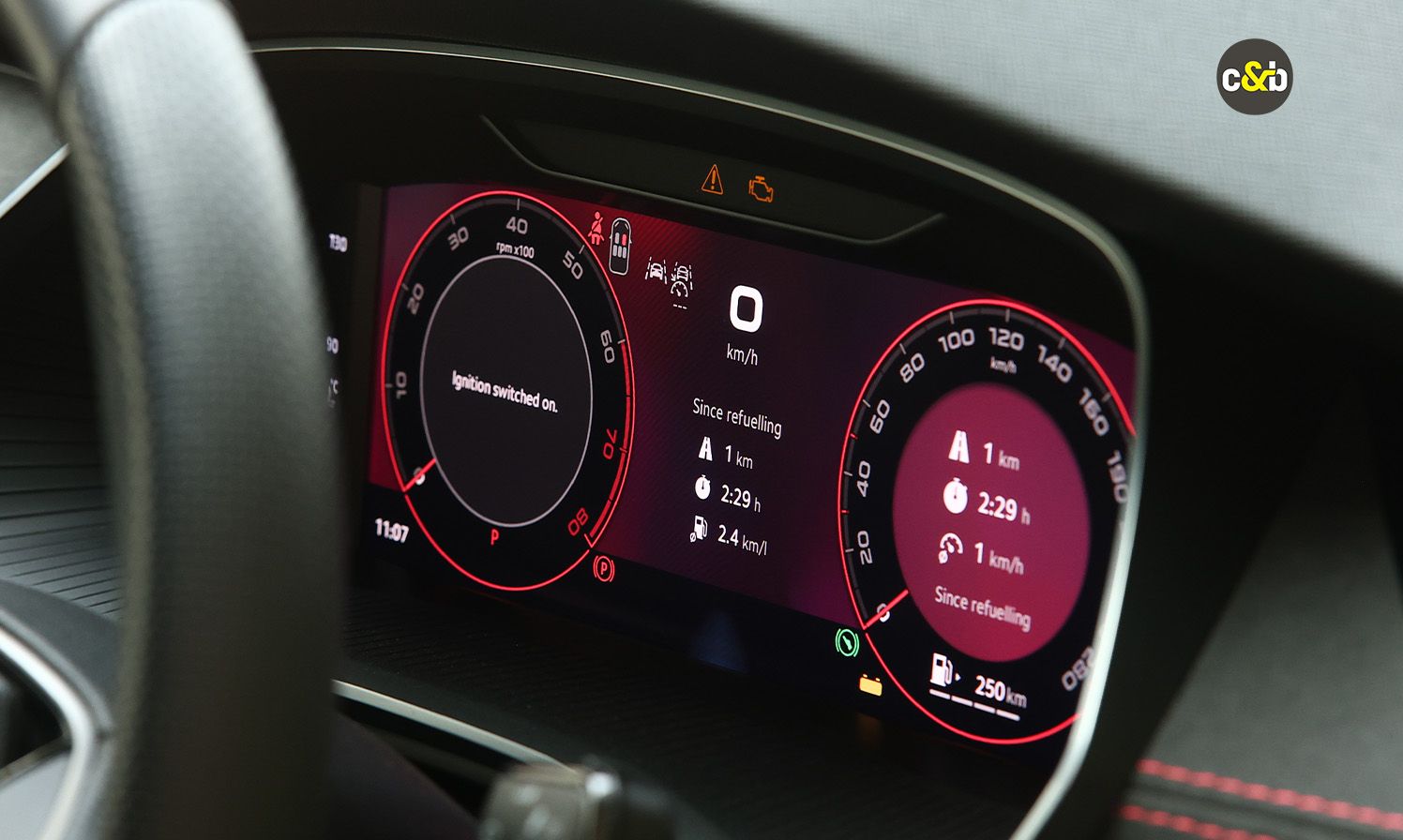
On the other end of the spectrum is the habit of holding onto a lower gear and letting the engine speed climb closer to the redline before shifting. Enthusiastic drivers favour this because it keeps the car ready to accelerate whenever they want. The quick burst to higher speeds feels very exciting.
However, keeping the engine running near its maximum limit constantly is not how standard road cars are meant to be driven.
Side Effects of Excessive High Revving
While modern engines can definitely spin fast, speed has some mechanical challenges, such as:
- Increased Friction: The faster the internal parts move, the more friction they create. Even with healthy oil pressure, the piston rings are rubbing against the cylinder walls thousands of times per minute.
- High Temperatures: Burning fuel faster means higher heat generating in a short amount of time. The cooling system has to work harder to keep the engine block at optimal temperature. And once the task gets too tedious, the heat begins to degrade plastic and rubber components.
- Valve Train Wear: The springs that open and close the engine valves have a physical limit. If you constantly push a standard engine to its absolute limit, those springs can lose their tension. The action reduces engine power and makes the car run rough, too.
Also Read: AWD vs 4WD Explained: Key Differences, Use Cases, & Which One You Really Need
Engine Lugging vs High Revving: Which is More Dangerous?
Both habits reduce the overall lifespan of your vehicle, but engine lugging is universally considered to be far more destructive.
When you rev an engine high, it operates exactly how it was designed to function, just at a faster pace. Modern vehicles have built-in safety features like electronic rev limiters that cut off the fuel supply before the engine speed can reach a catastrophic level. As long as the engine has clean oil and the cooling system works, high revving mostly causes the parts to wear out sooner than they normally would.
Engine lugging, however, forces the powertrain to work in a way it was never designed to. High pressure combined with low oil flow is a recipe for sudden mechanical failure. Lugging literally forces the metal parts against each other, bypassing the protective oil barrier. It can stretch timing chains, damage the flywheel, and even crack the pistons. The damage caused by lugging is structural and severe, making it the clear loser in this comparison.
Also Read: Can Traffic Violations Affect Your Insurance Premium? What Indian Drivers Should Know

How To Protect Your Engine Daily
Finding the right balance is key to maintaining a healthy car. You do not need to be an automotive expert to understand what your vehicle needs; you need to listen to it and apply a few simple practices on your daily commute. Some of them are:
- Downshifting when needed: If you need to accelerate quickly to pass a slow-moving truck, drop down a gear. It is always better to increase the engine speed and let it spin freely than to force it to pull heavily from a low speed.
- Understanding your powertrain's limits: Smaller engines need higher engine speeds to produce power. Adjust your shifting habits based on the car you drive. Diesel engines naturally operate at lower speeds, while petrol cars often need a few more revs.
- Trusting automatic gearboxes: If you drive a modern car with an automatic transmission, the computer handles the shifting logic for you. These systems are programmed to avoid lugging and unnecessary revving.
- Keeping the momentum consistent on inclines: On steep slopes, carry enough speed and settle at a lower gear before climbing. Do not wait for the car to slow down and struggle
While getting a high fuel economy figure or testing your car's red limits feels great, engine lugging and high revving will both cost you heavily in repairs as time goes on. The healthiest approach is to keep the engine in its happy medium, with oil pressure efficiently protecting its internal parts always.


Latest News


 car&bike Team | Oct 23, 2026Updated Bajaj Pulsar NS200 Launched at Rs. 1.60 Lakh; Gets TFT Display, Ride Modes, Quickshifter & MoreThe Pulsar NS200 now gets an electronic throttle body which enables six ride modes and traction control, as well as a quickshifter and TFT display with Google Maps mirroring.1 min read
 car&bike Team | Oct 23, 20265 Factory CNG Cars With Usable Boot Space: Nexon, i10 Nios, Exter & MoreHere are five of the most sought-after factory-fitted CNG cars available in 2026 that offer genuine, usable boot space.1 min read
 Seshan Vijayraghvan | Oct 23, 2026Ducati Formula 73 Limited Edition Café Racer Launched At Rs. 20 Lakh; All Units Sold OutThe Ducati Formula 73 has launched as the Italian marque celebrates its 100th year, whereas the motorcycle itself pays homage to the 1973 Ducati 750 Super Sport Desmo.1 min read
 Jaiveer Mehra | Oct 23, 2026BYD’s Denza Luxury Brand To Make India Debut On November 13Denza is expected to bring the D9 luxury MPV and the Z9 GT shooting brake to India.1 min read
 Sarthak Mahajan | Oct 23, 2026Ultraviolette X47 Venom: Top HighlightsThe Ultraviolette X47 Venom starts at Rs 2.65 lakh and is offered in four variants.1 min read
 Sarthak Mahajan | Oct 23, 2026MoRTH Proposes Mandatory Automatic Emergency Braking For New Cars From 2030The mandate will apply to new car models from October 1, 2030, and to existing models from October 1, 2032, along with new safety requirements for trucks and driver-assistance systems.1 min read