
How To Check If Your Existing Vehicle Is 100% Compatible With E10, E20, Or E85 Blended Petrol

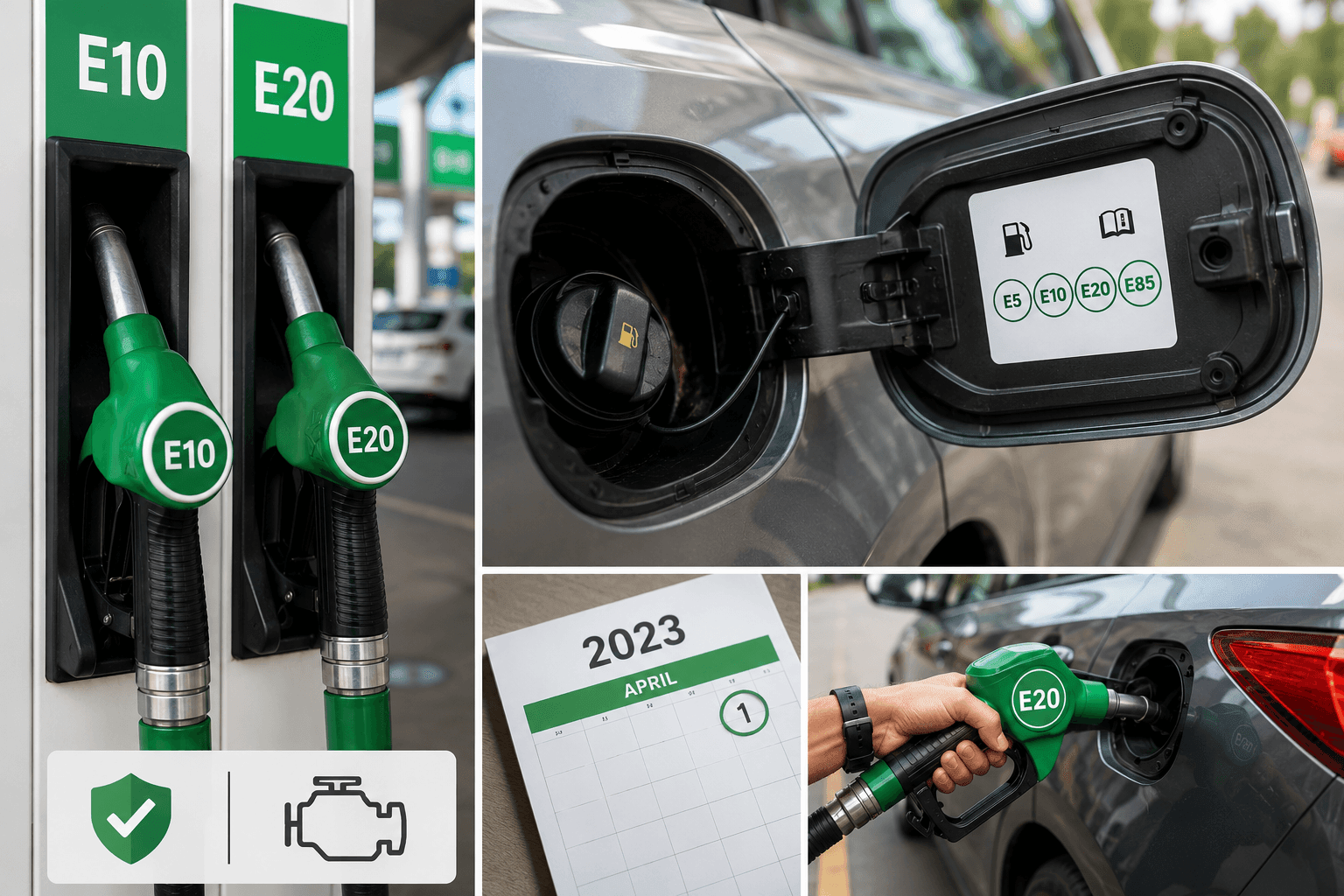
- The sticker inside your fuel filler cap is one of the most accurate ways to check
- Any vehicle launched after April 2023 is mandated by law to be fully compatible with E20
- Putting a high-ethanol blend into an older vehicle once or twice won’t corrode the engine
Ethanol is essentially a plant-based alcohol fuel. While it reduces pollution and lowers India’s need to import crude oil, it can be highly corrosive to older engine materials at the same time. If your vehicle is engineered for E10 (ten per cent ethanol), running it on E20 or E85 can bring about severe fuel leaks and rusted injectors. So before you fill up your tank, you need to be sure about what your engine is certified to consume first.
Also Read: What Exactly is E85 Fuel? A Complete Breakdown Of India's New Rs. 82/Litre Petrol Alternative
How to Check If Your Existing Vehicle is Ethanol-Compatible
Car manufacturers know that fuel changes can confuse buyers, so they leave clear indicators on the vehicle and in its documentation. We have mentioned four methods on how you can check what blend of petrol is safe for your engine.
Also Read: E85 Fuel Priced At Rs 82.12 Per Litre In Delhi; First E85 Station Inaugurated
The Fuel Flap Sticker
The absolute first place you can look is the inside of your fuel filler cap. Whenever you open this little door to put petrol in your car, look closely at the metal or plastic flap. Manufacturers place a permanent factory sticker here that explicitly states the fuel requirements. It will typically say something like "Unleaded Petrol Only" followed by "Up to E10" or a bold "E20" mark. If your flap has a clear E20 or E85 sticker, you have nothing to worry about. If the sticker only says E5 or E10, you need to be careful at the pump.
Digging Into the Owner's Manual
If the sticker on the fuel flap has faded or peeled off over the years, your next stop is the thick owner's manual, the one that comes with every vehicle. Skip straight to the index and look for the 'Fuel Specifications' or 'Technical Data' section. The manual will clearly mention the maximum permitted ethanol percentage for your car or motorcycle. It often clarifies that if you use another fuel that clearly wasn't meant for the vehicle's engine, your engine warranty will no longer hold.
Using the Vehicle Identification Number (VIN)
Sometimes, reading the manual can be confusing, especially when the manufacturer updates the engine halfway through the production year. If you want to be more sure, you can use your Vehicle Identification Number. This unique 17-digit code is usually on your registration certificate or written into the metal frame under the bonnet. You can call your authorised service centre, read this number to the service advisor, and ask them to go through the manufacturer's database. They will instantly tell you what type of fuel is best for your vehicle.
Also Read: India Cuts Excise Duty On Petrol With 22%-30% Ethanol To Zero
Checking Official Manufacturer Websites
Many major carmakers have added dedicated pages to their official Indian websites to help owners deal with the fuel transition. For example, brands like Volkswagen and Skoda have officially stated that their BS6 petrol cars sold after April 2020 are compatible with E20 fuel, even if the older fuel flap sticker only says E10. Visiting your brand's official website and searching for 'ethanol compatibility' will often bring up official press releases or customer advisories that clear up any confusion regarding specific models.
Also Read: Maruti Suzuki Wagon R Flex Fuel Priced At Rs 7.24 Lakh
What the Manufacturing Year Tells You
If you bought your vehicle second-hand and do not have access to the owner's manual or a service centre, the year the vehicle was manufactured gives you a very strong hint about its fuel capabilities.
Also Read: E85 Petrol Now Available In Mumbai At Rs 91.18 Per Litre
| Vehicle Manufacturing Date | Expected Ethanol Compatibility | Risk Level with E20 Fuel |
| Manufactured before 2012 | Not engineered for ethanol. | High Risk. Internal rubber components will likely crack and leak. |
| Manufactured between 2012 and April 2023 | Usually rated for E5 or E10. | Moderate Risk. It might run fine initially, but long-term use can cause fuel pump failure. |
| Manufactured after April 2023 | Rated for E20. | Safe. These vehicles comply with BS6 Phase 2 norms and feature upgraded fuel lines. |
| Specific Flex-Fuel Models (Mid-2026 onwards) | Rated for E20 up to E85/E100. | Safe for all blends. Designed specifically with heavy-duty internal materials. |
What Happens If Your Vehicle Is Not E20-Compatible?
Using E20 petrol in a vehicle that was originally designed for E5 or E10 petrol is not likely to cause immediate issues. However, extended use can cause increased wear in some fuel system parts that were not intended for use in higher ethanol blends.
Most of the older vehicles do not have the choice of switching to a lower ethanol blend, as E20 petrol has been the standard fuel available throughout India.
If a vehicle is not officially approved for E20 fuel, it is recommended to:
- Refer to the manufacturer for any E20 compatibility warnings for your model.
- Regularly check fuel lines, seals and rubber for wear or cracking.
- Adhere to the recommended service plan and resolve fuel-related problems in a timely manner.
- Pay attention to any symptoms like poor starting, rough idling, fuel leaks, or loss of fuel economy.
E20 fuel can be used in most older cars, but regular servicing is even more crucial. If you're not sure about the model, ask an authorised service centre for advice.


Latest News


 car&bike Team | Sep 21, 2026Updated Honda 350cc Range Launched: Prices Start At Rs 1.95 LakhHonda has updated its 350cc motorcycle range in India with new colourways and graphics, with prices starting at Rs 1.95 lakh across the CB350, CB350C and CB350RS.1 min read
 Seshan Vijayraghvan | Sep 21, 2026Stellantis Takes Full Ownership Of Tamil Nadu Plant; Aims To Produce 43,000 Units By 2028Stellantis is targeting a production ramp-up of over 160 per cent, growing from 16,000 units in 2026 to more than 43,000 units annually by 2028.1 min read
 Sarthak Mahajan | Sep 21, 2026World Car Awards 2027 Season CommencesThe 23rd edition will see 100 international automotive journalists evaluate eligible models before the winners are announced in New York in March 2027.2 mins read
 Sarthak Mahajan | Sep 21, 2026Maruti Suzuki Baleno, Dzire And Swift CNG AGS Variant-Wise Prices UnveiledThe Swift and Dzire cost Rs 35,000 more than their standard petrol-manual variants.1 min read
 Jafar Rizvi | Sep 21, 2026Honda CB500 Launched In India At Rs 2.75 LakhThe CB500 is offered in three variants with prices topping out at Rs 3.02 lakh (ex-showroom).2 mins read
 car&bike Team | Sep 21, 20262027 Mahindra Thar 3-Door Facelift Launch Tomorrow: What To Expect?This will be the second update for the 3-door SUV, and we expect some feature additions to play a key role in this update.2 mins read
 Bilal Firfiray | Sep 19, 2026MG Hector Tomahawk EV Review: Play It SafeMG’s new electric SUV has one of the coolest names ever, and the coolest temperament amongst its peers. But is it worth buying?7 mins read
 Preetam Bora | Sep 16, 2026Royal Enfield Himalayan 440 Review: Better Than the 450?The new Himalayan 440 with an upsized engine and gearbox has certainly improved as a touring machine and at an extremely attractive price of Rs. 2.29 Lakh. Is it the better Himalayan to choose for many riders?9 mins read
 Seshan Vijayraghvan | Sep 15, 2026BMW i5 LWB Review: Not The M60, This Is The Proper Electric 5 SeriesThe BMW i5 LWB takes the electric 5 Series formula and puts a stronger focus on rear-seat comfort and long-distance luxury. With a 669 km claimed range, 268 bhp and a more relaxed character, is this the i5 that makes the most sense for India?7 mins read
 Preetam Bora | Sep 14, 2026Ladakh Uncharted: Himalayan Basecamp Off-Road Ride ExperienceA day-long off-road excursion from Royal Enfield’s Himalayan Basecamp event in Ladakh, the Ladakh Uncharted ride by Alpinestars was all about re-discovery!6 mins read
 Janak Sorap | Sep 12, 2026New Bajaj Pulsar 125 First Ride Review: More Tech, Less Weight, Same Pulsar DNAThe new Bajaj Pulsar 125 retains the familiar Pulsar identity but gets a new engine, lighter construction, more features and a sharper riding experience.5 mins read