
Can Traffic Violations Affect Your Insurance Premium? What Indian Drivers Should Know

- Insurance providers have started checking your driving history on digital databases
- If you've picked up traffic challans, your annual insurance renewal premium cost will increase
- These premiums will only stay reasonable and offer extra discounts if you drive safely
With the insurance sector following stricter risk assessment rules in 2026, your driving behaviour in India will now determine how costly your next motor insurance premium is going to be. If you've ignored a red light or oversped before and got an e-challan for either, the vehicle's next policy renewal will be more expensive.
Also Read: How Interstate Vehicle Transfers Work In India: NOC, Re-registration And Road Tax Explained
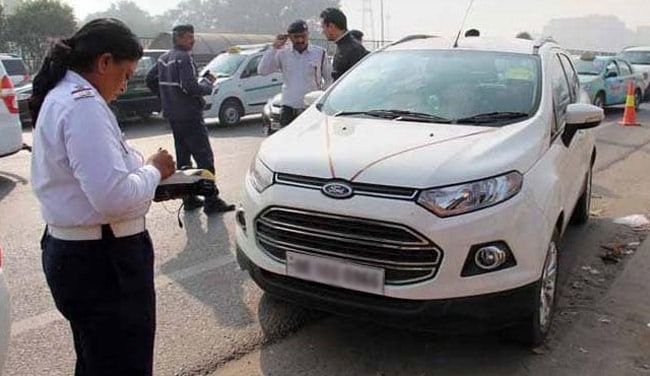
The Relation of Traffic Violations with Insurance Premium
When you receive a text message from the traffic police about a fine, you might quickly pay the amount and assume the matter is permanently resolved. However, the actual cost of breaking traffic rules is much more than this initial payment. Modern insurance companies in India are actively linking your driving record to your annual premium, considering even your minor mistakes on the road as major risk factors.
How Digital Databases Changed the Game
Traffic police and insurance companies operated in completely different spheres some time back. You could have multiple speeding tickets, and your insurer would remain oblivious. This disconnect no longer exists today. The integration of the Vahan database with the Insurance Information Bureau has created a transparent flow of data. Every time a camera catches you doing 80 kmph in a 60 kmph zone, the e-challan gets logged against your vehicle's registration number.
When renewing your insurance, the provider runs your registration details through their system. A history of reckless behaviour instantly classifies you as a high-risk customer, something considered as purely a mathematical calculation of financial risk. A driver who ignores lane discipline is statistically more likely to cause an accident. To offset that liability, the insurance company demands a higher premium.
Also Read: Green Tax in India Explained: Who Pays It and How Much Does It Cost?

Some Traffic Violations That Trigger an Insurance Premium Hike
One parking ticket might not make your premium more costly, but offences done again and again certainly will. Some of the driving patterns deciding this are:
- Overspeeding: If you push your car to run past the designated limits often, and if traffic cameras catch you doing so, expect a steeper premium renewal.
- Drunk Driving: Driving under the influence drastically increases the chances of an accident, so you become a highly undesirable client for the insurer.
- Signal Jumping: Ignoring traffic lights tells the insurer that you do not respect basic road safety manners.
- Ignoring Safety Gear: Driving without a seatbelt also determines how risky your profile is.
The Final Cost of Traffic Violations on Your Insurance Premium
When insurance companies figure out your traffic violations, your base premium increases first. For example, if you were paying Rs. 15,000 every year, a poor driving record might make it Rs. 18,000 or more, depending on how serious your past offences are.
Secondly, you risk losing your No Claim Bonus. A traffic violation that leads to an accident will wipe out your accumulated discount overnight. And even if you drive a vehicle boasting a five-star crash test rating and a smooth six-speed transmission, insurance companies won't consider the probable malfunctioning of these physical safety nets more than the driver's reckless behaviour.
The table below explains how traffic violations change your insurance premium:
| Factors Affected | Reason |
| Base Premium | Constant traffic violations mean you’re a high-risk driver, so insurance companies increase your base renewal cost. |
| No Claim Bonus (NCB) | Severe traffic offences that lead to accidents take away your accumulated NCB, stripping away a very beneficial discount. |
| Safety Tech Discounts | Insurers offer upfront discounts for cars with safety tech like ADAS. A digital record of reckless driving means automatic revocation. |
| Compulsory Deductibles | A consistent history of minor infractions may also lead insurers to impose a higher compulsory deductible, meaning you pay more. |
| Policy Renewal Eligibility | In extreme cases involving habitual violations, an insurance provider reserves the right to completely deny insurance renewal. |
Also Read: AWD vs 4WD Explained: Key Differences, Use Cases, & Which One You Really Need

How to Protect Your Insurance Premium
Keeping your insurance costs manageable and reasonable requires a calm approach to driving. The best ways to do so are quite practical for ideal renewal rates:
- Stick to speed limits: Keep a close eye on the speedometer. Modern cars isolate you from the outside world, so 100 kmph can feel deceptively like 50 kmph at times.
- Respect traffic signals: A yellow light means you should prepare to stop. The seconds you save blazing past the traffic lights are never worth the potential fine and premium hike.
- Check your records: Routinely log into the government portal to check if you have any pending e-challans. Challenge false violations at once before they silently affect your insurance renewal.
- Drive defensively: Anticipate other drivers to make mistakes. Keep your own approach calm instead. Not only will such habits reduce commute stress, but they will also keep your official record clean.
Your Next Insurance Premium Depends on Your Driving Nature
Regulatory bodies have made it clear by now that premium rates should be handed out according to the actual risk a driver poses. Some consider this a highly fair system, since you end up having more control over what you pay. If a fellow motorist drives recklessly and picks up heavy fines, they logically pay a much higher premium in the end compared to you if you keep your driving records clean.




Latest News


 Sarthak Mahajan | Oct 27, 2026India Clears Pathway For Introduction Of E100 Flex-Fuel VehiclesThe government has approved the inclusion of E100 fuel in the rules, specifying E100 and E85 for compatible flex-fuel vehicles.2 mins read
 Amaan Ahmed | Oct 27, 2026Land Rover Defender 110 Local Assembly Begins In India, Prices Drop By Up To Rs 34 LakhPreviously sold in India as a completely built-up (CBU) model, the incredibly popular Defender is now being built at Jaguar Land Rover's Pune facility.3 mins read
 car&bike Team | Oct 27, 2026Honda To Launch Mitsubishi Triton-Based Pickup Truck In ASEAN By 2028Honda and Mitsubishi Motors have signed an MoU for a new pickup truck based on the Mitsubishi Triton, marking their first complementary vehicle supply agreement as part of a wider strategic partnership involving Nissan1 min read
 Sarthak Mahajan | Oct 27, 2026Hyundai Bayon Colour Options ReveleadHyundai Bayon is available in 10 colour options.2 mins read
 Jafar Rizvi | Oct 26, 2026Royal Enfield Himalayan 750 Teased Ahead Of Global DebutThe Himalayan 750 will likely make its global debut at the EICMA Motor Show in Milan, Italy, next month.2 mins read
 Sarthak Mahajan | Oct 26, 2026Hyundai Bayon: In PicturesThe company said Bayon will receive a CNG option next year.4 mins read