
Why Low-Profile Tyres Are Not Always Ideal for Indian Roads

- Low-profile tyres are better for handling but provide less protection against potholes
- Rough roads are more likely to cause sidewall damage and alloy wheel repairs
- Tyres with a higher profile typically provide more comfort and longevity in everyday use
Walk into almost any car showroom today, and you'll notice a trend. The best variants typically receive larger alloy wheels with thinner tyres. They definitely look more upscale, fit the wheel arches well and give the car a sporty look.
The issue is that most of these tyre configurations were developed for smooth roads. Low-profile tyres may be more of a hindrance than a help on Indian roads, where potholes, rough surfaces, expansion joints and sudden speed bumps are commonplace.
Also Read: Vehicle Scrappage Policy Explained: What Happens When Your Vehicle Reaches End of Life?

What Exactly Is a Low-Profile Tyre?
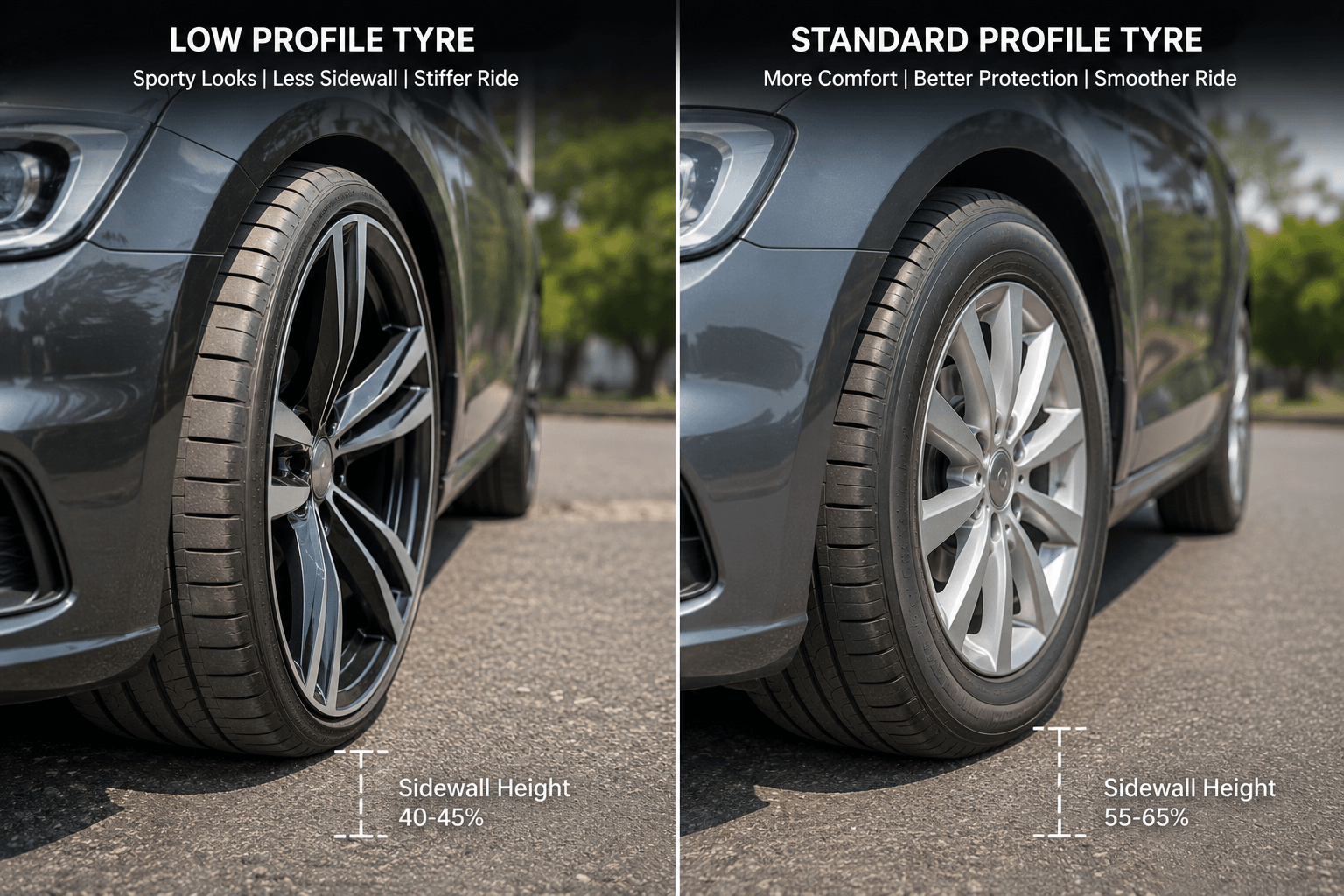
A tyre's profile refers to the height of its sidewall.
For example:
- 205/65 R16 = taller sidewall
- 225/45 R18 = shorter sidewall
The middle number is the tyre's aspect ratio. The lower the number, the less rubber between the road and the wheel.
In simple terms, a low-profile tyre has a shorter sidewall and a larger wheel.
Performance cars and luxury vehicles are typically equipped with this setup to enhance steering response and cornering stability.
Why Tyres Matter More Than You Think in India
When a car hits a pothole, most people think that the suspension takes care of everything. In fact, tyres are the first line of defence.
The tyre's sidewall flexes and absorbs some of the impact before the springs and shock absorbers can react. This cushioning effect helps to minimise the impact on the wheel, suspension and cabin. The taller the sidewall, the more cushioning it will offer.
Also Read: Hydroplaning Explained: Why Cars Lose Control During Heavy Rain
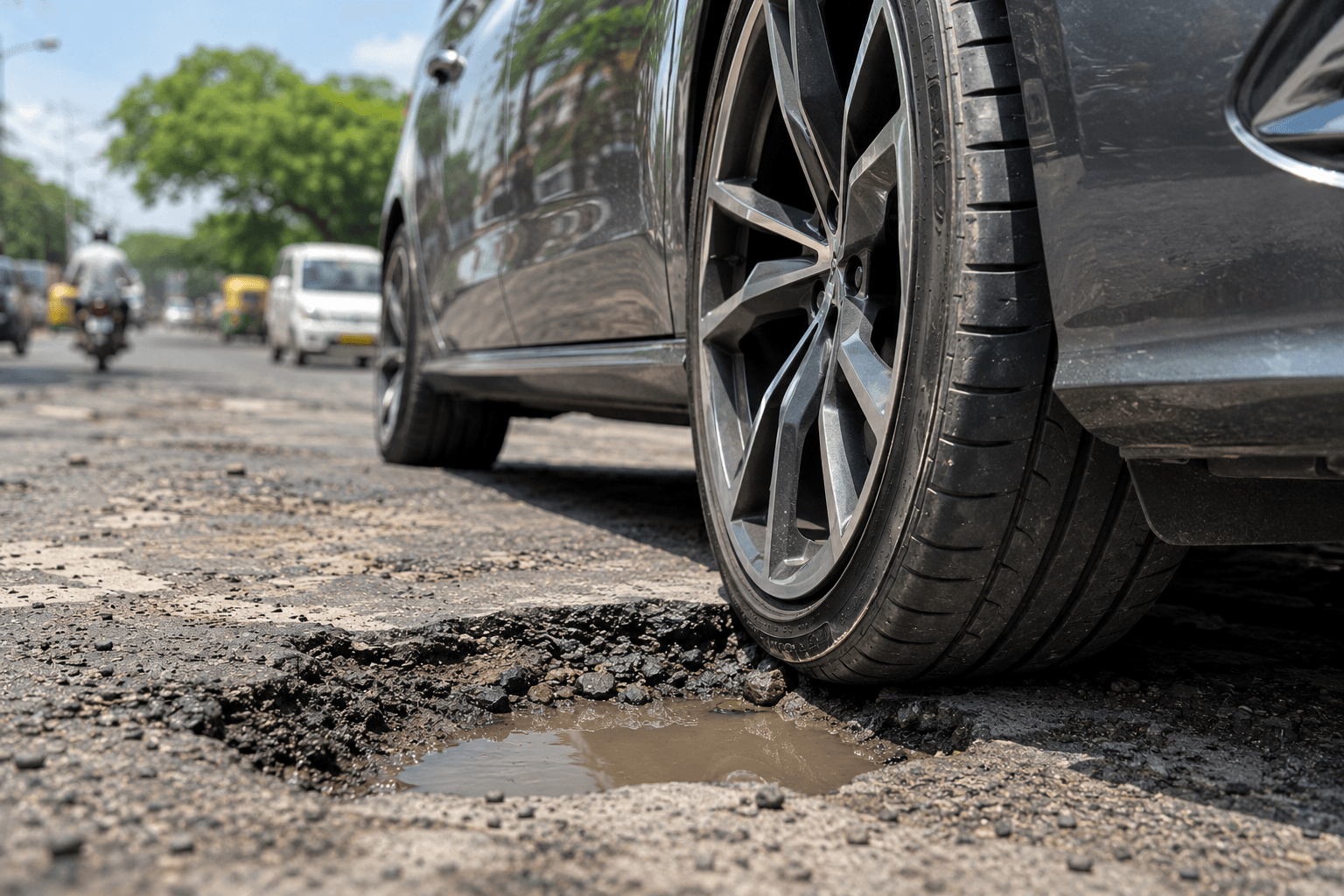
The Biggest Problem: Pothole Damage
Low-profile tyres are most challenged on Indian roads. A taller tyre will bend and take a lot of the shock when a car hits a deep pothole. A low-profile tyre is not very tall, so it cannot compress very much. This means that the force is transferred directly to the wheel.
This increases the chances of:
- Sidewall bulges
- Cut tyres
- Bent alloy wheels
- Cracked rims
- Slow air leaks
These problems can be costly to repair, unlike a mere puncture.
Also Read: Engine Lugging vs High Revving: Which Habit Causes More Long-Term Engine Damage
Why Sidewall Bulges Are So Dangerous
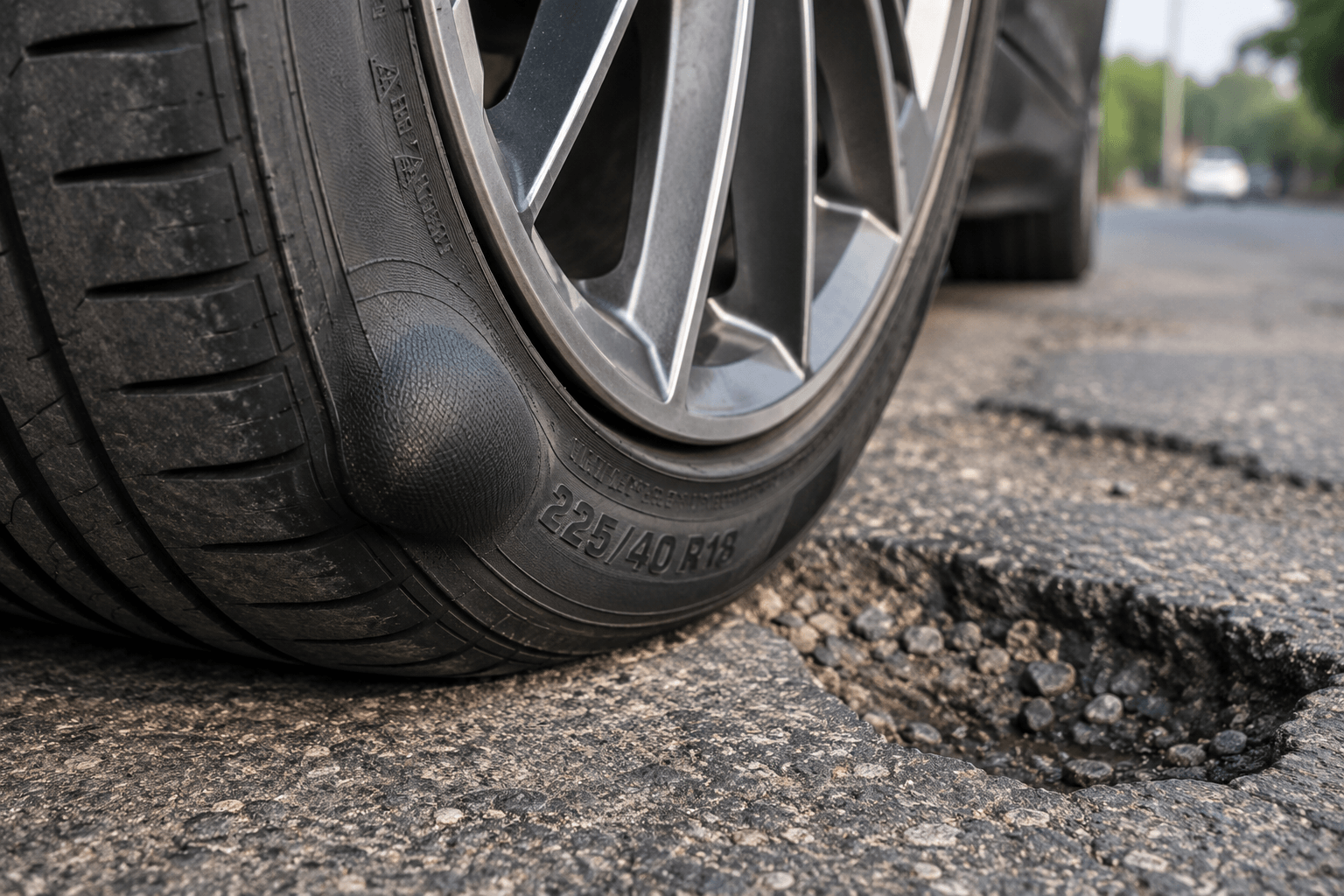
One of the most common issues with low-profile tyres is the appearance of a sidewall bulge. Typically occurs after a severe impact from a pothole or road edge.
Each tyre contains layers of structure to keep it in shape. These layers can be damaged by a strong impact, which causes air pressure to force outwards and form a visible bubble. If a bulge develops, the tyre is not safe to repair and is usually considered to be worn out and should be replaced.
The Ride Comfort Trade-Off
The sporty style is another sacrifice for comfort. Low-profile tyres have stiffer, shorter sidewalls, which means they have less contact with the road surface.
Drivers often notice:
- More bumps inside the cabin
- Higher road noise
- Sharper impacts over potholes
- Reduced comfort on broken roads
It may not be a big deal on smooth freeways, but it is clear when you're driving to work every day and challenging rough roads.
Also Read: Green Tax in India Explained: Who Pays It and How Much Does It Cost?
Why Wider Tyres Aren't Always Better in the Rain
Many low-profile tyres are also wider than standard tyres. This enhances dry road traction, but wider tyres have to expel more water in heavy rain.
Worn low-profile tyres may be more prone to hydroplaning on water-soaked roads, especially when the tread depth is shallow. The most important factor is good tyre condition, but tyre design also contributes to wet weather confidence.
The Hidden Highway Issue: Tramlining
This is something that many drivers go through without realising what it is. Tramlining is the tendency of tyres to ride in grooves, ruts or uneven areas of the road. Low-profile tyres are wider and stiffer and are more prone to road imperfections.
You may notice:
- The steering wheel is tugging slightly
- Constant small corrections
- Extra effort on long drives
It is not hazardous, but it can be tiring on uneven highways.
Low Profile vs Standard Profile Tyres
While both types of tyres offer advantages, the decision depends on your preference for handling and appearance or comfort and longevity on regular driving.
| Factor | Standard Profile Tyres | Low-Profile Tyres |
| Ride Comfort | Better | Firmer |
| Pothole Protection | Higher | Lower |
| Alloy Wheel Safety | Better | More vulnerable |
| Road Noise | Lower | Higher |
| Handling & Cornering | Good | Sharper |
| Daily Indian Road Use | Better suited | Depends heavily on road quality |
Also Read: How Interstate Vehicle Transfers Work In India: NOC, Re-registration And Road Tax Explained
Can You Still Use Low-Profile Tyres?
Absolutely. They are often included in many modern hatchbacks, sedans and SUVs and work fine if driven carefully. The bottom line is to know the compromises.
If most of your driving involves:
- Smooth city roads
- Expressways
- Well-maintained highways
Low-profile tyres can work just fine.
However, if your daily route includes:
- Frequent potholes
- Broken roads
- Rural highways
- Poorly maintained city streets
A taller tyre profile is often the more practical choice.
Style vs Practicality: Finding the Right Balance
Low-profile tyres certainly look better and can make driving more responsive. That's why manufacturers keep providing them on higher variants, and enthusiasts often upgrade to larger wheels.
However, for most Indian drivers, comfort, durability and pothole resistance are as important as looks. It's important to think about the roads you drive on every day before you go ahead and get larger wheels or the top variant, just for the larger alloys. In many instances, a slightly taller tyre may not be as sporty, but it could save you from a damaged wheel, a ruined tyre and a big repair bill down the road.




Latest News


 car&bike Team | Oct 24, 2026Top 5 Bikes In India With The Most Comfortable Pillion Seats For Elderly Parents And Family MembersLooking for a motorcycle that keeps your parents comfortable on rides? These five options offer relaxed ergonomics and pillion-friendly seats.5 mins read
 car&bike Team | Oct 24, 2026Maruti Victoris Gets An Aurum Edition Accessory Kit: Priced At Rs 22,990The accessory kit includes copper accents, chrome trim and 3D mats.1 min read
 car&bike Team | Oct 24, 2026Need A Family 7-Seater Under Rs 7 Lakh? 5 Dependable Second-Hand MPVs And SUVs: Ertiga, Triber, Mobilio & MoreA Rs. 7 lakh budget can get you a used seven-seater for family trips, school runs and everyday travel. The Maruti Suzuki Ertiga, Renault Triber and Honda Mobilio are worth considering, along with the Mahindra TUV300 and Maruti Suzuki Eeco.9 mins read
 car&bike Team | Oct 23, 2026Updated Bajaj Pulsar NS200 Launched at Rs. 1.60 Lakh; Gets TFT Display, Ride Modes, Quickshifter & MoreThe Pulsar NS200 now gets an electronic throttle body which enables six ride modes and traction control, as well as a quickshifter and TFT display with Google Maps mirroring.1 min read
 car&bike Team | Oct 23, 20265 Factory CNG Cars With Usable Boot Space: Nexon, i10 Nios, Exter & MoreHere are five of the most sought-after factory-fitted CNG cars available in 2026 that offer genuine, usable boot space.1 min read
 Seshan Vijayraghvan | Oct 23, 2026Ducati Formula 73 Limited Edition Café Racer Launched At Rs. 20 Lakh; All Units Sold OutThe Ducati Formula 73 has launched as the Italian marque celebrates its 100th year, whereas the motorcycle itself pays homage to the 1973 Ducati 750 Super Sport Desmo.1 min read