
Why Do Car Tyres Develop Sidewall Bulges and Can They Be Safely Repaired?

- Potholes and kerb impacts are among the most common causes of sidewall bulges.
- A visible outward bulge means the tyre should be replaced, not repaired.
- Small inward dips can be normal and do not always indicate tyre damage.
A tyre can suffer serious internal damage even when its outer rubber looks fine. A hard impact can damage the cords inside the sidewall, weakening the area that helps the tyre maintain its shape and support the car.
Once those cords are damaged, the air pressure inside the tyre can push the weakened section outward. This creates the bubble-like bulge that you can see on the sidewall, and continuing to drive on it can increase the risk of tyre failure.
What Is a Sidewall Bulge on a Tyre?
A sidewall bulge is a raised, bubble-like section that sticks outward from the tyre. It is usually caused by damage to the internal cords rather than a simple cut or puncture on the surface.
The damage often happens when the tyre is squeezed between a pothole or kerb and the wheel rim. The outside of the tyre may not show much damage, but the internal structure can still be weakened.
Why Do Car Tyres Develop Sidewall Bulges?
A hard impact is the most common reason for a sidewall bulge. Potholes, kerbs and sharp road edges can put a sudden load on the tyre and damage its internal structure.
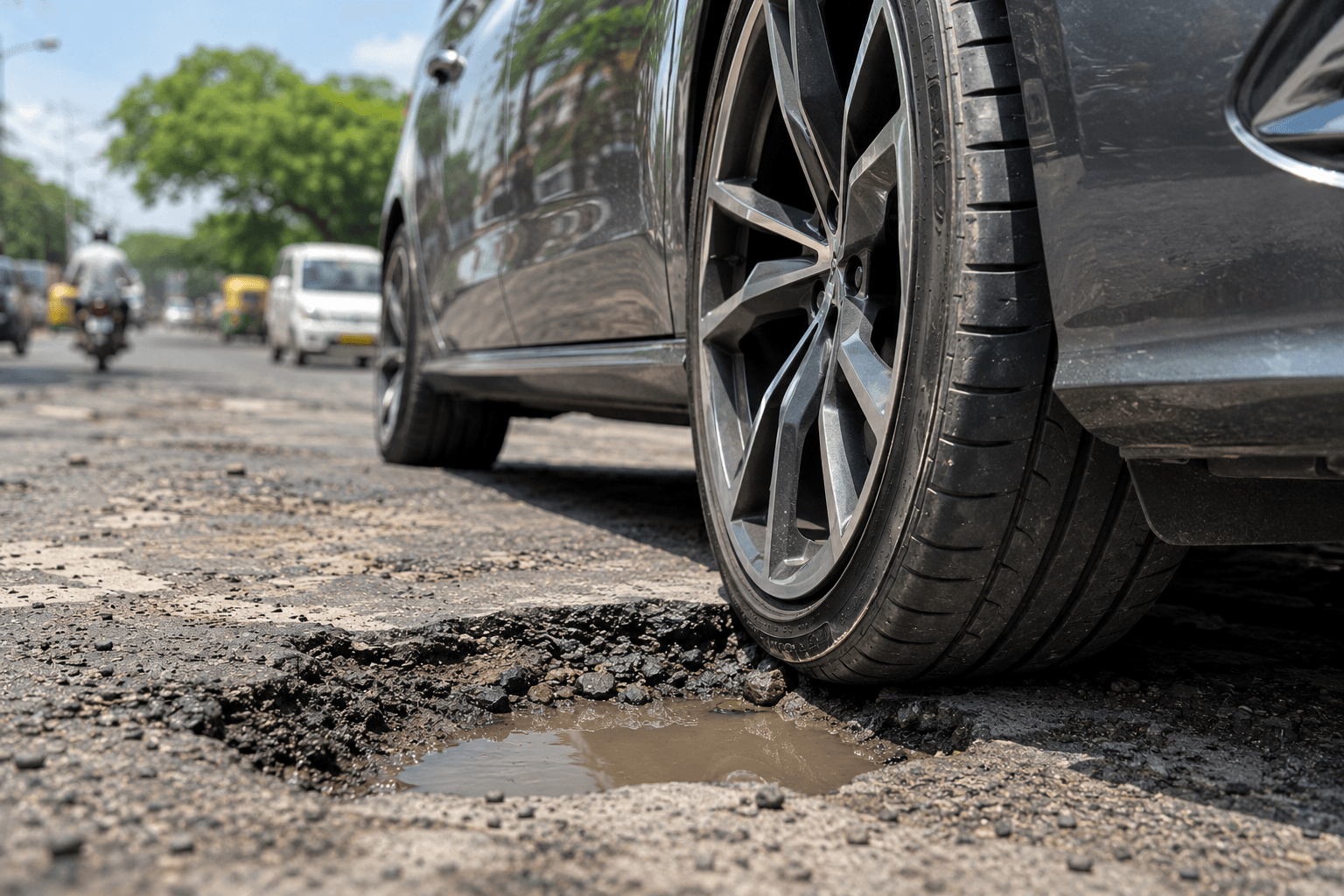
Low tyre pressure can make the problem worse because the tyre has less protection against a hard impact. Low-profile tyres can also be more exposed because their shorter sidewalls provide less room to absorb a sharp hit.
Some common causes include:
- Hitting deep potholes at speed
- Striking kerbs while parking or turning
- Driving over sharp road edges
- Running tyres with very low pressure
- Taking large speed breakers too quickly
- Severe impacts that also damage the wheel
What Happens Inside the Tyre?
A tyre's sidewall contains reinforcing cords that help it retain its shape and carry the vehicle's weight. A strong impact can break or damage some of these cords without causing a large visible cut on the outside.
Once the reinforcement is weakened, the air pressure inside the tyre pushes against the damaged section. This is what causes the sidewall to swell outward and form a bulge.
Can a Sidewall Bulge Be Repaired?
No. A genuine sidewall bulge should not be repaired. The tyre should be replaced. Patches, stitching and vulcanising may cover the damaged area, but they cannot restore the strength of the internal cords. The sidewall also flexes constantly while the car is moving, making a repaired bulge unsafe to rely on.
A sidewall bulge is therefore very different from a normal tread puncture, which can often be repaired when the tyre's structure is still intact.
Why Is Driving With a Bulging Tyre Dangerous?
The damaged section of the sidewall is weaker than the rest of the tyre. As you continue driving, repeated flexing can make the damage worse and increase the chance of a sudden loss of air.

The risk is particularly concerning at higher speeds, where the tyre experiences greater heat and stress. A sudden tyre failure can also make the car difficult to control, especially if the affected tyre is on the front axle. If you spot a clear outward bulge, it is best to stop using that tyre and get it replaced.
Sidewall Bulge vs Normal Sidewall Indentation
Not every uneven-looking section on a tyre means it is damaged. Some tyres have small inward dips or indentations caused by their normal construction.
The important difference is that a bulge pushes outward, while a normal construction mark generally goes inward. If you are unsure about what you are seeing, have the tyre inspected by a professional. Here is how the two usually differ.
| Feature | Sidewall Bulge | Normal Indentation |
| Appearance | Raised section pushing outward | Small section dipping inward |
| Usual cause | Internal structural damage | Normal tyre construction |
| Safety concern | Potentially dangerous | Generally not a concern |
| Repair | Tyre replacement | Usually no action needed |
| What to do | Get it inspected and replaced | Continue normal inspections |
How Can You Check for a Sidewall Bulge?
Walk around the car and inspect all four tyres, looking for any section that appears swollen compared with the surrounding sidewall. Pay particular attention after hitting a pothole or kerb.
Also look for deep cuts, cracks, exposed cords or fresh impact marks. If possible, check the inner side of the tyres too, as damage may not always be visible from outside the car.
If one tyre looks noticeably different from the others, do not ignore it simply because the tread still looks good. A tyre can have plenty of tread remaining and still have structural damage.
What Should You Do If You Find a Bulge?
If you find a clear outward bulge, avoid driving the car unless necessary. The safest option is to fit the spare tyre or arrange roadside assistance and have the damaged tyre replaced.
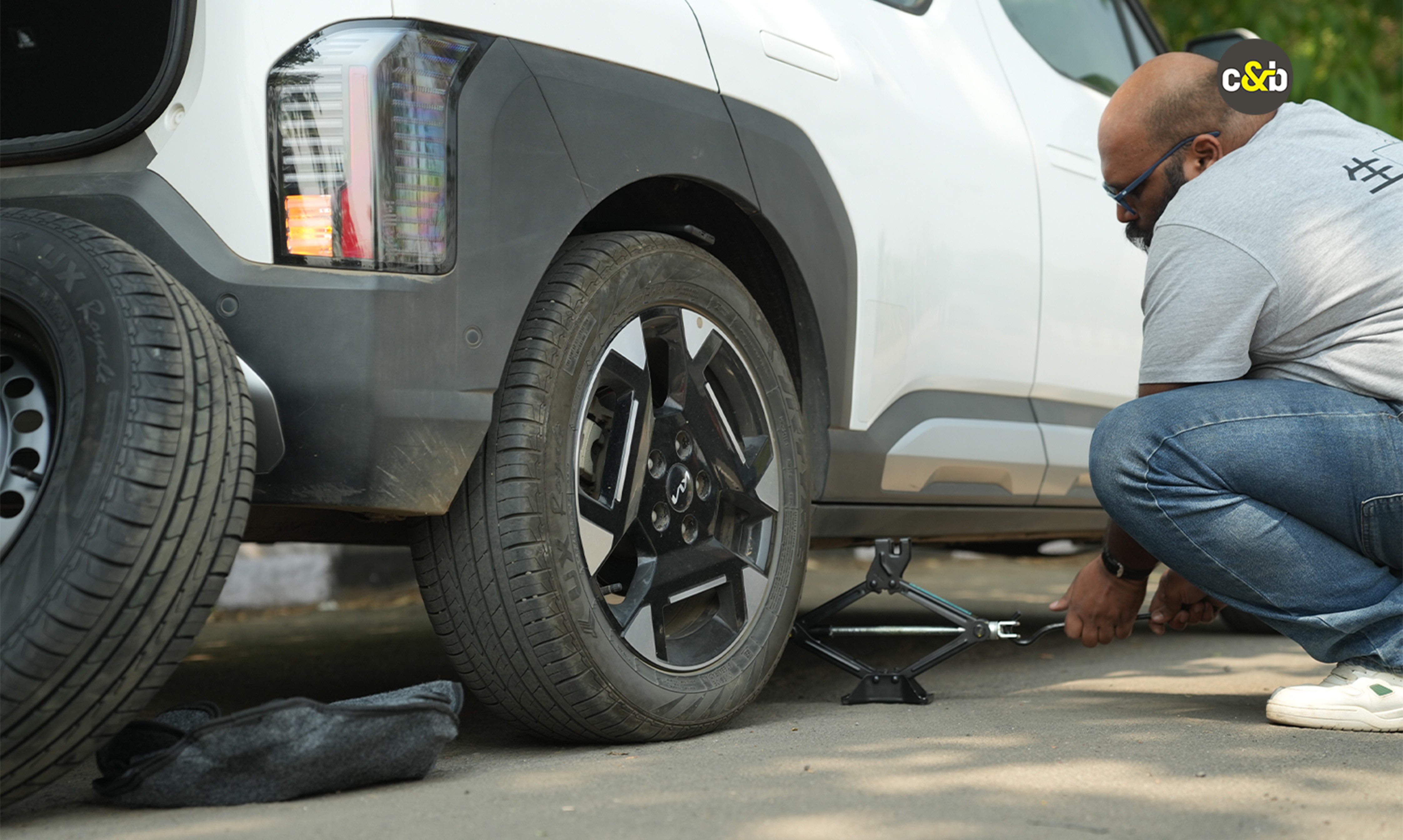
If the car needs to be moved a short distance to a safe place, keep the speed very low and avoid potholes, sudden braking and sharp steering. This should only be a short move to safety or a tyre shop, not a normal journey.
It is also worth getting the wheel inspected because a hard impact can damage or bend the wheel as well.
Can Vulcanising or Patching Make It Safe?
No. A patch can fix certain tread punctures, but it cannot repair the structural damage behind a sidewall bulge.
The same applies to stitching or putting a tube inside the tyre. These methods do not restore the damaged internal cords, so they should not be considered a safe solution for a bulging sidewall.
Does a Sidewall Bulge Always Mean You Hit a Pothole?
Not necessarily. Potholes and kerb impacts are common causes, but a tyre can also suffer sidewall damage from sharp road edges, very low tyre pressure or other heavy impacts.
If a relatively new tyre develops a bulge without any obvious impact, have it inspected by the tyre manufacturer or an authorised dealer. In some cases, the problem may be related to a manufacturing defect rather than road damage.
Can Tyre Warranty Cover a Sidewall Bulge?
It depends on what caused the damage and the terms of the tyre warranty. If an inspection shows that a pothole or kerb caused the bulge, it may be classified as accidental damage rather than a manufacturing defect.
Some tyre brands and specific warranty programmes provide coverage for certain types of accidental damage. Check the warranty terms and keep your purchase invoice before assuming you will have to pay the full replacement cost.
How Can You Prevent Sidewall Bulges?
You cannot completely avoid impact damage, especially when driving on roads with large potholes. However, maintaining the correct tyre pressure and slowing down over damaged roads can reduce the chances of serious damage.
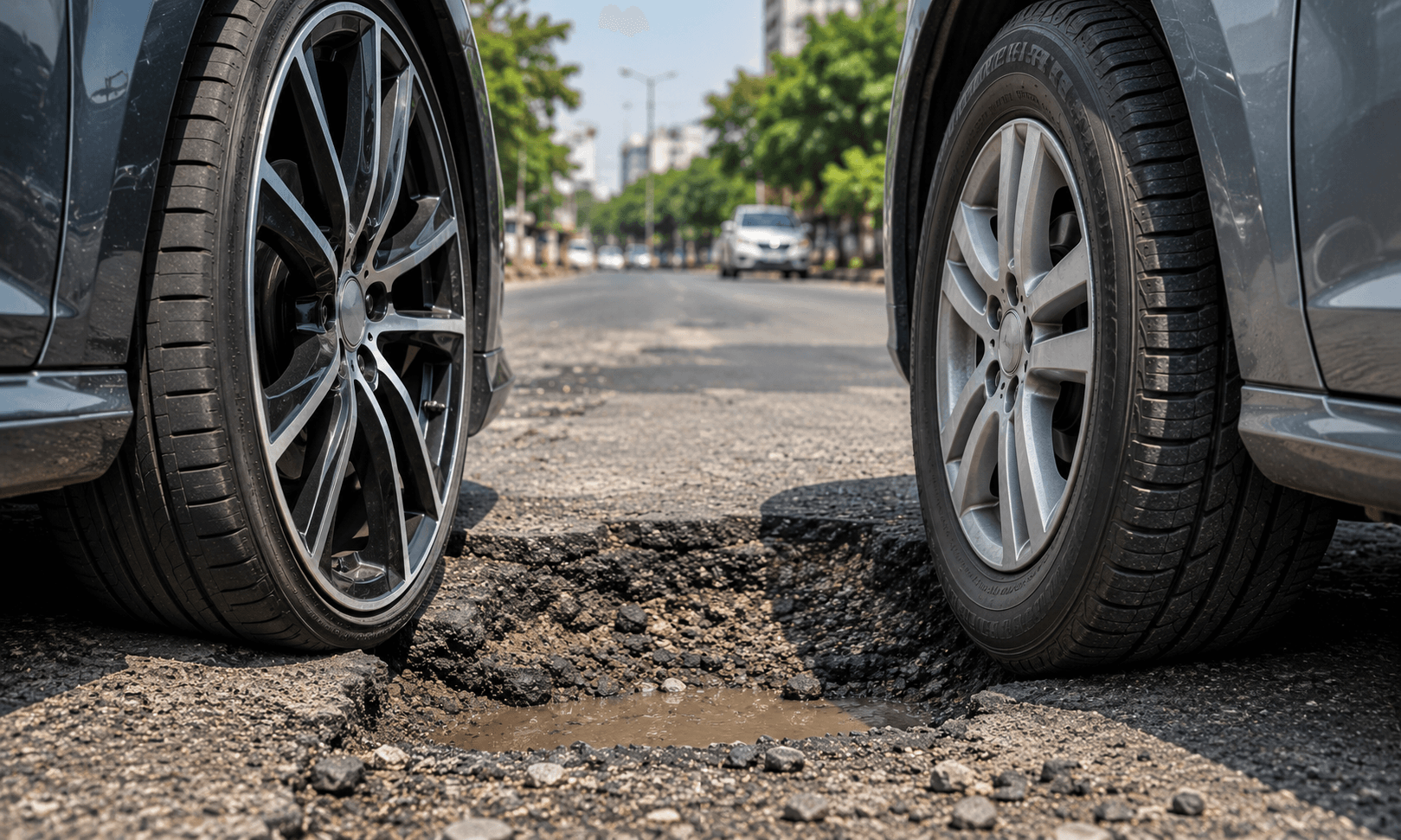
A few simple habits can help:
- Maintain the tyre pressure recommended by the car manufacturer.
- Slow down before potholes and broken road sections.
- Avoid hitting kerbs at speed.
- Check the tyres after a hard impact.
- Inspect the wheel after a major pothole strike.
- Be extra careful with low-profile tyres.
- Check tyre pressure before longer highway trips.
What Should You Remember About Sidewall Bulges?
A visible outward bulge should never be treated as a minor cosmetic issue. It usually points to damage inside the tyre, and repairing the outer rubber will not restore the damaged structure.
If you spot a bulge, replace the tyre and have the wheel checked for impact damage. If you see a small inward indentation instead, it may simply be part of the tyre's construction, but a professional inspection is the safest way to confirm the difference.
Related News


Latest Cars


Upcoming Cars


Latest News


 Sarthak Mahajan | Oct 27, 2026Government Introduces Local FASTag Passes From November 1The rules allow private vehicle owners living within 20 km of a toll plaza to obtain an annual pass for Rs 1,500 or Rs 3,000, subject to specified conditions.1 min read
 Amaan Ahmed | Oct 27, 2026Toyota Innova Hycross Facelift India Launch On November 26: Flex-Fuel Hybrid IncomingThe Innova Hycross is set to become Toyota's first flex-fuel passenger vehicle to go on sale in India, three years after the E85 prototype was showcased.2 mins read
 Janak Sorap | Oct 27, 2026Harley-Davidson Sprint 440 Spotted Undisguised Ahead Of LaunchThe upcoming Harley-Davidson Sprint 440 has been spotted undisguised, revealing its production-ready cruiser design ahead of its expected debut at EICMA 2026.1 min read
 Bilal Firfiray | Oct 27, 2026Hyundai Bayon vs Exter: How Different Are TheyVery Different! The Exter is more of a Nios on stilts. But the all-new Bayon is to Creta what the Victoris is to the Grand Vitara.3 mins read
 Sarthak Mahajan | Oct 27, 2026India Clears Pathway For Introduction Of E100 Flex-Fuel VehiclesThe government has approved the inclusion of E100 fuel in the rules, specifying E100 and E85 for compatible flex-fuel vehicles.2 mins read
 Amaan Ahmed | Oct 27, 2026Land Rover Defender 110 Local Assembly Begins In India, Prices Drop By Up To Rs 34 LakhPreviously sold in India as a completely built-up (CBU) model, the incredibly popular Defender is now being built at Jaguar Land Rover's Pune facility.3 mins read