
Car Tyre Pressure: How To Check & How To Maintain

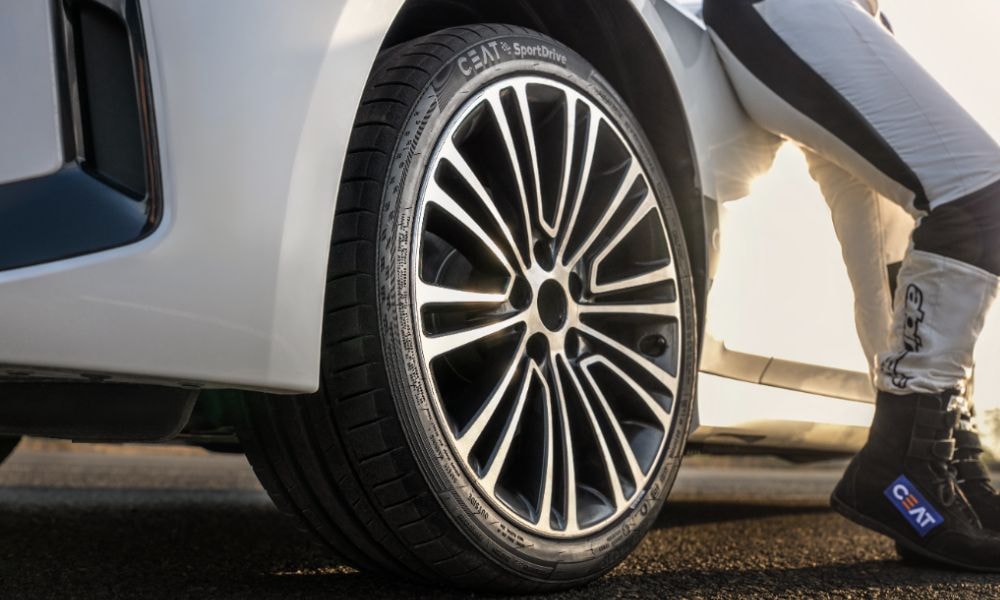
- Tyre pressure plays a big role in grip, comfort, braking and fuel efficiency
- Know how to check, what to check and other important tips
- Why correct tyre pressure matters? We tell you
One of the highly overlooked aspects of car ownership in India is tyre care, especially tyre pressure. It plays a big role in grip, comfort, braking and fuel efficiency, and simply asking the petrol pump attendant to check it on those occasional visits is not enough. The good news is it isn’t complicated. With a couple of simple tools and a bit of regular attention, you can easily keep your tyres in check. Let us guide you through the process.
How to check?
Every car comes with its recommended tyre pressure listed on a metal badge or sticker on the driver-side door pillar. It’s mentioned in both PSI and bar, for front and rear tyres. Also note that the values change for light load and full load, so always check this before filling the air.
When to check?
Always check tyre pressure when the tyres are cold, either in the morning before driving or after the car has been parked for a couple of hours. Air expands when hot, so checking after a drive gives a false reading. Regardless of outside temperature, always inflate tyres to the recommended pressure. Recheck after a long drive to ensure there are no punctures or leaks.
Also Read: Pre-Winter Car Care Tips: How to Keep Your Vehicle Up And Running In Cold Weather
What to use?
Invest in a good quality tyre pressure gauge, preferably a digital one for ease of use, and keep it handy. You can also opt for portable inflators with built-in gauges that run off a USB port or 12V socket. However, if your car runs larger tyres that need higher pressure, a heavy-duty manual pump rated up to 150 PSI is a better bet.
Don't forget the spare wheel
In addition to all four tyres, also check the spare wheel. In fact, it’s always recommended fill the spare wheel with slightly higher PSI, usually up to 60 PSI. That’s because spares lose air gradually and need to be ready for an emergency.
Don’t rely on TPMS
Nowadays, almost all cars come with a tyre pressure monitoring system. While they are helpful, you must not rely on them fully. They only get triggered when there is over 20 per cent air pressure loss. Manually check the tyre pressure every two weeks.
Nitrogen over normal air?
Both have their benefits and flaws. Nitrogen is usually more stable, there are fewer chances of blowouts, and improved tyre life due to its dry nature. But, unlike normal air, it’s not readily available everywhere and also, not free. Regular air is perfectly okay if the pressure is maintained.
Also Read: Nitrogen In Tyres: The Real Pros and Cons Explained
Why correct tyre pressure matters?
- Low pressure = poor mileage, heavy steering, faster tyre wear, more heat
- High pressure = harsh ride, less grip, uneven centre wear
- Correct pressure = safer braking, better handling, longer tyre life
Related News


Latest Cars


Upcoming Cars


Latest News


 Sarthak Mahajan | Sep 10, 2026Hyundai Launches Lounge Editions For Alcazar, Creta And Creta ElectricHyundai Motor India has launched the Lounge Edition across the Creta, Alcazar and Creta Electric. Prices start at Rs 19.22 lakh for the Creta Lounge and go up to Rs 25.22 lakh for the Creta Electric. The Alcazar Lounge sits in between, priced at Rs 21.81 lakh.1 min read
 Sarthak Mahajan | Sep 10, 2026Jawa 42 All Stars: In PicturesThe Jawa 42 All Stars will eventually replace the standard Jawa 42 and gets several key changes.1 min read
 Sarthak Mahajan | Sep 9, 2026BGauss C12 MaxR Launched At Rs 1.46 LakhBGauss has launched the C12 MaxR electric scooter with a 3.8 kWh LFP battery that offers a certified range of 178 km.2 mins read
 car&bike Team | Sep 9, 20262026 Jawa All Stars 42: What’s New?The Jawa All Stars 42 is the new and updated Jawa 42 model, and comes with a fair share of updates, including new alloy wheels with fatter tyres, new bodywork and more.3 mins read
 car&bike Team | Sep 9, 2026MV Agusta Production Halted in Varese: ReportMV Agusta is in financial turmoil with latest reports now indicating that motorcycle production in its manufacturing facility in Varese, Italy, may have been halted.2 mins read
 Jaiveer Mehra | Sep 9, 20262026 Jawa 42 All Stars Edition Launched At Rs 1.85 LakhLast updated in 2024, the standard 42 now gets updates in line with the 42 FJ, including fatter tyres and dual upswept exhausts.2 mins read
 Bilal Firfiray | Sep 10, 2026Mahindra XEV 9S Review: 3 Reasons To Buy It, And 3 Reasons To AvoidEveryone keeps telling me that the Mahindra XEV 9S is not the electric XUV 7XO. I disagree.1 min read
 Shams Raza Naqvi | Sep 8, 20262026 Maruti Suzuki Baleno Review: Heart Matters, Or Does It?The updated Maruti Suzuki Baleno is here and it gets some significant changes some of which have got the opinion divided. We drive it.7 mins read
 Abhishek Nigam | Sep 7, 2026Simple Wave First Ride Review: Space, Pace And More SpaceThe Simple Wave is here to rewrite the rules of the family EV scooter segment. We scoot around to tell you whether it will create waves or not!7 mins read
 Janak Sorap | Sep 4, 20262026 Ducati Monster V2 Review: Raising The BarWith the fifth iteration, the Ducati Monster gets a lighter chassis, a new 890cc V2 engine, sophisticated electronics and tweaks to the suspension, all to make the 2026 version so compelling.7 mins read
 Shams Raza Naqvi | Sep 4, 20262026 Lexus ES 350h And Lexus ES 500e Review: Luxury Meets CapabilityWe got behind the wheels of the new Lexus ES twins which were launched in India earlier this year. Which one suits you more? Lets find out1 min read