
Tata Punch EV Facelift Review: More Range, More Sense, Less Money

- New 40 kWh battery should deliver 300-320 km real-world range
- 60kW DC fast charging with improved thermal management
- Introductory prices lower than before, plus Battery-as-a-Service option
The Tata Punch EV is here to prove a point. Because this facelift isn’t about cosmetics, but more about improving a product through thoughtful engineering. The kind that doesn’t become apparent instantly but quietly improves the ownership experience where it matters – be it range, charging, efficiency, or everyday usability. And in typical Tata fashion, it has been done in a way that makes the car more appealing on paper and more convincing on the road. But is it now more comprehensive than before? Let’s find out.
Changes: Design and Cabin
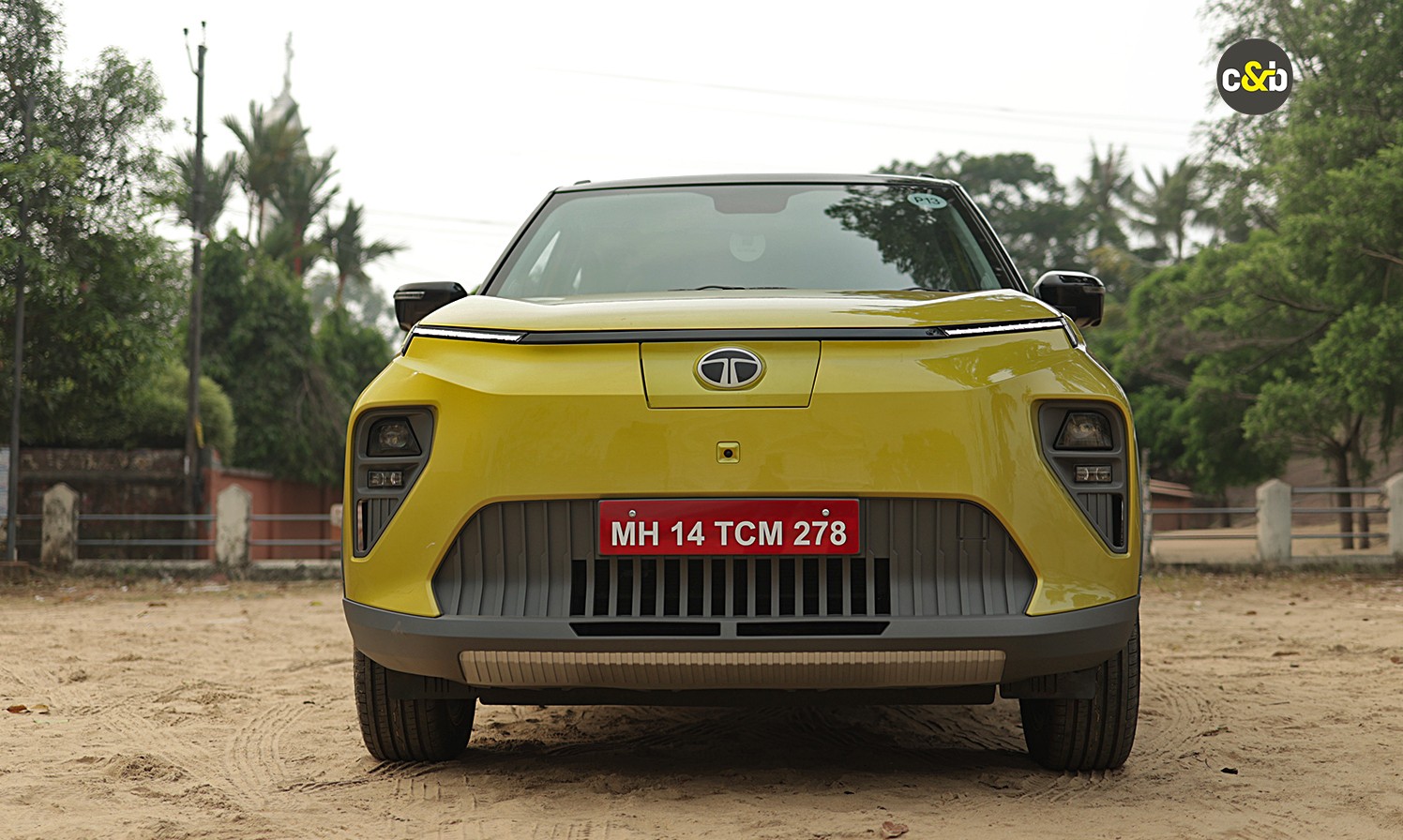
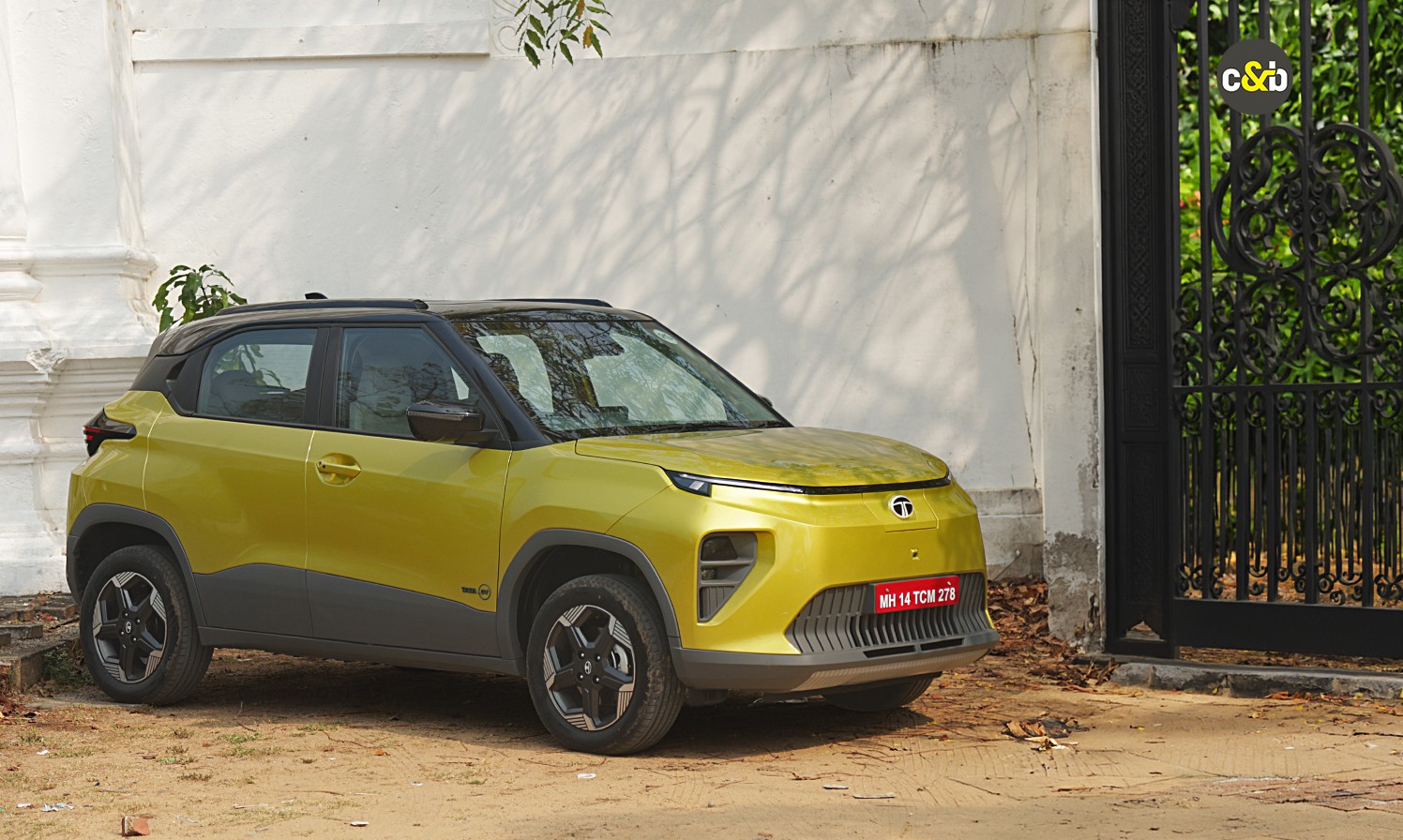
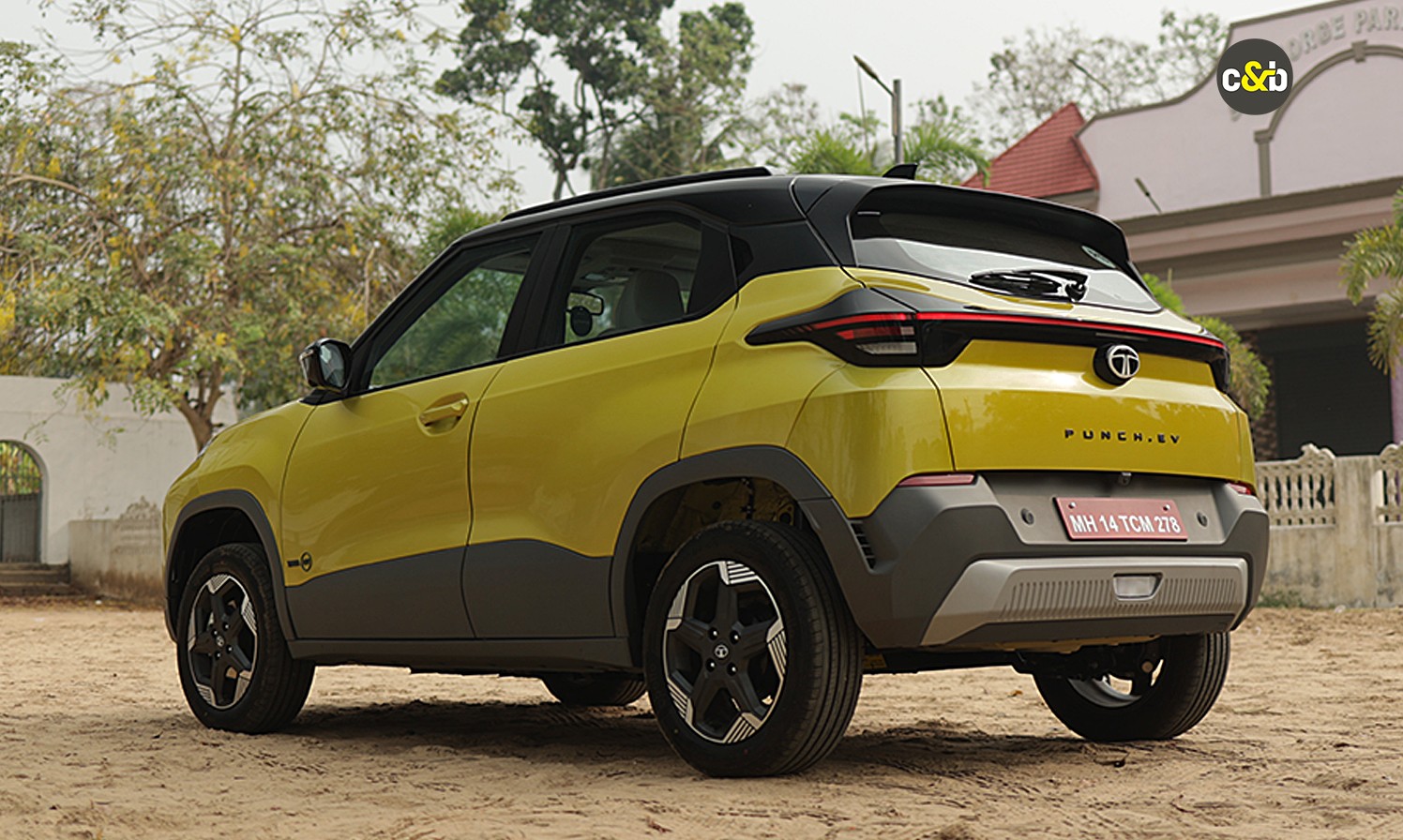
Visually, the changes are few. The new front bumper is cleaner and more muscular, jutting out slightly to give the car a stronger stance. The tail lamps have been redesigned with cues from the ICE sibling, and the surround black cladding has now turned grey — a clever move considering how black plastic inevitably fades to grey over time anyway. There are new colour options as well, but fundamentally, the Punch EV retains its mini-SUV character.
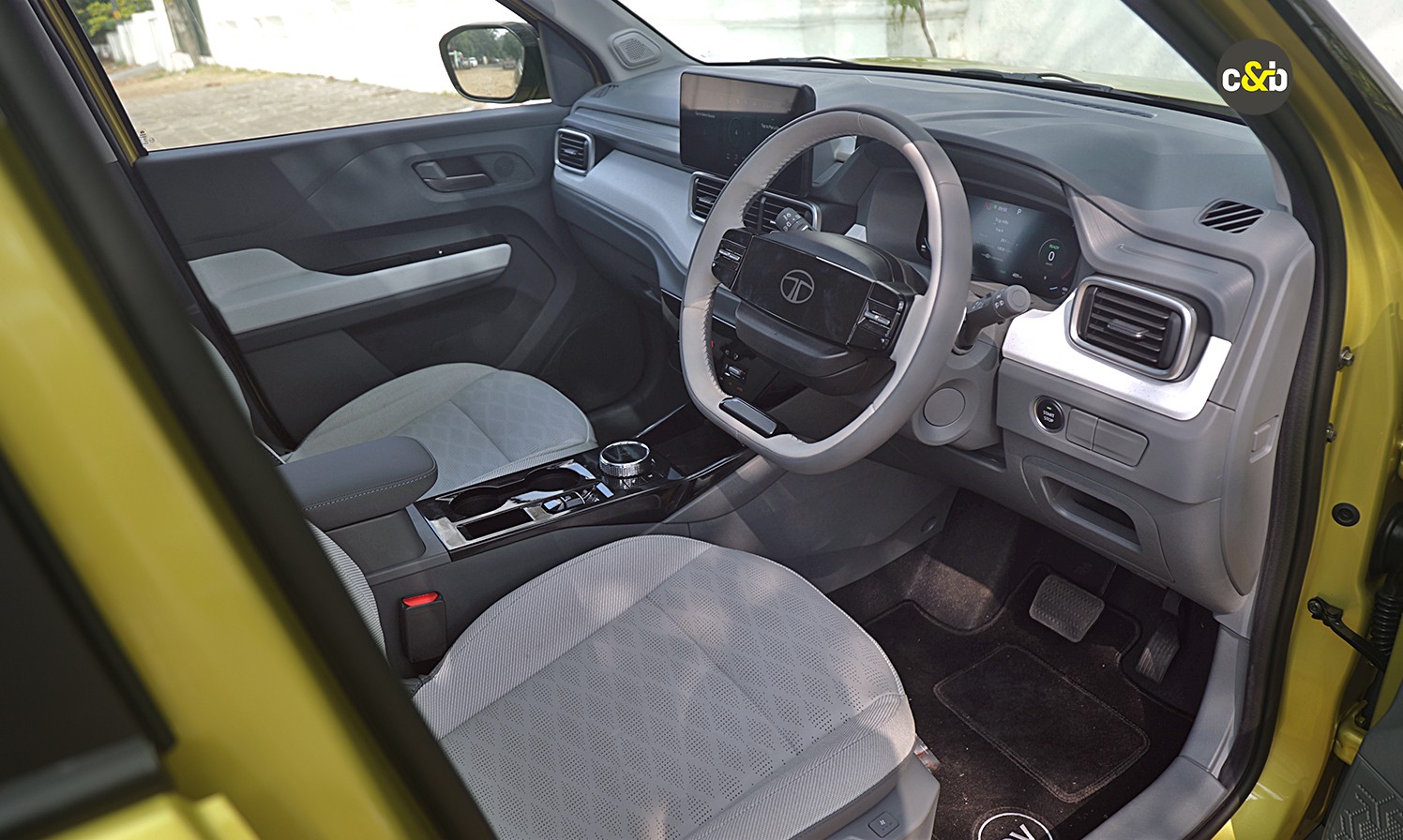
Inside, the biggest visible change is the new “Adventure Grey” interior theme replacing the earlier all-black cabin. The lighter shade makes the cabin feel airier and more contemporary. Everything else remains reassuringly familiar. The steering wheel, the 10.25-inch infotainment screen, the digital driver’s display, the rotary drive selector — all carried forward. Ergonomics hasn’t changed, although it could have deserved a revisit by the engineering team. Even the seats remain unchanged, where I did expect some added bolsters as seen on the ICE derivative.
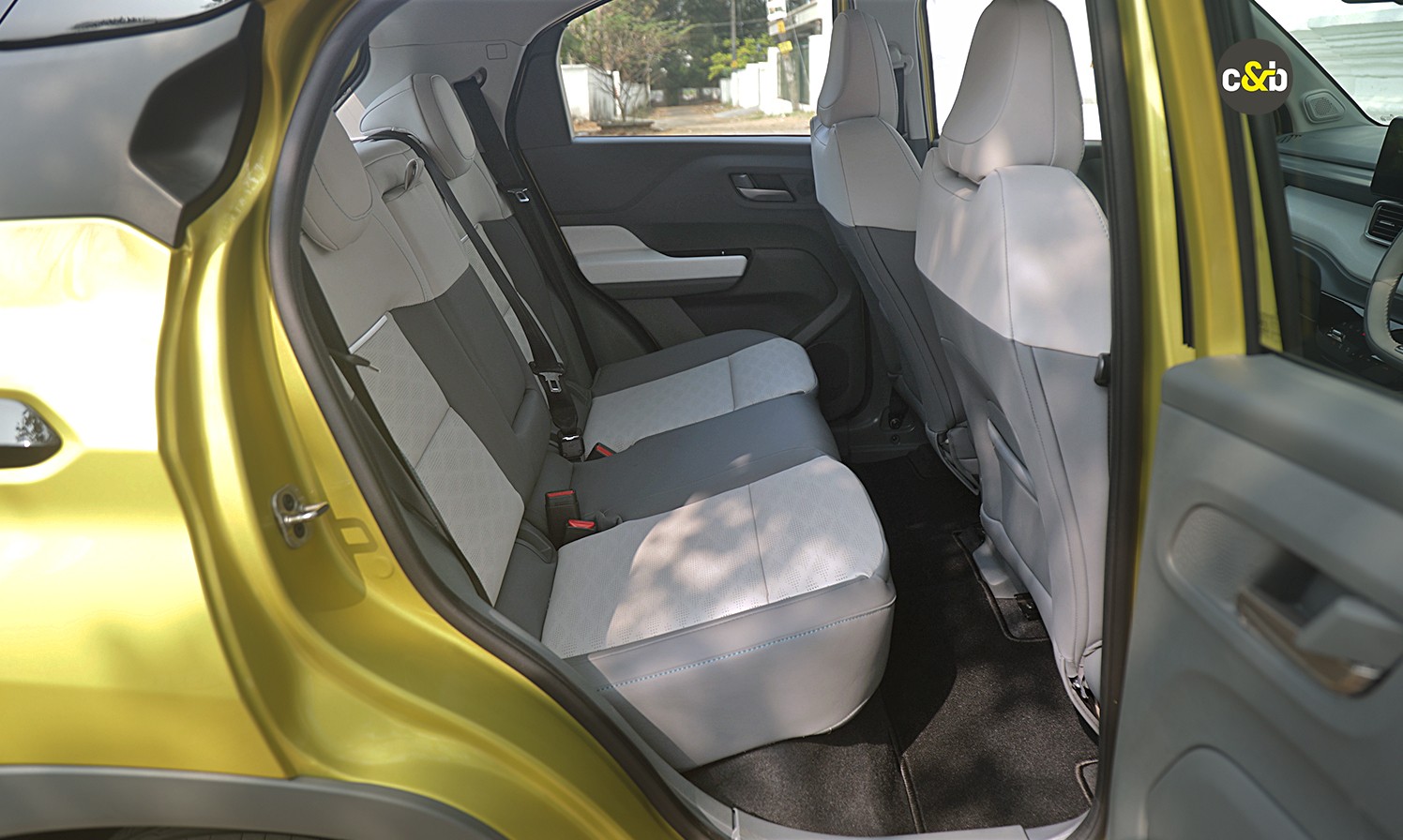
There are minor upgrades. The new metallic-feel toggle switches for the window controls feel more premium, though their protruding design may take a moment to get used to. The door lock switch has been split into two buttons instead of a single unit. What hasn’t changed is equally important. Despite the larger battery pack, cabin space hasn’t shrunk. The floor height hasn’t risen, and that’s a good thing.
New Battery and Engineering Changes
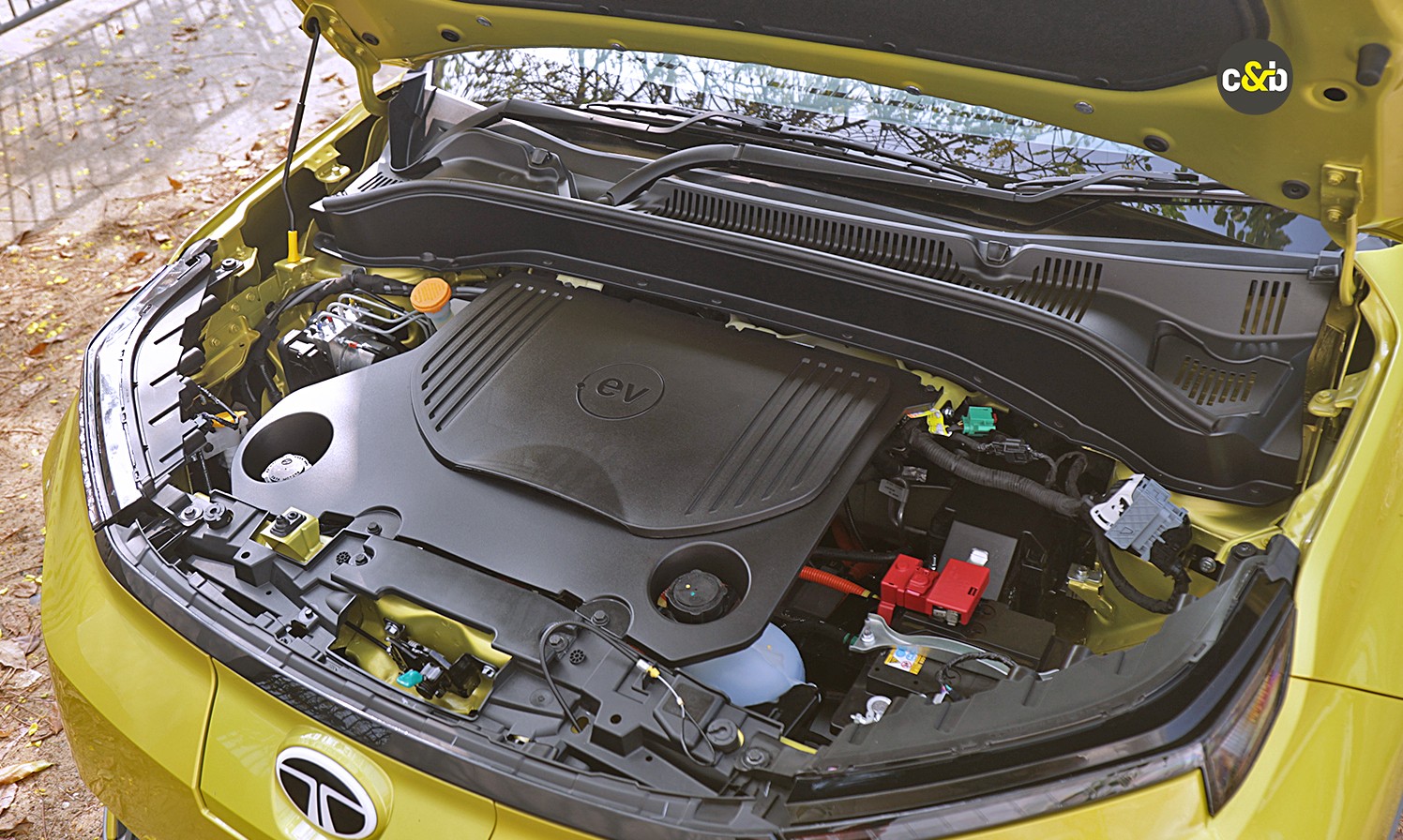
Under the skin, the 25kWh and 35kWh battery packs are gone and in come the new 30kWh and 40kWh units. I was a bit ambitious and expected the bigger 45kWh from the Nexon EV to make its way here. Tata said it's not needed, but there were a few challenges, nonetheless.
Simply stuffing a bigger battery into a smaller car is not straightforward. There are engineering challenges such as weight, packaging, thermal management and rolling resistance. That said, Tata has addressed the size factor with a denser prismatic battery design (instead of cylindrical) and a new battery management strategy with claims that there’s a 10 per cent denser packaging, and it operates within a wider temperature band, along with an overall improvement in energy efficiency and stability.
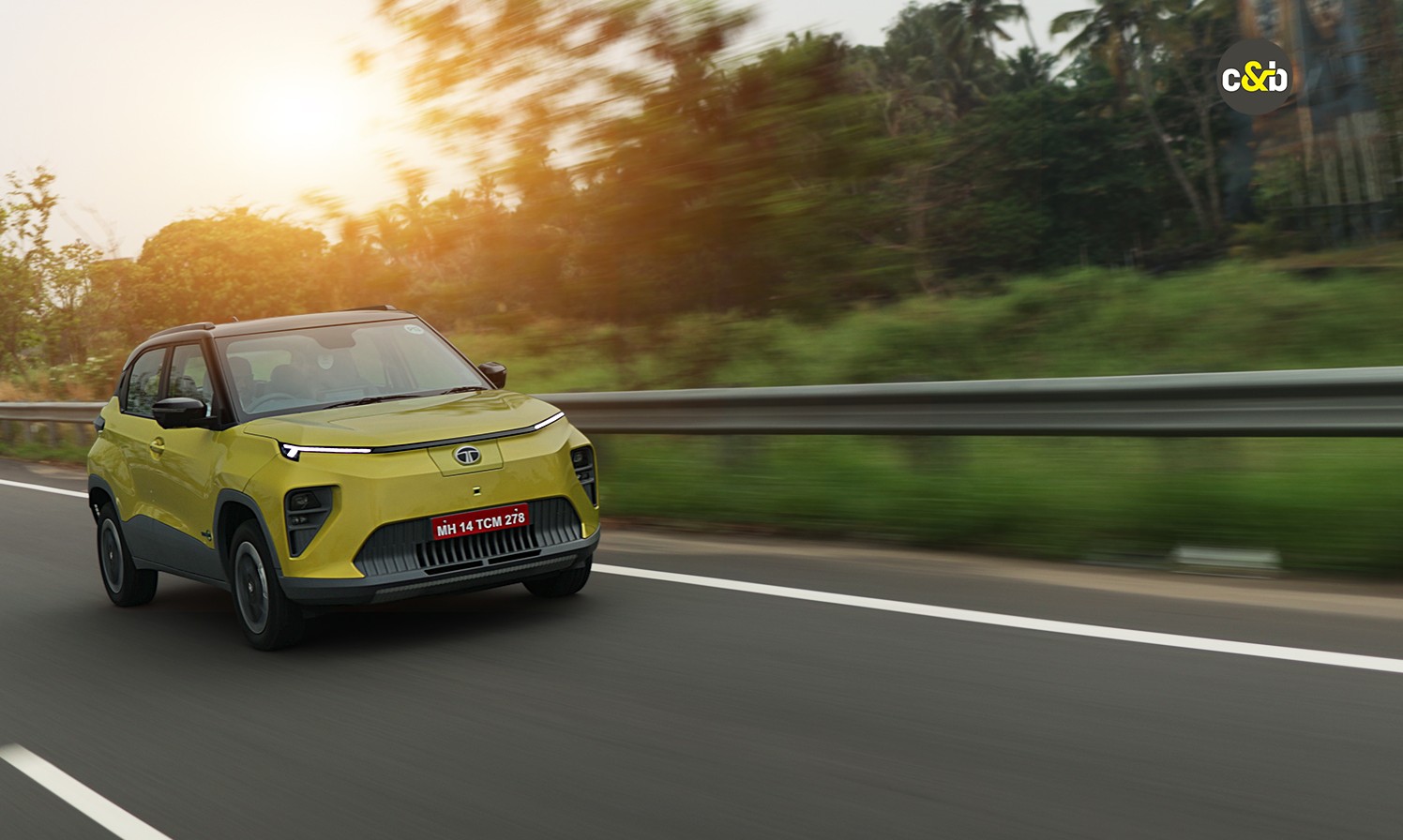
More importantly, thermal management has been upgraded. In the outgoing model, there were instances where the air conditioning performance would fluctuate because the coolant had to prioritise battery cooling. The facelift introduces an electronically controlled thermal expansion valve that intelligently manages coolant distribution between the battery and cabin. Tata identified and rectified this with the valve so that the battery can cool itself without turning your cabin into a sauna. That’s the kind of improvement that shows the learning curve of an evolving EV manufacturer.
New E-Drive System
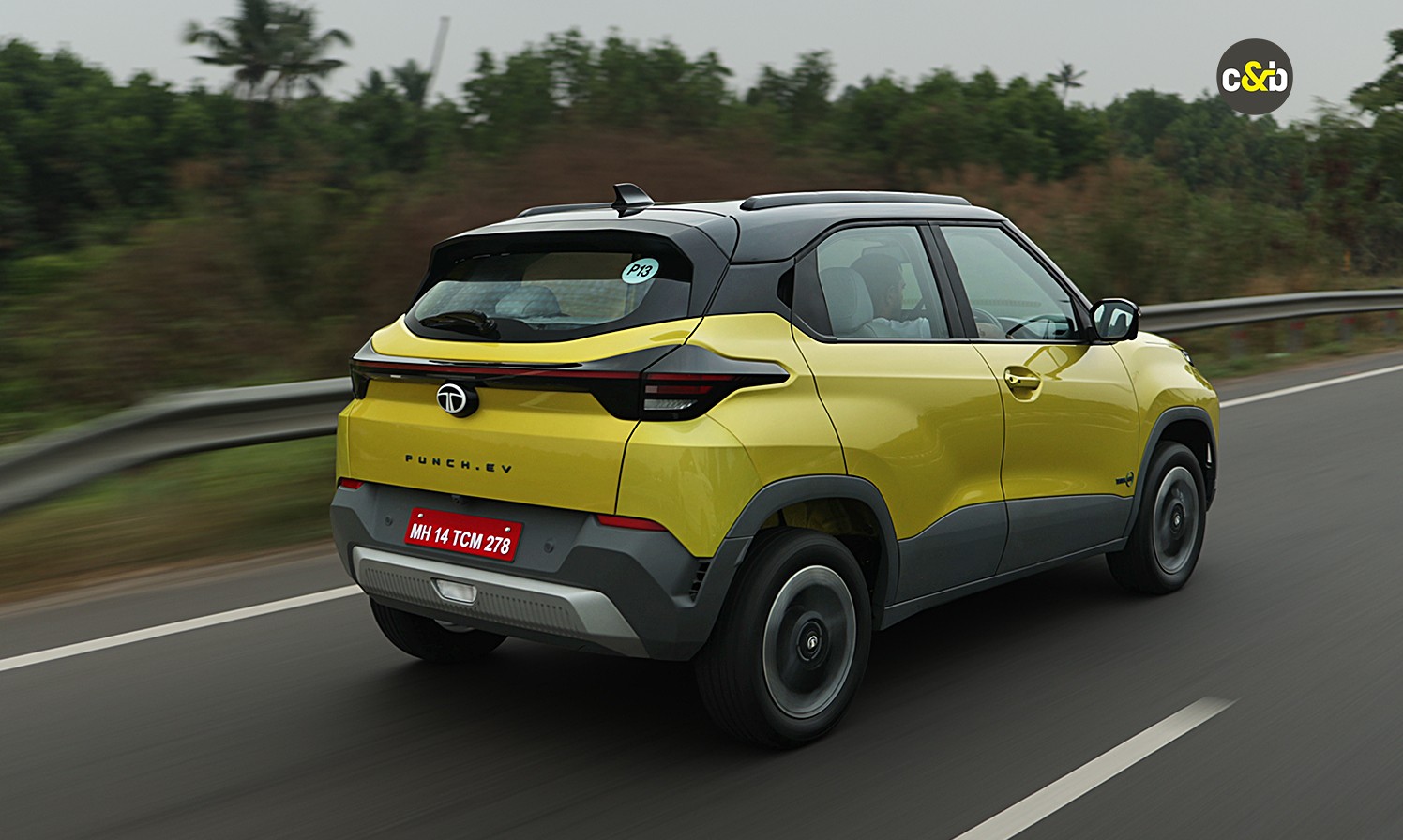
Also, this is the first Tata EV to debut a 6-in-1 integrated eDrive system. It combines six key powertrain components into a single compact unit. This has been done in international-spec cars, in fact, BYD has an 8-in-1 eDrive hardware. But here, the new eDrive brings in benefits like 50 per cent smaller packaging, 28 per cent reduction in weight, 6 per cent more efficiency, and reduced use pf semiconductor and wiring complexity. More importantly, despite the larger battery, kerb weight remains the same at around 1,360 kg owing to this new eDrive.
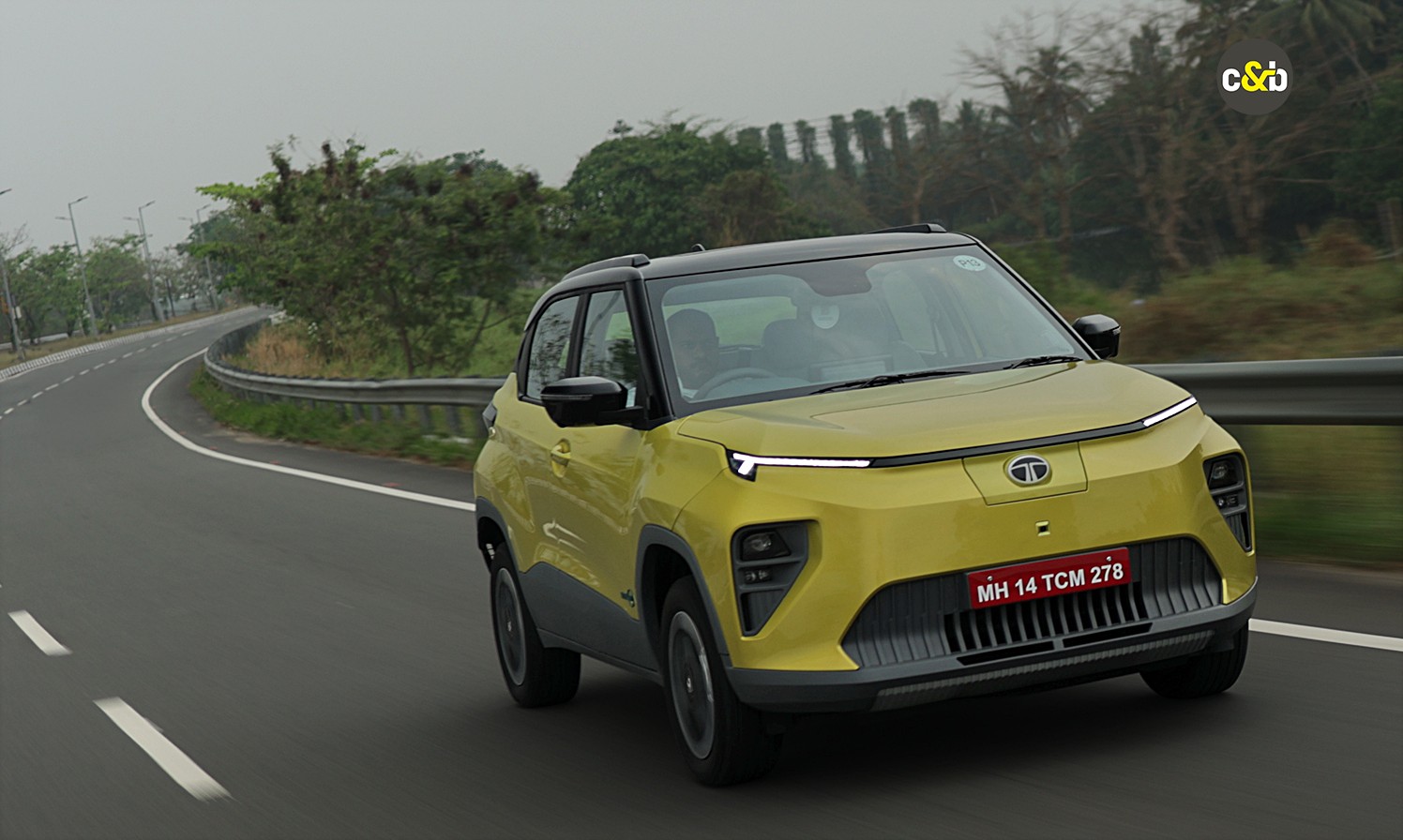
When it comes to driving dynamics, the first noticeable change is throttle calibration. It feels slightly tighter than before. There’s a sense of controlled response, almost as if mild regeneration is always present in the background. But the new Punch EV remains smooth, linear and genuinely quick for its size. Tata claims 0–100 kmph in under 9 seconds, and subjectively, it feels brisk. That said, city driving is effortless, and instant torque makes traffic gaps easy to exploit. Even highway cruising is stable and relaxed, as triple-digit speeds require surprisingly little throttle input.
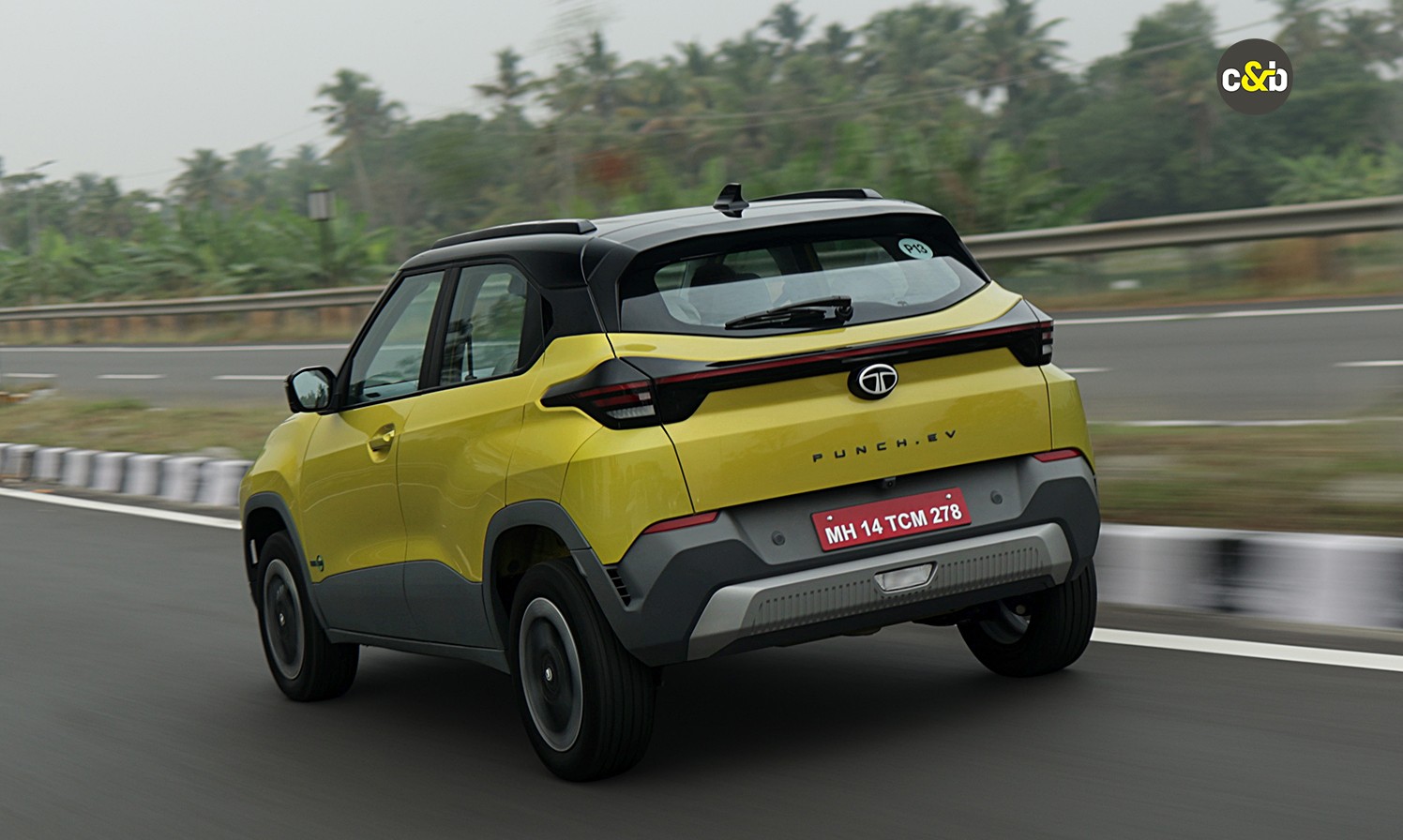
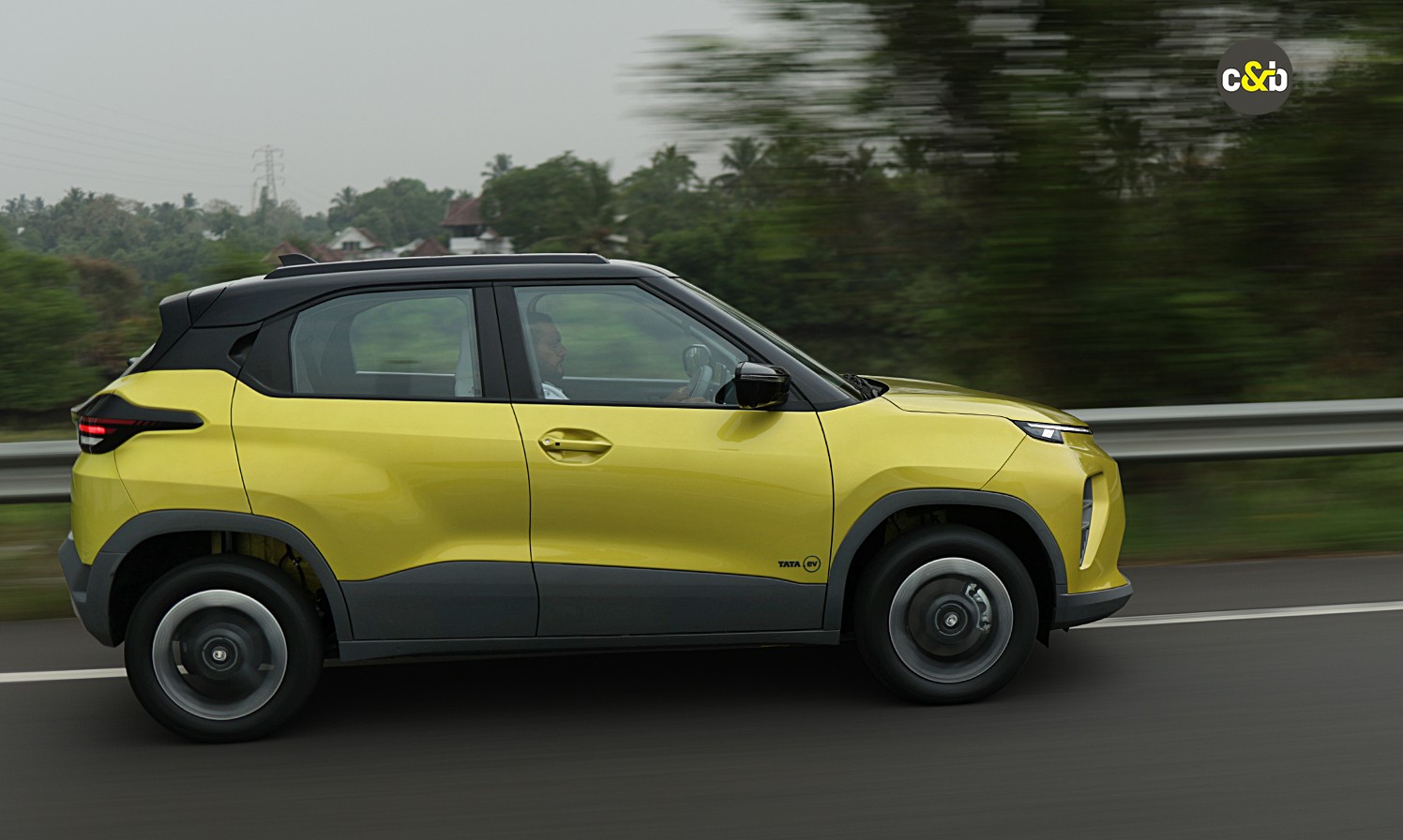
The steering remains light with decent artificial heft. It’s predictable, easy to live with and comfortable in daily conditions. It isn’t particularly communicative, but in this segment, that’s forgivable. But if there’s one area where the Punch EV continues to excel, it’s ride quality. Like before, sharp edges, broken patches, speed breakers, everything and anything, are absorbed with great composure. There’s excellent damping control, minimal vertical bounce and good stability at highway speeds.
It feels marginally tauter than before, possibly due to recalibration and the fresh setup, but comfort remains a standout trait. In fact, the suspension alone is reason enough to consider this car.
Real World Range:
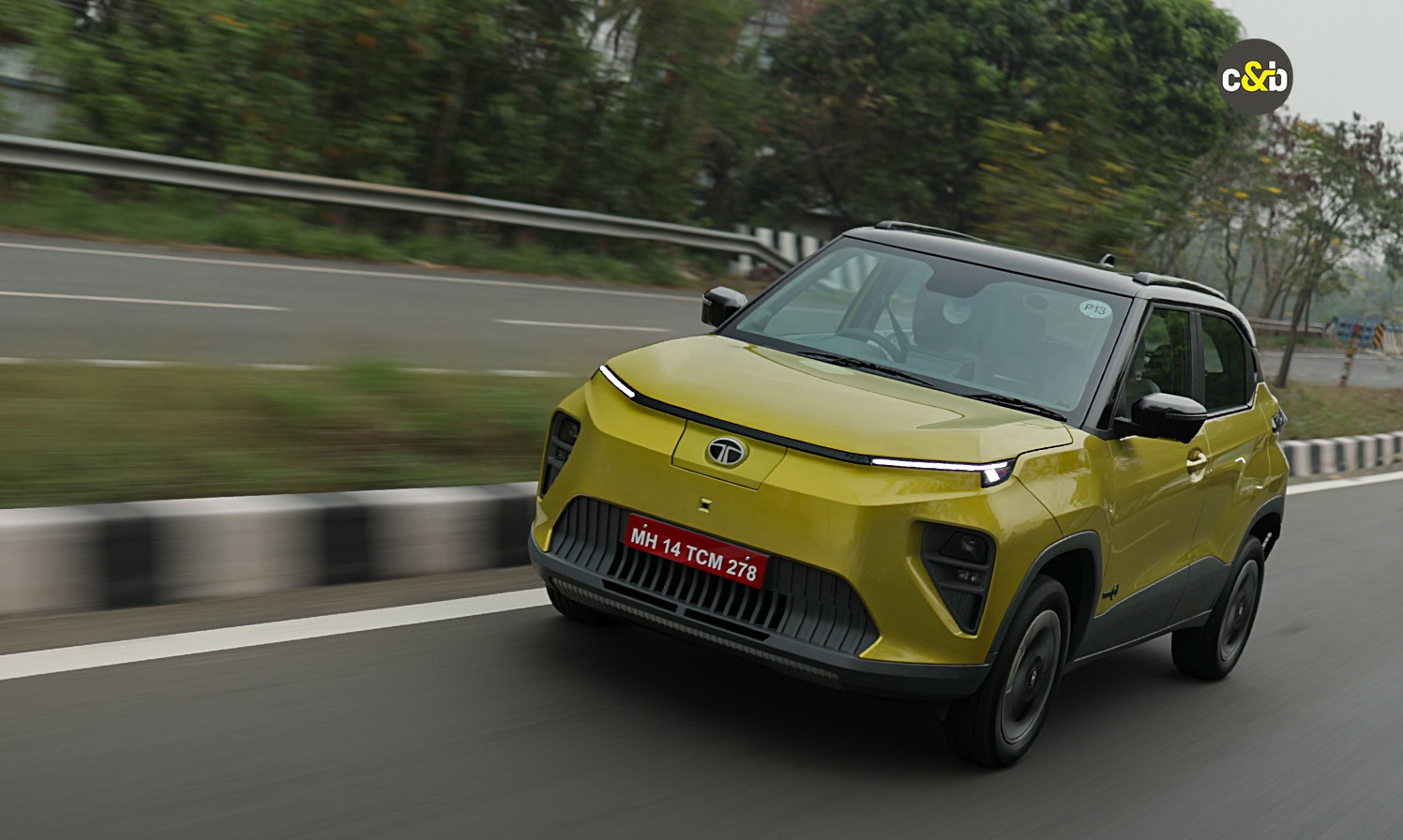
Now to the part buyers truly care about. In mixed driving, city traffic, highway stretches, brief idling during shoots, AC set at 23°C, here’s a breakdown of how the range depleted with each kilometre. Starting at 100 per cent and the trip set to zero, after 60 km, the battery dropped to 79 per cent with 260 km indicated range remaining. That equates to roughly 320 km of real-world usable range. After 105 km of driving, the battery stood at 62 per cent with 210 km remaining. Energy consumption hovered around 130 Wh/km. Depending on driving style, a realistic 320–330 km range is achievable. That’s a respectable improvement over the older model’s 250–270 km real-world figure.
Conclusion:
Despite the bigger battery, improved efficiency, faster charging and engineering upgrades, the introductory prices of the new Tata Punch EV are nearly Rs 2 lakh lower than the outgoing model. Tata has also added the Battery-as-a-Service option, and the Punch EV becomes financially accessible to a wider audience. In a market where any update usually comes with a price hike, this is something new.
At the end of the day, the Tata Punch EV facelift doesn’t attempt to reinvent the wheel. It simply makes the wheel better engineered, better calibrated and probably better value. The larger 40 kWh battery brings genuinely usable 300-plus kilometre real-world range, the faster 60 kW DC charging removes the anxiety (especially for highway runs), and the improved thermal management quietly fixes one of the more annoying quirks of the older car. And none of this has come at the cost of cabin space or ride comfort, which remains one of the Punch EV’s strongest attributes. Sure, the throttle might feel slightly more measured, the steering still prioritises ease over emotion, but the overall driving experience is cohesive, mature and urban-friendly.
And then there’s the pricing, lower than before despite meaningful mechanical upgrades. Which makes this update not just logical, but strategic. For buyers stepping into the EV space for the first time, especially those who want an SUV stance, strong ride quality and practical range without stretching into larger and more expensive territory, the Punch EV facelift emerges as one of the most sensible and well-rounded choices out there.
Pictures By Pawan Dagia and Arvind Salian
Related News


Learn more about Tata Punch EV


Popular Tata Models


Latest Cars


Upcoming Cars


Latest News


 Amaan Ahmed | Oct 12, 2026Hyundai Bayon SUV Revealed Ahead Of October 26 LaunchAt over 4.2 metres in length, the Bayon slots perfectly in between the Venue and Creta in Hyundai's lineup; interior mirrors that of new i20 hatchback unveiled overseas.1 min read
 Jaiveer Mehra | Oct 12, 2026BYD Sealion 7 Festive Edition Launched At Rs 50.60 LakhThe special edition Sealion 7 is limited to 150 units and gets a different interior colour scheme.1 min read
 Janak Sorap | Oct 12, 20262026 TVS Radeon Launched At Rs. 67,100; Gets LED Lighting And New ColoursTVS Motor Company has updated the Radeon commuter motorcycle for 2026 with LED lighting, revised graphics, and new colour options, while retaining it mechanically.1 min read
 Sarthak Mahajan | Oct 12, 2026Tata And Stellantis Team Up To Develop New Cars And Vehicle TechnologiesThe agreement aims to leverage Tata Motors’ vehicle architectures and technology capabilities to develop vehicles for more than 50 global markets.1 min read
 Janak Sorap | Oct 12, 2026Kawasaki Z300 Revealed In India; Bookings To Open On October 19Kawasaki has showcased the new Z300 in India, bringing a naked streetfighter based on the Ninja 300 platform to the entry-level end of its Z range.2 mins read
 Bilal Firfiray | Oct 12, 2026Renault E-Space Concept Showcases ‘How Cars Are For Living’“Voitures à vivre” is simple sentence in French which translates to ‘cars for living’ but showcases how simple improvements can make a car more useful. And the new E-Space Concept is a modern take on it.1 min read