
Auto Industry Disappointed With Additional Cess On Larger Cars, SUVs

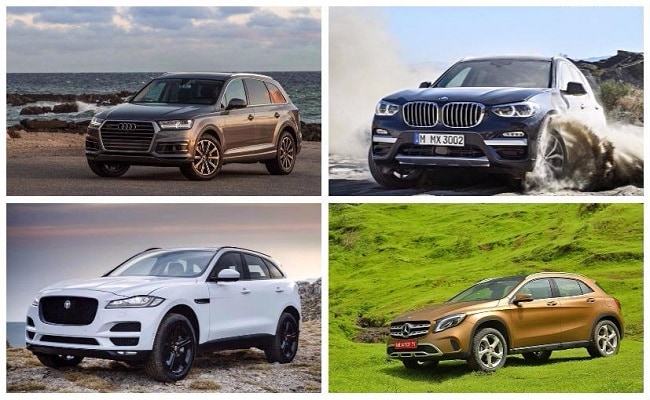
- Auto makers disappointed with Union Cabinet decision
- The additional 10 per cent cess will see car prices shoot upward
- Auto makers say additional taxation will be passed on to consumers
The Indian auto industry is disappointed with the Union Cabinet's decision for an ordinance to increase the Goods and Service Tax (GST) cess on mid-range, large cars and SUVs from the current 15 per cent right now to 25 per cent. The government ordinance will need to be cleared by the President, but looks like the 25 per cent tax will be implemented soon enough. After the new GST regime was announced effective July 1, prices of most cars and SUVs were cut, but now with the additional cess being proposed, most cars are expected to become more expensive.
Also Read: Cabinet Approves Hike In GST Cess On Luxury Cars, SUVs
The actual tax rates are yet to be defined across different models of cars, and the specifics are likely to be defined at the GST Council's next meeting on September 9. While most auto makers have protested the move, calling the change in policy so soon after the GST roll out damaging, some have questioned the decision, asking what defines a "luxury" car.
"When you start talking about another cess - another 10 per cent - 43 to 53 per cent - it will hurt the industry. And I don't know what is the definition of luxury. We are a mass player. And we have invested a huge amount to develop and introduce (new models). 10 per cent cess increase is a very huge amount. On a Rs. 10 lakh price tag that's an increase of Rs. 1 lakh," said Y K Koo, MD & CEO, Hyundai Motor India.
Roland Folger, Managing Director & CEO, Mercedes-Benz India, said, "The Automotive segment has not even settled in, to see the effect of the marginal relief in terms of rationalization of taxes in the GST regime. Prior to this, the proposed increase in cess has surprised the entire luxury car industry. Attracting one of the highest rate under GST, even without this proposed increase, the luxury industry is already highly taxed, which constrains its growth. Now, with this proposed measure, the luxury car industry is going to decelerate. If at all it was required, a review could have been taken after six months when the outcome of GST regime would have been clearer. GST was implemented effective 1st July so that the market do not experience any untoward reaction during the festive season in India. For the same reason, even if any revision is required, the same could have been considered at the appropriate time and not immediately after introduction of the new tax regime."
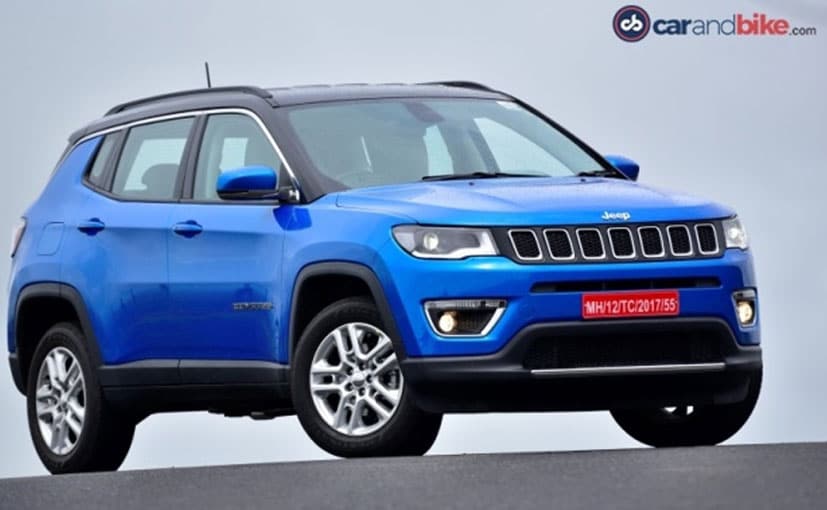
Prices of SUVs like the Jeep Compass will be affected
Also Read: Ten Per Cent Cess Hike On Larger Cars & SUVs: 10 Things To Know
Talking about how the Government's decision was too hasty, Folger added, "In any case, the hurry to implement the hike in Cess is frankly quite surprising to us. What we understand from the press reports is the fact that, the collection of tax has been above expected and it would have been ideal to give the industry more time to analyze the outcome of GST on our business. We reiterate, this decision, contradictory to the requirement of creating a sustained demand for the luxury car in this market, would rather affect the growth momentum adversely. We sincerely hope the government realizes that luxury industry in India has the potential to create attractive jobs at various levels, enhance manufacturing prowess and contribute to the nation's GDP, in addition to ushering in world-class products that are unrivalled in terms of latest automotive technologies, safety features and also are environment friendly. We surely need a long-term and stable outlook for the segment to grow, like in other developed economies."
Commenting on the decision Rahil Ansari, Head Audi India, said, "The taxes on this industry are already very high and this increase in cess rate will be detrimental to the luxury car industry as we will be forced to hike our prices to levels higher than pre-GST period. This is bound to adversely impact sales by possibly a double-digit reduction and will consequently reduce revenues for the company, dealers and perhaps also tax revenues for the Government. While the overall impact will still have to be evaluated in some time, we will be forced to redraw our plans for the Indian market based on future projections in this scenario."
He further added, "The luxury car industry in India, while small in volumes, still contributes over 10 percent in value. While the segment definitely needs more positive initiatives from the Government to be able to deliver a bigger contribution to the Indian economy, this scenario is clearly a setback. We request the GST Council to carefully evaluate the negative impact on this and, if a decision is taken on a 10% cess increase, postpone the implementation for another 6-12 months to evaluate the real impact of the GST on the automobile sector, in particular the luxury segment. This will surely prove that the overall effect with a lower cess percentage of 15% is generating higher tax revenues than expected."
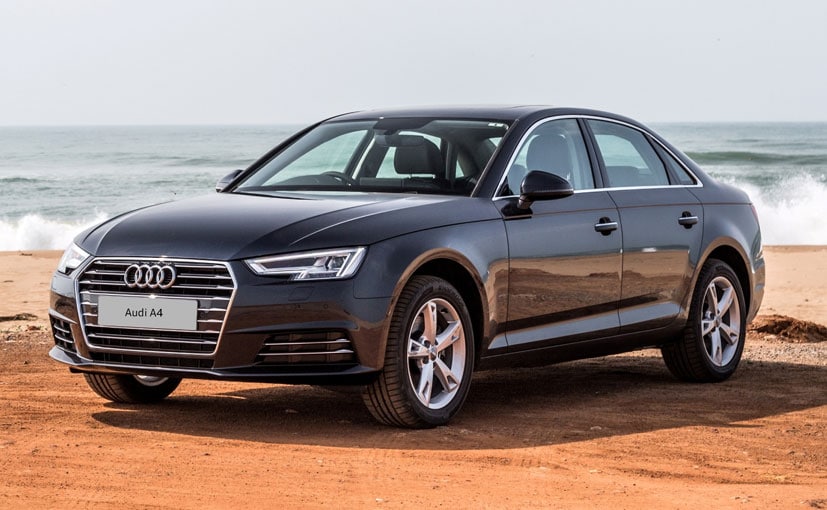
Prices of luxury sedans like the Audi A4 is likely to go up
"The GST implementation on July 1 removed the cascading impact of multiple taxes applicable in the pre-GST regime, which we understand was one of the primary objectives of the Government. The removal of the cascading impact enabled the Industry to reduce prices and benefit the consumer as well as expand the market, which had been declining because of high taxation. The expansion in demand would have enabled further investments in local manufacturing and job creation across the supply chain including more people in factories, showrooms, workshops and logistics service providers. We earnestly hope that the Government and the GST Council will give due consideration to this matter and desist from raising the cess and putting a dampener on the positive momentum in demand that the industry had started to witness since July 1," said Rohit Suri, President and Managing Director, Jaguar Land Rover India.
India's third largest car manufacturer, Mahindra & Mahindra has also reacted with disappointment to the government's decision, and the company says it has reached out to the government, without giving any details.
"Passing of ordinance to increase the limit of Cess to 25 per cent, on certain class of vehicles, is along the expected lines. What is critical to the industry is when, how much and on what criteria will the cess be increased. Industry has made a representation to the Government and we await the final decision," said Dr. Pawan Goenka, Managing Director, Mahindra & Mahindra.
Also Read: Mercedes-Benz Warns Of Prices Going Back To Pre-GST Level
Yoichiro Ueno, CEO, Honda Cars India said, "HCIL sincerely welcomed the tax reform achieved by the implementation of the GST from July 1 with a confidence that it would be a big boost for the automobile industry in India. However, the latest government move to increase the ceiling on the additional cess on automobiles from 15% to 25% on larger cars and SUVs, is a big disappointment. Such a move will impact the growth of advanced global models in India and will isolate India as a market with too much bias towards small cars."
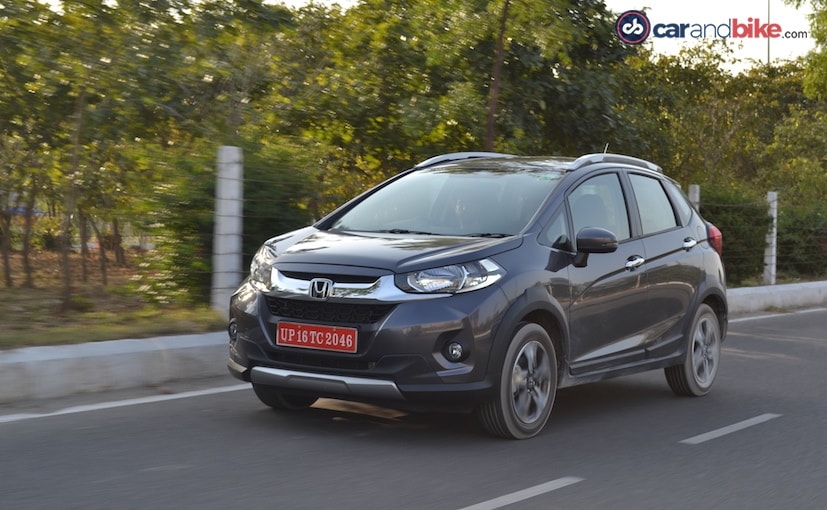
(Honda WR-V)
He further added, "India has grown to be the fourth biggest market in the world in terms of sales volumes. However, the market is dominated by small cars, which are classified as micro vehicles in other countries. A lot of models which are classified as entry segments in other countries are regarded as luxury models in India just because it is over four meters in length. The Indian automobile industry is moving towards globalization in emission norms and safety standards. But too much focus on small cars and the tax benefits to small cars will isolate India from the global automobile trends and prevent Indian consumers from experiencing a wider variety of vehicles with more comfort, safety and advanced technologies."
Many other car makers have decided to wait and watch before reacting to the decision, saying they will review the ordinance once it is issued before taking any decisions. But one thing is near certain - any increase in overall taxation will be passed on to the consumer. And that means cars will only get more expensive now. Some manufacturers like Mercedes-Benz have also petitioned the government that the proposed increase in cess, if it's to be made, should be applicable after a few months, or after the festive season culminates by October. Either way, the 25 per cent additional cess will result in higher price tags of cars, affect sales, and eventually it will also likely affect investment decisions of car makers in India.
Related News





Latest Cars


Upcoming Cars


Latest News


 Jaiveer Mehra | Aug 3, 2026Michelin Launches First India-Made Passenger Car Tyres; New Primacy 5 Range Prices Start at Rs 10,000The company unveiled plans last year to launch India-made passenger car tyres.4 mins read
 car&bike Team | Aug 3, 2026Two-Wheeler Sales July 2026: TVS, Honda, Suzuki, Royal Enfield And Bajaj Report Strong GrowthJuly 2026 remained good for India's two-wheeler industry, with most manufacturers reporting healthy year-on-year growth.3 mins read
 Preetam Bora | Aug 3, 2026Opinion: Norton Needs More Than World-Class MotorcyclesTVS is betting big on Norton Motorcycles. The strategy seems to be a product onslaught led by a V4 superbike, a middleweight adventure tourer, and more in the pipeline. Should TVS have also focussed on Norton’s legacy and history?7 mins read
 car&bike Team | Aug 3, 2026Kia Sorento Bookings Open Ahead Of India LaunchKia has also teased the Sorento for the first time, though the first teaser reveals precious little about the hybrid SUV.1 min read
 Janak Sorap | Aug 3, 2026New Bajaj Pulsar 125 Leaked Ahead Of August 12 LaunchThe next-generation Bajaj Pulsar 125 has started arriving dealerships ahead of its official debut, revealing significant updates to its design and underpinnings.1 min read
 car&bike Team | Aug 1, 2026Maruti Suzuki Sells More Than 2 Lakh Vehicles In July, Sets New Domestic RecordThe brand sold a total of 2,41,421 units last month which also included exports of 30,056 cars1 min read
 Bilal Firfiray | Aug 1, 2026Toyota Hilux Review: The InvincibleMarking it as the ninth generation, the Hilux comes with a major cosmetic overhaul. But is it still relevant enough for the current times or is it getting too long in the tooth?5 mins read
 Bilal Firfiray | Jul 30, 2026Kia Syros EV Review: Best EV To Buy Under Rs 20 Lakh?The Kia Syros EV comes into the game with a modern design, spacious cabin, strong performance, decent range and an aggressive pricing. But could it become the new benchmark under Rs 20 lakh?5 mins read
 Jaiveer Mehra | Jul 27, 20262026 Maruti Suzuki Brezza Facelift Review: Bestseller Joins The Turbo ClubWhile Maruti’s facelifts have always tended to bring subtle updates over the outgoing models, the latest Brezza brings some heavy updates under the skin, including a new 6-speed manual gearbox and, for the first time, a turbocharged petrol engine option.1 min read
 Bilal Firfiray | Jul 24, 2026Honda ZR-V Review: Who Is It For?Honda has brought the new ZR-V to India as their current flagship offering. It’s a CBU, it’s a hybrid, and it’s here for a limited few. Who is it for though?1 min read
 Girish Karkera | Jul 29, 2026Mercedes-AMG E53 4MATIC+ PHEV First Drive Review: Just What The Doctor OrderedThere are luxury cars and there are high-performance cars. But what if you want both for the price of one? Mercedes-Benz has a recommendation that promises to tread a fine line between the two – the second generation E53 with a twist.7 mins read