
Electric Vehicle Owners Can Now Use Existing Connections At Home, Office For Charging


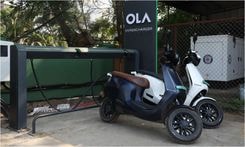
The government has come out with revised guidelines and standards for charging infrastructure for electric vehicles that allows owners to use their existing power connections at home and offices for charging their vehicles, Union Ministry of Power said on Saturday.
"In a significant step, owners may charge their electric vehicles at their residence/offices using their existing electricity connections. Infrastructure requirements for Public Charging Infrastructure as well as for Public Charging Infrastructure for long-range EVs and/or heavy duty EVs have been outlined," the ministry said in a statement.
The Union Ministry of Power promulgated the revised consolidated Guidelines & Standards for Charging Infrastructure for Electric Vehicles (EV) on January 14, 2022.
Under the revised guideline, any individual/entity is free to set up public charging stations without the requirement of a license provided that, such stations meet the technical, safety as well as performance standards and protocols laid down under the guidelines as well as norms/ standards/ specifications laid down by Ministry of Power, Bureau of Energy Efficiency (BEE) and Central Electricity Authority (CEA) from time to time.

Photo Credit: pod-point.com
An exhaustive list of compliance requirements for Public Charging Station (PCS) have also been outlined. These include norms for "appropriate" infrastructure for civil, electricity and safety requirements.
"The objective is to enable faster adoption of electric vehicles in India by ensuring safe, reliable, accessible and affordable charging infrastructure and eco-system. This would also promote energy security and reduction of emission intensity of the country by promotion of entire EV ecosystem," the ministry said.
The guidelines have been made further technology-agnostic by providing for not only the prevailing international charging standards available in the market but also the new Indian charging standards.
In order to address the challenge of making a charging station financially viable in the period of growth of Electric Vehicles, a revenue-sharing model has been put in place for land used for the same. Land available with the government/public entities shall be provided for installation of Public Charging Stations to a government/public entity on a revenue-sharing basis at a fixed rate of Re 1 / kWh (used for charging) to be paid to the land-owning agency from such PCS business payable on a quarterly basis.
A model revenue sharing agreement has also been included under the guidelines. Such revenue sharing agreement may be initially entered by parties for a period of 10 years. The Revenue Sharing Model may also be adopted by the public land-owning agency for providing the land to a private entity for installation of Public Charging Stations on a bidding basis with a floor price of Re 1 / kWh.




Latest News


 Bilal Firfiray | Jul 27, 2026BMW X5 And iX5 Long-Wheelbase Unveiled For ChinaBMW has taken the wraps off the long-wheelbase body style of the new-gen X5, and its all-electric iX5 avatar is exclusively for the Chinese market. Both are Neue Klasse with up to 1,000km of claimed range.1 min read
 car&bike Team | Jul 25, 2026Jeep Meridian 85th Anniversary Edition Launched At Rs 36.05 LakhLimited to 85 units, the special edition gets cosmetic changes and also features the CARA AI voice assistant.1 min read
 car&bike Team | Jul 25, 2026River Indie Electric Scooter Crosses 50,000 Units Production MilestoneThe milestone comes less than three years after the first unit rolled out of the company's Hoskote manufacturing facility.2 mins read
 car&bike Team | Jul 25, 20262026 Maruti Brezza Facelift Fuel Efficiency Figures RevealedThe updated model returns up to 26.90 km/kg in CNG guise, while the newly introduced turbo-petrol delivers a claimed 20.47 kmpl.2 mins read
 Jafar Rizvi | Jul 25, 2026Honda ZR-V Hybrid SUV Launched In India At Rs 47.99 LakhThe ZR-V is Honda’s first hybrid SUV for India and arrives as a CBU.1 min read
 Jafar Rizvi | Jul 24, 20262026 Maruti Brezza Facelift: Variants, Features, Engine Options ExplainedThe 2026 Maruti Suzuki Brezza is offered in four trim levels: LXi, VXi, ZXi and ZXi+ and with two engine options.5 mins read
 Jaiveer Mehra | Jul 27, 20262026 Maruti Suzuki Brezza Facelift Review: Bestseller Joins The Turbo ClubWhile Maruti’s facelifts have always tended to bring subtle updates over the outgoing models, the latest Brezza brings some heavy updates under the skin, including a new 6-speed manual gearbox and, for the first time, a turbocharged petrol engine option.1 min read
 Bilal Firfiray | Jul 24, 2026Honda ZR-V Review: Who Is It For?Honda has brought the new ZR-V to India as their current flagship offering. It’s a CBU, it’s a hybrid, and it’s here for a limited few. Who is it for though?1 min read
 Shams Raza Naqvi | Jul 15, 2026Ferrari 849 Testarossa Spider Driven: Rs. 11.25 Crore Meets 1,000 bhpWe got behind the wheel of the most powerful convertible from Ferrari. What makes the 849 Testarossa Spider Special? We tell you.1 min read
 Bilal Firfiray | Jul 12, 2026Tata Sierra EV Review: Reborn In The Electric AgeThe Tata Sierra EV isn’t drastically different from its ICE counterpart when it comes to design. But being the seventh electric offering from the Indian brand, it has gotten a few things right, and very few things wrong. But is it a compelling package to buy?5 mins read
 Jafar Rizvi | Jul 13, 2026TVS Orbiter Long-Term Review (Report 1): Settling In Takes TimeFirst impressions weren't the strongest, but the Orbiter has made a mark in its first month in the car&bike garage.5 mins read