
How Does OBD (On-Board Diagnostics) Work?


What is On-Board Diagnostics?
OBD is an automotive electronic system that uses various parameters to provide performance diagnostics for repair technicians. This system is primarily used to monitor the performance of the vehicle and analyze repair needs. The main purpose of using OBD is to get real-time data on the emission of NO, CO, and other such elements.

During the early 1980s, the diagnostic information provided by the older version of the OBD system used to be limited in terms of specifications of the error detected. The modern versions of OBD provide accurate and standardized diagnostic trouble codes which use a standard communications port to get real-time information on the nature of the error.

There are various versions of On-Board Diagnostics systems including OBD I and OBD II. These protocols are primarily designed to recognize and analyze emission-related diagnoses. There is this term called Off-Board Diagnostics that handles the data related to the electronic control unit (ECU).

Photo Credit: en.wikipedia.org
How does On-Board Diagnostics work?
OBD is an electric component that coordinates with other components of the vehicle such as all the sensors. OBD system sends error signals to the Electronic Control Unit (ECU) of the vehicle. An ECU is a core for recognizing all the glitches as it stores the data from all parts of the vehicle and sends the corrective signal if necessary.
The OBD consists of an ignition timing stop knock present in the power plant that sends a signal to retrieve information on the amount of fuel to be injected for the combustion process. ECU helps in accelerating the process of injecting more fuel into the cylinder to generate more power. In this case, OBD will indicate a sign on the instrument cluster while fixing the knock inside the combustion chamber with the help of ECU.

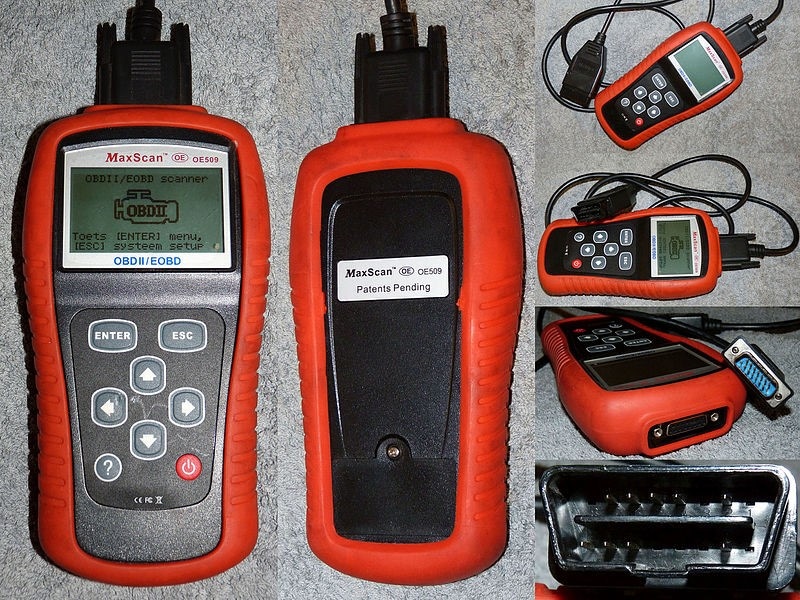
When the emission levels of a vehicle are at par, the OBD will instantly indicate the nature of the error inside the vehicle and ECU will fix the issue if it can be fixed. In case it cannot be fixed by ECU, the driver will be informed to get the problem fixed at a service centre. OBD uses a port that can be linked to a laptop or a tablet where an individual can access real-time data based on specific parameters to find the ultimate issue concerning the vehicle specifically if any of the components has malfunctioned.
Related News
Latest Cars


Upcoming Cars


Latest News


 car&bike Team | Nov 12, 2026Hyundai Creta vs Maruti Suzuki Grand Vitara vs Toyota Urban Cruiser Hyryder: Which Compact SUV Fits You?The Hyundai Creta, Maruti Suzuki Grand Vitara and Toyota Urban Cruiser Hyryder are among the popular choices in the compact SUV space. But which one fits your bill?10 mins read
 car&bike Team | Nov 12, 2026Kia To Invest USD 2 Billion For Second Andhra Pradesh Manufacturing FacilityThe brand’s annual production capacity from this plant is rated at 2 lakh units.1 min read
 car&bike Team | Nov 12, 2026Why Does Regenerative Braking In EVs Stop At 100% Battery Charge?We have explained why your electric car suddenly glides freely instead of slowing down when driven with a completely full battery pack.1 min read
 car&bike Team | Nov 12, 2026BYD's Denza D9 MPV, Z9 GT Shooting Brake India Launch Tomorrow: What To Expect?BYD’s luxury brand Denza will enter India with two very different electric offerings: the D9 luxury MPV and the 1,140 bhp Z9 GT Shooting Brake.3 mins read
 car&bike Team | Nov 12, 2026Does Hardwiring A Dashcam Void Your Car Warranty?Take a look at whether hardwiring a dashcam really affects your factory warranty and how you can install one safely in India.6 mins read
 car&bike Team | Nov 11, 2026RTI vs Zero Depreciation: Which Car Insurance Cover Pays More?Return to Invoice (RTI) covers the gap between your car's current IDV (Insured Declared Value) and the original invoice value in case of theft or total loss. Zero Depreciation reduces deductions on replaced parts during accident repairs.1 min read