
2026 Nissan Tekton 700 km Review: Can It Conquer The Himalayas?
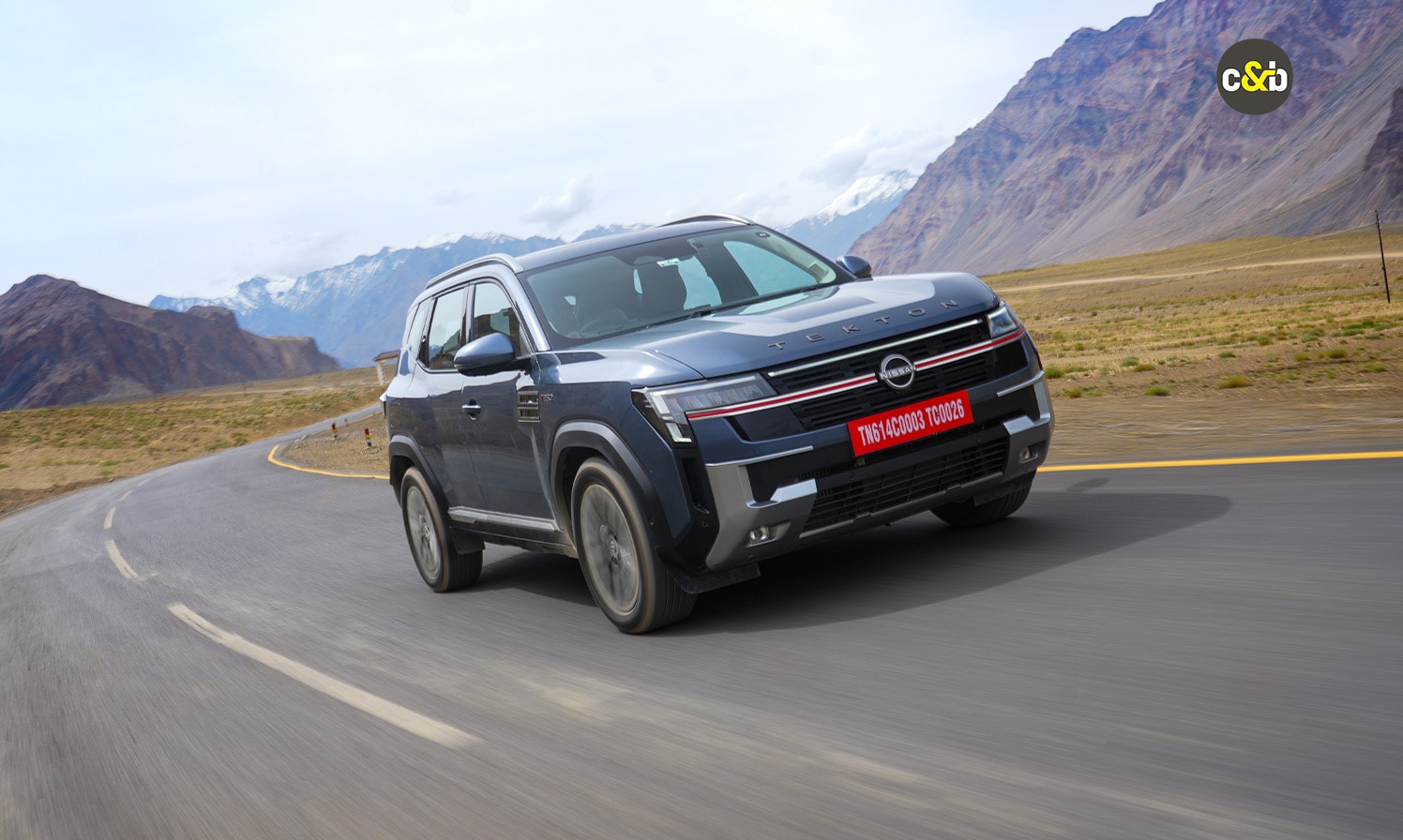
- We drove the Nissan Tekton over 700 km from Chandigarh to Leh
- Both 1.3-litre and 1.0-litre engines faced the Himalayan test
- 60 Tektons set an India Book Record on the journey to Leh
A trip to the Himalayas is always memorable, and I've been lucky enough to make that journey twice this year. The first was in March, when I headed into Uttarakhand's Garhwal Himalayas to drive the new-generation Renault Duster. A few months later, I was back in the mountains, this time behind the wheel of its Japanese cousin, the all-new Nissan Tekton.
This time, the journey was far more ambitious. Over three days, we drove from Chandigarh to Leh, crossing Manali and Shinkula Pass before making our way through the spectacular Zanskar Valley. Along the way came some of the most challenging roads I've driven on, dramatic changes in altitude and some truly spectacular scenery. It was also a chance to see how the Nissan Tekton handled everything the Himalayas could throw at it. So, let's get going.
Day 1: Chandigarh To Manali
Day 1 kicked off with an early morning departure from Chandigarh. Driving to Leh is special enough, but this journey had another objective. Nissan was setting an India Book Record for the largest convoy of a single SUV model to reach Leh. Sixty Tektons rolled out together, making for quite a sight on the highway.
Also Read: Nissan Tekton Makes Global Debut; Launched At Rs 10.49 Lakh
But the convoy wasn't the only thing turning heads. Even a quick tea break by the roadside had people walking up to ask about the car. And it's easy to see why. The Tekton looks imposing, with its Patrol-inspired styling, sharp LED headlights, bold alloys and strong proportions. The one detail I'm not a fan of, though, is the Tekton lettering on the bonnet.
The run to Manali, taking in NH 205, NH 154 and NH 3, was a relatively easy start to the journey. The roads were smooth, the traffic gradually thinned out, and I had enough time to settle into the Tekton before the real climb began. I was behind the wheel of the range-topping Tekna Plus, powered by the 1.3-litre turbo-petrol making 162 bhp and 280 Nm. It cruised effortlessly on the highway, with enough punch for quick overtakes, and as the road narrowed and began winding its way towards Manali, that torque became even more useful.
By evening, we rolled into Manali. Day 1 had been all about settling into the drive, but the easy part was over. From here on, the roads would get steeper, the air thinner, and the real test for both the Tekton and us was about to begin.
Also Read: Nissan Tekton Price, Variants Explained
Day 2: Manali To Padum via Shinkula Pass
Day 2 began where Day 1 left off. The easy highway miles were behind us, and the real journey into the Himalayas was about to begin. The first landmark was the Atal Tunnel. Once through it, the roads narrowed, the landscape became more dramatic and the climb towards Shinkula Pass began. It was also here that the Tekton’s 1.3-litre turbo-petrol faced its first real test.
Standing at 16,703 feet above sea level, Shinkula is one of the highest points on this route. And up here, things are simple: small car, small engine works; big car, big engine works; but big car, small engine can be a problem. Thankfully, the 1.3-litre turbo felt just about right for this part of the journey. Its 280 Nm of torque gave me enough pulling power to maintain a good pace on the climbs, while the robust chassis and suspension kept the SUV planted and stable over the changing surfaces.
There was, however, no escaping turbo lag. In fact, it became more noticeable as we climbed higher. But once the turbo spooled up, the Tekton's character changed almost instantly. It became more eager, more agile and, as the road twisted higher into the mountains, considerably more engaging.
The 6-speed dual-clutch automatic certainly made life easier, and I have to admit, I did feel a little sorry for my colleagues piloting the 1.0-litre version with the 6-speed manual. More on that struggle later. For now, the DCT brought welcome convenience, but it wasn't without its quirks. Being a conventional DCT, it did feel a little slow to react at times, especially on steep climbs. There were instances when I expected a downshift but the gearbox held on, breaking the momentum just when I needed it.
That’s where the paddle shifters proved useful. It takes a little getting used to, but once you understand its behaviour and start planning your climbs and overtakes, the gearbox settles into the rhythm of mountain driving quite nicely.
The road dropped towards the base of Gongbo Rangjon, one of the most striking landmarks in the Zanskar Valley. But somewhere along this stretch, I realised that driving in the mountains isn't just about what the road throws at you. It's also about how your body handles the altitude.
We had climbed quickly without enough time to properly acclimatise, and I began feeling the effects of Acute Mountain Sickness. It was a reminder that in the Himalayas, the mountains can test you even when the road doesn't. If you're planning a journey like this, give your body time to adjust, stay hydrated and, most importantly, don't ignore the early signs of altitude sickness.
By evening, we reached Padum in the Zanskar district. After a long day behind the wheel, it was time to call it a night at our campsite before the final push to Leh.
Day 3 – Padum To Leh via Zanskar Valley
With Leh finally within reach, we packed up camp and set off from Padum. But there was another first waiting for me. For this final leg through the Zanskar Valley, I switched to the Nissan Tekton T160 with the 1.0-litre turbo-petrol engine.
On paper, the numbers aren't bad: 99 bhp and 166 Nm. But is that enough for the Tekton? Well, it really depends on the road. On the highway and the better-paved stretches of the Zanskar Valley, the 1.0-litre petrol had no major complaints. But throw in steep climbs and higher elevations, and things got considerably harder.
There's no easy way to say it: the SUV feels underpowered. You need to approach a climb with some momentum, because if you lose it, the engine takes its time getting back up to speed. I found myself keeping the revs above 2,000 rpm almost all the time on the climbs. There really wasn't much of a choice.
The 6-speed manual itself is decent. The shifts can feel a little clunky, but they slot in cleanly. The bigger issue is that you have to work the gearbox quite hard in these conditions. And I wouldn't have minded that as much if the clutch were lighter. It's a little too tall and on the heavier side, and after a long day of mountain driving, your left leg definitely knows about it. It does take some getting used to.
As we pushed deeper into the Zanskar Valley, the roads became tighter and more technical. And this is where the 1.0-litre Tekton surprised me. The engine may be smaller, but the underlying driving experience remains largely unchanged. The lighter SUV still felt planted and composed, with good control through the tighter sections. The steering also has a reassuring weight to it, keeping me connected to what the front wheels were doing. On roads like these, that confidence counts for a lot.
As we finally reached Leh, a few things had become clear. Long journeys aren't just about performance. After three days on the road, it was the everyday comforts that I appreciated the most. The well-bolstered, ventilated seats made those long hours behind the wheel easier, while the 360-degree camera proved genuinely useful on narrow mountain roads where every inch mattered. Add to that the comfortable driving position, and these were the features I found myself relying on the most through the journey.
Verdict
Something strange happens when you finally reach your destination after a long road trip. The fatigue, the difficult roads and all those hours behind the wheel somehow seem to disappear. That's exactly how I felt when we finally made it to Leh. And when the destination is as spectacular as Ladakh, it makes the journey feel even more worthwhile.
As for the machines that got us here, the Tekton has certainly left me impressed. I spent most of the journey in the 1.3-litre version and also experienced the 1.0-litre manual. Both had their strengths, and both had to work hard on these roads.
If you're buying a Tekton primarily for the city, either engine will get the job done. The one big drawback with the 1.0-litre is that it isn't offered with an automatic.
But if you plan to travel extensively, venture into the mountains or simply want that extra reserve of performance, I'd pick the 1.3-litre. It has the extra firepower you need when the roads get challenging, and the automatic makes long journeys that much easier. After three days and hundreds of kilometres in the Himalayas, that's the one I'd want to take home.
And there was one more milestone to mark the end of the journey. Nissan successfully set an India Book Record for the largest convoy of a single SUV model to reach Leh, with 60 Tektons completing the journey together. It was quite a way to cap off three days of driving through some of the most challenging and spectacular roads in the country.
Photos: Vaibhav Dhanawade
Related News


Latest Cars


Upcoming Cars


Latest News


 Sarthak Mahajan | Aug 11, 2026PM E-Drive EV Subsidy Extended To March 2028; Incentive For E2Ws Cut To Rs 5,000Even with the extension, incentives for electric two-wheelers have been reduced to Rs 5,000 per vehicle.1 min read
 Jafar Rizvi | Aug 11, 2026Hero Splendor Off-Road Crossover Design Patented In IndiaTwo new design patents filed by the brand show motorcycles based on the commuter, with one appearing to draw heavily from the old Passion Pro TR's off-road-inspired styling.1 min read
 Sarthak Mahajan | Aug 11, 2026General Motors Pulls The Plug On Chevrolet In ChinaGeneral Motors’ Chevrolet brand exits the Chinese market after 21 years of operations.1 min read
 car&bike Team | Aug 11, 2026Ethanol Blended Diesel Does Not Meet Existing Diesel Flash Point Safety StandardsMinister of State for Petroleum and Natural Gas Suresh Gopi told Parliament that the blending of ethanol in diesel reduced the fuel’s flash point to below that of standard diesel.1 min read
 Sarthak Mahajan | Aug 11, 2026New Mahindra BE 6 Sporteq Variant Teased Ahead Of Aug 15 DebutMahindra Electric Origin SUV family will grow soon with the arrival of a new variant of the BE 6, named the BE 6 Sporteq.2 mins read
 Sarthak Mahajan | Aug 10, 2026Top 5 Major Feature Updates On The New Mahindra Scorpio-NMahindra recently launched the updated Scorpio-N. Here are the top five features to look out for.1 min read
 Seshan Vijayraghvan | Aug 11, 20262026 Nissan Tekton 700 km Review: Can It Conquer The Himalayas?We drove the newly launched Nissan Tekton from Chandigarh all the way up to Leh, covering over 700 km with the new SUV. From exploring the Tekton’s capabilities in the Himalayas to setting an India Book Record, here’s how the trip unfolded.1 min read
 Preetam Bora | Aug 11, 20262026 Aprilia Tuono 457 Special Edition First Ride Review: Should You Buy It?The 2026 Aprilia Tuono 457 delivers an engaging, everyday riding experience with strong performance. At its price point, the Tuono 457 is a brilliant motorcycle, but not quite the complete package. Why is that, and should you still buy it? Read on.8 mins read
 Bilal Firfiray | Aug 1, 2026Toyota Hilux Review: The InvincibleMarking it as the ninth generation, the Hilux comes with a major cosmetic overhaul. But is it still relevant enough for the current times or is it getting too long in the tooth?5 mins read
 Bilal Firfiray | Jul 30, 2026Kia Syros EV Review: Best EV To Buy Under Rs 20 Lakh?The Kia Syros EV comes into the game with a modern design, spacious cabin, strong performance, decent range and an aggressive pricing. But could it become the new benchmark under Rs 20 lakh?5 mins read
 Jaiveer Mehra | Jul 27, 20262026 Maruti Suzuki Brezza Facelift Review: Bestseller Joins The Turbo ClubWhile Maruti’s facelifts have always tended to bring subtle updates over the outgoing models, the latest Brezza brings some heavy updates under the skin, including a new 6-speed manual gearbox and, for the first time, a turbocharged petrol engine option.1 min read