
Pirelli Reboots Its R&D To Stay On Track Through The Pandemic


When the coronavirus pandemic forced Italian tyremaker Pirelli to temporarily shut its factories in March, R&D chief Pierangelo Misani needed a rapid rethink. With a new range of products due to be launched by early next year at the latest, Misani scrambled technicians and IT teams to get more research and development shifted online so locked down engineers could test materials and tyres virtually. The pandemic has disrupted production and sales for tyremakers worldwide - Pirelli's revenue fell by a third in the first six months of 2020 - and it needed to keep its new tyre development on track for an expected sales rebound next year.
"There are moments of crisis, like COVID, when you have to reshape and make yourself more efficient and that's what we're doing," Misani told Reuters. Pirelli has 19 plants in 12 countries and is the only major manufacturer working solely in the consumer tyre market, supplying high-end tyres for cars, motorcycles and bicycles - as well as Formula 1 racing cars.
Like companies throughout the auto industry, Pirelli has been going digital for years as cheaper computing power and advanced software programmes made virtual engineering possible. But it also continues with on-the-road testing of a number of factors where it is still better to do so in a physical setting.
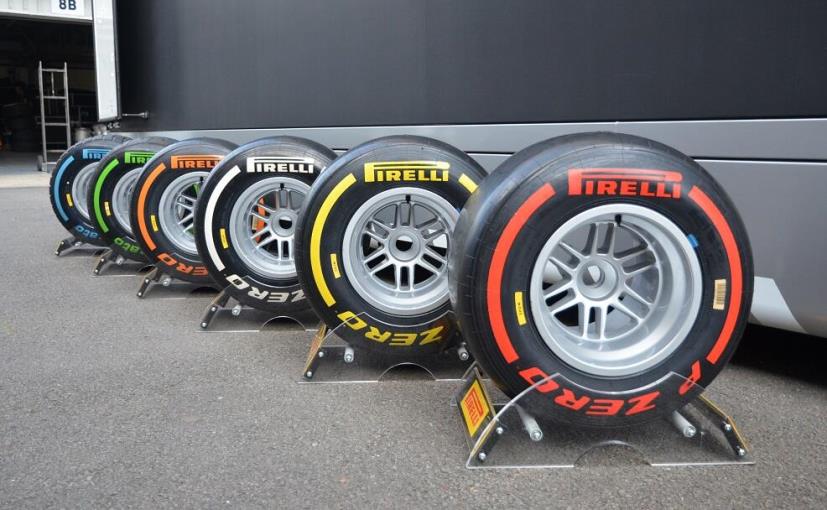
Pirelli has 19 plants in 12 countries and is the only major manufacturer working solely in the consumer tyre market
As part of its digital drive, Pirelli had been drafting in younger IT staff - engineers with different skillsets, able to match vehicle dynamics and modelling know-how as costly road testing slowly makes way for virtual testing. "Changing the engineering profile is the biggest challenge for the auto industry," Misani said.
WRAP-AROUND SCREEN
In recent years, the company headquartered in Milan in northern Italy has spent more than 6% of revenue on average from its so-called high-value tyres on R&D, one of the highest levels among rivals.
While some tests such as noise and aquaplaning can be done reliably using full simulation, others such as tyre endurance still need physical fine-tuning in lengthy road trials to check things such as handling and driving characteristics.
But with the lockdown making it impossible to drive cars round for thousands of miles, Misani's team needed solutions. So he turned to its new tyre development simulator unveiled early this year which drew on years of virtual work in Formula 1.
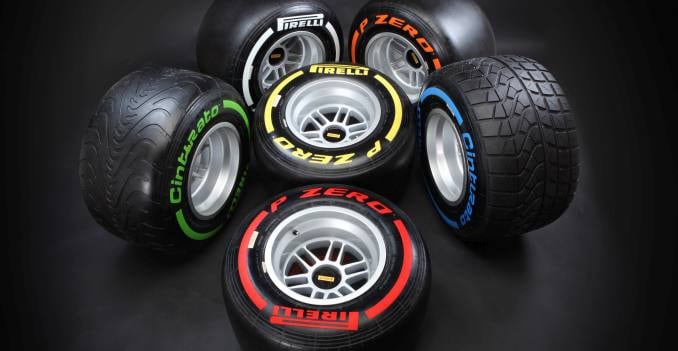
While some tests such as noise and aquaplaning can be done reliably using full simulation, others such as tyre endurance still need physical fine-tuning
The system uses a wrap-around 210-degree panoramic screen built around a static car wired up to reproduce the sensations any driver would feel in a real car - the seat, steering wheel, seat belts, shaker systems.
It cuts lead times by 30% and the number of physical prototypes needed.
As the lockdown bit, Misani's team stepped up remote drives, developing a series of "off-line" simulations. These allowed engineers to do some tests on their PCs at home connected to the Pirelli server, where the computing programmes are run.
"What surprised us was the speed and acceleration of the whole thing. If before we were at 70% simulation, now we're suddenly at 80%," Misani said. "And it's going to grow."
READY FOR LAUNCH
Misani said the best results have been in the replacement market where it is due to launch three new product lines by the start of 2021 - an ultra-high performance tyre for summer use, a brand new all-season tyre and a new winter tyre.
"The epidemic prompted us to engineer tools to boost simulation and modeling and we'll be ready in plenty of time for the launch," Misani said.
Things have been a little slower in the so-called original equipment sector where the company sells direct to automakers as it is tied to the development times for the cars themselves.
"There's been some delay though it's not as bad as we thought since carmakers have also tried to upgrade their IT platforms in this period," he said.
Pirelli has development centres around the world in Germany, South America, the United States and China. It also has testing facilities at its factories.
While going virtual does remove the need to pay for physical testing environments, part of the savings are then reinvested in new tools, software licences and IT infrastructure.
But Misani says bumping up simulator programming and virtual testing will help save and, more importantly, speed up the time it takes to develop products and get them to market.
"What we're doing is not streamlining or rightsizing R&D - we're reshaping it."
(This story has not been edited by NDTV staff and is auto-generated from a syndicated feed.)
Related News


Latest Cars


Upcoming Cars


Latest News


 car&bike Team | Jul 31, 2026Hero Vida VX2 Now Available With Fixed 3.1 kWh Battery, Priced At Rs 1.13 LakhUnlike the existing removable-battery variants, the new VX2 variant comes with a fixed battery and direct-plug charging.1 min read
 car&bike Team | Jul 31, 2026Honda Cars India Appoints Toshiyuki Yanagisawa As New President And CEOYanagisawa replaces Takashi Nakajima, who is set to move to Honda's regional headquarters after completing his stint in India.1 min read
 car&bike Team | Jul 31, 2026TVS Raider Doctor Doom Edition Launched At Rs 95,320TVS has expanded its Marvel-inspired Raider 125 Super Squad lineup with a new Doctor Doom Edition.2 mins read
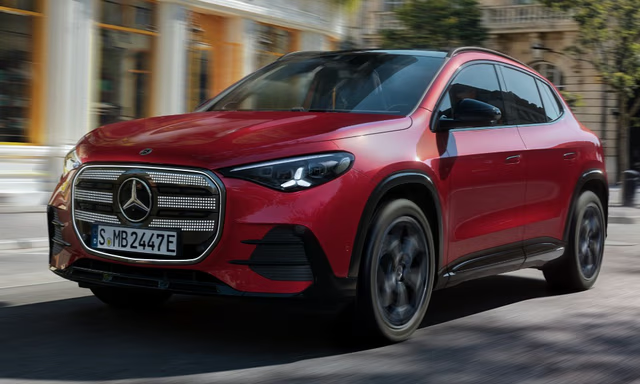 Jaiveer Mehra | Jul 31, 2026Third-Gen Mercedes-Benz GLA Debuts With Internal Combustion, Electric Powertrains; EV Offers Over 600 Km RangeUnlike the new CLA and GLB, the GLA’s styling draws inspiration from the new GLC EV.1 min read
 car&bike Team | Jul 30, 2026Maruti Suzuki's Hansalpur Plant Hits 10 Lakh Annual Production Capacity; First For Suzuki GloballyWith production beginning at its fourth plant, the Hansalpur facility can now build one million cars a year, making it the largest passenger vehicle manufacturing site at a single location in India.1 min read
 Amaan Ahmed | Jul 30, 2026Made-In-India Honda Rebel 500 Set To Wear Sub-Rs 4 Lakh Price TagRegional BigWing dealer websites incorrectly listed a price of Rs 5.50 lakh for the Rebel 500, but that's not the price at which the locally-built model will be launched.1 min read
 Bilal Firfiray | Jul 30, 2026Kia Syros EV Review: Best EV To Buy Under Rs 20 Lakh?The Kia Syros EV comes into the game with a modern design, spacious cabin, strong performance, decent range and an aggressive pricing. But could it become the new benchmark under Rs 20 lakh?5 mins read
 Jaiveer Mehra | Jul 27, 20262026 Maruti Suzuki Brezza Facelift Review: Bestseller Joins The Turbo ClubWhile Maruti’s facelifts have always tended to bring subtle updates over the outgoing models, the latest Brezza brings some heavy updates under the skin, including a new 6-speed manual gearbox and, for the first time, a turbocharged petrol engine option.1 min read
 Bilal Firfiray | Jul 24, 2026Honda ZR-V Review: Who Is It For?Honda has brought the new ZR-V to India as their current flagship offering. It’s a CBU, it’s a hybrid, and it’s here for a limited few. Who is it for though?1 min read
 Girish Karkera | Jul 29, 2026Mercedes-AMG E53 4MATIC+ PHEV First Drive Review: Just What The Doctor OrderedThere are luxury cars and there are high-performance cars. But what if you want both for the price of one? Mercedes-Benz has a recommendation that promises to tread a fine line between the two – the second generation E53 with a twist.7 mins read
 Shams Raza Naqvi | Jul 15, 2026Ferrari 849 Testarossa Spider Driven: Rs. 11.25 Crore Meets 1,000 bhpWe got behind the wheel of the most powerful convertible from Ferrari. What makes the 849 Testarossa Spider Special? We tell you.1 min read