
Simple Wave vs Ather Konarc: Battery, Range, Performance, Features Compared

- Wave offers up to 243km claimed range
- Konarc gets AirWalk and Smart Key features
- Prices for the Wave start Rs 10,000 above the Konarc
Simple Energy has tapped into the family-oriented electric scooter space with the launch of the Wave, which is offered in six variants and four battery pack options. Prices start at Rs 1.10 lakh (ex-showroom), while prices for the remaining variants are yet to be announced.
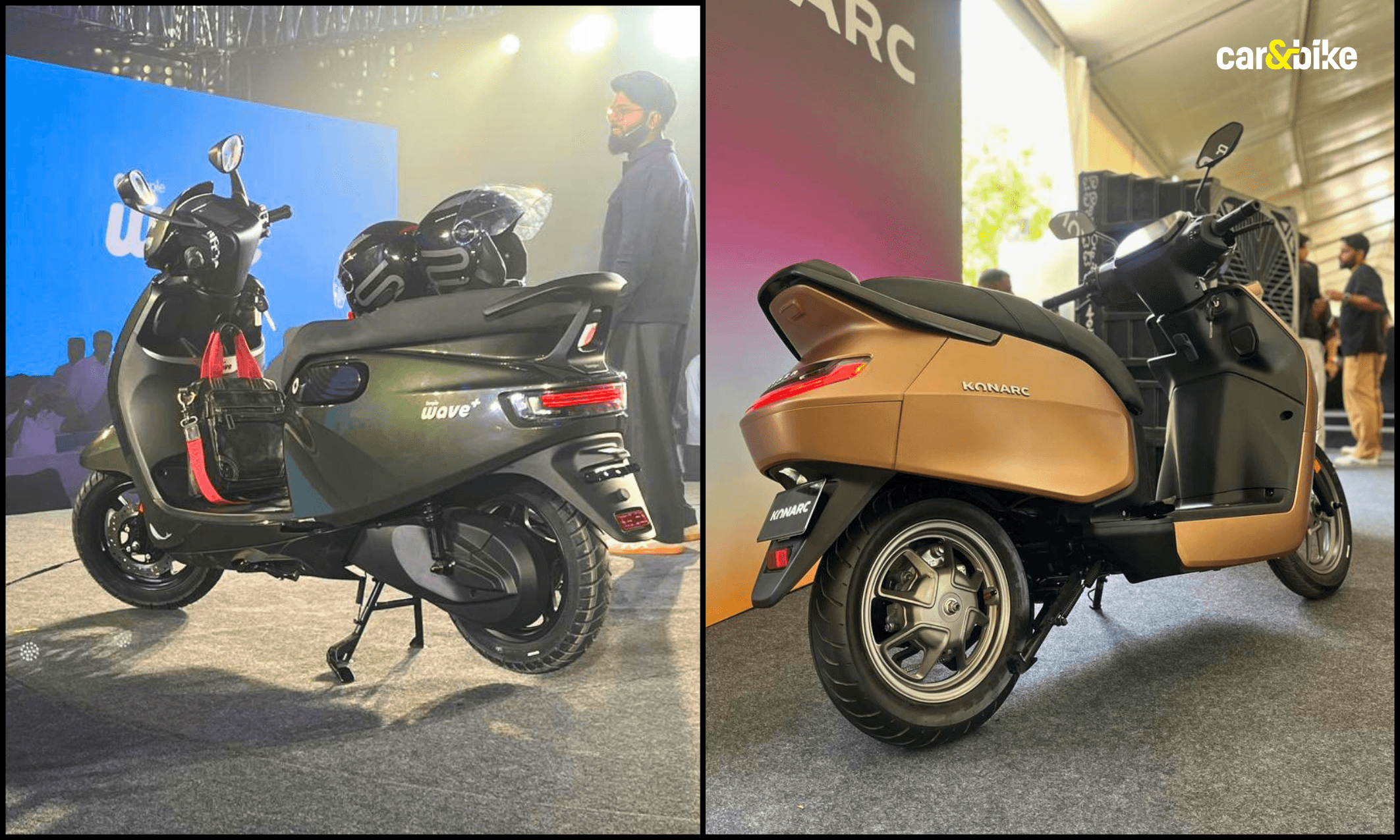
The Wave will go up against scooters such as the recently launched Ather Konarc, giving buyers another option in the growing family-focused electric scooter space. While both models prioritise everyday usability, their specifications show some significant differences in battery capacity, range, performance and practicality.
Also Read: Simple Wave Electric Scooter Launched At Rs 1.10 Lakh; Up To 243 Km Range
Simple Wave vs Ather Konarc: Battery and performance
| Simple Wave | Ather Konarc | |
|---|---|---|
| Battery packs | 2.2, 2.7, 3.7 and 5.0kWh | 2.1, 2.7 and 3.5kWh |
| Claimed range | 110, 132, 171 and 243km | 100, 125 and 161km |
| Peak power | 8.5bhp | 6.3bhp |
| Top speed | 90kmph | 70kmph |
| Ride modes | 4 | 3 |
| Charger | Portable 750W and standard | Onboard 450W plus standard |
| 0-80% charging time | 2hr 15min (fast) | 3hr 10min |
The Wave has a clear advantage in battery choice, with four options ranging from 2.2kWh to 5.0kWh. The Konarc, meanwhile, gets three battery options ranging from 2.1kWh to 3.5kWh.
This difference also shows up in their claimed range figures. The Wave starts at 110 km and goes up to 243 km, while the Konarc offers between 100 km and 161 km depending on the battery pack. So, at their respective maximums, the Wave offers 82 km more claimed range given the larger battery pack.
Also Read: Ather Konarc vs TVS iQube: Specifications Compared
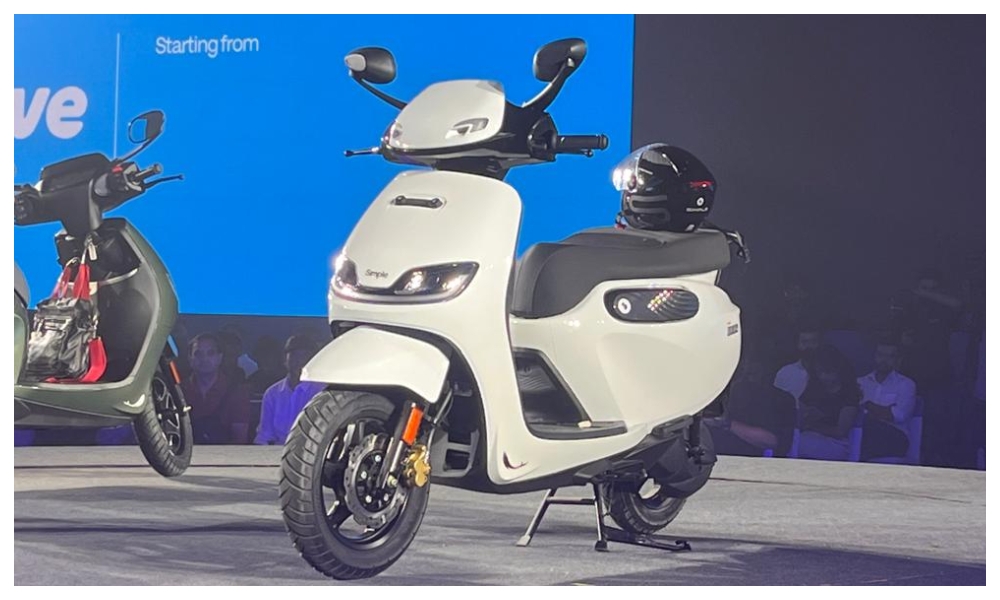
The Simple also has the performance advantage, with its motor producing 8.5bhp compared with 6.3 bhp for the Ather. Its 90 kmph top speed is 20 kmph higher than the Konarc's 70 kmph, while the Wave also gets four riding modes against three on the Ather.
Charging is quicker with the Wave when using its 750W fast charger. Simple claims a 0-80 per cent charging time of 2hr 15 min, compared with 3hr 10 min for the Konarc.
Also Read: Simple Wave: In Pictures
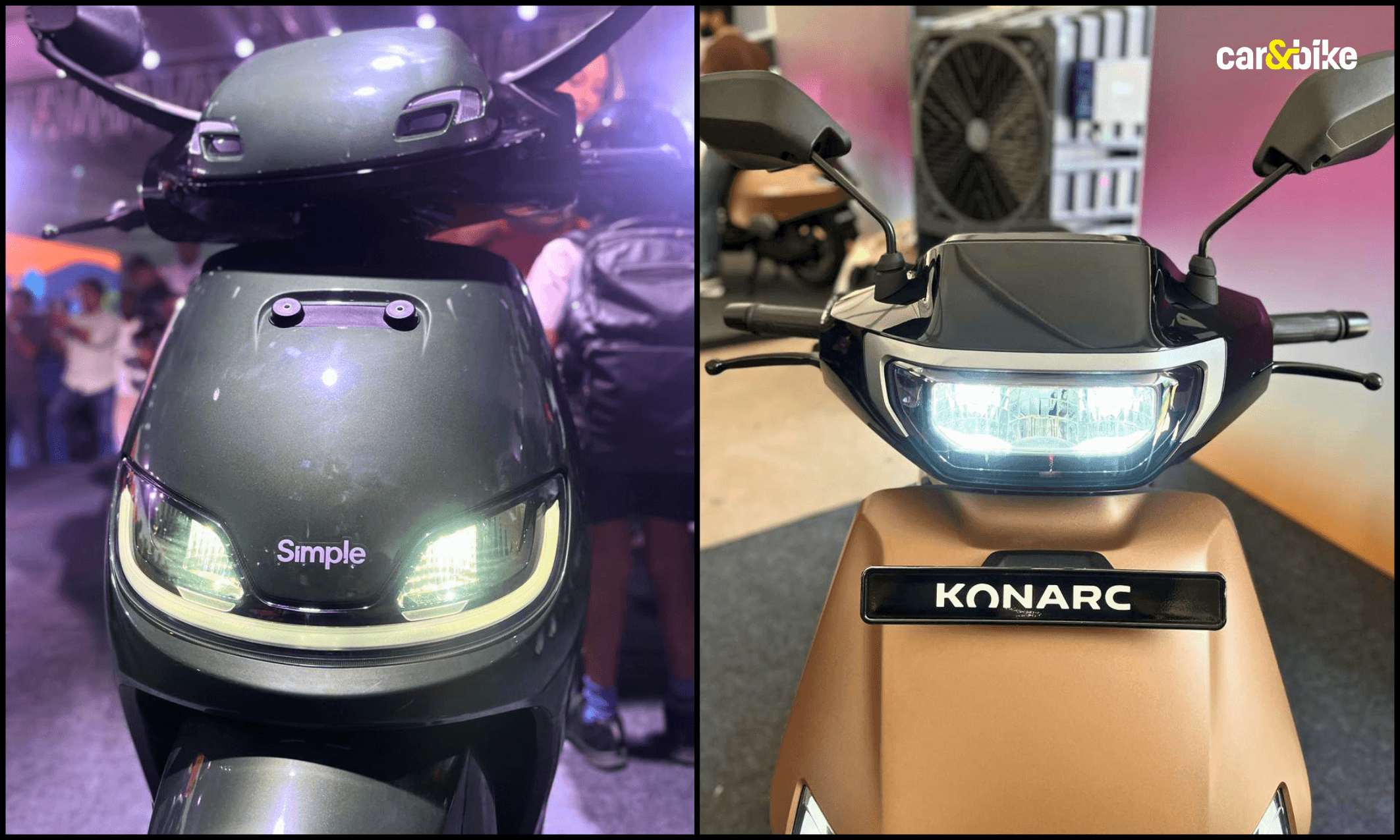
Simple Wave vs Ather Konarc: Practicality and hardware
| Simple Wave | Ather Konarc | |
|---|---|---|
| Underseat storage | 63 litres | 31 litres |
| Front storage | 3 litres | 2 litres |
| Front wheel | 12-inch | 14-inch |
| Rear wheel | 12-inch | 12-inch |
| Front brake | Disc | Disc |
| Rear brake | Drum | Drum |
| Wheelbase | 1,347mm | 1,352mm |
| Ground clearance | 175mm | NA |
| Seat height | 775mm | 770mm |
| Seat length | 920mm | 749mm |
| Weight | 128kg | 129kg |
One of the biggest differences between the two scooters is their storage capacity. The Wave gets a huge 63-litre underseat compartment, which is more than twice the 31-litre space offered by the Konarc. Simple also provides 3 litres of front storage compared with 2 litres on the Ather.
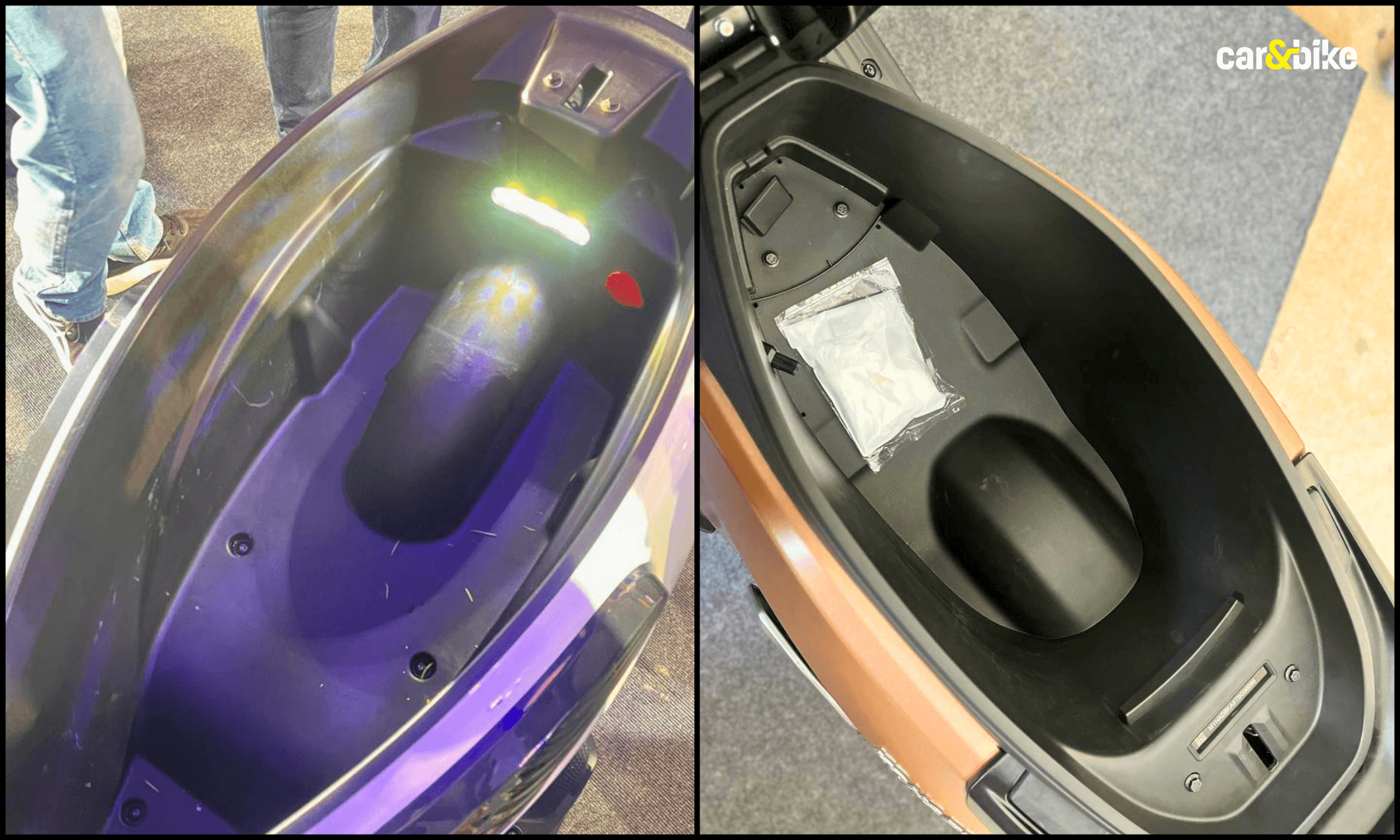
The Wave further adds a 4-litre pill storage compartment, which is the first of its kind. It is positioned on the body panel and can be unlocked from the key fob.
The Konarc fights back with a larger 14-inch front wheel, while the Wave uses a 12-inch unit. Both get 12-inch rear wheels, along with a front disc and rear drum brake setup. On the scale, the Wave is 1 kg lighter than the Konarc, weighing 128 kg compared with the Ather's 129 kg. The Konarc also has a slightly lower 770mm seat height, while the Wave stands at 775mm.
Also Read: Ather Konarc Launched in India, Prices Start At Rs 1 Lakh
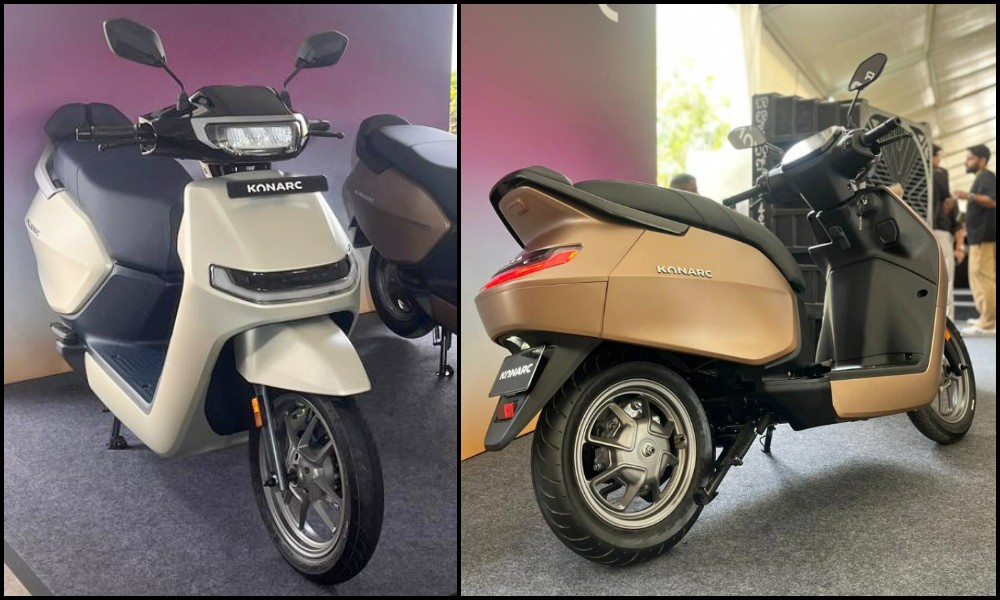
The two scooters have almost identical wheelbases, with the Konarc's 1,352mm figure being just 5mm longer than the Wave's 1,347mm. The Wave has 175mm of ground, while a figure for the Konarc isn't available at this point.
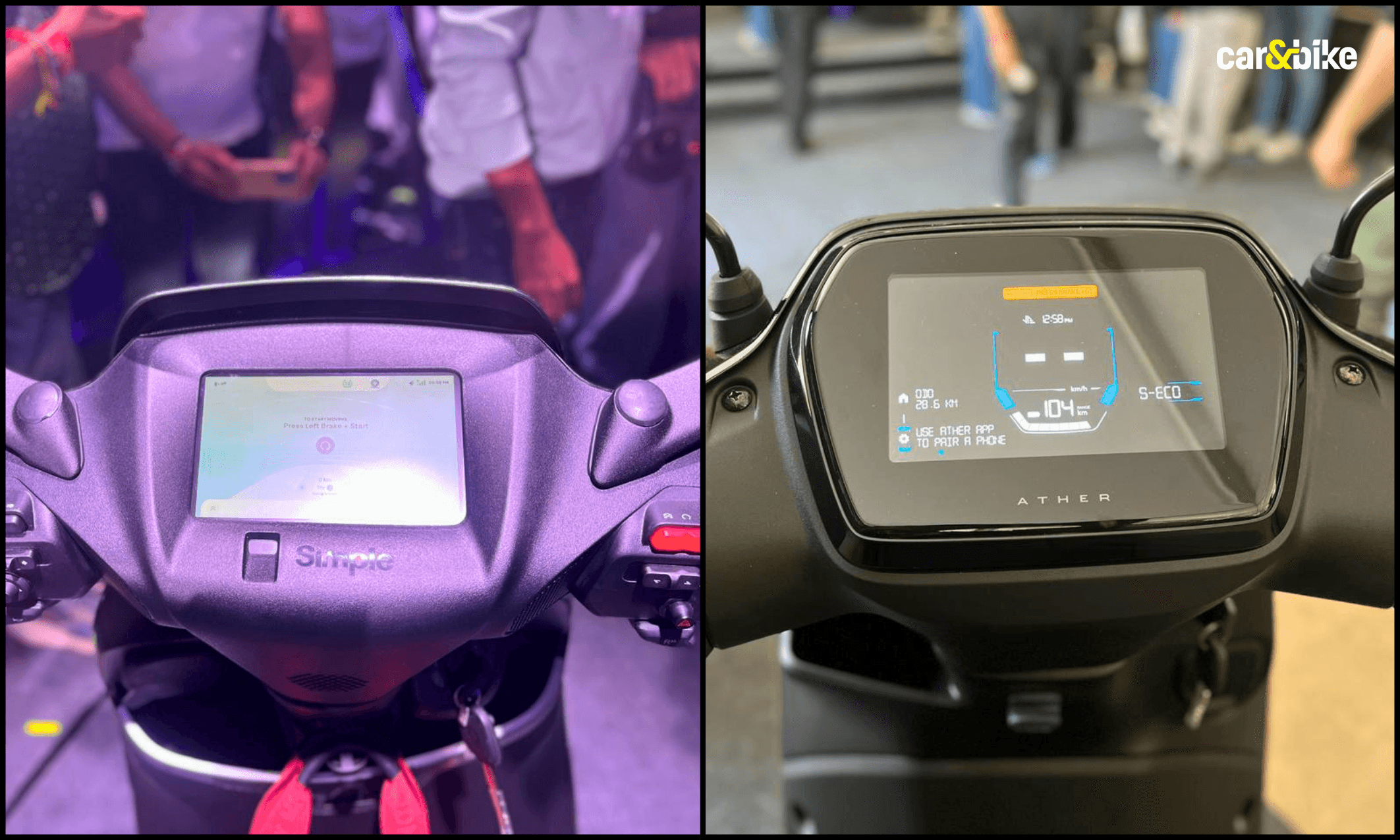
Simple Wave vs Ather Konarc: Key Features
| Simple Wave | Ather Konarc | |
|---|---|---|
| TFT dash | 7-inch non-touch | 7-inch touchscreen |
| USB charging | Yes | Yes |
| Hill hold assist | Yes | Yes |
| Reverse mode | Yes | Yes |
| Turn-by-turn navigation | Yes | Yes |
| Google Maps integration | – | Yes |
| Connected features | Yes | Yes |
| Theft & Tow Alerts | Yes | Yes |
| Traction control | Yes | No |
| AirWalk | – | Yes |
| Smart Key | – | Yes |
| Pop-up seat | – | Yes |
Both scooters come with the usual connected features, including USB charging, hill hold assist, reverse mode, navigation and theft and tow alerts. The Konarc, however, packs in a few clever touches that make it feel more thought-out for everyday use.
Ather's AirWalk is one such feature. It makes moving the scooter from a standstill easier, which can be particularly useful. The Konarc also gets a pop-up seat function, allowing the seat to open automatically with a single press rather than requiring the rider to manually lift it.
The Smart Key adds another layer of convenience, with a host of functions built around it. The Konarc also gets a 7-inch touchscreen with Google Maps integration, while the Wave sports a 7-inch non-touch TFT. The Simple does have an advantage in one area, though, with traction control being offered on the Wave while the Konarc does without it.
Also Read: Ather Konarc Electric Scooter: In Pictures
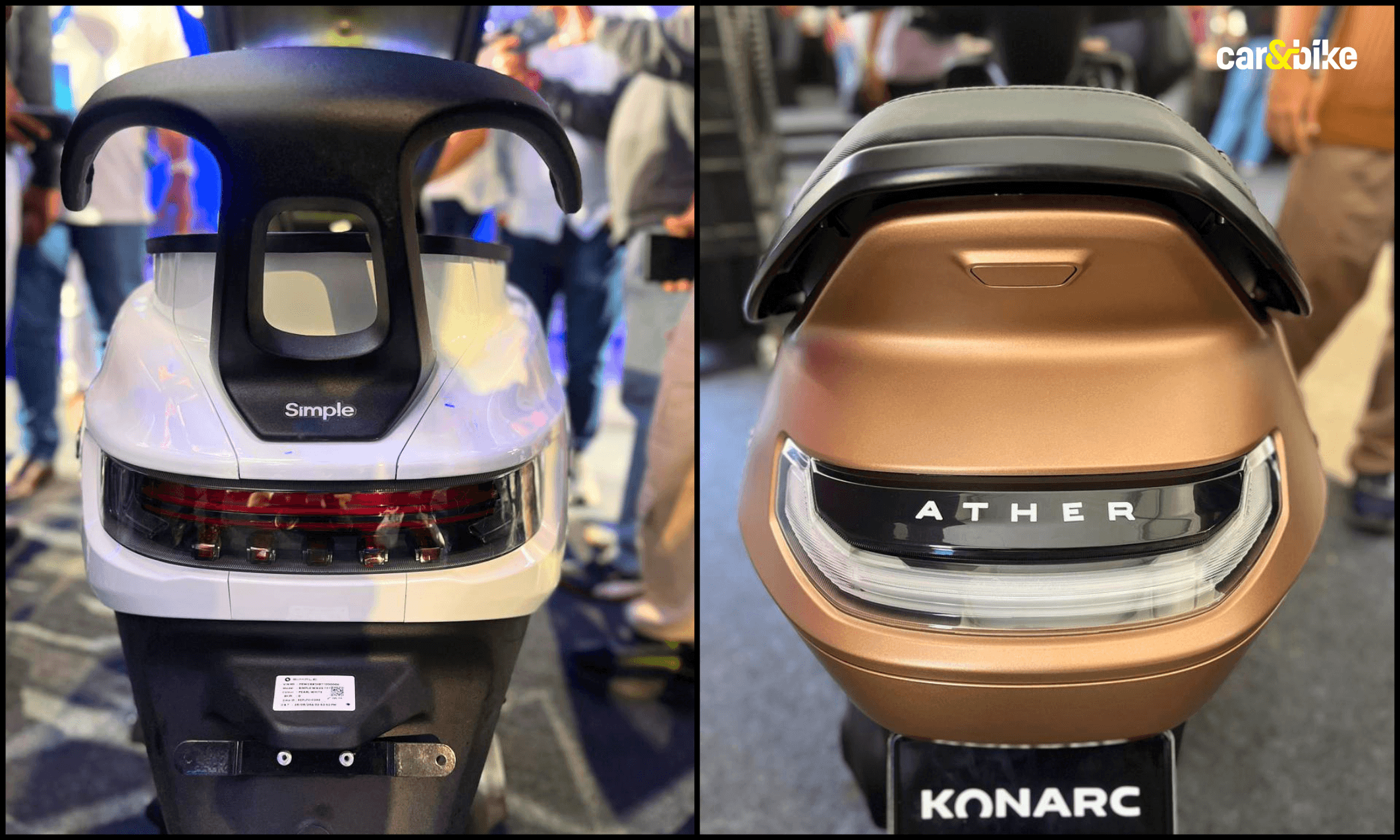
Simple Wave vs Ather Konarc: Price
Simple Energy has only announced the price of the entry-level Wave so far, at Rs 1.10 lakh (ex-showroom). Ather, meanwhile, has priced the Konarc from Rs 1 lakh, with the range currently going up to Rs 1.45 lakh.
That means the Wave's starting price is Rs 10,000 higher than the Konarc's entry price. However, we are comparing the top-spec versions of both scooters here, and Simple has not yet revealed what the top-spec Wave will cost. We will update this comparison once those prices are announced.
Simple Wave vs Ather Konarc: Which one makes more sense?
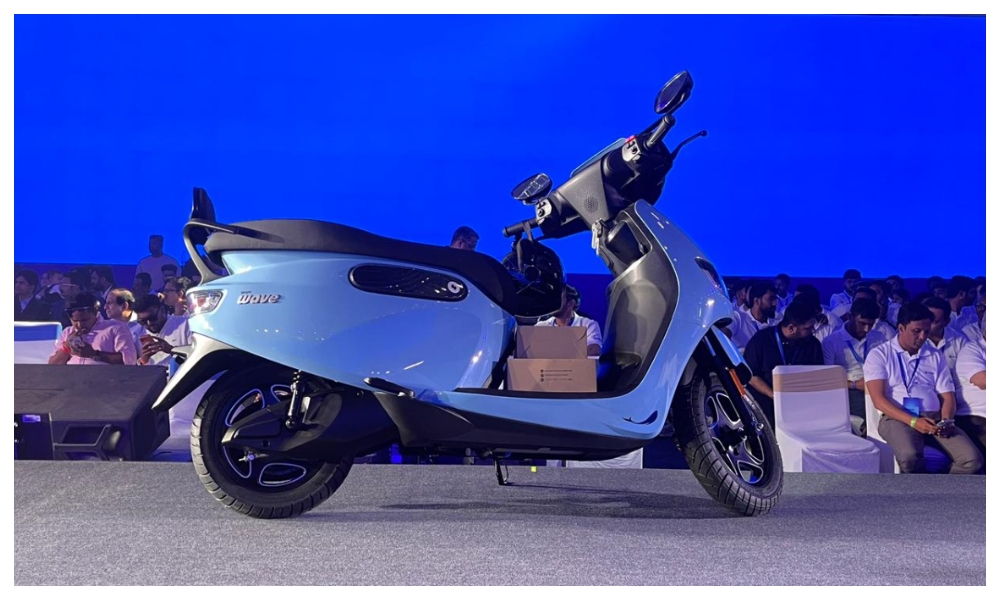
The Wave has the advantage in the areas that matter most if you're looking at the numbers. Its 5.0kWh battery gives it a claimed 243km range, the motor makes 8.5bhp, and its 90kmph top speed is considerably higher than the Konarc's 70kmph. It also has much more storage, with 63 litres under the seat and another 4-litre pill compartment.
The Konarc, though, isn't simply outgunned. It is 10kg lighter, has a lower seat height and a larger 14-inch front wheel, while features such as AirWalk, the pop-up seat and Smart Key make a difference when you're actually using the scooter every day. Its touchscreen and Google Maps integration also give it an upper hand.
There is also the price to consider, although we can't make a direct top-end comparison just yet. The Konarc starts at Rs 1 lakh, while the Wave starts at Rs 1.10 lakh, but the Wave's top-spec price is still to be announced.
Related News


Latest Cars


Upcoming Cars


Latest News


 car&bike Team | Oct 23, 2026Updated Bajaj Pulsar NS200 Launched at Rs. 1.60 Lakh; Gets TFT Display, Ride Modes, Quickshifter & MoreThe Pulsar NS200 now gets an electronic throttle body which enables six ride modes and traction control, as well as a quickshifter and TFT display with Google Maps mirroring.1 min read
 car&bike Team | Oct 23, 20265 Factory CNG Cars With Usable Boot Space: Nexon, i10 Nios, Exter & MoreHere are five of the most sought-after factory-fitted CNG cars available in 2026 that offer genuine, usable boot space.1 min read
 Seshan Vijayraghvan | Oct 23, 2026Ducati Formula 73 Limited Edition Café Racer Launched At Rs. 20 Lakh; All Units Sold OutThe Ducati Formula 73 has launched as the Italian marque celebrates its 100th year, whereas the motorcycle itself pays homage to the 1973 Ducati 750 Super Sport Desmo.1 min read
 Jaiveer Mehra | Oct 23, 2026BYD’s Denza Luxury Brand To Make India Debut On November 13Denza is expected to bring the D9 luxury MPV and the Z9 GT shooting brake to India.1 min read
 Sarthak Mahajan | Oct 23, 2026Ultraviolette X47 Venom: Top HighlightsThe Ultraviolette X47 Venom starts at Rs 2.65 lakh and is offered in four variants.1 min read
 Sarthak Mahajan | Oct 23, 2026MoRTH Proposes Mandatory Automatic Emergency Braking For New Cars From 2030The mandate will apply to new car models from October 1, 2030, and to existing models from October 1, 2032, along with new safety requirements for trucks and driver-assistance systems.1 min read