
Why India Needs Stricter Norms for Controlling Pollution

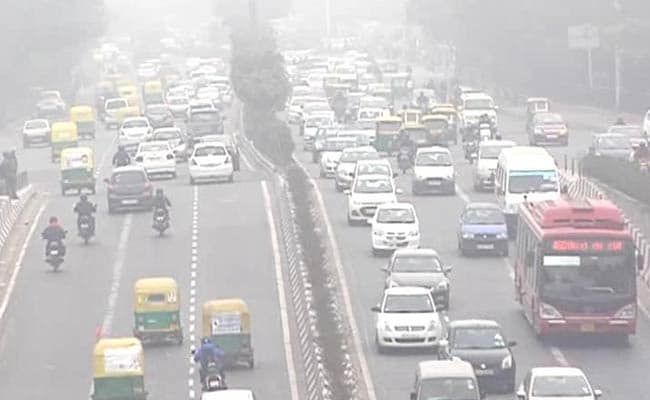
The reason behind this is an almost criminal cycle of blame between the government, the auto industry and the oil companies. Diesel exhaust is an invisible killer in Delhi and this is because India has slowed down adopting cleaner technology for cars.
It was in 2005 that the West adopted the Euro 4 emission standard for cars, India did that in 2010. When Europe went for the stringent Euro 6 norms in 2014; India plans to reach there ten years later.
Sunita Narain from Centre for Science and Environment said, "If we do not catch up with Europe, we'll basically be breathing very very foul air. What India needs is to do this investment at one time instead of this incremental gain."
And this is how India can benefit if it leapfrogs. Currently, the cleanest diesel cars in india pump out 250 milligrams of the nitrogen oxide per km. If Euro 6 norms were to be adopted, this will come down by a phenomenal 68% for diesel and 25% for petrol cars. Particulate matter too will come crashing down by 80%.
"When we said bring in Euro 3 , Euro 2 ,oh it cant be done they refrained, from the oil companies to the automobiles said we just cant do it. clean air its not a trade offs between the interest of the automobile industry and the health of the citizen health of the citizen is not negotiable , if you cant make cars which are healthy go out of the market we will import them somebody in the world will make them", said Harish Salve, who helped push for Euro 4 or Bharat Stage 4 norms in India.
Data shows that if the leap from Euro 4 to Euro 6 emission norms is taken, it will reduce the poisonous emissions from cars up to 3 times. But ironically car manufactures in India are producing Euro 6 compliant engines only for European markets.
And this is where the blame game starts. Nitin Gadkari, Minister of Road Transport and Highways said, "We want Euro 6 but auto companies need time" But the auto industry simply shifts the blame onto oil companies. "The car that has been manufactured for export will only run in those markets, but if you were to run that car in India, that technology might fail. Oil companies need to gear up to supplying 10 ppm fuel to us", says Vishnu Mathur, Director General, Society of Indian Automobile Manufacturers.
Narendra Taneja, advisor to the ministry of petroleum believes that this upgrade is urgent but expensive. "The auto industry needs to upgrade its infrastructure, their machines and accordingly the entire system. Majority of our refineries, mostly owned by the government of India, are rather old in terms of technology, practice, so you need to upgrade them! We need a 14 billion dollar investment to upgrade these refineries", he said.
But the situation in India is much worse. All of India, except 13 cities, still adopts the Bharat stage 3 norms. Bharat Stage 4, what Delhi runs on, will only be implemented countrywide in 2017!
The buck passes from auto manufacturers to government and to oil companies, but what we fail to realise is that this blame game affects the quality of air you and I are breathing and this it's only getting worse.
Related News


Latest Cars


Upcoming Cars


Latest News


 Bilal Firfiray | Jun 4, 2026BMW M2 Gets AWD For The First Time; No Additional Power, But Is 0.3 Seconds QuickerWe all frowned when the M3/M4 got a (switchable) AWD system. Now the smaller and more fun to drive M2 has received the same hardware. Should the RS3 be worried?1 min read
 Jafar Rizvi | Jun 4, 2026Skoda Peaq SUV Exterior Revealed In Design Sketches; Unveil On June 23The Peaq brings to life the Vision 7S concept that was showcased at the Auto Expo 2025.4 mins read
 car&bike Team | Jun 4, 2026All-New Hyundai i20 Teased Ahead Of Global DebutLatest generation of Hyundai's popular hatchback is all set to make its global debut in Brazil next month.2 mins read
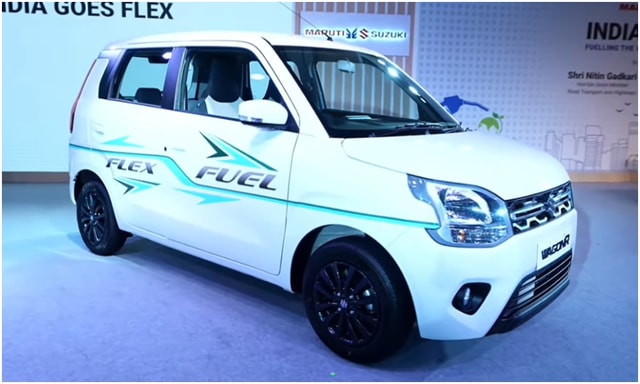 Amaan Ahmed | Jun 4, 2026Maruti Suzuki Wagon R Flex Fuel Showcased In Delhi; Can Run On Pure EthanolThe flex-fuel variant of one of India's highest-selling cars was unveiled in the presence of road transport minister Nitin Gadkari and petroleum minister Hardeep S Puri.2 mins read
 Jaiveer Mehra | Jun 4, 20262026 Toyota Innova Crysta Launched At Rs 19.72 LakhRefreshed diesel MPV gets updates to the design, new upholstery & trim colours and some added features.2 mins read
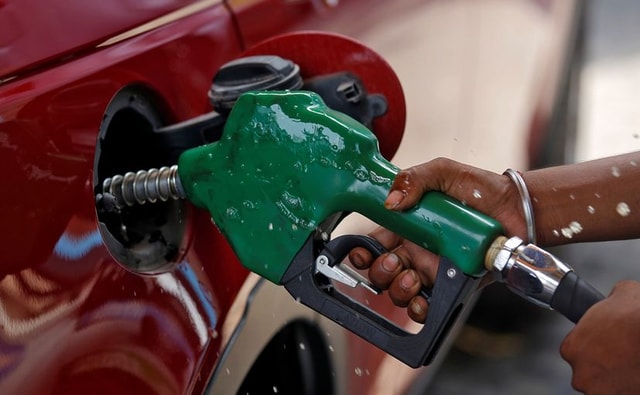 Preetam Bora | Jun 4, 2026E85 Fuel Rollout Imminent, Could Be Much Cheaper Than PetrolThe Indian government is now emphasising increasing ethanol blending to 85 per cent, or E85 petrol, in comparison to current E20 petrol, where 20 per cent ethanol is mixed with 80 per cent petrol.2 mins read
 Preetam Bora | Jun 4, 2026Royal Enfield Bullet 650 Review: Is This the Most Desirable RE 650 Twin Yet?We spent some quality time with the new Royal Enfield Bullet 650, and here's our honest take – what we love, and where there's room to do better.1 min read
 Janak Sorap | Jun 2, 2026California Superbike School: Finding Speed The Right WayThree days of coaching, track time and self-discovery at California Superbike School revealed that riding faster begins with understanding how to ride better.7 mins read
 Girish Karkera | May 31, 20262026 Honda City e:HEV Review: Smartest Compact Sedan To Buy?The most affordable strong hybrid sedan in India looks more interesting than any of its past avatars1 min read
 Bilal Firfiray | May 29, 2026Skoda Octavia vRS Review: The Sensible Car Every Car Guy (Eventually) WantsThe Skoda Octavia vRS blends practicality with performance. It’s a real enthusiast appeal in a sensible sedan package.1 min read
 Bilal Firfiray | May 25, 2026Renault Duster 1.3 Turbo DCT Road Test Review: The Solid Middle GroundMarking its return, the Renault Duster offers a strong ride quality, a refined 1.3 turbo-petrol engine, balanced handling and lot more impressive cabin. Should you buy it though?5 mins read