
Automotive Logos Mean Nothing Without Experience
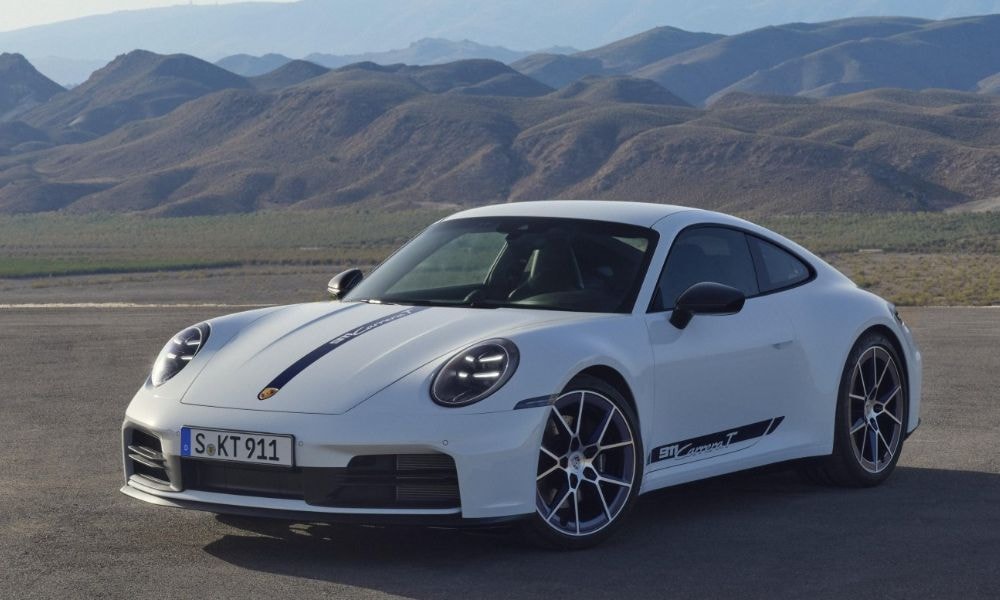
"If you tell me what you love, I will tell you what you are."
This quote from Antonin Sertillanges’, “The Intellectual Life”, defined a human’s identity. Ferdinand Porsche communicated his identity through his products , and users who experienced them became addicts, turning “Porsche” into a “Pusher” of not just a product , but a unique automotive philosophy. Call it Porsche-ism.
In my first career, as an internal auditor at companies making tractors, refrigerators etc, all I knew was that trademarks were law and their logos were art. The marketing department’s job was to create advertisements to tell customers why they should buy a product, and they must feature logos to identify them while shopping. The process worked well when sales went up, but when they didn’t, my role was to present the data – Money Spent vs Money Earned – and write a report of the discussions between various HODs and the MD. These reports were full of terms I didn’t understand then, and when I asked, I was told, “Don’t worry, that’s not your job”!
I was not worried, but since I was young, I was curious – because I had to clear a paper called “Inductive and Deductive Logic” enroute to my accounting degree. So, to learn the “logic” in marketing, and at a much lower salary (logic that horrified my boss and parents), I joined an advertising agency while attending evening classes in marketing at a nearby business school. While the professors taught me the four Ps of marketing (product, price, place, promotion), a practitioner – my first client - taught me the order in which they must work to make a business succeed.
Preference before identification
My first client made cigarettes, and my very first meeting was a smokers’ panel who evaluated cigarettes without seeing the pack, the name or the logo. Yet, every member on the panel expressed clear preferences and explained them with surprising confidence: aroma, taste, smoothness and after-effects.
People had already decided what they preferred before they knew what it was called.
A month later, the product – tobacco blend, paper, filter etc. - was finalised, and meetings then were about names, logos and packaging that our agency had created. Finally, came the client’s brief for the advertising, “Justify the price of India's most expensive cigarette.” The campaign followed the brief, and when the Q1 sales met the client’s expectations, we partied.
By Q2, cigarette advertising was banned, but sales kept growing – not just in India, but also in Nepal. Interestingly, with a different name, logo and packaging.
Marketing logic for an accountant - a product creates a user’s experience, which gives the meaning to the name, or names to the user. People can change names (identifier), but it doesn’t change who they are (their identity).
THE AUTOMOTIVE EQUIVALENT
I wasn’t a smoker, but I was a biker – so to check if my “marketing logic” worked for India’s bike makers as well, I switched jobs. I joined an advertising agency that owned the research company which had conducted those smoker panels, and one of its key client made bikes my father used, and I learnt motorcycling on.
In our very first meeting, this client there asked a simple question: "Are there 5,000 Indians willing to buy our Japanese partner’s motorcycle (then) priced almost at par with a car?"
Instinctively, I cited the “smoker panel” experience, and offered to conduct “blind tests” for the new bike and answer the client’s question. The client agreed, but my boss was perplexed - because we were the ad agency, not the research arm. Four months of pan-India blind testing later, our research concluded - make at least 10,000 units.
The television commercial barely showed the motorcycle. It focused on its unmistakable sound and the expressions of people hearing it for the first time. While pretesting the TVC, one viewer summed it up perfectly: "Bloody maniac... I couldn't even read the name!"
Clearly, he remembered the experience, not the logo.
Another 18,000 Indians remembered the sound and booked the RD 350, from a name that was then unknown in India. Soon afterwards Yamaha introduced the RX100. This time, one announcement advertisement was almost enough. The RD350 had already created the meaning. The Yamaha logo simply inherited it.
Products (names) come and go. Brands (surnames – even hyphenated ones) live forever.
Emission regulations eventually ended the two-stroke era and Hero-Honda’s fuel-efficient 4-strokes soon ruled India’s 2-wheeler market. Yamaha responded with equally fuel-efficient four-stroke motorcycles, but its sales declined.
And our research revealed, why. For India’s commuters, Hero-Honda meant “transport”, but for India’s enthusiasts Yamaha was supposed to mean “sport”. Many enthusiasts spent much more in restoring old RD350s and RX100s, than buying Yamaha’s brand-new 4-stroke bikes which couldn’t deliver the ‘true Yamaha experience’.
My recommendation was straightforward. Take the spiritual successor of the RD (Race Derived) 350 – Yamaha’s race-winning 4-stroke YZF-R1, and create a scaled down (and therefore more affordable) version of it – a 4-stroke version of the RX 100, but with cutting-edge styling and even more power as substitute for the RX-100’s 2-stroke sound.
That product – the YZF-R15 - restored Yamaha’s identity, and one test ride of it rekindled Indian bikers’ love for the brand. No advertising was required – just a press release inviting people to see Valentino Rossi launch the new product at Yamaha showrooms. Years later, another product with the YZF R15’s engine – made sure that Yamaha meant “sport” even for India’s scooterists, while “Activa” reinforced that Honda meant “transport”.
A brand with a strong identity can leverage it for entering seemingly disparate markets. Yamaha’s first business was musical instruments, then hi-fi, so it’s natural that its bikes bearing the “Tuning Fork” logo are music for every category of enthusiasts across the world.
When the machine becomes the brand, cash registers make music.
Like Honda and Yamaha, India embraced Suzuki engineering with the name “Maruti”. But every service showed the owner Suzuki under the hood. When India first introduced BS Norms, the name was changed to Maruti Suzuki. Regardless, the experience remained consistent, and MSIL’s cash-registers have kept ringing – in showrooms, and in stockmarkets.
Likewise, "Intel Inside" succeeded because Intel processors consistently justified the promise. Because engineering created preference and that one sticker reminded users which name (the source) to trust, without looking under the hood.
In the era of AI, branding is going back to Porche-ism. Artificial intelligence now makes beautiful logos, compelling copy and polished visuals/videos. Quickly. Making marcom ubiquitous and therefore a commodity. Which makes product differentiation even more valuable when creating a business, with continuous investment in engineering and industrial design for consistently superior experiences for users to call the logo or name a brand.
And that requires passion- which can only come from the “human in the loop” who uses AI as a tool, and not an end in itself. Like the passion for physics that led to Tesla, and the passion for chemistry that led to BYD. Both dominate mobility in the new world order of car makers.
PS: I hope “Honda = transport” changes, because my Fireblade meant ‘Honda’ when I lived abroad.


The author is an accountant-turned-Indian advertising and brand specialist. An alumnus of SRCC and IIM Calcutta, he founded Embrand in 1996 where he works extensively on user-experience driven product development.
Related News


Latest Cars


Upcoming Cars


Latest News


 car&bike Team | Sep 30, 2026Royal Enfield Himalayan 440 Bookings Temporarily Halted After Strong DemandRoyal Enfield has temporarily stopped accepting bookings for the Himalayan 440 after selling through around six months’ worth of planned production.1 min read
 car&bike Team | Sep 30, 2026New Royal Enfield Himalayan 750 Spied In Four ColoursThe upcoming Royal Enfield Himalayan 750 has been spotted in four colour schemes.1 min read
 Sarthak Mahajan | Sep 30, 2026Porsche Cayenne Electric Launched At Rs 1.77 CrorePorsche has launched the Cayenne Electric twins in the Indian market, producing up to 1,140 bhp and 1,500 Nm of torque.3 mins read
 car&bike Team | Sep 30, 2026Yamaha R15 M Could Be Discontinued; Base Variants To ContinueYamaha likely to discontinue the R15 M, creating a wider price and positioning gap between the newly launched R2.1 min read
 car&bike Team | Sep 30, 2026CAFE-III Norms For Cars Released, Electric Vehicles To Benefit More Than Small CarsThe new norms will come into effect from 1 April 2027 and remain applicable up to 31 March 20321 min read
 Shams Raza Naqvi | Sep 30, 202610 New Car Launches In October: Hyundai Bayon, Duster Hybrid And Audi Q3 Lined UpThe festive season will well and truly kick in with as many as 10 new cars hitting the roads in October5 mins read
 Bilal Firfiray | Sep 28, 2026Renault Triber 1.0 Turbo Review: Was It Necessary?With the new RGEP platform, the Triber has received a much-awaited turbocharged petrol engine. It makes more power now, but was it necessary for this seven-seater MPV's fitness to purpose?5 mins read
 Girish Karkera | Sep 26, 2026Mahindra Thar OG Review: An Ode To The Past But Aimed At The FutureOn the surface, the new Mahindra Thar OG might look like a facelift, but that is more than meets the eye.7 mins read
 Jafar Rizvi | Sep 28, 2026TVS Orbiter Long-Term Review (Report 2): Slow But SmoothAfter nearly three months with the TVS Orbiter, its relaxed performance remains its biggest weakness, but easy handling, comfort and usable real-world range make it a capable city commuter.1 min read
 Bilal Firfiray | Sep 19, 2026MG Hector Tomahawk EV Review: Play It SafeMG’s new electric SUV has one of the coolest names ever, and the coolest temperament amongst its peers. But is it worth buying?7 mins read
 Preetam Bora | Sep 16, 2026Royal Enfield Himalayan 440 Review: Better Than the 450?The new Himalayan 440 with an upsized engine and gearbox has certainly improved as a touring machine and at an extremely attractive price of Rs. 2.29 Lakh. Is it the better Himalayan to choose for many riders?9 mins read