
Analysis-EU Gas Solidarity Complicated By Lack Of Fuel Sharing Deals

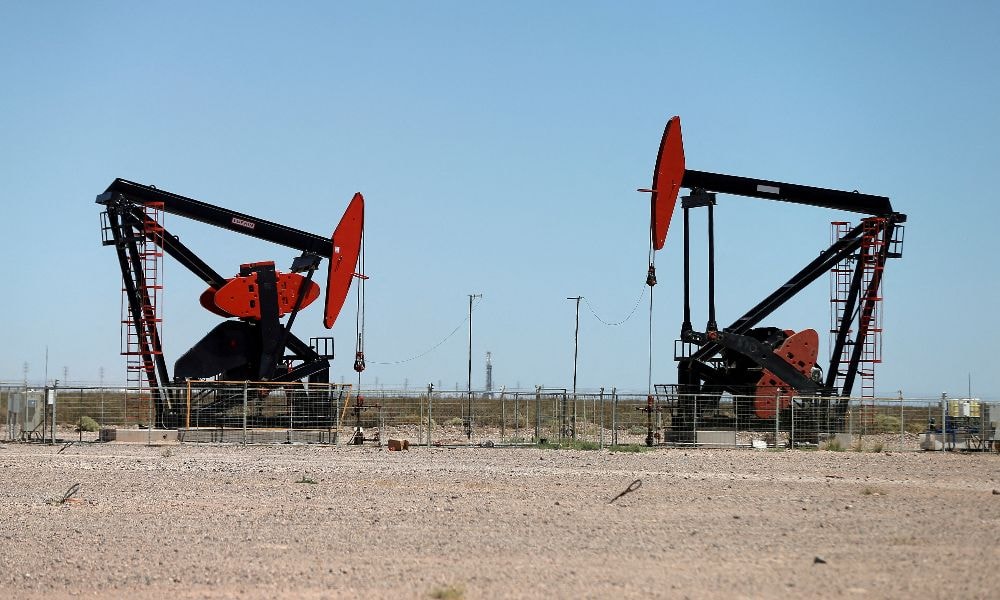
The European Union clinched a deal this week to cope with a gas supply crisis, but to make it work member states need to establish bilateral pacts to share gas and, right now, most have no such agreement in place.
Only six such deals have been secured, leaving most of the EU's 27 countries without firm terms on how and when they would share gas in a supply crunch, or the financial compensation they would give or get for doing so.
"(Bilateral deals) are really ... the only thing that will hold at the end of the day if there is a real supply crisis," Christian Egenhofer, associate senior research fellow at the Centre for European Policy Studies, said.
"They organise the legal stuff, the compensation, the financial but also the infrastructure constraints," he said.
Fearing Russia may completely halt gas flows, EU countries agreed on Tuesday to curb their gas use by 15% over winter, to fill storage and free up fuel to share around in a supply crisis.
But it is up to individual countries to sort out how that sharing of fuel will happen in practice.
EU laws oblige member states to send gas to a neighbouring state whose households or essential services like hospitals face a severe shortage. To make that happen, governments arrange bilateral deals. However, just eight countries are covered by the six agreements so far - including between Germany and Austria, Estonia and Latvia, and Italy and Slovenia.
"This is not sufficient," EU energy policy chief Kadri Simson said last month, urging countries to arrange more.
A handful of countries are negotiating new two-way agreements, government officials said. A German-Czech deal is due to be signed by winter, and Germany is working on further agreements with Poland and Italy, its economy ministry said.
But some countries heavily reliant on Russian gas - such as landlocked Hungary, which opposed this week's deal - have none. Italy and France are the EU's biggest gas users after economic powerhouse Germany. Italy has just one bilateral deal on emergency gas sharing and France has none.
A senior Italian official said the country was negotiating a deal with Greece on gas storage. The French energy ministry said "at this stage" France did not have any bilateral agreements in place.
The solidarity deals aim to avoid a panicked response if a supply crisis did strike, and reduce the risk that countries would hoard fuel and refuse to help their neighbours.
GUARANTEEING GAS SHARING
Simone Tagliapietra, senior fellow at the Bruegel think tank, suggested the EU should implement a wider compensation scheme where countries pay other member states to save and share gas.
"Without such a compensation mechanism it will be difficult to ensure solidarity," he said, adding that Europe's biggest economy Germany, which is heavily reliant on Russian gas, should be first to contribute.
Without firmer terms on gas sharing, "we might not see all the solidarity we currently see on paper turn into molecules moving around Europe," Tagliapietra added.
The idea of compensation may appeal to states like Greece and Spain, which initially balked at being asked by Brussels to use less gas to help countries that for years cultivated closer energy ties with Moscow.
Spain does not rely on Russian gas, and EU diplomats said Brussels' call for solidarity rankled in some capitals that still resent Germany's sharp criticisms of southern states' economic policies during past financial crises.
After EU countries approved the gas curbs on Tuesday, however, Spanish Energy Minister Teresa Ribera struck a more conciliatory tone, expressing willingness to reinforce Spain's liquefied natural gas import capacity "for the benefit of all".
German Economy Minister Robert Habeck also pledged, "as part of European solidarity" to keep gas flowing to its neighbours including Austria and the Czech Republic.
Germany has so far been the most active country in seeking solidarity arrangements with neighbours. As well as being Europe's biggest gas consumer, Germany's pipelines are the veins through which gas reaches many central and eastern states.
Some appear unwilling to cooperate, however. Hungary this month said it would stop exporting fuels to other countries. Poland has also struck a sceptical tone on sharing supplies.
The EU-wide deal on Tuesday was approved by all 27 members except Hungary, which also initially opposed EU oil sanctions on Russia. The agreement set voluntary curbs on gas use that can be made binding in a supply crisis. But it included a raft of exemptions and derogations for countries and industries that some analysts said meant, if Russia did shut off flows, more severe curbs and sharing between states would be needed to guarantee supply.
One EU diplomat said it was ultimately in countries' own interests to help one another, since an economic crisis or a gas shortage in one - particularly in Germany - would ripple around the bloc.
"If Germany falls, every one of us will fall with Germany," the diplomat said.
Related News


Latest Cars


Upcoming Cars


Latest News


 car&bike Team | Jul 31, 2026Hero Vida VX2 Now Available With Fixed 3.1 kWh Battery, Priced At Rs 1.13 LakhUnlike the existing removable-battery variants, the new VX2 variant comes with a fixed battery and direct-plug charging.1 min read
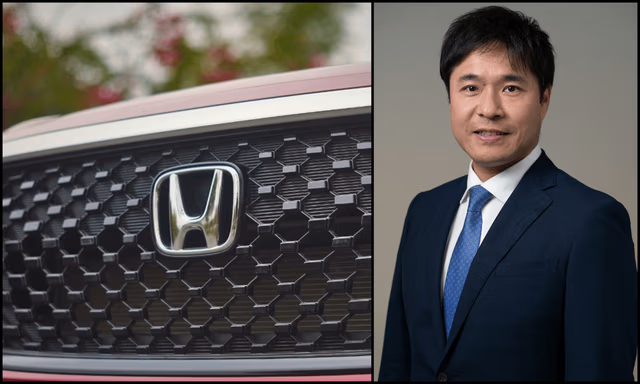 car&bike Team | Jul 31, 2026Honda Cars India Appoints Toshiyuki Yanagisawa As New President And CEOYanagisawa replaces Takashi Nakajima, who is set to move to Honda's regional headquarters after completing his stint in India.1 min read
 car&bike Team | Jul 31, 2026TVS Raider Doctor Doom Edition Launched At Rs 95,320TVS has expanded its Marvel-inspired Raider 125 Super Squad lineup with a new Doctor Doom Edition.2 mins read
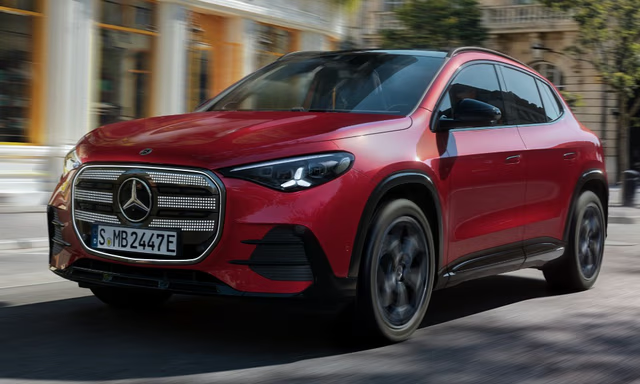 Jaiveer Mehra | Jul 31, 2026Third-Gen Mercedes-Benz GLA Debuts With Internal Combustion, Electric Powertrains; EV Offers Over 600 Km RangeUnlike the new CLA and GLB, the GLA’s styling draws inspiration from the new GLC EV.1 min read
 car&bike Team | Jul 30, 2026Maruti Suzuki's Hansalpur Plant Hits 10 Lakh Annual Production Capacity; First For Suzuki GloballyWith production beginning at its fourth plant, the Hansalpur facility can now build one million cars a year, making it the largest passenger vehicle manufacturing site at a single location in India.1 min read
 Amaan Ahmed | Jul 30, 2026Made-In-India Honda Rebel 500 Set To Wear Sub-Rs 4 Lakh Price TagRegional BigWing dealer websites incorrectly listed a price of Rs 5.50 lakh for the Rebel 500, but that's not the price at which the locally-built model will be launched.1 min read
 Bilal Firfiray | Aug 1, 2026Toyota Hilux Review: The InvincibleMarking it as the ninth generation, the Hilux comes with a major cosmetic overhaul. But is it still relevant enough for the current times or is it getting too long in the tooth?1 min read
 Bilal Firfiray | Jul 30, 2026Kia Syros EV Review: Best EV To Buy Under Rs 20 Lakh?The Kia Syros EV comes into the game with a modern design, spacious cabin, strong performance, decent range and an aggressive pricing. But could it become the new benchmark under Rs 20 lakh?5 mins read
 Jaiveer Mehra | Jul 27, 20262026 Maruti Suzuki Brezza Facelift Review: Bestseller Joins The Turbo ClubWhile Maruti’s facelifts have always tended to bring subtle updates over the outgoing models, the latest Brezza brings some heavy updates under the skin, including a new 6-speed manual gearbox and, for the first time, a turbocharged petrol engine option.1 min read
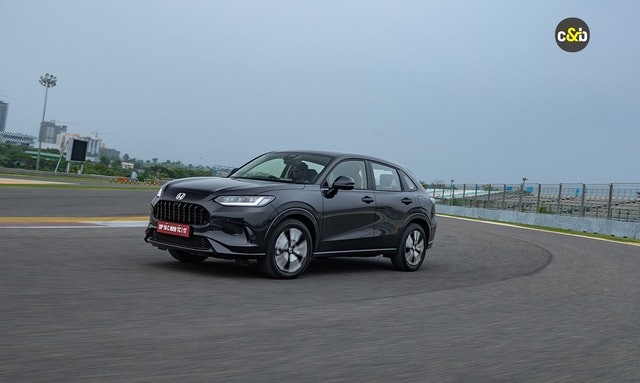 Bilal Firfiray | Jul 24, 2026Honda ZR-V Review: Who Is It For?Honda has brought the new ZR-V to India as their current flagship offering. It’s a CBU, it’s a hybrid, and it’s here for a limited few. Who is it for though?1 min read
 Girish Karkera | Jul 29, 2026Mercedes-AMG E53 4MATIC+ PHEV First Drive Review: Just What The Doctor OrderedThere are luxury cars and there are high-performance cars. But what if you want both for the price of one? Mercedes-Benz has a recommendation that promises to tread a fine line between the two – the second generation E53 with a twist.7 mins read