
Analysis-When It Comes To Oil, The Global Economy Is Still Hooked


The world may be less dependent on oil now than it was during the energy shocks of the 1970s, but the Ukraine conflict is stark evidence of a stubborn craving that can still disrupt economies, confound policymakers and spark political strife. When the Yom Kippur War of 1973 triggered an Arab State oil embargo that convulsed world markets and sent inflation into double-digits, oil made up nearly half the global energy mix - a figure that has since dropped to around one third.
The shift came as rich countries focused more on services, factories became more efficient and electricity generation switched away from using oil to coal and natural gas instead.
A Columbia University study last year found that the same economic growth which half a century ago required one barrel of oil could now be had with less than half a barrel.
Some analysts had in recent years even speculated that the world economy could take future oil shocks in its stride. Others pointed to the COVID-19 lockdowns of the past two years as evidence that the economy could - in an albeit different form - function with dramatically lower oil consumption.
But the roaring back of oil demand in 2021 and the spike in oil prices triggered by the Ukraine conflict has highlighted again the size of the effort that will be needed to wean the global economy from an oil habit ingrained over decades.
Shifting oil demand is difficult in the short term as it requires trillions of dollars to replace legacy infrastructure such as vehicles and equipment, said Alan Gelder, VP refining, chemicals, and oil markets at consultancy Wood Mackenzie.
"Investment is needed to reduce the linkage of economic activity and oil demand," he said.
The latest rally in oil prices - up 50% since the start of the year - has buried the hopes nurtured last year by the world's central banks that the inflation stoked by pandemic-era stimulus packages would be "transitory".
Instead it has made it only too clear just how deeply oil permeates the internal mechanics of the global economy.

Asia, as the region with not only the world's largest demand for oil but also the fastest growth in demand, is also badly hit
PETROL PUMP ANGER
Americans are driving less and airlines are charging higher fares. From the petrochemicals used in plastics or crop fertilizers to the fuel burned simply to ship goods around the world, crude oil derivatives are a big part of the higher prices that consumers are now paying for all kinds of essential goods.
In the United States, the Fed estimates that every $10 per barrel rise in oil prices cuts GDP growth by 0.1 percentage point and increases inflation by 0.2 percentage point. In the euro zone, as a rule of thumb, every 10% rise in the oil price in euro terms increases euro zone inflation by 0.1 to 0.2 points, according to European Central Bank research.
Inevitably, that most visible impact is at the petrol pump.
Europe's oil-importing nations are racing to offer motorists fuel rebates and other concessions, mindful of how their anger can spill over into wider protest - as it did with the "yellow vest" movement in France back in 2018.
Asia, as the region with not only the world's largest demand for oil but also the fastest growth in demand, is also badly hit. Japan and South Korea are among those who are raising fuel subsidies to offset higher prices.
The world's biggest oil producer, the United States, should be better shielded than others. Federal Reserve Chair Jerome Powell noted on Monday that the country is clearly better able to withstand an oil shock now than in the 1970s.
But that did not stop him from delivering his strongest message to date on his battle with too-high inflation, suggesting the central bank could move "more aggressively" to keep an upward price spiral from getting entrenched.
EXPENSIVE HABIT TO KICK
If it took five decades for oil's share in the global energy mix to fall from 45% to 31%, it remains an open question how quickly the world - now with its avowed goal of net-zero carbon economies - can further reduce that share.
Motorists' switch to electric vehicles is expected to cause a tipping point in global oil demand, sending it into decline. Passenger vehicles are the sector with the largest oil demand use, consuming around one-quarter of the oil used worldwide.
"Oil intensity will from now on fall much faster, as global oil demand will peak within the next few years, thereafter to decline, while GDP will continue to grow," said Sverre Alvik, energy transition programme director at energy adviser DNV, which sees electric vehicles reaching 50% of new passenger vehicle sales in 10 years.
Yet that is only one side of the story.
The rising demand for oil in Asia, plus the fact that key sectors like shipping, aviation, freight and petrochemicals are much further behind the auto sector in switching to alternative fuels, mean large areas of oil demand remain firmly entrenched.
"Our projections suggest that dependence on oil, particularly imported oil, is unlikely to disappear quickly," IEA analysts concluded in a 2019 note entitled "The world can't afford to relax about oil security".
Such outlooks suggest that, even in a best-case scenario, the world's transition from oil and other fossil fuel sources will pose new challenges for consumers and policymakers alike.
European Central Bank Executive Board member Isabel Schnabel this month used the term "fossil-flation" for the price to be paid for what she called "the legacy cost of the dependency on fossil energy sources".
For Schnabel, that cost stems partly from how policies like carbon pricing make fossil fuels more expensive but more so because of how energy producers can create artificially tight markets to push prices up at the expense of importers.
Add to that the embargoes imposed on Russian oil by the United States and Britain, and Europe's goal of cutting its Russian gas imports, and she concluded: "A marked decline of fossil energy prices, as indicated by current futures prices, seems rather unlikely from this perspective."
(This story has not been edited by NDTV staff and is auto-generated from a syndicated feed.)
Related News


Latest Cars


Upcoming Cars


Latest News


 car&bike Team | Jul 25, 2026River Indie Electric Scooter Crosses 50,000 Units Production MilestoneThe milestone comes less than three years after the first unit rolled out of the company's Hoskote manufacturing facility.2 mins read
 car&bike Team | Jul 25, 20262026 Maruti Brezza Facelift Fuel Efficiency Figures RevealedThe updated model returns up to 26.90 km/kg in CNG guise, while the newly introduced turbo-petrol delivers a claimed 20.47 kmpl.2 mins read
 Jafar Rizvi | Jul 25, 2026Honda ZR-V Hybrid SUV Launched In India At Rs 47.99 LakhThe ZR-V is Honda’s first hybrid SUV for India and arrives as a CBU.1 min read
 Jafar Rizvi | Jul 24, 20262026 Maruti Brezza Facelift: Variants, Features, Engine Options ExplainedThe 2026 Maruti Suzuki Brezza is offered in four trim levels: LXi, VXi, ZXi and ZXi+ and with two engine options.5 mins read
 Jafar Rizvi | Jul 24, 20262026 Maruti Brezza Facelift Launches With Three Major FirstsThe 2026 Maruti Suzuki Brezza has arrived, and along with carrying a five-star Bharat NCAP rating, the model brings three firsts for both the Brezza and, in one case, Maruti itself.2 mins read
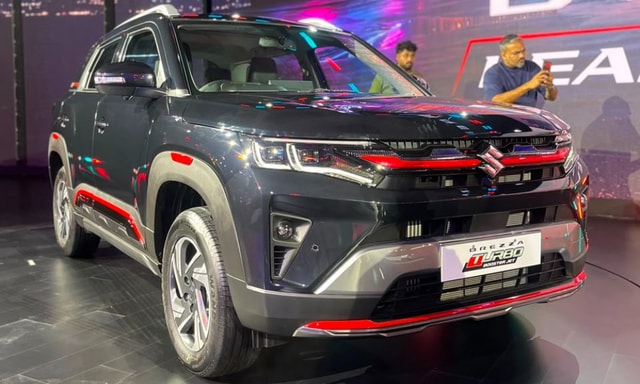 Jaiveer Mehra | Jul 24, 20262026 Maruti Suzuki Brezza Facelift Launched; Price Starts At Rs 7.40 LakhUpdated Brezza arrives with a new turbo-petrol engine option and a new 6-speed manual gearbox aside from new features.2 mins read
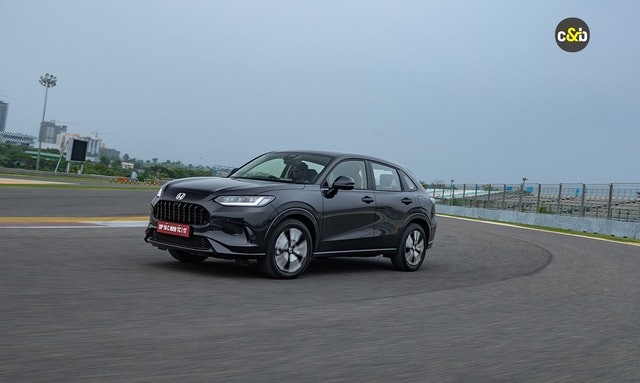 Bilal Firfiray | Jul 24, 2026Honda ZR-V Review: Who Is It For?Honda has brought the new ZR-V to India as their current flagship offering. It’s a CBU, it’s a hybrid, and it’s here for a limited few. Who is it for though?1 min read
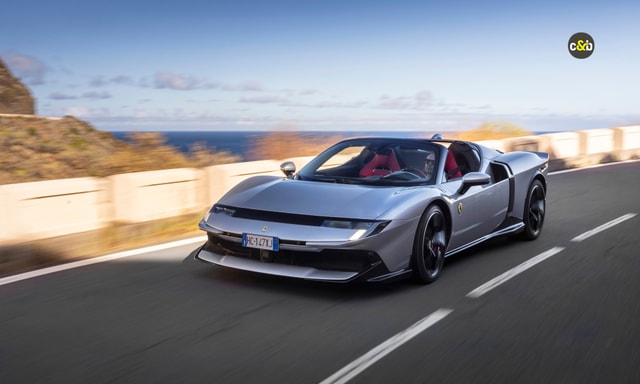 Shams Raza Naqvi | Jul 15, 2026Ferrari 849 Testarossa Spider Driven: Rs. 11.25 Crore Meets 1,000 bhpWe got behind the wheel of the most powerful convertible from Ferrari. What makes the 849 Testarossa Spider Special? We tell you.1 min read
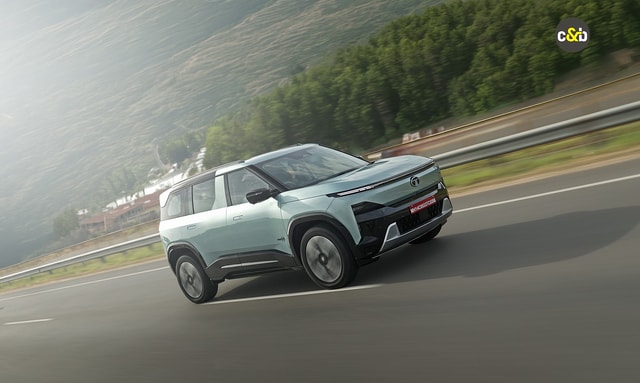 Bilal Firfiray | Jul 12, 2026Tata Sierra EV Review: Reborn In The Electric AgeThe Tata Sierra EV isn’t drastically different from its ICE counterpart when it comes to design. But being the seventh electric offering from the Indian brand, it has gotten a few things right, and very few things wrong. But is it a compelling package to buy?5 mins read
 Jafar Rizvi | Jul 13, 2026TVS Orbiter Long-Term Review (Report 1): Settling In Takes TimeFirst impressions weren't the strongest, but the Orbiter has made a mark in its first month in the car&bike garage.5 mins read
 Seshan Vijayraghvan | Jul 7, 2026Tata Altroz Petrol DCA Long-Term Review: Intercity & Highway Driving ReportWe tested the Tata Altroz Petro DCA’s highway manners, intercity performance, and real-world fuel efficiency.1 min read