
Fuelled By Volvo, China's Geely Seeks Launchpad To Enter Auto Giant Orbit

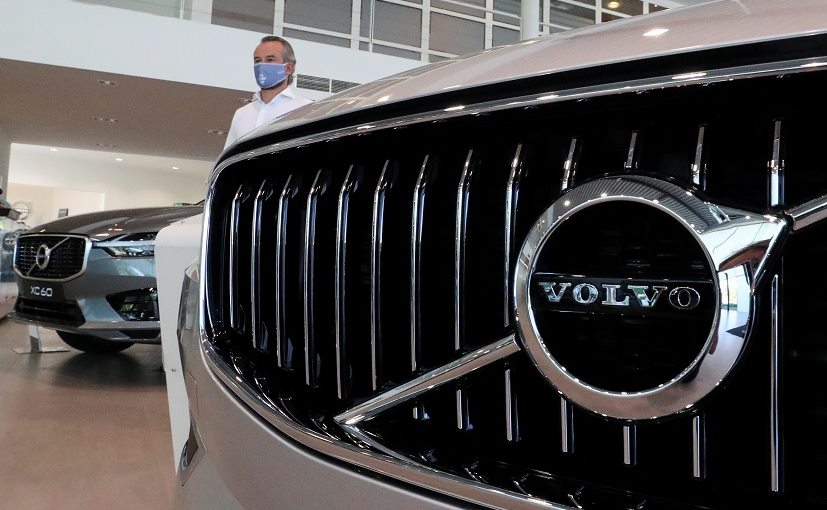
Chinese carmaker Geely plans to use a platform developed with input from Volvo to build new models in Malaysia for its partly owned Proton brand, a strategy that shows how it aims to accelerate its push to become China's first global auto giant. The yet-to-be-finalised plans for Proton are just one strand of a Geely project to revamp factories at home and abroad using joint platforms it has been perfecting with Volvo since 2013. Geely bought the Swedish brand 10 years ago for $1.8 billion (1.4 billion pounds) - a deal that raised its international profile and sent shockwaves through the global auto trade.
Senior Geely officials and engineers told Reuters that a project dubbed Compact Modular Architecture (CMA) will allow them to develop, design and build different types of compact cars with similar mechanical layout faster than before - and at lower cost.
They said CMA, along with a platform for smaller cars known as B-segment Modular Architecture (BMA) that Geely plans to roll out for Proton, allow them to harness the Swedish automaker's technologies and Geely's capabilities in cost control, supply chain management and local production.

The new platform developed by Geely and Volvo will be used to build new models in Malaysia for its partly owned Proton brand
"CMA will be the core of Geely's future architecture design ... We learn technologies and build up talents through developing it," said Li Li, vice president at Geely Automobile Research Institute, confirming the Proton plan during an interview in Ningbo, south of Shanghai. Li declined to disclose details of general investment, financial targets or a timetable for expansion plans.
From its lowly foundation in 1986 in Taizhou on the east coast as a maker of refrigerator parts, Geely has grown into one of the biggest players in China, the world's largest auto market accounting for nearly one in every three passenger cars sold around the planet. Geely now sells more than 2 million cars a year across all brands, ranking it not far from the world's top 10 automakers by unit sales.
The CMA platform in particular will allow Geely and Volvo to design vehicles more quickly and cost-effectively, Li said, providing a technological springboard towards a higher market share at a time when the auto industry must embrace a future featuring electric and autonomously driven transport.
GLOBAL AMBITIONS
Like Geely - an anglicisation of the Chinese word for 'lucky' - domestic peers Great Wall Motor and GAC have branched out with their own versions of vehicle platforms, harbouring greater ambitions for selling cars in major Western markets.
But grand plans have previously been delayed, or simply cancelled, amid a lack of practical preparedness, analysts have said, against a backdrop of years of trade tensions between China and the United States that have roiled the global economy. At the same time, attention has been diverted to deal with stalling sales at home as the pace of China's growth has slowed.
In its pursuit of global automaker status, Hangzhou-based Geely is now holding talks to merge the Volvo Cars business with its Hong Kong-listed Geely Automobile - worth about $22 billion by market value, bigger then famed industry names like Fiat Chrysler Automobile and Nissan Motor.
As well as the 49.9% stake it took in Proton three years ago, the broader Geely group - Zhejiang Geely Holding Group, led by Taizhou-born billionaire Li Shufu - now also comprises a 9.7% stake in Germany's Daimler AG and a majority stake in British sport car brand Lotus.
And while giants from Toyota Motor Corp to Volkswagen AG and General Motors Co have followed a similar shared platform projects for their respective brands, Geely's strategy is a first for a Chinese company.
The automaker plans to develop all its future models for the Geely and Lynk & Co brands on CMA or other related product platforms, like BMA. It is also developing a new architecture to accelerate the launch of pure battery electric vehicles with intelligent connectivity functions, said Li, a former Ford engineer.
In addition, Geely wants to shift development of next generations of some popular existing models, like Borui and Emgrand sedans, to those architectures, he said. It takes around 18 months for Geely to significantly change a CMA-based car, versus 24-30 months to do so on a non-CMA-based model.
Using CMA, plant managers can switch production of different models to maintain smooth overall capacity utilisation rates at production lines, said Oskar Falk, the Volvo-trained head at Geely and Volvo's first joint production site in Taizhou.
The plant already exports Volvo Polestar 2 electric sedans to the United States and Europe, and is preparing to make Volvo's first battery-powered electric vehicle, Falk said.
Geely also plans to start exporting China-made Lynk & Co 01 SUVs to Europe this year.
Related News


Popular Volvo Models


Latest Cars


Upcoming Cars


Latest News


 car&bike Team | Jul 25, 2026Jeep Meridian 85th Anniversary Edition Launched At Rs 36.05 LakhLimited to 85 units, the special edition gets cosmetic changes and also features the CARA AI voice assistant.1 min read
 car&bike Team | Jul 25, 2026River Indie Electric Scooter Crosses 50,000 Units Production MilestoneThe milestone comes less than three years after the first unit rolled out of the company's Hoskote manufacturing facility.2 mins read
 car&bike Team | Jul 25, 20262026 Maruti Brezza Facelift Fuel Efficiency Figures RevealedThe updated model returns up to 26.90 km/kg in CNG guise, while the newly introduced turbo-petrol delivers a claimed 20.47 kmpl.2 mins read
 Jafar Rizvi | Jul 25, 2026Honda ZR-V Hybrid SUV Launched In India At Rs 47.99 LakhThe ZR-V is Honda’s first hybrid SUV for India and arrives as a CBU.1 min read
 Jafar Rizvi | Jul 24, 20262026 Maruti Brezza Facelift: Variants, Features, Engine Options ExplainedThe 2026 Maruti Suzuki Brezza is offered in four trim levels: LXi, VXi, ZXi and ZXi+ and with two engine options.5 mins read
 Jafar Rizvi | Jul 24, 20262026 Maruti Brezza Facelift Launches With Three Major FirstsThe 2026 Maruti Suzuki Brezza has arrived, and along with carrying a five-star Bharat NCAP rating, the model brings three firsts for both the Brezza and, in one case, Maruti itself.2 mins read
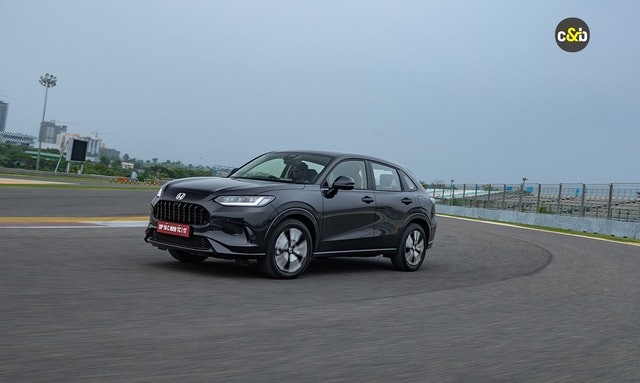 Bilal Firfiray | Jul 24, 2026Honda ZR-V Review: Who Is It For?Honda has brought the new ZR-V to India as their current flagship offering. It’s a CBU, it’s a hybrid, and it’s here for a limited few. Who is it for though?1 min read
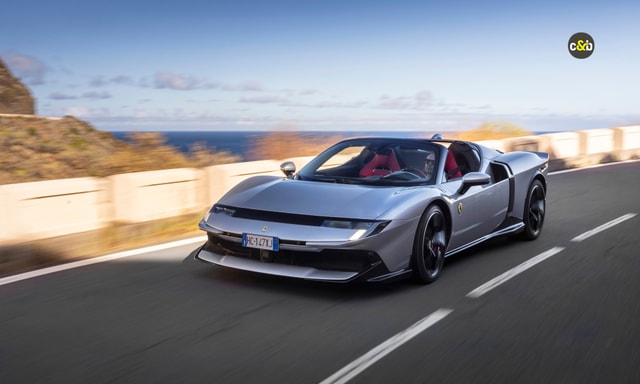 Shams Raza Naqvi | Jul 15, 2026Ferrari 849 Testarossa Spider Driven: Rs. 11.25 Crore Meets 1,000 bhpWe got behind the wheel of the most powerful convertible from Ferrari. What makes the 849 Testarossa Spider Special? We tell you.1 min read
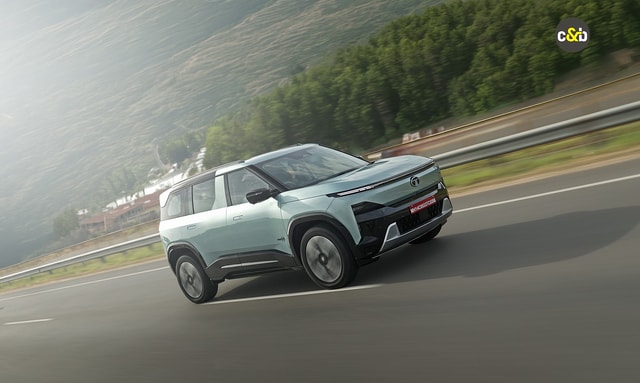 Bilal Firfiray | Jul 12, 2026Tata Sierra EV Review: Reborn In The Electric AgeThe Tata Sierra EV isn’t drastically different from its ICE counterpart when it comes to design. But being the seventh electric offering from the Indian brand, it has gotten a few things right, and very few things wrong. But is it a compelling package to buy?5 mins read
 Jafar Rizvi | Jul 13, 2026TVS Orbiter Long-Term Review (Report 1): Settling In Takes TimeFirst impressions weren't the strongest, but the Orbiter has made a mark in its first month in the car&bike garage.5 mins read
 Seshan Vijayraghvan | Jul 7, 2026Tata Altroz Petrol DCA Long-Term Review: Intercity & Highway Driving ReportWe tested the Tata Altroz Petro DCA’s highway manners, intercity performance, and real-world fuel efficiency.1 min read