
New Device Could Make Hydrogen Cars Affordable For Masses

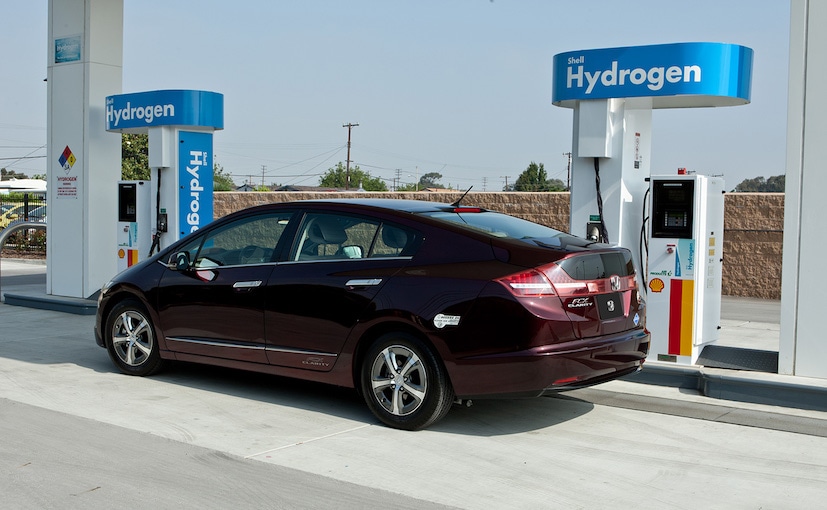
- The new device produces hydrogen using cheaper materials like nickel
- Unlike traditional hydrogen fuel cells, the device uses 3 electrodes
- The device can also be useful for rural areas or remote military units
Scientists have designed a device that can use solar energy to inexpensively and efficiently create and store energy, which could be used to power electronic devices, and to create hydrogen fuel for eco-friendly cars. The device could make hydrogen cars affordable for many more consumers because it produces hydrogen using nickel, iron and cobalt - elements that are much more abundant and less expensive than the platinum and other precious metals that are currently used to produce hydrogen fuel. "Hydrogen is a great fuel for vehicles: It is the cleanest fuel known, it's cheap and it puts no pollutants into the air - just water," said Richard Kaner, professor at University of California, Los Angeles (UCLA) in the US.
"And this could dramatically lower the cost of hydrogen cars," said Kaner, senior author of the study published in the journal Energy Storage Materials. The technology could be especially useful in rural areas, or to military units serving in remote locations.
"People need fuel to run their vehicles and electricity to run their devices. Now you can make both electricity and fuel with a single device," Kaner said. It could also be part of a solution for large cities that need ways to store surplus electricity from their electrical grids, researchers said. "If you could convert electricity to hydrogen, you could store it indefinitely," said Kaner.
Traditional hydrogen fuel cells and supercapacitors have two electrodes: one positive and one negative. The device has a third electrode that acts as both a supercapacitor, which stores energy, and as a device for splitting water into hydrogen and oxygen, a process called water electrolysis.
All three electrodes connect to a single solar cell that serves as the device's power source, and the electrical energy harvested by the solar cell can be stored in one of two ways: electrochemically in the supercapacitor or chemically as hydrogen.
The device also is a step forward because it produces hydrogen fuel in an environmentally friendly way. Currently, about 95 per cent of hydrogen production worldwide comes from converting fossil fuels such as natural gas into hydrogen - a process that releases large quantities of carbon dioxide into the air, said Maher El-Kady, a UCLA postdoctoral researcher and a co-author of the research.
"Hydrogen energy is not 'green' unless it is produced from renewable sources," El-Kady said. He added that using solar cells and abundantly available elements to split water into hydrogen and oxygen has enormous potential for reducing the cost of hydrogen production and that the approach could eventually replace the current method, which relies on fossil fuels.
Related News


Latest Cars


Upcoming Cars


Latest News


 Shams Raza Naqvi | Sep 18, 2026Kia Carens CNG, Carens Clavis CNG Launched In India: Prices Start At Rs. 12.12 LakhWhile the Carens CNG has been introduced in a single variant, the Clavis CNG will have two variants.2 mins read
 Girish Karkera | Sep 18, 2026Maruti Suzuki Swift, Dzire and Baleno CNG AMT Launched: Check Mileage, PricesAutomated manual gearbox option makes the petrol-CNG hybrid a viable option for everyday city use for Swift, Dzire and Baleno models4 mins read
 car&bike Team | Sep 18, 20262026 TVS Apache RTR 200 4V: Top 5 UpdatesThe TVS Apache RTR 200 4V has been introduced in a new top-end variant which gets a lot of new features, including preload adjustable front suspension. Here’s a look at what’s new on the top-spec Apache RTR 200 4V.1 min read
 Jaiveer Mehra | Sep 18, 20262027 Mahindra Thar 3-Door Facelift Teased Ahead Of LaunchSecond update in two years to bring additional cosmetic changes and more features.1 min read
 Amaan Ahmed | Sep 18, 2026Tata Sierra Legend Series Launched At Rs 11.99 Lakh; Adds More Features To Entry And Mid TrimsA slew of features, previously limited to the top-spec Sierra, have been introduced on the Smart+, Pure, Pure+ and Adventure+ variants of the SUV.3 mins read
 car&bike Team | Sep 18, 2026Raptee.HV Commences Customer Deliveries in Bengaluru, Targets 100+ Motorcycles by NovemberThe electric motorcycle maker has begun deliveries in Bengaluru and aims to deliver more than 100 motorcycles across Bengaluru and Chennai by November1 min read
 Preetam Bora | Sep 16, 2026Royal Enfield Himalayan 440 Review: Better Than the 450?The new Himalayan 440 with an upsized engine and gearbox has certainly improved as a touring machine and at an extremely attractive price of Rs. 2.29 Lakh. Is it the better Himalayan to choose for many riders?9 mins read
 Seshan Vijayraghvan | Sep 15, 2026BMW i5 LWB Review: Not The M60, This Is The Proper Electric 5 SeriesThe BMW i5 LWB takes the electric 5 Series formula and puts a stronger focus on rear-seat comfort and long-distance luxury. With a 669 km claimed range, 268 bhp and a more relaxed character, is this the i5 that makes the most sense for India?7 mins read
 Preetam Bora | Sep 14, 2026Ladakh Uncharted: Himalayan Basecamp Off-Road Ride ExperienceA day-long off-road excursion from Royal Enfield’s Himalayan Basecamp event in Ladakh, the Ladakh Uncharted ride by Alpinestars was all about re-discovery!6 mins read
 Janak Sorap | Sep 12, 2026New Bajaj Pulsar 125 First Ride Review: More Tech, Less Weight, Same Pulsar DNAThe new Bajaj Pulsar 125 retains the familiar Pulsar identity but gets a new engine, lighter construction, more features and a sharper riding experience.5 mins read
 Bilal Firfiray | Sep 10, 2026Mahindra XEV 9S Review: 3 Reasons To Buy It, And 3 Reasons To AvoidEveryone keeps telling me that the Mahindra XEV 9S is not the electric XUV 7XO. I disagree.1 min read