
Norway Sees A Boom In Electric Cars, Fueled By The Government

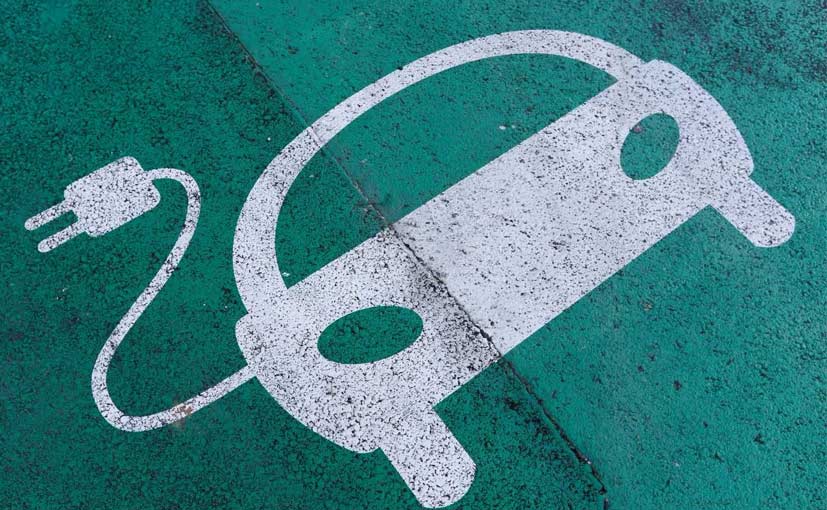
A silent revolution has transformed driving in Norway. Eerily quiet vehicles are ubiquitous on the ford-side roads and mountain passes of this wealthy European nation of 5.3 million. Some 30 percent of all new cars sport plug-in cables rather than gasoline tanks, compared with 2 percent across Europe overall and 1-2 percent in the U.S. As countries around the world - including China, the world's biggest auto market - try to encourage more people to buy electric cars to fight climate change, Norway's success has one key driver: the government. It offered big subsidies and perks that it is now due to phase out, but only so long as electric cars remain attractive to buy compared with traditional ones.
"It should always be cheaper to have a zero-emissions car than a regular car," says Climate and Environment Minister Ola Elvestuen, who helped push through a commitment to have only sell zero-emissions cars sold in Norway by 2025. The plan supports Norway's CO2 reduction targets under the 2015 Paris climate accord, which nations last agreed to rigorous rules to ensure emissions goals are met.
To help sales, the Norwegian government waived hefty vehicle import duties and registration and sales taxes for buyers of electric cars. Owners don't have to pay road tolls and get free use of ferries and bus lanes in congested city centers.
These perks, which are costing the government almost $1 billion this year, are being phased out in 2021, though any road tolls and fees would be limited to half of what gasoline car owners must pay. Gradually, subsidies for electric cars will be replaced by higher taxes on traditional cars.
Registration tax on new cars is paid on a sliding scale with a premium for the quantum of emissions produced. Elvestuen pledges that the incentives for electric vehicles will be adjusted in such a way that it does not scupper the 2025 target.
"What is important is that our aim is not just to give incentives," he says. "It is that we are taxing emissions from regular cars."
Using taxes to encourage consumers to shift to cleaner energy can be tricky for a government - protests erupted in France this autumn over a fuel tax that hurt the livelihood of poorer families, especially in rural areas where driving is often the only means of transportation.
In this sense, Norway is an outlier. The country is very wealthy after exporting for decades the kind of fossil fuels the world is trying to wean itself off of. Incomes are higher than the rest of Europe, and so is the price.
Some 36 percent of all new cars sold are SUVs, which provide safety in the country's tough winters. Tesla's SUV, the Model X - the motor of choice for well-to-do environmentally-minded Norwegians - costs around 900,000 Norwegian kronor ($106,000).
"Buying a Tesla Model X is not much more expensive than buying a standard premium Volvo because gasoline cars are taxed heavily. That is also the reason Teslas sell well," says Christina Bu, General Secretary of the Norwegian Electric Vehicle Association.
The premium gas-powered Volvo XC90 SUV, for example, starts at 919,000 kroner ($107,100) in Norway compared with $47,700 in the U.S.
To date, with its longer battery life, Tesla has dominated the upmarket family car space for electric vehicles, but more premium marques are entering the market, like the Audi Quattro e-tron. Demand is still outstripping supply, with Norwegians having to wait up to a year to get their hands on the steering wheels of their new electric vehicles.
Norway has pledged to reduce emissions of greenhouse gases by 40 percent by 2030, compared with 1990 levels. The country has work to do: by 2017, emissions were up 3 percent compared to the 1990 baseline. Cutting emissions from road transport will allow Norway to reduce the amount it has to spend buying up emissions certificates from other European countries to meet its target. The savings are likely to run into billions, potentially balancing out the cost of subsidizing electric cars.
Norway is looking to China for help in developing the market.
China has invested heavily in electric vehicles as it looks to meet its own Paris climate accord commitments, to clean up its choking cities and to get in early in a growing area of manufacturing. In October, 6 percent of new cars were electric, according to the China Association of Automobile Manufacturers, up almost 50 percent from a year earlier. The market has huge growth potential, experts say, and like Norway, the market boom has relied on government incentives.
The hope in Norway is that the sheer size of China's market will encourage the industry to develop the technology more quickly - improving battery life, for example - and force down prices.
Experts say the electric vehicle market needs to develop more for sales to keep growing.
Battery life on smaller vehicles is slim and the resale market is untested. Fast battery charging points are slow compared with gasoline pumps, and on Norway's often empty mountain roads, these points are uneconomical despite government subsidies for the private companies that set them up.
Even in city centers, construction of such points has not kept pace with sales. At one station in Oslo, a Tesla driver cracks open his laptop while his car charges. Another, Ida Vihovde, drums her fingers as she waits for a charging station to free up.
"If the government put up more of these it would be OK," she says beside her electric VW Golf. "Right now there are no more chargers so I have to sit and wait."
Related News


Latest Cars


Upcoming Cars


Latest News


 Janak Sorap | Aug 3, 2026New Bajaj Pulsar 125 Leaked Ahead Of August 12 LaunchThe next-generation Bajaj Pulsar 125 has started arriving dealerships ahead of its official debut, revealing significant updates to its design and underpinnings.1 min read
 car&bike Team | Aug 1, 2026Maruti Suzuki Sells More Than 2 Lakh Vehicles In July, Sets New Domestic RecordThe brand sold a total of 2,41,421 units last month which also included exports of 30,056 cars1 min read
 car&bike Team | Aug 1, 2026India-UK FTA: Aston Martin Announces Revised PricesAlong with the revised pricing, the British marque has refreshed its lineup by replacing the Vantage, DB12 and DBX with more powerful 'S' derivatives.4 mins read
 car&bike Team | Aug 1, 2026BMW 7 Series, i7 Facelift Bookings Open In India Ahead Of LaunchThe facelifted models were unveiled globally in April 2026 and are set to arrive in India.3 mins read
 car&bike Team | Aug 1, 2026Auto Sales July 2026: Growth For Tata, Mahindra And Hyundai; Nissan Jumps 218%July 2026 turned out to be a strong month for several carmakers in India. Tata Motors, Mahindra, Hyundai, MG Motor and Nissan all reported healthy year-on-year growth, with new model launches, exports and growing EV demand.4 mins read
 car&bike Team | Jul 31, 2026Hero Vida VX2 Now Available With Fixed 3.1 kWh Battery, Priced At Rs 1.13 LakhUnlike the existing removable-battery variants, the new VX2 variant comes with a fixed battery and direct-plug charging.1 min read
 Bilal Firfiray | Aug 1, 2026Toyota Hilux Review: The InvincibleMarking it as the ninth generation, the Hilux comes with a major cosmetic overhaul. But is it still relevant enough for the current times or is it getting too long in the tooth?5 mins read
 Bilal Firfiray | Jul 30, 2026Kia Syros EV Review: Best EV To Buy Under Rs 20 Lakh?The Kia Syros EV comes into the game with a modern design, spacious cabin, strong performance, decent range and an aggressive pricing. But could it become the new benchmark under Rs 20 lakh?5 mins read
 Jaiveer Mehra | Jul 27, 20262026 Maruti Suzuki Brezza Facelift Review: Bestseller Joins The Turbo ClubWhile Maruti’s facelifts have always tended to bring subtle updates over the outgoing models, the latest Brezza brings some heavy updates under the skin, including a new 6-speed manual gearbox and, for the first time, a turbocharged petrol engine option.1 min read
 Bilal Firfiray | Jul 24, 2026Honda ZR-V Review: Who Is It For?Honda has brought the new ZR-V to India as their current flagship offering. It’s a CBU, it’s a hybrid, and it’s here for a limited few. Who is it for though?1 min read
 Girish Karkera | Jul 29, 2026Mercedes-AMG E53 4MATIC+ PHEV First Drive Review: Just What The Doctor OrderedThere are luxury cars and there are high-performance cars. But what if you want both for the price of one? Mercedes-Benz has a recommendation that promises to tread a fine line between the two – the second generation E53 with a twist.7 mins read