
Russia Poised To Largely Skirt New G7 Oil Price Cap

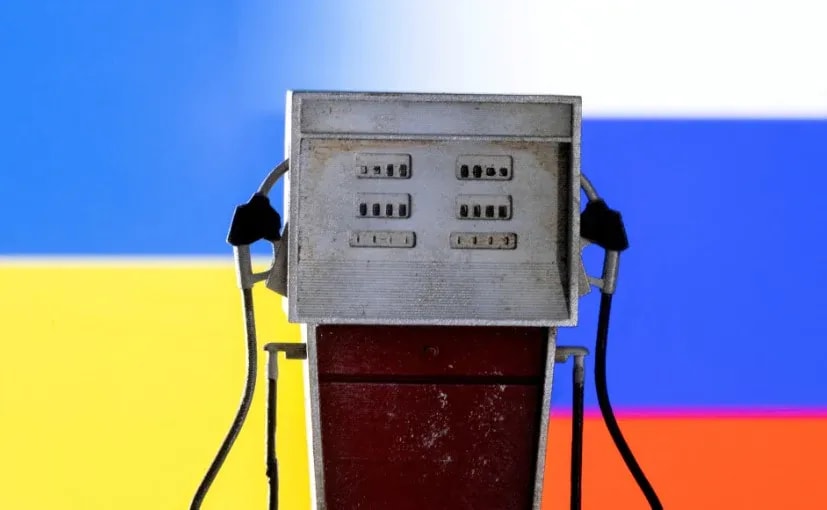
Russia can access enough tankers to ship most of its oil beyond the reach of a new G7 price cap, industry players and a U.S. official told Reuters, underscoring the limits of the most ambitious plan yet to curb Moscow's wartime revenue.
The Group of Seven countries agreed last month to cap Russian oil sales at an enforced low price by Dec. 5 but faced consternation from main players in the global oil industry who feared the move could paralyse the trade worldwide.
Months of discussions between the United States and those insurance, trading and shipping firms have mollified concerns on their exposure to sanctions but all parties now realize Russia can largely skirt the plan with their own ships and services.
The forecasts on the resilience of the Russian oil trade and details of the discussions between Washington and the global oil and services industry have not previously been published.
Estimates that up to 80-90% of Russian oil will continue to flow outside the cap mechanism if Moscow seeks to flout it are not unreasonable, a U.S. Treasury official told Reuters.
Between 1 and 2 million barrels per day (bpd) of Russian crude and refined products exports could be shut in, said the official, who declined to be named due to the sensitivity of the situation, adding this was one of several possible scenarios and it was unclear whether Russia will comply with the cap.
Russia exported over 7 million bpd in September.
That could pose financial and technical difficulties for Russia but would also deprive the world of 1-2% of its global supply just as inflation is on the rise and a recession looms.
The United States is aware of some ships changing their countries of origin and trading entities being moved beyond the G7 to order to evade the plan, the official added.
Russia would incur costs from having to conduct longer voyages and being relegated to subpar insurance and financing, the official said, making the United States optimistic Russia will be compelled to sell within the price cap over time.
India and China have increased purchases of Russian oil at steep discounts in recent months, but neither has endorsed the cap. India said this week it would examine the plan.
The U.S. sees the price cap empowering China and India to buy Russian oil at lower prices, benefitting their economies.
SHADOW FLEET
Industry and policy veterans have seen the limits of a plan which at first appeared to have the entire Russian oil trade in its crosshairs but whose scope could now be greatly diminished.
"In theory there is a big enough shadow fleet to continue Russian crude flows after Dec. 5," Andrea Olivi, global head of wet freight at commodities trading giant Trafigura told Reuters.
"A lot of these shadow vessels will be able to self-insure or they will be able to be insured by Russian P&I", he added, referring to protection and indemnity insurance.
Bank JP Morgan sees the impact of the price cap as muted, with Russia almost completely skirting the ban by marshalling Chinese, Indian and its own ships - whose average age is nearly two decades old - relatively ancient by shipping standards.
That could leave Russian exports in December reduced by just 600,000 bpd compared with September, the bank added.
Not just ships but the services needed to keep them and their oil cargoes flowing are on the move, according to Norbert Rucker, head of economics and next generation research at Swiss wealth manager Julius Baer.
"Oil traders dealing in Russian oil are no longer in Switzerland, Geneva or London. They are more coming out of the Middle East," Rucker told Reuters.
"If you look at the Asian buyers of the oil, the ships, the insurance - this seems to be increasingly done out of Asia."
SHOT IN THE FOOT?
The G7 price cap plan agreed in September was shopped by the United States to industry players as a safety valve to total EU bans on Russian shipments ratified in June.
P&I services heeding EU law insure approximately 90% of the world's oceangoing trade, meaning the EU move could have halted most of Russia's exports.
That may have boomeranged back on the sanctioning countries by sending energy prices soaring amid an already deep cost of living crisis as a potential global recession looms.
Insurance and shipping industry figures still saw themselves at risk of sanctions which could upend the trade even in the G7 price cap workaround. The EU ratified the price cap this month but details on implementing it remain forthcoming.
The U.S. official said the policy has been tailor-made so that it is easy for firms to verify, or attest, that prices were sold below the cap.
The cap, the official added, aims not be punitive toward the industry and will allow them to keep the attestations and not force them to submit it to a central registry.
This would be lax enough to allow insurers to ask buyers of Russian oil to pledge in writing that sales would occur at, or below the price cap for the duration of their policy period.
One industry official familiar with the matter viewed this attestation policy as "positive" and believes Washington now understands that insurers cannot enforce the policy themselves.
Another said that with six weeks to go before the sanctions take effect, the insurance industry still wants more details on how the attestations would work and is concerned that EU regulations still do not mention the process or set out their obligations.
Daniel Ahn, a former chief economist at the U.S. State Department, says the countries sanctioning Russia overestimated their control of the global oil trade and that changes and clarifications to their policy aimed at reducing self-harm.
"All it's going to do is reroute oil ... and make life difficult for everyone else, which is what is happening right now anyway," said Ahn, a global fellow at the Woodrow Wilson International Center for Scholars.
"It's going to be less damaging than a complete seaborne import ban. They shot themselves in the foot, but they're now kind of trying to bandage it a bit."
Related News


Latest Cars


Upcoming Cars


Latest News


 car&bike Team | May 26, 2026STUDDS Helios Effect Helmet Launched At Rs. 3,445The Studds Helios Effect adds new decals to the brand’s flagship full-face helmet range.1 min read
 car&bike Team | May 26, 20262026 Triumph Bonneville T120, Bobber and Speedmaster Launched In IndiaThe 2026 Triumph Bonneville range gets feature updates as well as minor design tweaks to give the bikes fresh appeal.1 min read
 Jaiveer Mehra | May 26, 20261035 bhp Ferrari Luce Is Brand’s First-Ever Electric CarQuad-motor EV, Ferrari’s first, is fitted with a 122 kWh battery and offers over 530 km of range.5 mins read
 car&bike Team | May 25, 2026Triumph Street Triple 765 RX Launched At Rs. 13.91 LakhThe Street Triple 765 RX is a track-focussed limited-edition weapon which gets premium hardware and sportier ergonomics.1 min read
 car&bike Team | May 25, 2026Ultraviolette X-47 New Base Variant Launched At ₹ 2.49 LakhWith Ultraviolette’s Hypersense radar technology given a skip for the new base variant, the X-47 is now more affordable and appealing to riders who seek a simpler, less tech-heavy experience.1 min read
 Jaiveer Mehra | May 25, 20262026 Mercedes-Benz S-Class Facelift India Launch On June 15; Will Get PHEV OptionThe facelifted S-class made its global debut in January this year with upgrades to the powertrains and tech.1 min read
 Bilal Firfiray | May 25, 2026Renault Duster 1.3 Turbo DCT Road Test Review: The Solid Middle GroundMarking its return, the Renault Duster offers a strong ride quality, a refined 1.3 turbo-petrol engine, balanced handling and lot more impressive cabin. Should you buy it though?5 mins read
 Preetam Bora | May 23, 20262026 Harley-Davidson X440T Road Test Review: Did Harley Just Fix Everything?We spent a few days with the Harley-Davidson X440T to understand if Harley-Davidson India has managed to fix all the shortcomings of the standard X440!1 min read
 Janak Sorap | May 20, 2026Norton Manx R First Ride Review: Brit Superbike Killer?The Norton Manx R is not just another 200 bhp superbike chasing lap times — it is a motorcycle that tries to bring character, exclusivity and real-world usability back into the superbike experience.8 mins read
 car&bike Team | May 20, 2026Axor Brutale Surges Dual Spoiler Helmet Review: Best Of Both WorldsThe Axor Brutale Surges Dual Spoiler Helmet promises a strong mix of everyday comfort and track-focused safety. But does it? Let's find out.5 mins read
 Preetam Bora | May 11, 20262026 Suzuki Burgman Street 125 Review: What’s Good, What’s Not?The new Suzuki Burgman Street 125 gets refreshed design, minor but meaningful tweaks to the engine, a stiffened chassis, new features and more. But is it worth recommending? Read on, to find out.8 mins read