
Banned in the Basement? Why Indian Housing Societies Are Blocking Private EV Home Chargers


- Many housing societies are delaying or rejecting requests for private EV chargers in the basement
- Fire safety and electrical infrastructure concerns are at the centre of the debate
- Government guidelines generally support EV charger installation, provided safety norms are followed
Buying an electric vehicle is becoming easier than ever. Charging it at home, however, is proving to be a different story. In cities such as Bengaluru, Mumbai, Pune, Gurugram, and Noida, EV owners are increasingly reporting difficulties obtaining permission to install private charging points in apartment parking spaces. Some housing societies approve them quickly, while others delay applications for months or reject them outright.
The result is a growing conflict between residents who want the convenience of home charging and management committees concerned about safety, infrastructure and liability.
Also Read: What Exactly is E85 Fuel? A Complete Breakdown Of India's New Rs. 82/Litre Petrol Alternative
Why Are Housing Societies Worried?
Most societies are not opposing EV chargers simply because they dislike electric vehicles. Their concerns usually fall into two categories: fire safety and electrical infrastructure.
The Fire Safety Debate
The biggest concern revolves around lithium-ion batteries. While EV fires remain relatively rare, they attract significant attention whenever they occur. Unlike conventional vehicle fires, lithium-ion battery fires can be difficult to control and may continue to generate heat even after the flames appear to be extinguished. For housing societies, the concern becomes even greater in enclosed basement parking areas.
Common concerns include:
- Smoke accumulation in the underground parking
- Emergency evacuation challenges
- Limited access for firefighting equipment
- Potential damage to nearby vehicles
As a result, some societies choose the easiest solution: banning chargers altogether.
However, experts generally agree that professionally installed, certified charging systems are significantly safer than improvised electrical setups.
Older Buildings Face Electrical Challenges
Many apartment complexes were designed long before EVs became popular. Their electrical systems were built to power homes, lifts, pumps and common facilities, not dozens of charging points operating simultaneously. Imagine a society where 20 residents begin charging their EVs every evening after work.
Without proper planning, this can create concerns around:
- Transformer load capacity
- Voltage fluctuations
- Cable overheating
- Future infrastructure upgrades
For this reason, some societies prefer to conduct electrical audits before approving charger installations.
Can a Housing Society Legally Ban EV Chargers?
This is where things become interesting. Government policies have increasingly moved in favour of EV adoption and home charging infrastructure.
Various central and state-level guidelines encourage charging facilities in residential buildings, while newer building regulations increasingly require EV-ready parking provisions.
Also Read: Plug-in Hybrid vs Strong Hybrid in India: Understanding the Difference
In most situations, housing societies can insist on safety checks and compliance requirements, but a blanket refusal without valid technical reasons may be difficult to justify.
The focus is gradually shifting from "whether" a charger can be installed to "how" it can be installed safely.
Why Home Charging Matters So Much
For most EV owners, home charging is the biggest advantage of electric vehicle ownership. Unlike petrol or diesel vehicles, EVs can be charged overnight while parked.
Without access to home charging, owners often become dependent on:
- Public charging stations
- Commercial charging networks
- Workplace charging facilities
This can reduce convenience and increase running costs. For many buyers, the availability of home charging is one of the primary reasons for choosing an EV in the first place.
Common Concerns vs Practical Solutions
The debate is often less about the charger itself and more about ensuring installations are carried out correctly.
| Concern Raised by Societies | Practical Solution |
| Risk of electrical overload | Install a dedicated line from the owner's meter |
| Fire safety concerns | Use certified chargers and approved installation practices |
| Cable management issues | Route wiring through proper conduits and cable trays |
| Responsibility during faults | Use licensed installers and documented approvals |
| Future increase in charger demand | Conduct infrastructure planning and load assessments |
How Most Successful Installations Work
In many residential societies, EV charging approvals are being granted through a simple process.
Typically, the owner:
- Submits a formal request to the society.
- Shares charger specifications.
- Uses a certified installer.
- Draws power through a dedicated connection linked to their own meter.
- Completes installation according to electrical safety requirements.
This approach ensures that charging costs are billed directly to the vehicle owner while reducing concerns for the society.
What Should You Do If Your Application Is Rejected?
If your housing society refuses permission, the first step should always be discussion rather than confrontation. Ask for the specific reasons behind the rejection.
Some common questions include:
- Is the concern related to fire safety?
- Does the building require an electrical audit?
- Are there infrastructure limitations?
- What additional documents are needed?
A technical concern can often be solved through engineering solutions. A vague or blanket rejection without explanation is usually where disputes begin.
Also Read: How Extreme Indian Summers Affect EV Battery Performance
Things to Include in Your EV Charger Application
A well-documented application often receives faster approvals.
Include:
- Vehicle details
- Parking slot details
- Charger specifications
- Installation drawings if available
- Installer credentials
- Electrical load requirements
- Safety certifications
The more information you provide upfront, the easier it becomes for management committees to evaluate the proposal.
The Bigger Challenge Facing Indian Cities
The charger dispute highlights a larger issue. India's EV adoption is moving faster than the residential infrastructure built to support it.
Many apartment complexes were never designed with EV charging in mind. As EV ownership continues to rise, societies will increasingly need structured charging policies rather than case-by-case decisions.
The conversation is gradually shifting from "Should EV chargers be allowed?" to "How can they be installed safely and efficiently?"
The Road Ahead for EV Owners and Housing Societies
The future of EV adoption in India's major cities depends heavily on residential charging access. While housing societies have legitimate concerns around fire safety and infrastructure capacity, outright bans are unlikely to be a long-term solution.
For most residents, the best approach is cooperation rather than conflict. Certified equipment, proper installation practices and transparent communication can help address many of the concerns that currently stand between EV owners and their charging points. As more societies gain experience with EV infrastructure, home charging is likely to become a standard amenity rather than a point of contention.


Latest News


 car&bike Team | Sep 17, 2026Triumph Speed 400 And Tracker 400 Prices Cut By Up To Rs 7,000Triumph has revised prices of the Speed 400 and Tracker 400 receiving cuts of up to Rs 7,000, while the Scrambler 400 X gets a new colour option.1 min read
 car&bike Team | Sep 17, 2026Kia Carens Clavis Line-Up Expanded With More Accessible Automatic VariantsThe HTE (O) and HTE (EX) variants of the Kia Carens Clavis will now come with a turbo DCT setup, while the former will also offer a diesel automatic version.2 mins read
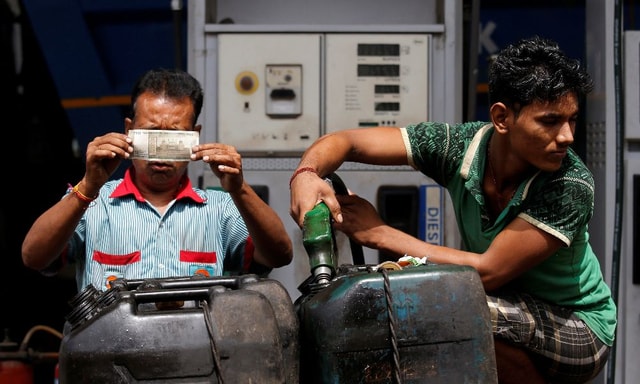 car&bike Team | Sep 17, 2026Petrol Dealers Call For Rs 5 MDR Charge Exemption On UPI Payments; Will Consider Going Cash-Only For Payments Over Rs 2,000Dealers say that the Rs 5 charge on UPI payments of over Rs 2,000 will eat into their earnings.1 min read
 car&bike Team | Sep 17, 2026Royal Enfield Flying Flea C6 Gets New Parachute White ColourRoyal Enfield’s electric motorcycle brand Flying Flea has added a new Parachute White colour to the C6, giving the electric motorcycle a third colour option in India.1 min read
 car&bike Team | Sep 17, 2026MG M9, Cyberster Now Offered With BaaS: Prices Start At Rs 69.99 LakhOpting for the BaaS scheme enables buyers to save up to Rs 10 lakh on the upfront costs.1 min read
 car&bike Team | Sep 17, 2026TVS Apache Range Updated With New Variants And Features Ahead Of Festive SeasonTVS Motor has updated its Apache range with new safety and connectivity features for the RTR 160, RTR 160 4V and RTR 200 4V, while the flagship 310s get new Black Diamond editions.2 mins read
 Preetam Bora | Sep 16, 2026Royal Enfield Himalayan 440 Review: Better Than the 450?The new Himalayan 440 with an upsized engine and gearbox has certainly improved as a touring machine and at an extremely attractive price of Rs. 2.29 Lakh. Is it the better Himalayan to choose for many riders?9 mins read
 Seshan Vijayraghvan | Sep 15, 2026BMW i5 LWB Review: Not The M60, This Is The Proper Electric 5 SeriesThe BMW i5 LWB takes the electric 5 Series formula and puts a stronger focus on rear-seat comfort and long-distance luxury. With a 669 km claimed range, 268 bhp and a more relaxed character, is this the i5 that makes the most sense for India?7 mins read
 Preetam Bora | Sep 14, 2026Ladakh Uncharted: Himalayan Basecamp Off-Road Ride ExperienceA day-long off-road excursion from Royal Enfield’s Himalayan Basecamp event in Ladakh, the Ladakh Uncharted ride by Alpinestars was all about re-discovery!6 mins read
 Janak Sorap | Sep 12, 2026New Bajaj Pulsar 125 First Ride Review: More Tech, Less Weight, Same Pulsar DNAThe new Bajaj Pulsar 125 retains the familiar Pulsar identity but gets a new engine, lighter construction, more features and a sharper riding experience.5 mins read
 Bilal Firfiray | Sep 10, 2026Mahindra XEV 9S Review: 3 Reasons To Buy It, And 3 Reasons To AvoidEveryone keeps telling me that the Mahindra XEV 9S is not the electric XUV 7XO. I disagree.1 min read