
How Extreme Indian Summers Affect EV Battery Performance

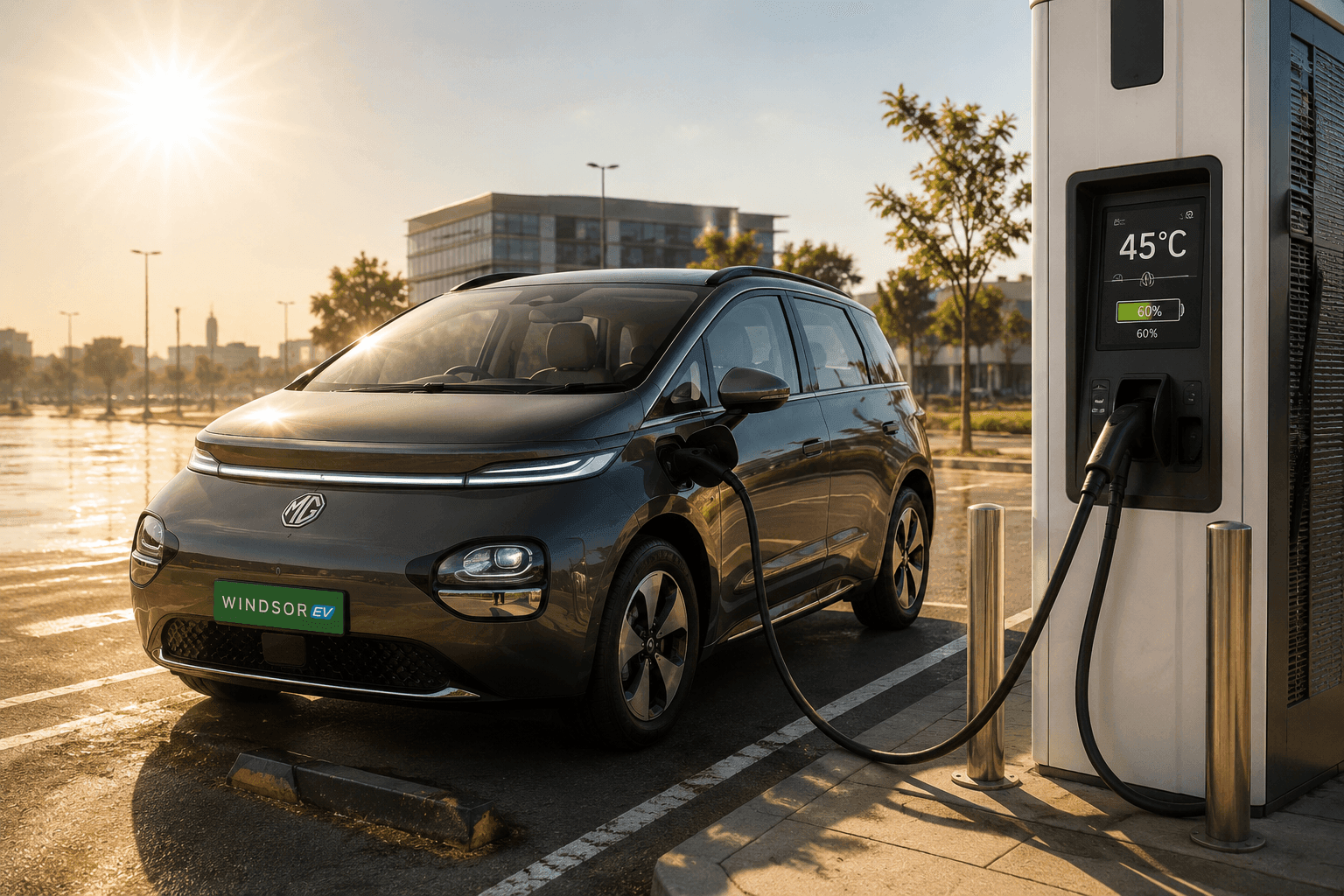
- High temperatures can temporarily reduce EV efficiency and driving range
- Fast charging may slow down in extreme heat to protect the battery
- Simple habits can help improve battery health during the summer months
From Delhi and Jaipur to Ahmedabad and Mumbai, summer temperatures regularly cross 40°C and can sometimes approach 50°C. While most drivers worry about engine overheating in petrol and diesel cars, EV owners often wonder how these conditions affect the battery.
The good news is that modern electric vehicles are designed with sophisticated battery management systems that continuously monitor and control temperatures. However, extreme heat still creates additional stress on the battery, impacts charging performance, and can reduce real-world range. Understanding what happens behind the scenes can help owners get the best out of their EV during the hottest months of the year.
Also Read: EV-Specific Tyres Explained: Why Electric Cars Need Different Rubber
Why Heat Is Demanding for EV Batteries
Like most electronic devices, EV batteries operate best within a specific temperature range. Battery cells are happiest when temperatures remain moderate. Once temperatures rise significantly, the battery management system starts working harder to keep the pack within safe limits.
This doesn't mean the battery is in danger, but it does mean the vehicle may use some of its energy to manage heat rather than simply powering the wheels. Think of it like running the air conditioner at home during a heatwave. It still works, but it has to work much harder to maintain the same result.
Why Range Often Drops During Peak Summer
Many EV owners notice lower range during May and June and immediately assume battery degradation has started. In most cases, that isn't what's happening. The range reduction is usually caused by two major factors:
Cabin Air Conditioning
Keeping the cabin cool when outside temperatures are touching 45°C requires a lot of energy. The air-conditioning compressor draws power directly from the battery, reducing the energy available for driving.
Battery Cooling Systems
Many modern EVs use dedicated cooling systems to protect the battery pack. These systems continuously monitor battery temperatures and activate cooling whenever necessary. While this improves battery longevity, it also consumes additional energy. The result is a noticeable drop in real-world range during extremely hot days.
Also Read: Fast Charging vs Slow Charging: Which Is Better for Long-Term Battery Health?
Why Charging Can Take Longer in Summer
Fast charging and extreme heat are not always the best combination. When a battery is already hot from highway driving and then receives a large amount of electricity from a DC fast charger, temperatures can rise quickly.
To prevent damage, the vehicle automatically reduces charging speeds when necessary. This means a charger rated at 60 kW may not always deliver its full output during a scorching summer afternoon. The slowdown is intentional and designed to protect battery health.
Why Parking Can Be Harder on Batteries Than Driving
This surprises many EV owners. A parked car sitting under direct sunlight for several hours can experience extremely high temperatures inside the cabin and around the battery pack.
While modern EVs have safeguards in place, prolonged exposure to extreme heat can accelerate battery ageing over time. That is why parking habits matter more than many people realise.
Whenever possible:
- Park in shaded areas
- Use covered parking
- Choose basement parking when available
- Use cabin pre-cooling features if your EV supports them
Also Read: Battery-as-a-Service (BaaS) Explained: How EV Subscription Batteries Actually Work
Do All EV Batteries Handle Heat Equally?
Not exactly. Different battery chemistries react differently to high temperatures. Generally speaking:
| Battery Type | Heat Tolerance |
| LFP (Lithium Iron Phosphate) | Higher |
| NMC (Nickel Manganese Cobalt) | Lower but offers higher energy density |
Many affordable EVs now use LFP batteries because they tend to handle heat and daily charging cycles particularly well. However, both battery types rely heavily on the vehicle's thermal management system for long-term durability.
Air-Cooled vs Liquid-Cooled Battery Systems
Not all EVs manage heat in the same way.
| Feature | Air-Cooled Systems | Liquid-Cooled Systems |
| Cooling Performance | Basic | More effective |
| Fast Charging Performance | More temperature sensitive | Better consistency |
| Summer Highway Driving | Greater performance variation | More stable |
| Long-Term Thermal Control | Limited | Better overall protection |
Liquid-cooled systems are generally better equipped to handle India's extreme climate, particularly for buyers who frequently travel long distances.
How to Protect Your EV Battery During Summer
A few simple habits can make a noticeable difference.
Avoid Parking in Direct Sunlight
Keeping the vehicle out of direct sunlight reduces heat build-up throughout the day.
Let the Car Cool Down Before Fast Charging
After a long highway drive, give the vehicle a short break before plugging into a DC fast charger.
Avoid Keeping the Battery at 100%
For everyday driving, many manufacturers recommend maintaining charge levels between 20% and 80% whenever practical.
Keep Software Updated
Battery management systems are constantly refined through software updates that can improve thermal management and charging behaviour.
Also Read: Why Low-Profile Tyres Are Not Always Ideal for Indian Roads
Should EV Buyers Be Worried About Indian Summers?
Not really. Modern EVs sold in India undergo extensive testing in extreme weather conditions and are specifically engineered for hot climates. While summer temperatures can temporarily affect range and charging speeds, these changes are usually part of the vehicle protecting its battery rather than a sign of a problem.
The bigger concern is long-term exposure to unnecessary heat. Simple habits such as parking in the shade, avoiding excessive fast charging during peak temperatures, and following recommended charging practices can go a long way towards preserving battery health.
What Summer Really Means for EV Owners
Extreme Indian summers are challenging for every vehicle, whether it runs on petrol, diesel, or electricity. For EVs, the impact is usually felt through slightly lower range, slower charging sessions, and increased cooling demands rather than outright performance issues.
As battery technology and thermal management systems continue to improve, EVs are becoming increasingly capable of handling Indian conditions. For most owners, understanding how heat affects the vehicle and adopting a few smart habits is all that's needed to enjoy trouble-free electric motoring throughout the summer months.
Related News


Latest Cars


Upcoming Cars


Latest News


 Jafar Rizvi | Jul 24, 20262026 Maruti Brezza Facelift: Variants, Features, Engine Options ExplainedThe 2026 Maruti Suzuki Brezza is offered in four trim levels: LXi, VXi, ZXi and ZXi+ and with two engine options.5 mins read
 Jafar Rizvi | Jul 24, 20262026 Maruti Brezza Facelift Launches With Three Major FirstsThe 2026 Maruti Suzuki Brezza has arrived, and along with carrying a five-star Bharat NCAP rating, the model brings three firsts for both the Brezza and, in one case, Maruti itself.2 mins read
 Jaiveer Mehra | Jul 24, 20262026 Maruti Suzuki Brezza Facelift Launched; Price Starts At Rs 7.40 LakhUpdated Brezza arrives with a new turbo-petrol engine option and a new 6-speed manual gearbox aside from new features.2 mins read
 car&bike Team | Jul 24, 20262026 Maruti Brezza Facelift Launch Highlights: Price, Specifications, Details, ImagesMaruti will launch the 2026 Brezza today. Stay tuned to this space to get all the details firsthand.0 mins read
 Jafar Rizvi | Jul 24, 2026Honda XR 300L, XR 300 Rally Unveiled In IndiaBoth motorcycles are made in India and will launch before the end of FY20272 mins read
 Janak Sorap | Jul 24, 2026Honda Unveils QC3 Electric Scooter; Claims 145 km IDC RangeHonda has expanded its electric scooter portfolio in India with the launch-ready QC3, positioned above the QC1 and Activa-e.1 min read
 Bilal Firfiray | Jul 24, 2026Honda ZR-V Review: Who Is It For?Honda has brought the new ZR-V to India as their current flagship offering. It’s a CBU, it’s a hybrid, and it’s here for a limited few. Who is it for though?1 min read
 Shams Raza Naqvi | Jul 15, 2026Ferrari 849 Testarossa Spider Driven: Rs. 11.25 Crore Meets 1,000 bhpWe got behind the wheel of the most powerful convertible from Ferrari. What makes the 849 Testarossa Spider Special? We tell you.1 min read
 Bilal Firfiray | Jul 12, 2026Tata Sierra EV Review: Reborn In The Electric AgeThe Tata Sierra EV isn’t drastically different from its ICE counterpart when it comes to design. But being the seventh electric offering from the Indian brand, it has gotten a few things right, and very few things wrong. But is it a compelling package to buy?5 mins read
 Jafar Rizvi | Jul 13, 2026TVS Orbiter Long-Term Review (Report 1): Settling In Takes TimeFirst impressions weren't the strongest, but the Orbiter has made a mark in its first month in the car&bike garage.5 mins read
 Seshan Vijayraghvan | Jul 7, 2026Tata Altroz Petrol DCA Long-Term Review: Intercity & Highway Driving ReportWe tested the Tata Altroz Petro DCA’s highway manners, intercity performance, and real-world fuel efficiency.1 min read