
Why Tyre Pressure Monitoring Systems Matter More Than You Think

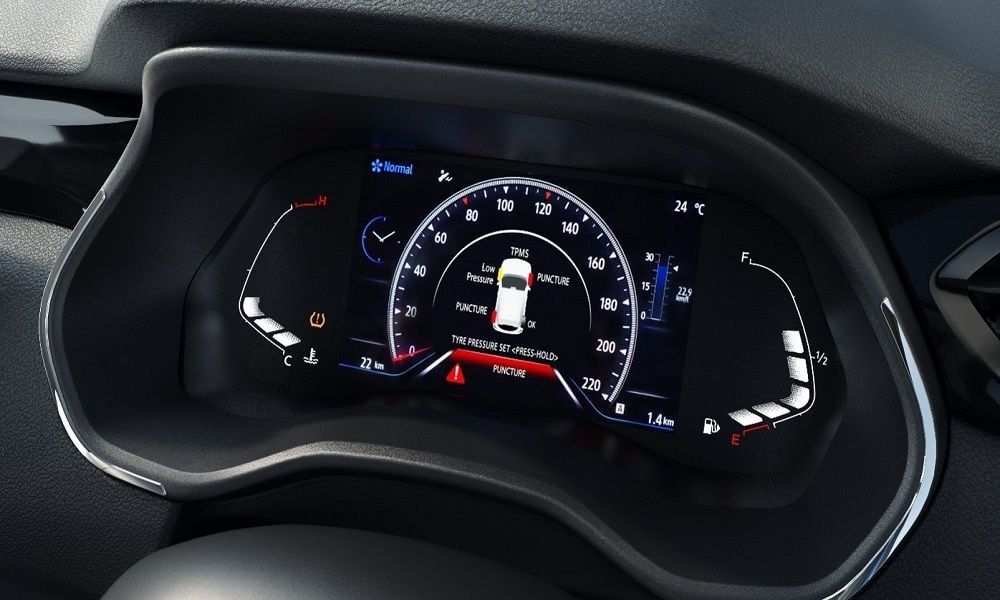
- Incorrect tyre pressure impacts fuel efficiency and handling
- Tyres also wear out faster due to wrong pressure
- Braking also might be affected in certain conditions
Tyre Pressure Monitoring System is one of the most talked about features in modern day cars. This is specially true for a market like India that has different road and weather conditions and constant monitoring of tyres increases their durability and longevity. Tyre Pressure Monitoring System or TPMS, as it is widely known is now being provided in almost all car segments, save for the entry level cars and some manufacturers go a step ahead to offer this extremely useful feature across all variants including the base.
Now you may think that a TPMS just tells you if one of your tyres is punctured and you get alerted before causing too much damage to the deflated tyre. Yes, that is its primary job but these systems have a much larger role to play and actually matter more than you think. The system with sensors installed in all the tyres gives real time pressure they’re driving on to tell you the discrepancies between different tyres in the vehicle. It is ideal if pressure in all wheels is similar if not exact to ensure that occupants get the best possible ride.
Also Read: What Happens If You Continue Driving With an Expired Insurance Policy
Before we tell you why TPMS matters lets understand how it works. It is largely of two kinds — highline and lowline. The former is more desirable as it gives the driver details of exact tyre pressure on all the four wheels so that he knows which wheel needs immediate attention. Its a much safer way of keeping tyres and vehicle secure. Lowline TPMS through an indication on cluster informs you about low pressure in one of the wheels without mentioning the exact pressure. It is an inferior system when compared to highline but is definitely more useful than not having any such system in the car at all.
Now that we know how it functions lets talk bout why TPMS matters. A lot of critical functions in the vehicle depend on accurate tyre pressures. Both low and high tyre pressures can cause serious damage to both the tyres and even the vehicle as a whole. The tyres wear faster, their alignment gets disturbed and this results in inappropriate handling as well as reduced fuel efficiency. More rolling resistance owing to lower pressures means more fuel is burnt while edges wear out faster which reduces the lifespan of tyres. So to ensure optimum fuel efficiency and long tyre life it is imperative to have the correct pressure in all the wheels.
Also Read: What Happens If Your FASTag Balance Goes Negative During a Highway Journey?
At high speeds low tyre pressures can also result in a blowout due extra friction and built up of heat in the tyre walls. Then there’s stability which gets affected to an extent due to incorrect pressures in the tyres. The steering doesn’t feel as precise and overall handling isn’t as taut as it would otherwise be. Some other parts like brakes too heat up faster due to this which results in longer braking distances. Overall the impact of low tyre pressure goes just beyond tyres and can cause long term harm to vehicle in the turn making the drive unsafe for occupants.
High tyre pressure has its own perils. Once again the control the driver should have over the vehicle is not maximised. More than inflated tyres result in reduced traction on the road due to less grip on offer. This again increases braking times in certain situations again directly impacting safety. The ride itself feels more bouncy making it a little more difficult to manage turns at high speeds. Tyres are not able to absorb as much impact as they’re supposed to which means more bumps are felt inside the cabin. Here too tyres wear out much faster as only the middle parts bear all the weight of the vehicle.
Also Read: Car-Like Features Now Seen in Motorcycles
All the problems listed above can be negated by having correct tyre pressures. That is why TPMS is a perfect tool to have in any vehicle. If you vehicle is not equipped with one as standard there are various aftermarket options available as well, but remember it will most likely affect the warranty of the vehicle. Tyre pressure is also weather dependent as it drops in cold weather and goes up in summers so its advisable to follow y our vehicle manual and keep the correct pressure going according to the outside temperatures.
Related News


Latest Cars


Upcoming Cars


Latest News


 car&bike Team | Sep 18, 2026Triumph Speed 400 And Tracker 400 Prices Cut By Up To Rs 7,000Triumph has revised prices of the Speed 400 and Tracker 400 receiving cuts of up to Rs 7,000, while the Scrambler 400 X gets a new colour option.1 min read
 car&bike Team | Sep 17, 2026Kia Carens Clavis Line-Up Expanded With More Accessible Automatic VariantsThe HTE (O) and HTE (EX) variants of the Kia Carens Clavis will now come with a turbo DCT setup, while the former will also offer a diesel automatic version.2 mins read
 car&bike Team | Sep 17, 2026Petrol Dealers Call For Rs 5 MDR Charge Exemption On UPI Payments; Will Consider Going Cash-Only For Payments Over Rs 2,000Dealers say that the Rs 5 charge on UPI payments of over Rs 2,000 will eat into their earnings.1 min read
 car&bike Team | Sep 17, 2026Royal Enfield Flying Flea C6 Gets New Parachute White ColourRoyal Enfield’s electric motorcycle brand Flying Flea has added a new Parachute White colour to the C6, giving the electric motorcycle a third colour option in India.1 min read
 car&bike Team | Sep 17, 2026MG M9, Cyberster Now Offered With BaaS: Prices Start At Rs 69.99 LakhOpting for the BaaS scheme enables buyers to save up to Rs 10 lakh on the upfront costs.1 min read
 car&bike Team | Sep 17, 2026TVS Apache Range Updated With New Variants And Features Ahead Of Festive SeasonTVS Motor has updated its Apache range with new safety and connectivity features for the RTR 160, RTR 160 4V and RTR 200 4V, while the flagship 310s get new Black Diamond editions.2 mins read
 Preetam Bora | Sep 16, 2026Royal Enfield Himalayan 440 Review: Better Than the 450?The new Himalayan 440 with an upsized engine and gearbox has certainly improved as a touring machine and at an extremely attractive price of Rs. 2.29 Lakh. Is it the better Himalayan to choose for many riders?9 mins read
 Seshan Vijayraghvan | Sep 15, 2026BMW i5 LWB Review: Not The M60, This Is The Proper Electric 5 SeriesThe BMW i5 LWB takes the electric 5 Series formula and puts a stronger focus on rear-seat comfort and long-distance luxury. With a 669 km claimed range, 268 bhp and a more relaxed character, is this the i5 that makes the most sense for India?7 mins read
 Preetam Bora | Sep 14, 2026Ladakh Uncharted: Himalayan Basecamp Off-Road Ride ExperienceA day-long off-road excursion from Royal Enfield’s Himalayan Basecamp event in Ladakh, the Ladakh Uncharted ride by Alpinestars was all about re-discovery!6 mins read
 Janak Sorap | Sep 12, 2026New Bajaj Pulsar 125 First Ride Review: More Tech, Less Weight, Same Pulsar DNAThe new Bajaj Pulsar 125 retains the familiar Pulsar identity but gets a new engine, lighter construction, more features and a sharper riding experience.5 mins read
 Bilal Firfiray | Sep 10, 2026Mahindra XEV 9S Review: 3 Reasons To Buy It, And 3 Reasons To AvoidEveryone keeps telling me that the Mahindra XEV 9S is not the electric XUV 7XO. I disagree.1 min read