
Australia Plans To Restart Production At Idled Car Factories To Pull It Out Of COVID Slump


In 2017, the last car Australia built rolled out of a General Motors' plant in the city of Adelaide, ending seven decades of local automotive history and the belief that the country's factories could ever compete globally. Three years later, policymakers are once again looking to manufacturing to generate some growth as they scramble to drive the economy through the coronavirus and out of its deepest slump on record.
While Australians are unlikely to buy millions of locally made cars, refrigerators and toasters as they did in the 20th century, a government push that puts manufacturing at the centre of its longer-term recovery plan has strong industry support and has kindled ventures that would have seemed far-fetched half a year earlier.
Behind the pivot is a realisation that Australia has been too reliant on Asia for the supply of essential goods. A recent worsening in relations with China, Australia's biggest trading partner, has only strengthened that view. "If you look at it over time, we have been running down our manufacturing and we're at this point of inflexion - we're saying maybe we shouldn't be doing that," said Drew Woodhouse, a Sydney-based consultant at Bain & Company who looks at supply chain issues.
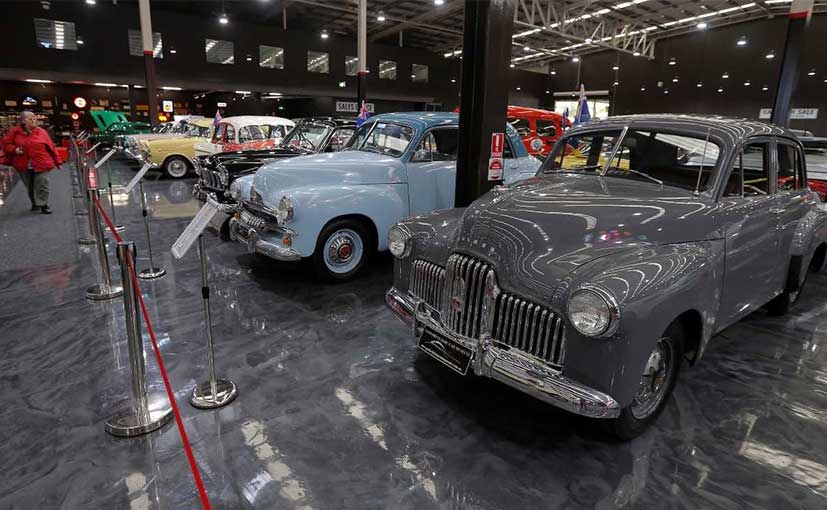
(Australian car manufacturing ended in 2017 after GM's Holden closed its plant)
For many, the coronavirus has shown that the benefits of globalisation, namely low tariffs and cheap labour, are limited when the world economy grinds to a halt. That has prompted many in the industry to seriously consider bringing operations onshore, even if it means some costs go up. What businesses say is needed longer-term are reforms that reduce energy costs, encourage innovation and cut red tape for investment.
Andrew Liveris, former head of U.S. industrial giant Dow Chemicals, returned to his native Australia earlier this year to join Prime Minister Scott Morrison's manufacturing advisory taskforce. "We have a lot of confusion about how to get investment approved here," Liveris told Reuters. "So we have to adopt a business-friendly environment to attract foreign direct investment to an economy that can punch above its weight in terms of quality research and quality technologies."
(RE)START YOUR ENGINES
Scarred by critical shortages during World War Two, Australia expanded its factory sector in following years, heavily protected by tariffs.
By the end of the century, however, production had largely drifted offshore as businesses and politicians embraced globalisation's upsides.
In 2019, manufacturing accounted for just 5% of gross domestic product, down from about 25% in 1960, while its share of the labour force has fallen to 7% from 17% in 1984.
Liveris said manufacturing should make up closer to 15% to 20% of GDP.
While some economists see that as an ambitious target, the shift in thinking has galvanised some early movers.
H2X, a startup formed in May, is looking to resurrect local automobile production by making hydrogen cars in Port Kembla, a smelting town about 100km south of Sydney.
Brendan Norman, the company's chief executive who previously worked on hydrogen cars in China, expects a prototype to be ready later this year and production to start in 2022. The operation is looking to employ 100 people by the end of this year, which could ramp up to 5,000 by 2025.
Norman said production could use 80% local content by 2024. That bet is based on a belief that Australia already has most of the skills and materials needed to make items such as supercapacitors and fuel cells, even if the manufacturing scale is not there yet.
"Australia can certainly compete in this because it is high-tech manufacturing and this is something that we feel we should be able to encourage to come back," he said.
"If we're producing the bulk of the world's hydrogen, I'd like to think that we can produce the tools that are required to use it properly."
SCOPE FOR REFORM
H2X's plan relies less on low labour costs that offshore production provides and more on the value of intellectual property, like Germany's high-tech factory sector.
Visy Industries, a recycling and packaging company, expanded into glass manufacturing in a deal worth almost A$1 billion ($730.80 million).
That move comes as China's recent curbs on waste imports forces Australia to come up with innovative ways of dealing with its garbage.
One of the central proposals of the manufacturing taskforce is to lower energy costs by boosting distribution.
Australian businesses are paying about 50% more for natural gas than its export customers, the country's competition watchdog said.
Treasurer Josh Frydenberg said last week that policies that foster entrepreneurship and cut red tape will be key in next month's national budget.
Tony Shepherd, former chairman of infrastructure firm Transfield Services, said Australia needed to use the crisis to better streamline investment policies across the multiple layers of government.
"We couldn't even produce the basic medical supplies and we were worried about toilet paper," he said, referring to the panic buying of toilet tissue earlier this year. "If that isn't enough of a wake up call for politicians to get going, I don't know what is."
Related News


Latest Cars


Upcoming Cars


Latest News


 car&bike Team | Jul 31, 2026TVS Raider Doctor Doom Edition Launched At Rs 95,320TVS has expanded its Marvel-inspired Raider 125 Super Squad lineup with a new Doctor Doom Edition.2 mins read
 Jaiveer Mehra | Jul 31, 2026Third-Gen Mercedes-Benz GLA Debuts With Internal Combustion, Electric Powertrains; EV Offers Over 600 Km RangeUnlike the new CLA and GLB, the GLA’s styling draws inspiration from the new GLC EV.1 min read
 car&bike Team | Jul 30, 2026Maruti Suzuki's Hansalpur Plant Hits 10 Lakh Annual Production Capacity; First For Suzuki GloballyWith production beginning at its fourth plant, the Hansalpur facility can now build one million cars a year, making it the largest passenger vehicle manufacturing site at a single location in India.1 min read
 Amaan Ahmed | Jul 30, 2026Made-In-India Honda Rebel 500 Set To Wear Sub-Rs 4 Lakh Price TagRegional BigWing dealer websites incorrectly listed a price of Rs 5.50 lakh for the Rebel 500, but that's not the price at which the locally-built model will be launched.1 min read
 Janak Sorap | Jul 30, 2026Yezdi Adventure Gets Tubeless Spoke Wheels; Scrambler, Roadster Receive New ColoursYezdi has updated its motorcycle lineup with tubeless spoke wheels for the Adventure and fresh colour options for the Roadster and Scrambler.1 min read
 car&bike Team | Jul 30, 2026JSW Motor To Offer AWD Option on Chery iCar V23-Based SUVTest mules of the electric SUV have been spotted testing in India on multiple occasions.1 min read
 Bilal Firfiray | Jul 30, 2026Kia Syros EV Review: Best EV To Buy Under Rs 20 Lakh?The Kia Syros EV comes into the game with a modern design, spacious cabin, strong performance, decent range and an aggressive pricing. But could it become the new benchmark under Rs 20 lakh?5 mins read
 Jaiveer Mehra | Jul 27, 20262026 Maruti Suzuki Brezza Facelift Review: Bestseller Joins The Turbo ClubWhile Maruti’s facelifts have always tended to bring subtle updates over the outgoing models, the latest Brezza brings some heavy updates under the skin, including a new 6-speed manual gearbox and, for the first time, a turbocharged petrol engine option.1 min read
 Bilal Firfiray | Jul 24, 2026Honda ZR-V Review: Who Is It For?Honda has brought the new ZR-V to India as their current flagship offering. It’s a CBU, it’s a hybrid, and it’s here for a limited few. Who is it for though?1 min read
 Girish Karkera | Jul 29, 2026Mercedes-AMG E53 4MATIC+ PHEV First Drive Review: Just What The Doctor OrderedThere are luxury cars and there are high-performance cars. But what if you want both for the price of one? Mercedes-Benz has a recommendation that promises to tread a fine line between the two – the second generation E53 with a twist.7 mins read
 Shams Raza Naqvi | Jul 15, 2026Ferrari 849 Testarossa Spider Driven: Rs. 11.25 Crore Meets 1,000 bhpWe got behind the wheel of the most powerful convertible from Ferrari. What makes the 849 Testarossa Spider Special? We tell you.1 min read