
Auto Expo 2016: New Toyota Prius Unveiled in India

car&bike Team
1 min read
Feb 05, 2016, 04:52 PM
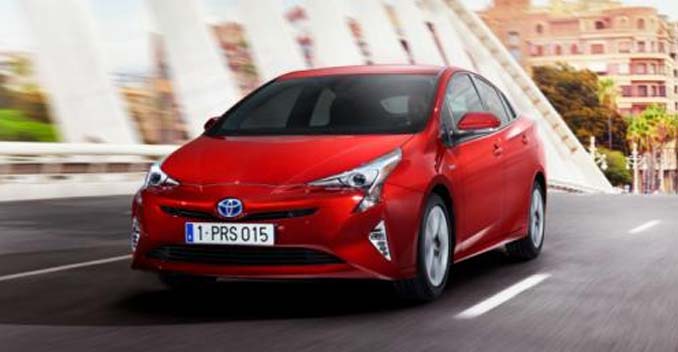
The 2016 Toyota Prius hybrid has been unveiled in India at the 2016 Delhi Auto Expo, with the car likely to be launched by the end of the year. The all-new Prius, which was globally revealed by Toyota in September 2015, utilises the new Toyota New Global Architecture (TNGA) and this platform has resulted in a series of improvements in the car when compared to the outgoing model.
The chassis is now 60% more rigid while the centre of gravity is lower, which has boosted the car's stability, handling, and overall comfort level for the driver and passengers. The change in the suspension setup has a significant effect on the way it drives as well, with a new front suspension and a rear double wishbone suspension.
The powertrain too has been placed lower and all these changes have had a significant change in the way the new Toyota Prius performs. Powering the Prius is the same 1.8-litre, 4-cylinder VVT-i gasoline engine. However, the naturally-aspirated engine has been reworked to improve fuel economy by 18 per cent and thermal efficiency by 40 per cent. The bump in fuel efficiency will mean that the Prius will now be able to return a fuel economy figure of 40Km/l.
The DOHC combustion engine churns out 97bhp and develops a respectable 142Nm of torque. The engineers at Toyota have redesigned the transaxle and the electric motor, which punches out 73bhp, to lower mechanical losses through friction by approximately 20 per cent, thanks to a new multi-axle design.
The Prius comes equipped with a new nickel-metal hydride (NiMH) hybrid battery that now sits beneath the rear seats, which results in a configuration that helps in the weight distribution of the car. The battery is smaller than before, but more durable, and with an increased charging performance.
The trunk capacity too remains at a respectable 502 litres and the auxiliary batteries have been moved from the trunk to the engine compartment.
The car measures 4,540mm in length, 1,760mm in width, 1,470mm in height and 2,700mm in wheelbase. This makes it 60mm longer, 15mm wider and 20mm lower than the previous generation and these changes translate into a more spacious cabin for the passengers as well as more trunk space.
The fourth generation of the Prius is safe too. According to Toyota, it uses a higher proportion of high-tensile strength steel in its construction, making good use of high-strength, lightweight hot-stamp materials to achieve rigidity of 980Mpa and higher. The content of this quality of steel in the vehicle has increased from 3 to 19 per cent. Furthermore, the use of advanced Global Outstanding Assessment (GOA) helps to reduce overall weight, improve stability, and provides excellent collision safety performance.
Apart from all of this, the new Toyota Prius is packed with features like lane departure alert, pre-collision system, dynamic radar cruise control, automatic high beam, etc.
The Prius will be imported into India through the CBU route and is expected to be priced in the range of Rs. 38-40 lakh (ex-showroom, Delhi). The Prius and the Camry Hybrid benefit from the Indian government's FAME (Faster Adoption and Manufacturing of Hybrid and Electric vehicles in India) scheme, which helps to lower their price.
The chassis is now 60% more rigid while the centre of gravity is lower, which has boosted the car's stability, handling, and overall comfort level for the driver and passengers. The change in the suspension setup has a significant effect on the way it drives as well, with a new front suspension and a rear double wishbone suspension.
The powertrain too has been placed lower and all these changes have had a significant change in the way the new Toyota Prius performs. Powering the Prius is the same 1.8-litre, 4-cylinder VVT-i gasoline engine. However, the naturally-aspirated engine has been reworked to improve fuel economy by 18 per cent and thermal efficiency by 40 per cent. The bump in fuel efficiency will mean that the Prius will now be able to return a fuel economy figure of 40Km/l.
The DOHC combustion engine churns out 97bhp and develops a respectable 142Nm of torque. The engineers at Toyota have redesigned the transaxle and the electric motor, which punches out 73bhp, to lower mechanical losses through friction by approximately 20 per cent, thanks to a new multi-axle design.
The Prius comes equipped with a new nickel-metal hydride (NiMH) hybrid battery that now sits beneath the rear seats, which results in a configuration that helps in the weight distribution of the car. The battery is smaller than before, but more durable, and with an increased charging performance.
The trunk capacity too remains at a respectable 502 litres and the auxiliary batteries have been moved from the trunk to the engine compartment.
The car measures 4,540mm in length, 1,760mm in width, 1,470mm in height and 2,700mm in wheelbase. This makes it 60mm longer, 15mm wider and 20mm lower than the previous generation and these changes translate into a more spacious cabin for the passengers as well as more trunk space.
The fourth generation of the Prius is safe too. According to Toyota, it uses a higher proportion of high-tensile strength steel in its construction, making good use of high-strength, lightweight hot-stamp materials to achieve rigidity of 980Mpa and higher. The content of this quality of steel in the vehicle has increased from 3 to 19 per cent. Furthermore, the use of advanced Global Outstanding Assessment (GOA) helps to reduce overall weight, improve stability, and provides excellent collision safety performance.
Apart from all of this, the new Toyota Prius is packed with features like lane departure alert, pre-collision system, dynamic radar cruise control, automatic high beam, etc.
The Prius will be imported into India through the CBU route and is expected to be priced in the range of Rs. 38-40 lakh (ex-showroom, Delhi). The Prius and the Camry Hybrid benefit from the Indian government's FAME (Faster Adoption and Manufacturing of Hybrid and Electric vehicles in India) scheme, which helps to lower their price.
Related News


Latest Cars


Upcoming Cars


Latest News


 car&bike Team | Jul 16, 2026Studds Trooper Trail Flip-Up Helmet Launched in India at Rs 2,125Studds has expanded its Trooper helmet range with the new Trail edition, featuring fresh graphics and a new colour-shifting paint option.1 min read
 car&bike Team | Jul 16, 20262027 Suzuki Hayabusa Receives Three New ColoursApart from the new liveries, the 2027 Hayabusa retains the same powertrain, electronics, and hardware.1 min read
 car&bike Team | Jul 16, 2026Hero MotoCorp Enters Germany, Expands European Presence to Five MarketsHero MotoCorp has officially entered the German market, strengthening its European presence with the launch of the Euro 5+ compliant XPulse 200 4V range.1 min read
 Jaiveer Mehra | Jul 16, 2026New Kia Syros EV Variants ExplainedThe all-electric derivative of the Syros subcompact SUV will go on sale with two battery options and in five trim levels.1 min read
 car&bike Team | Jul 16, 2026Triumph Speed Twin 1200 TFC Launched in India at Rs 21 Lakh; Limited To 750 Units WorldwideTriumph has introduced the exclusive Speed Twin 1200 TFC in India, bringing its latest Triumph Factory Custom model to the country right after its global debut.1 min read
 car&bike Team | Jul 16, 2026Royal Enfield Classic 350 With Assist & Slipper Clutch Launched At Rs. 1.95 LakhThe assist & slipper clutch as well as USB C-type charging socket are offered only on the dual-channel ABS variant, with prices starting from Rs. 1.95 lakh (Ex-showroom).3 mins read
 Shams Raza Naqvi | Jul 15, 2026Ferrari 849 Testarossa Spider Driven: Rs. 11.25 Crore Meets 1,000 bhpWe got behind the wheel of the most powerful convertible from Ferrari. What makes the 849 Testarossa Spider Special? We tell you.1 min read
 Bilal Firfiray | Jul 12, 2026Tata Sierra EV Review: Reborn In The Electric AgeThe Tata Sierra EV isn’t drastically different from its ICE counterpart when it comes to design. But being the seventh electric offering from the Indian brand, it has gotten a few things right, and very few things wrong. But is it a compelling package to buy?5 mins read
 Jafar Rizvi | Jul 13, 2026TVS Orbiter Long-Term Review (Report 1): Settling In Takes TimeFirst impressions weren't the strongest, but the Orbiter has made a mark in its first month in the car&bike garage.5 mins read
 Seshan Vijayraghvan | Jul 7, 2026Tata Altroz Petrol DCA Long-Term Review: Intercity & Highway Driving ReportWe tested the Tata Altroz Petro DCA’s highway manners, intercity performance, and real-world fuel efficiency.1 min read
 Seshan Vijayraghvan | Jun 29, 2026Renault Kiger vs Toyota Urban Cruiser Taisor: Which Underdog Deserves Your Money?Both the Kiger and the Taisor promise strong performance, solid features, comfortable cabins and everyday usability, all without breaking the bank. But which of these underrated subcompact SUVs deserves your money? Let's find out.1 min read