
Buying Used Car? Things To Keep In Mind When Checking A Car

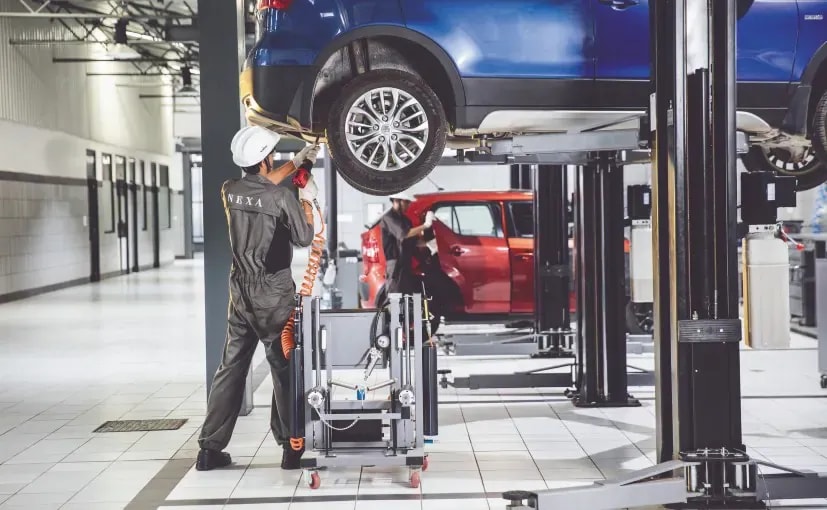
- Here is a checklist of things to look out for while buying used cars
- Checking the basic health of a used car is a must
- The better you understand the car, the easier it becomes to make a decision
The used car market has become immensely popular in the last few years. In FY'20, the used car market in India was 50 per cent larger than the new car market and by FY'25, the used car market will be approximately 90 per cent larger than the new car market, with total used car sales forecast at 7.1 million units, having a compounded annual growth rate of 11 per cent. Here is a small and handy checklist on exactly what to look at when you are planning to buy a used car. There are chances that you may be misled but it is always better to be prepared.

(The Maruti Suzuki Swift is a popular car in the pre-owned vehicle market)
- Paint - The first thing that you'll notice is the exterior of the car. Scan the entire car for scratches, any odd paint work which has been done. Doing so will make you aware if the car has been in any accident or not.
- Check the odometer - You get into the car and the first thing you do is check the odometer reading. If a 4-5 year old car has done more than a 60,000 km on the odometer, it's better you get out and start looking at other options.
- Engine - Start the engine and check the engine sound. If it sounds too harsh, enquire why it is so.
- Electrical - Check all the electrical bits of the car which include the cabin light, horn, headlamps, tail lamps, wipers, fog lamps (if any) music system. Take your time and run a thorough check through all of them.

(Headlight and Taillights)
- Battery - Check out how old the battery is and then check the acid levels as it shows if the car is well maintained or not.
- Leakage - There is a likelihood that oil, water or lubricants might leak from the car. It is better to check before you end up with a leaky car.
- Brakes - There are two tests for braking, one is to go on the highway and brake when at 50 kmph. It should stop in a straight line. The other being to take it on a slope and apply the brake to check how effective they really are.
- Steering - Check for vibrations on the steering at high speeds.

(Documentation is an important part of buying a used car)
- Documentation - The three documents that have to be in order are Registration papers, Insurance Papers and No Objection Certificate. The Registration papers will have the chassis number of the car. The Insurance Papers are a must have when you go to the RTO to transfer the car in your name and the No Objection Certificate which should be issued from the financial institution stating that the car loan has been paid off and the lender has absolutely no claim on the car.
This is a small checklist that will help you a long way and we hope this streamlines your experience of buying a used car. Wish you safe and happy driving!
Related News

Latest Cars


Upcoming Cars


Latest News


 car&bike Team | Nov 11, 2026RTI vs Zero Depreciation: Which Car Insurance Cover Pays More?Return to Invoice (RTI) covers the gap between your car's current IDV (Insured Declared Value) and the original invoice value in case of theft or total loss. Zero Depreciation reduces deductions on replaced parts during accident repairs.1 min read
 car&bike Team | Nov 11, 2026Engine Protection vs Zero Depreciation: What's The Difference?Zero Depreciation reduces your share of accident repair costs, while Engine Protection covers certain engine and gearbox damage caused by water ingress or oil leakage.1 min read
 car&bike Team | Nov 11, 20262027 Hyundai Creta Interior Spied For The First TimeThe next-generation Creta's cabin gets a complete overhaul with a larger screen, a new steering wheel and more.2 mins read
 Amaan Ahmed | Nov 11, 2026'Fun' In Focus: How Honda Is Building ADV 160, Rebel 300 At Its Oldest India PlantFrom rolling out the first Activa, Honda's Manesar facility -- which marked its 25th anniversary this year -- is now primed to build the company's most exciting new products in years.1 min read
 car&bike Team | Nov 11, 2026Genesis GV90 SUV Design Patented In IndiaThe Genesis GV90's design has been patented in India just months after its global debut.1 min read
 car&bike Team | Nov 10, 20263.3 kW Vs 7.2 kW Vs 11 kW EV Chargers: Which Do You Need?Choosing a home EV charger depends on your car, daily driving and home power supply. A 3.3 kW charger works for smaller EVs, while 7.2 kW suits most mid-size electric cars. An 11 kW charger is meant for larger EVs that support three-phase charging.1 min read