
Most Common Used Car Scams Buyers Still Fall For


- Odometer rollback is still one of the most common used-car scams in India.
- Always verify the RC, service history and vehicle details before making payment.
- Never transfer money for a used car before inspecting it in person.
Buying a used car is not just about checking its condition. You're also buying its history, and that's where many buyers get caught out. Some sellers are completely genuine, but others go to great lengths to make a heavily used or poorly maintained car look like a great deal. A rolled-back odometer, fake paperwork or hidden accident damage can turn what looks like a bargain into an expensive mistake.
The good news is that most of these scams can be spotted if you know where to look. Let us take a look at some of the most common scams and how to spot them to keep you safe.

1. Odometer Rollback Scam
This is one of the oldest tricks in the used-car market, and it still happens regularly. Some sellers reduce the displayed mileage to make the car look lightly used. A vehicle that has actually covered over one lakh kilometres may suddenly show only 40,000 or 50,000 km on the dashboard.
How to Spot It
Don't rely on the odometer alone. Instead:
- Compare the mileage with the service history.
- Check the steering wheel, gear knob, pedals and driver's seat for excessive wear.
- Ask an authorised service centre to verify previous service records using the VIN or registration number.
- If the service history doesn't match the displayed mileage, it's best to walk away.
Also Read: What To Do If A Falling Tree Damages Your Vehicle During Monsoon

2. Fake Online Listings and Advance Payment Scams
This scam usually starts online. A seller lists a popular used car at a price that's far lower than similar listings. They often claim they're being transferred to another city or are serving in the armed forces, so they need to sell the car urgently.
Before you can even see the vehicle, they ask for a booking amount, transport charge or refundable token payment. Once the money is transferred, they disappear.
How to Spot It
- Never pay a token amount before inspecting the car.
- Be cautious if the asking price seems unusually low.
- Reverse-search the listing photos to check if they've been copied.
- Always meet the seller and inspect the vehicle before making any payment.
3. Fake RC or Loan Clearance Scam
A clean-looking Registration Certificate doesn't always tell the full story. Some sellers hide the fact that the car still has an active loan, while others use forged documents to misrepresent the vehicle's ownership.
How to Spot It
Always verify the vehicle details on the VAHAN portal.
Check whether:
- The registration details match the RC.
- The engine and chassis numbers are correct.
- The car is still hypothecated to a bank.
- There are any unpaid challans or other issues linked to the vehicle.
If there's an outstanding loan, ask the seller for the bank's No Objection Certificate (NOC) before proceeding.
Also Read: How to Check Whether a Used Car Was Previously Used as a Taxi

4. Accident-Damaged Cars Disguised as Well-Maintained Cars
A fresh coat of paint can hide far more than small scratches. Some heavily damaged cars are repaired and repainted before being sold as "accident-free". While minor repairs aren't always a concern, major structural damage can affect safety and long-term reliability.
How to Spot It
Look for:
- Uneven gaps between body panels.
- Paint shades that don't match perfectly.
- Overspray on rubber trims or window seals.
- Welding marks inside the engine bay or boot.
- Signs that airbags have been replaced after deployment.
A professional pre-purchase inspection can often reveal repairs that aren't obvious during a casual inspection.
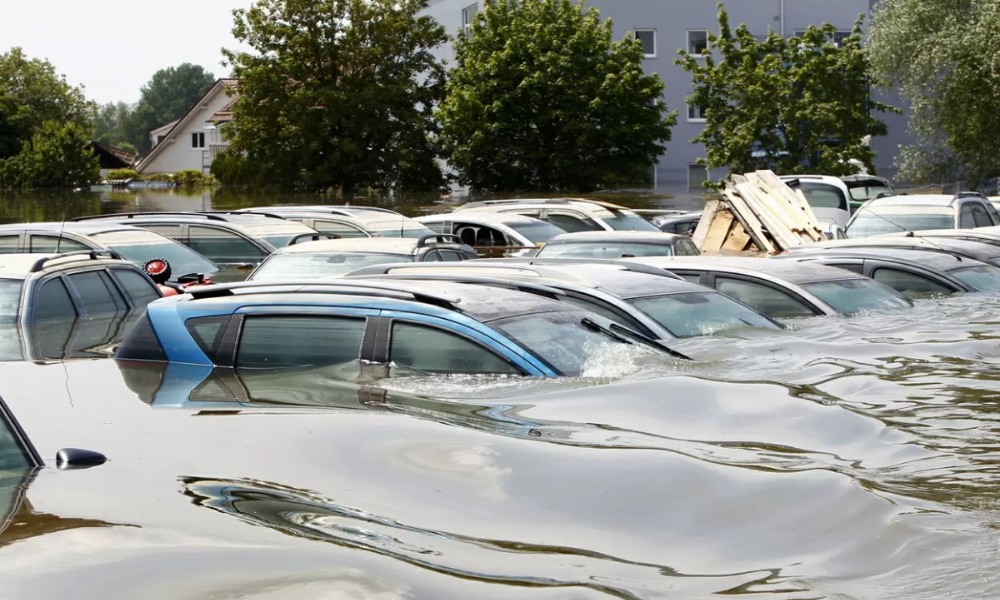
5. Flood-Damaged Cars Sold as Clean Cars
After every monsoon, some flood-damaged vehicles find their way back into the used-car market. Although they may look clean on the outside, water can damage wiring, electronic components and mechanical parts long after the car has dried.
How to Spot It
Watch out for:
- A damp or musty smell inside the cabin.
- Rust under the seats or dashboard.
- Mud deposits in hard-to-reach areas.
- Water stains on seat belts or carpets.
- Electrical features that don't work consistently.
If you notice several of these signs together, it's worth getting the car inspected before making a decision.
6. Missing or Incomplete Service History
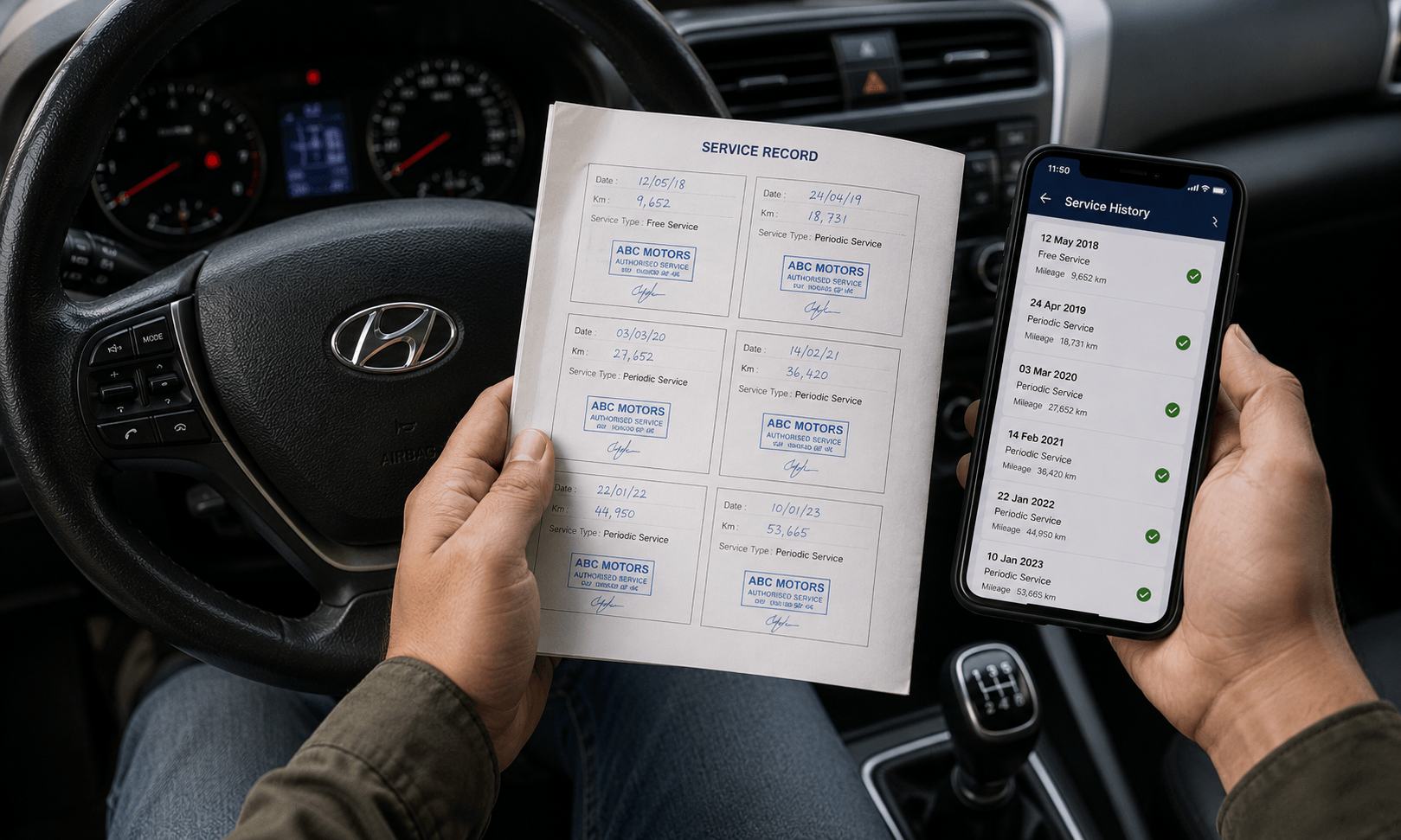
A missing service record doesn't always mean the car has been neglected, but it should raise questions. Some sellers claim the service book has been lost or that servicing was always done at a local garage. Without proper records, it's much harder to verify how well the car has actually been maintained.
How to Spot It
- Ask for service invoices instead of relying only on the service booklet.
- Verify the maintenance history with an authorised service centre.
- Check whether the recorded mileage matches the car's current reading.
A complete service history usually gives much greater confidence when buying a used car.

7. Delaying the RC Transfer
Some buyers complete the payment, take the keys and assume the ownership transfer can be done later. That can become a problem if the RC remains in the previous owner's name for months. If the vehicle is involved in traffic violations or legal issues before the ownership transfer is completed, it can create unnecessary complications for both the buyer and seller.
How to Avoid It
- Complete the RC transfer as soon as possible.
- Ensure all required RTO paperwork has been signed.
- Keep copies of the sale agreement and delivery note.
- Don't rely on verbal promises that the paperwork will be completed later.
Also Read: Why Some Buyers Prefer Older Cars Over New Cars

Quick Checklist Before Buying Any Used Car
Before paying even a small booking amount, run through these simple checks. They can help you spot many common scams before it's too late.
- Verify the RC details on the VAHAN portal.
- Match the engine and chassis numbers with the documents.
- Check the authorised service history.
- Inspect the car carefully for repainting or accident repairs.
- Test drive the vehicle.
- Get an independent pre-purchase inspection done.
- Never pay before inspecting the car in person.
- Complete the RC transfer without unnecessary delays.
A Good Deal Should Not Feel Like a Gamble
Buying a used car can be a smart decision, but only if you know exactly what you're paying for. Most scams rely on buyers rushing into a deal or skipping a few basic checks.
Taking a little extra time to verify the paperwork, inspect the vehicle and confirm its service history can save you from expensive surprises later. And if something about the deal does not feel right, it's usually better to walk away than regret the purchase later.
Related News

Learn more about Maruti Suzuki Swift


Popular Maruti Suzuki Models


Latest Cars


Upcoming Cars


Latest News


 car&bike Team | Nov 11, 2026RTI vs Zero Depreciation: Which Car Insurance Cover Pays More?Return to Invoice (RTI) covers the gap between your car's current IDV (Insured Declared Value) and the original invoice value in case of theft or total loss. Zero Depreciation reduces deductions on replaced parts during accident repairs.1 min read
 car&bike Team | Nov 11, 2026Engine Protection vs Zero Depreciation: What's The Difference?Zero Depreciation reduces your share of accident repair costs, while Engine Protection covers certain engine and gearbox damage caused by water ingress or oil leakage.1 min read
 car&bike Team | Nov 11, 20262027 Hyundai Creta Interior Spied For The First TimeThe next-generation Creta's cabin gets a complete overhaul with a larger screen, a new steering wheel and more.2 mins read
 Amaan Ahmed | Nov 11, 2026'Fun' In Focus: How Honda Is Building ADV 160, Rebel 300 At Its Oldest India PlantFrom rolling out the first Activa, Honda's Manesar facility -- which marked its 25th anniversary this year -- is now primed to build the company's most exciting new products in years.1 min read
 car&bike Team | Nov 11, 2026Genesis GV90 SUV Design Patented In IndiaThe Genesis GV90's design has been patented in India just months after its global debut.1 min read
 car&bike Team | Nov 10, 20263.3 kW Vs 7.2 kW Vs 11 kW EV Chargers: Which Do You Need?Choosing a home EV charger depends on your car, daily driving and home power supply. A 3.3 kW charger works for smaller EVs, while 7.2 kW suits most mid-size electric cars. An 11 kW charger is meant for larger EVs that support three-phase charging.1 min read