
Different Car Safety Features Explained


- Two types of safety features
- Active features intervene before an accident takes place
- Passive features activate after a crash occurs
Driving a car has the potential to be fatal if not done right. Moreover, road accidents happen all the time and some of them are inevitable. In such scenarios, having a car that is loaded with safety features can prove to be a savior. Most buyers prioritise fancy entertainment units and convenience-boosting technologies without realizing how important safety features are. Now, there are many such safety features available in the market. While some are offered as standard with almost every car, some are only available in more expensive cars. Moreover, safety features are categorized into two: active and passive. Active features will intervene before an accident to improve safety while passive ones operate after a crash occurs to protect the passengers. So, let's take a look at all the safety features that are offered in cars to ensure safety of the driver and passengers.
Active Safety Features:
Tyre Pressure Monitor

Photo Credit: en.wikipedia.org
The purpose of the Tyre Pressure Monitoring System (TPMS) in your vehicle is to warn you that at least one or more tyres are significantly under-inflated, possibly creating unsafe driving conditions.
Speed-limiters
Many cars fitted with cruise control also come with a feature to prevent the car from being driven above a pre-set speed. Speed-limiting devices can normally be set to any speed and will gently reduce engine power when it is reached. Many systems will deactivate if the driver floors the accelerator, so they can still react to developing situations on the road.

Photo Credit: en.wikipedia.org
Lane-keeping assistance (LKA) systems monitor the position of the vehicle with respect to the lane boundary and apply torque to the steering wheel, or pressure to the brakes, when a lane departure is about to occur.
ABS with Electronic Brake-force Distribution

Photo Credit: en.wikipedia.org
Electronic Brakeforce Distribution or EBD is an extension of the Anti-Lock Braking System (ABS). It ensures that the right amount of force is applied to each wheel in order to bring it to a complete halt. Though the Anti-Lock Braking System or ABS ensures that the wheels do not lock under heavy braking, EBD makes sure that each wheel gets the right amount of braking force.
Autonomous Emergency Braking
Autonomous emergency braking (AEB) systems start braking automatically if a collision is imminent and the driver is not taking any action (or is not doing so fast enough). AEB is able to detect a potential collision and activate the braking system to decelerate the vehicle with the purpose of avoiding a collision, or at least mitigating its impact.
Electronic Stability Control

Photo Credit: en.wikipedia.org
ESC is a computerised technology that improves a vehicle's stability by detecting and reducing loss of traction. In such a scenario, it automatically applies the brakes to help steer the vehicle where the driver intends to go. Braking is automatically applied to wheels individually, such as the outer front wheel to counter oversteer, or the inner rear wheel to counter understeer.
Passive Safety Features:
Seat-belts

Photo Credit: en.wikipedia.org
Seatbelts (or safety belts) are restraint systems that keep passengers correctly positioned during an accident or sudden stop, thereby reducing the impact of the vehicle interior on the body and preventing people from being ejected.
Isofix child seat mounts

Photo Credit: en.wikipedia.org
ISOFIX, essentially, is a standardised international child seat fitting system. In other words, it is the international standard for attachment points for child safety seats in cars. Car seats differ in design, shape and size. So does the length of a seatbelt as well as seatbelt anchorages. This makes it problematic to fix a child seat correctly and securely. In fact, a number of surveys indicate that child car seats are fitted incorrectly, making them ineffective in securing a kid in the event of an accident. ISOFIX seats solve this problem by providing an easier and secure way of attaching child seats in a car. It's also different because it removes the need to use the car's seatbelt to secure the child seat.
Driver and Passenger Airbags

Photo Credit: en.wikipedia.org
The driver-side airbag has been made mandatory under the BNVSAP safety norms in India. But, you should look for a car that at least has dual airbags at the front, for both the driver and passenger. Any number more than that is great. Airbags play a crucial role during accidents as they act as restraints and prevent the driver and passengers from incurring serious injuries.
Pedestrian Airbags
The pedestrian airbag (Pedestrian Airbag) is fitted under the bonnet near the windscreen. In the event of certain frontal collisions with a pedestrian, the sensors in the front bumper react and the airbag inflates if required, based on the force of the impact.
Related News




Latest Cars


Upcoming Cars


Latest News


 car&bike Team | Jul 25, 2026Jeep Meridian 85th Anniversary Edition Launched At Rs 36.05 LakhLimited to 85 units, the special edition gets cosmetic changes and also features the CARA AI voice assistant.1 min read
 car&bike Team | Jul 25, 2026River Indie Electric Scooter Crosses 50,000 Units Production MilestoneThe milestone comes less than three years after the first unit rolled out of the company's Hoskote manufacturing facility.2 mins read
 car&bike Team | Jul 25, 20262026 Maruti Brezza Facelift Fuel Efficiency Figures RevealedThe updated model returns up to 26.90 km/kg in CNG guise, while the newly introduced turbo-petrol delivers a claimed 20.47 kmpl.2 mins read
 Jafar Rizvi | Jul 25, 2026Honda ZR-V Hybrid SUV Launched In India At Rs 47.99 LakhThe ZR-V is Honda’s first hybrid SUV for India and arrives as a CBU.1 min read
 Jafar Rizvi | Jul 24, 20262026 Maruti Brezza Facelift: Variants, Features, Engine Options ExplainedThe 2026 Maruti Suzuki Brezza is offered in four trim levels: LXi, VXi, ZXi and ZXi+ and with two engine options.5 mins read
 Jafar Rizvi | Jul 24, 20262026 Maruti Brezza Facelift Launches With Three Major FirstsThe 2026 Maruti Suzuki Brezza has arrived, and along with carrying a five-star Bharat NCAP rating, the model brings three firsts for both the Brezza and, in one case, Maruti itself.2 mins read
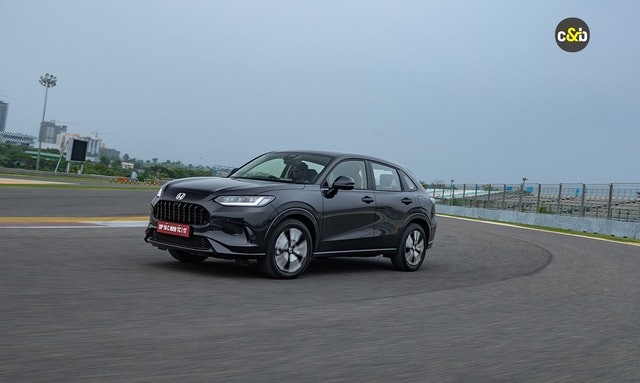 Bilal Firfiray | Jul 24, 2026Honda ZR-V Review: Who Is It For?Honda has brought the new ZR-V to India as their current flagship offering. It’s a CBU, it’s a hybrid, and it’s here for a limited few. Who is it for though?1 min read
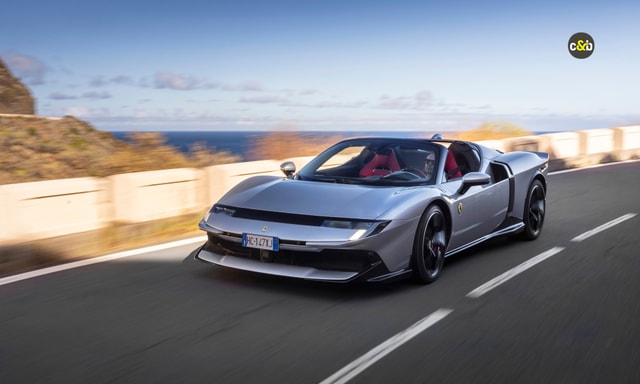 Shams Raza Naqvi | Jul 15, 2026Ferrari 849 Testarossa Spider Driven: Rs. 11.25 Crore Meets 1,000 bhpWe got behind the wheel of the most powerful convertible from Ferrari. What makes the 849 Testarossa Spider Special? We tell you.1 min read
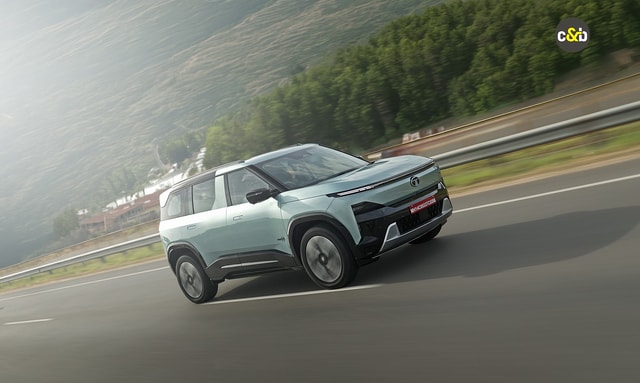 Bilal Firfiray | Jul 12, 2026Tata Sierra EV Review: Reborn In The Electric AgeThe Tata Sierra EV isn’t drastically different from its ICE counterpart when it comes to design. But being the seventh electric offering from the Indian brand, it has gotten a few things right, and very few things wrong. But is it a compelling package to buy?5 mins read
 Jafar Rizvi | Jul 13, 2026TVS Orbiter Long-Term Review (Report 1): Settling In Takes TimeFirst impressions weren't the strongest, but the Orbiter has made a mark in its first month in the car&bike garage.5 mins read
 Seshan Vijayraghvan | Jul 7, 2026Tata Altroz Petrol DCA Long-Term Review: Intercity & Highway Driving ReportWe tested the Tata Altroz Petro DCA’s highway manners, intercity performance, and real-world fuel efficiency.1 min read