
Factbox - Western Governments Struggle To Agree On Russian Oil Price Cap


Western governments want to set a maximum purchase price for Russian oil on the world market to limit Moscow’s ability to raise money for its war on Ukraine.
The plan is meant to punish Russia while at the same time keeping its vast petroleum exports flowing to energy-starved global markets to tamp down inflation.
But so far, the countries have failed to agree on what the price limit should be, reflecting divisions over how badly the scheme should seek to hurt Moscow.
The clock is ticking.
If they can’t reach a deal by Dec. 5, an outright ban on Russian imports into the European Union will take effect, crimping supplies heading into peak winter heating season.
Here is what you need to know:
WHO'S IN THE PRICE CAP COALITION?
The Group of Seven (G7) wealthy nations -- the United States, Japan, Germany, Britain, France, Italy and Canada -- and the EU are hammering out details of the plan.
The G7 had proposed the idea because Russia supplies 10% of the world's oil and losing it would shock the global market.
The EU had earlier agreed to impose an outright ban on Russian oil imports starting Dec. 5. But with the bloc suffering with thin inventories and high prices heading into winter, governments want to sidestep the ban.
The United States also imposed an outright ban on Russian oil imports after Russia invaded Ukraine, and it intends to keep that in place regardless of whether a price cap is agreed.
WHAT IS THE PRICE UNDER DISCUSSION?
The G7 has proposed a cap in the range of $65-70 per barrel. But the EU can’t find consensus.
Poland, Lithuania and Estonia have been pushing for a price cap that is much lower - $30 per barrel - arguing that anything higher provides Moscow too much profit.
Other nations think that level is too low.
Global benchmark oil prices are currently around $85 a barrel with Russian crude already trading at a steep discount at around $63.50.
Russia’s cost of production for oil is estimated at around $20 a barrel.
HOW WOULD IT WORK?
The plan - if it is ever finalized - would require participating countries to deny Western-dominated services including insurance, finance, and brokering cargoes priced above the cap.
The scheme would apply to all Russian oil cargoes loaded after 12:01 a.m. EST (0501 GMT) on Dec. 5, and docking after Jan. 12, according to recent guidance from the U.S. Treasury Department.
The U.S. guidance further sketched out which types of companies would be obligated to participate in the cap plan. They include trading and commodities brokers, and companies involved in financing, shipping, insurance, flagging, and customs brokering.
While U.S. companies would be allowed to handle Russian cargoes priced at or below the cap, those cargoes would still be banned from U.S. shores.
IS IT ENFORCEABLE?
G7 officials believe the plan would work because the London-based International Group of Protection & Indemnity Clubs provides marine liability cover for about 95% of the global oil shipping fleet.
But traders point to parallel fleets that can handle Russian oil using Russian and other non-Western insurance. It remains uncertain how many ports around the world will accept Russian-insured ships.
The plan could backfire in other ways too.
Russian President Vladimir Putin has said Russia will withhold exports to countries that enforce the cap, something that could undermine the plan’s intention of keeping Russian oil flowing to the EU.
Related News


Latest Cars


Upcoming Cars


Latest News


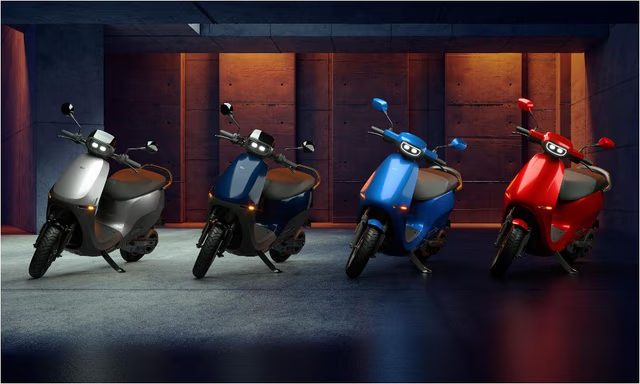 car&bike Team | Aug 6, 2026Ola Electric Shifts To Dealer-Led Retail Model After Five Years Of Company-Owned StoresOla Electric has announced a strategic shift to a dealer-led retail model, while retaining its company-owned outlets as brand experience centres.2 mins read
 car&bike Team | Aug 6, 2026E3 Trion Electric Scooter Launched In India At 1 LakhAvailable in three variants, the scooter's biggest talking point is its AI-backed software ecosystem, which promises to monitor the health of the scooter.3 mins read
 car&bike Team | Aug 6, 2026Production-Spec Royal Enfield Himalayan 750 Spotted Testing Ahead Of Global DebutRoyal Enfield's upcoming Himalayan 750 has been spotted testing in near-production form in the UK, ahead of its expected debut at EICMA 2026.2 mins read
 Jafar Rizvi | Aug 6, 2026Audi Confirms New Q3 For India This Year; A5, Q9 To Arrive By 2027Audi has confirmed three new launches for India by 2027. The Q3 is expected to debut around the festive season, followed by the A5 and Q9 in 2027.3 mins read
 Sarthak Mahajan | Aug 6, 2026Tata Nexon Camo Edition Launched At Rs 9.99 LakhAvailable in petrol, diesel, and CNG variants; prices start at Rs 9.99 lakh.2 mins read
 car&bike Team | Aug 6, 2026SIAM Downplays Letter To Govt Citing Chloride-Related Concerns In E20 PetrolThe original letter cited increased cases for part replacements in cars and SUVs due to high chloride-related wear or corrosion while a second letter shared with the public said that the data still required to be authenticated.1 min read
 Bilal Firfiray | Aug 1, 2026Toyota Hilux Review: The InvincibleMarking it as the ninth generation, the Hilux comes with a major cosmetic overhaul. But is it still relevant enough for the current times or is it getting too long in the tooth?5 mins read
 Bilal Firfiray | Jul 30, 2026Kia Syros EV Review: Best EV To Buy Under Rs 20 Lakh?The Kia Syros EV comes into the game with a modern design, spacious cabin, strong performance, decent range and an aggressive pricing. But could it become the new benchmark under Rs 20 lakh?5 mins read
 Jaiveer Mehra | Jul 27, 20262026 Maruti Suzuki Brezza Facelift Review: Bestseller Joins The Turbo ClubWhile Maruti’s facelifts have always tended to bring subtle updates over the outgoing models, the latest Brezza brings some heavy updates under the skin, including a new 6-speed manual gearbox and, for the first time, a turbocharged petrol engine option.1 min read
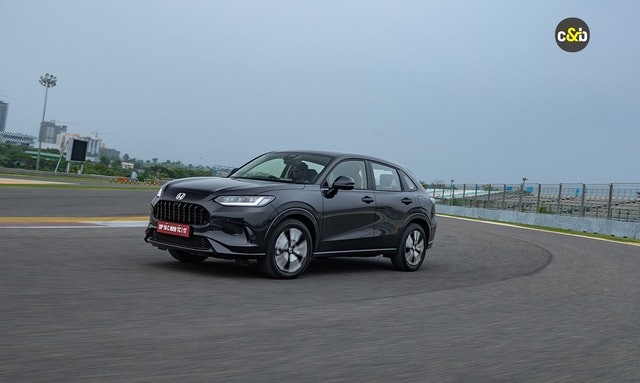 Bilal Firfiray | Jul 24, 2026Honda ZR-V Review: Who Is It For?Honda has brought the new ZR-V to India as their current flagship offering. It’s a CBU, it’s a hybrid, and it’s here for a limited few. Who is it for though?1 min read
 Girish Karkera | Jul 29, 2026Mercedes-AMG E53 4MATIC+ PHEV First Drive Review: Just What The Doctor OrderedThere are luxury cars and there are high-performance cars. But what if you want both for the price of one? Mercedes-Benz has a recommendation that promises to tread a fine line between the two – the second generation E53 with a twist.7 mins read