
Hyundai Kona Electric: Top Five Features Explained


- The Kona Electric is the first mainstream EV from a mass market carmaker.
- Hyundai has launched the 39.2 kWh version in India.
- It offers an impressive ARAI certified all-electric range of 452 km.
The Hyundai Kona Electric breathes in new life into the electric vehicle offerings in India. It is the first mainstream electric SUV from a mass market carmaker and the Korean brand has put its best foot forward to keep it affordable and a viable alternative to conventional cars. Hyundai has gone a step further and has decided to assemble the Kona electric locally in India which helps in aggressive pricing. It has been launched in the lower spec 39.2 kWh version in our market, of course to keep it affordable. Having said that, the drive range is still impressive and it is packed with pretty exciting features too.
Also Read: Hyundai Kona EV Review
Here Are The Top 5 Features Of The Hyundai Kona Electric
Aerodynamic Exterior
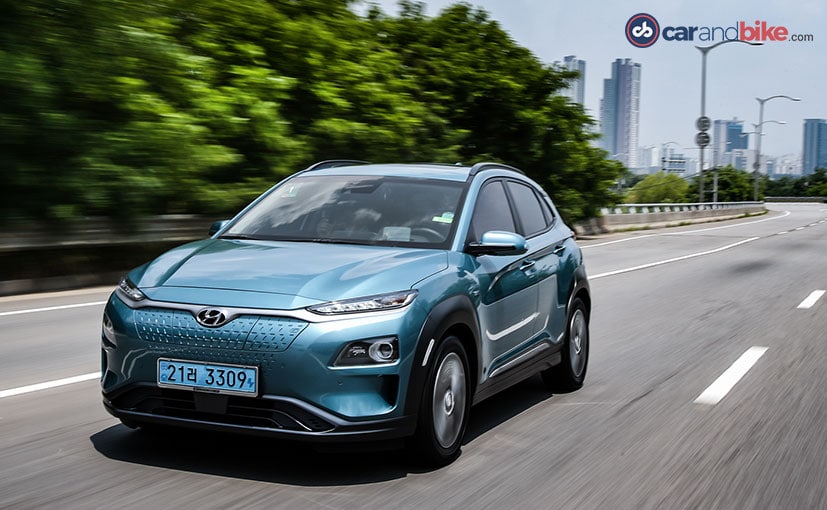 The Hyundai Kona Electric adorns the Sensuous Sportiness design language.
While premium carmakers have kept their EVs less radical and more like regular cars, the Kona misses on the grille and embodies intaglio patterns which make it look futuristic. Hyundai has designed the Kona electric using organic geometric body forms and it gets aero-tuned wheel arch to eliminate wind noise along with increasing drag co-efficiency. The electric charging port is integrated with the grille area and seamlessly fits in. The face overall adorns the Sensuous Sportiness design language which debuted on the Palisade SUV globally and on the Venue in India. The new design language goes around with the trendy design featuring split type headlamp set up where the headlights are moved down and the DRLs are positioned above. The overhangs of the Kona electric are short, making for a long wheelbase while and the design is further accentuated by the bold claddings which add a little drama. The over silhouette of the Kona electric is of an urban compact SUV and the rear looks quite like a regular car with no highlighting elements other the LED tail lamps and claddings. The Kona electric will be available in four colour options and one dual-tone colour option- Phantom Black, Polar White, Marina Blue, Typhoon Silver and Polar white with Phantom Black Roof.
Also Read: Hyundai Kona Electric Launched In India
Feature Packed
 The cabin of the Hyundai Kona Electric feels premium and it is packed with features.
The cabin of the Kona electric looks quite like any other combustion engine powered car which is good as customers will find it a familiar place to be in. The cabin definitely feels premium being equipped with leather seats and leather-wrapped steering wheel along with the dashboard finished in soft touch. As already mentioned, the Kona electric is loaded to the brim with features. It gets 10-way power adjustable driver's seat, electric parking brake, charge management, energy information, ventilated and heated front seats, voice recognition, button type shift-by-wire technology, paddle shifters, utility mode, option for only driver side air-con (in case you run short of charge), smart eco pedal guide, 6 airbags, ESC and HSC among others.
Also Read: Hyundai Kona Electric SUV Car India Launch: Highlights
All Electric Range Of 452 km
 India gets the lower-spec version of the Kona Electric but it offers a decent driving range.
Globally, the Kona Electric gets two battery options- a 39.2 kWh unit and a 64 kWh unit. In India, Hyundai is offering the Kona Electric only with the 39.2 kWh battery pack. Though it's the lower spec model, it has an impressive ARAI certified driving range of 452 km on single charge. The battery can be fully charged in seven to eight hours and using a fast-charger it takes 57 mins to top it up to 80 per cent. The India-spec model gets a 100 kW motor which sends power to the front wheels and puts out 131 bhp and 395 Nm of peak torque. It takes 9.7 seconds to clock triple digit speed.
Also Read: Hyundai India Plans To Sell 500 Units Of The Kona Electric Annually
Regenerative Braking
 The Hyundai Kona Electric also get the one-pedal drive feature.
Regenerative braking is a common feature in Electric Vehicles which helps to charge the batteries when you slow down. In the Kona Electric, regenerative braking also enables single-pedal operation for acceleration and de-acceleration. Whenever you lift-off the throttle, the car will automatically slow down and the motor will use the kinetic energy to charge the battery. The regenerative braking or drive modes- Eco, Comfort and Sport can be selected using the paddle shifters.
Virtual Engine Sound

The Hyundai Kona Electric also gets the vurtual engine sound system.
This is one of the most prominent features in EVs. As the term suggests, virtual sound of an IC powertrain is emitted through speakers to give owners the feel of a regular car. Switching to an electric car form a combustion engine powered car can feel really unusual. So EV makers tend to add such features to keep things familiar. Moreover, such noise also helps to avoid feeling drowsy and keep the driver alert.
Related News



Latest Cars


Upcoming Cars


Latest News


 car&bike Team | Jul 25, 2026Jeep Meridian 85th Anniversary Edition Launched At Rs 36.05 LakhLimited to 85 units, the special edition gets cosmetic changes and also features the CARA AI voice assistant.1 min read
 car&bike Team | Jul 25, 2026River Indie Electric Scooter Crosses 50,000 Units Production MilestoneThe milestone comes less than three years after the first unit rolled out of the company's Hoskote manufacturing facility.2 mins read
 car&bike Team | Jul 25, 20262026 Maruti Brezza Facelift Fuel Efficiency Figures RevealedThe updated model returns up to 26.90 km/kg in CNG guise, while the newly introduced turbo-petrol delivers a claimed 20.47 kmpl.2 mins read
 Jafar Rizvi | Jul 25, 2026Honda ZR-V Hybrid SUV Launched In India At Rs 47.99 LakhThe ZR-V is Honda’s first hybrid SUV for India and arrives as a CBU.1 min read
 Jafar Rizvi | Jul 24, 20262026 Maruti Brezza Facelift: Variants, Features, Engine Options ExplainedThe 2026 Maruti Suzuki Brezza is offered in four trim levels: LXi, VXi, ZXi and ZXi+ and with two engine options.5 mins read
 Jafar Rizvi | Jul 24, 20262026 Maruti Brezza Facelift Launches With Three Major FirstsThe 2026 Maruti Suzuki Brezza has arrived, and along with carrying a five-star Bharat NCAP rating, the model brings three firsts for both the Brezza and, in one case, Maruti itself.2 mins read
 Bilal Firfiray | Jul 24, 2026Honda ZR-V Review: Who Is It For?Honda has brought the new ZR-V to India as their current flagship offering. It’s a CBU, it’s a hybrid, and it’s here for a limited few. Who is it for though?1 min read
 Shams Raza Naqvi | Jul 15, 2026Ferrari 849 Testarossa Spider Driven: Rs. 11.25 Crore Meets 1,000 bhpWe got behind the wheel of the most powerful convertible from Ferrari. What makes the 849 Testarossa Spider Special? We tell you.1 min read
 Bilal Firfiray | Jul 12, 2026Tata Sierra EV Review: Reborn In The Electric AgeThe Tata Sierra EV isn’t drastically different from its ICE counterpart when it comes to design. But being the seventh electric offering from the Indian brand, it has gotten a few things right, and very few things wrong. But is it a compelling package to buy?5 mins read
 Jafar Rizvi | Jul 13, 2026TVS Orbiter Long-Term Review (Report 1): Settling In Takes TimeFirst impressions weren't the strongest, but the Orbiter has made a mark in its first month in the car&bike garage.5 mins read
 Seshan Vijayraghvan | Jul 7, 2026Tata Altroz Petrol DCA Long-Term Review: Intercity & Highway Driving ReportWe tested the Tata Altroz Petro DCA’s highway manners, intercity performance, and real-world fuel efficiency.1 min read