
Toyota Urban Cruiser Taisor: 3 Reasons To Buy And 3 Reasons To Avoid


- Same petrol powertrain choices as the Fronx
- 1.2-litre naturally-aspirated petrol and 1.0-litre turbo-petrol
- Offers higher standard warranty
The Toyota Urban Cruiser Taisor is the fourth and the newest rebadged model born out of the collaboration between Toyota and Suzuki in the current line-up. Where the Fronx has been leading the sales chart since its introduction, the segment has also witnessed a growing demand amongst buyers. This segment offers a crossover stance, higher ground clearance than a hatchback with body cladding, and while not being too expensive on the pocket. So why should you consider buying the Taisor instead of the Fronx, and what are the reasons to stay away from it? Let us break it down for you.
Reasons to buy the Toyota Taisor
Higher Standard Warranty
Where Fronx buyers are offered a standard warranty of two years or 40,000 km, Taisor buyers – since it’s a Toyota – will have the upper hand with a standard warranty of three years or 1,00,000 km. This has always been the case with Toyota-badged Maruti products including the Glanza, Invicto and the Rumion. And now the Taisor continues with it, albeit at a slightly higher premium you pay over the Maruti car it is based on. Moreover, Toyota is also offering complimentary roadside assistance for five years which makes the deal even sweeter.
Powertrain Choices
Although it’s rebadged, you still get all the powertrain choices in the Taisor that are offered in the Fronx. The 1.2-litre naturally aspirated ending offers a smooth and refined driving experience which is also frugal and can be had with an AMT automatic. Meanwhile, the 1.0-litre turbo-petrol we drove has a punchy nature with a vibration-free refinement that is unheard of in a three-cylinder engine. It can also be had with a six-speed torque converter automatic. And for buyers looking for a CNG option, the Taisor offers that as well – but only in the entry-level trim.
Appealing positioning
The Fronx is selling at an average of 13,000 units per month. Which means the Taisor has a successful recipe to start on. Buyers are looking for a beefed-up hatchback without the bulk of an SUV and the Fronx/Taisor offers it in the best possible manner. Secondly, if you wanted to buy a Toyota and the Glanza was the only affordable choice, spending a little more for the Taisor makes so much more sense. And, the Taisor carrying small but noticeable changes over the Fronx (rather than being just a rebadged product) also works in its favour.
Also Read: Toyota Urban Cruiser Taisor vs Rivals: Specifications Comparison
Reasons to avoid the Toyota Taisor
Variants and Pricing
With the badge engineering, the Taisor carries a slight extra premium over the equivalent variant-to-variant Fronx. Not only that, as with the Fronx, the Taisor also doesn’t offer a 1.0-litre turbo-petrol engine with the more affordable trims but only in the more expensive V and G trims. This means if a buyer wants the punchy 1.0-litre Boosterjet, they’d have to spend the extra for it and can’t have it in the more affordable trims. And the same goes the other way around too where the 1.2-litre petrol buyers don’t get the range-topping features offered in the G and V despite them wanting this powertrain and added features. Luckily the Boosterjet variants of the Taisor are priced on par with the same powertrain variants of the Fronx. Lastly, the Toyota touchpoints aren’t as extensive and well spread across the country as Maruti Suzuki’s.
Uninspiring Cabin
Although the exterior of the Taisor carries some changes over the car it is rebadged from, the same cannot be said about the cabin. With a concoction of materials used all around the cabin, they are all hard plastic and make the cabin feel less spacious than it actually is. Toyota could have made use of lighter or beige materials inside the cabin to make it feel more premium and spacious in comparison. Even the seats could have had better leatherette upholstery both fore and aft. Moreover, the second row has ample leg room, but the headroom and shoulder room are on the tighter side. So, spending long hours in the back won’t be very comfortable, especially for taller passengers.
Bigger alternatives available at the same price
The range-topping Taisor V with turbo-petrol automatic and dual-tone finish carries a price tag of Rs 13.04 lakh. At this price, there are other sub-4 metre SUVs along with a few C-SUVs that could offer a much better buying sense with their larger dimension, more features, and bigger engine configuration. You can opt for the Tata Nexon in the Creative Plus S trim or a diesel-automatic combination in the Kia Sonet HTX trim at the same price as the range-topping Taisor. Even the Hyryder CNG option or the Honda City VX petrol manual are good alternatives for the Taisor at around Rs 13 lakh (ex-showroom)
Also Read: Toyota Urban Cruiser Taisor vs Maruti Suzuki Fronx: What’s The Difference?
Conclusion
All things considered, the Taisor is yet another likeable car born out of the alliance between the two carmakers. It has got a lot going for itself including powertrain choices, driving dynamics, features it offers, pricing as well as styling. And the high-volume segment it has entered, the Taisor will give the buyers another choice with Toyota’s brand factor backing it up.
Related News


Research More on Toyota Urban Cruiser Taisor


Popular Toyota Models


Latest Cars


Upcoming Cars


Latest News


 Bilal Firfiray | Jul 27, 2026BMW X5 And iX5 Long Wheelbase Unveiled With Extra Rear Leg RoomBMW has taken the wraps off the long-wheelbase body style of the new-gen X5, and its all-electric iX5 avatar is exclusively for the Chinese market. Both are Neue Klasse with up to 1,000km of claimed range.2 mins read
 car&bike Team | Jul 25, 2026Jeep Meridian 85th Anniversary Edition Launched At Rs 36.05 LakhLimited to 85 units, the special edition gets cosmetic changes and also features the CARA AI voice assistant.1 min read
 car&bike Team | Jul 25, 2026River Indie Electric Scooter Crosses 50,000 Units Production MilestoneThe milestone comes less than three years after the first unit rolled out of the company's Hoskote manufacturing facility.2 mins read
 car&bike Team | Jul 25, 20262026 Maruti Brezza Facelift Fuel Efficiency Figures RevealedThe updated model returns up to 26.90 km/kg in CNG guise, while the newly introduced turbo-petrol delivers a claimed 20.47 kmpl.2 mins read
 Jafar Rizvi | Jul 25, 2026Honda ZR-V Hybrid SUV Launched In India At Rs 47.99 LakhThe ZR-V is Honda’s first hybrid SUV for India and arrives as a CBU.1 min read
 Jafar Rizvi | Jul 24, 20262026 Maruti Brezza Facelift: Variants, Features, Engine Options ExplainedThe 2026 Maruti Suzuki Brezza is offered in four trim levels: LXi, VXi, ZXi and ZXi+ and with two engine options.5 mins read
 Jaiveer Mehra | Jul 27, 20262026 Maruti Suzuki Brezza Facelift Review: Bestseller Joins The Turbo ClubWhile Maruti’s facelifts have always tended to bring subtle updates over the outgoing models, the latest Brezza brings some heavy updates under the skin, including a new 6-speed manual gearbox and, for the first time, a turbocharged petrol engine option.1 min read
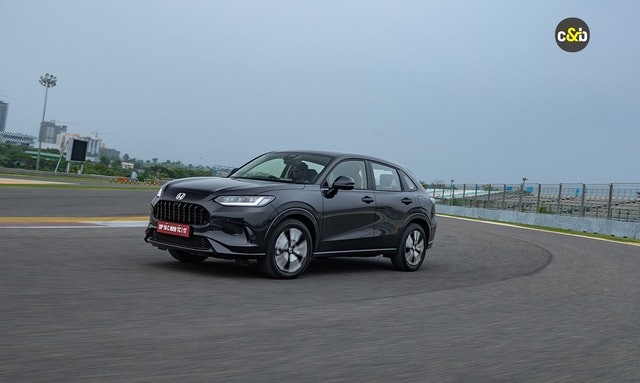 Bilal Firfiray | Jul 24, 2026Honda ZR-V Review: Who Is It For?Honda has brought the new ZR-V to India as their current flagship offering. It’s a CBU, it’s a hybrid, and it’s here for a limited few. Who is it for though?1 min read
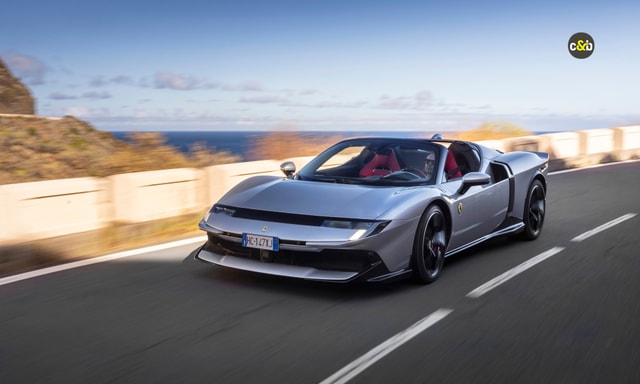 Shams Raza Naqvi | Jul 15, 2026Ferrari 849 Testarossa Spider Driven: Rs. 11.25 Crore Meets 1,000 bhpWe got behind the wheel of the most powerful convertible from Ferrari. What makes the 849 Testarossa Spider Special? We tell you.1 min read
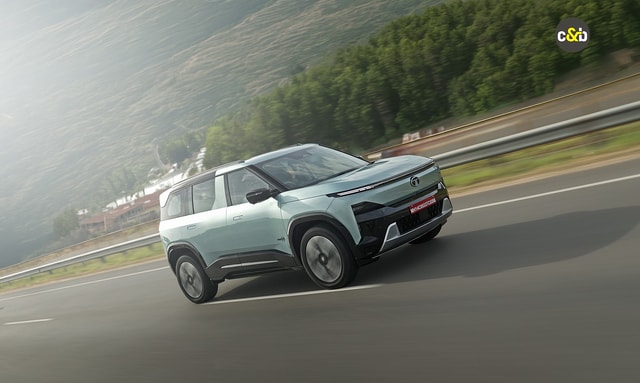 Bilal Firfiray | Jul 12, 2026Tata Sierra EV Review: Reborn In The Electric AgeThe Tata Sierra EV isn’t drastically different from its ICE counterpart when it comes to design. But being the seventh electric offering from the Indian brand, it has gotten a few things right, and very few things wrong. But is it a compelling package to buy?5 mins read
 Jafar Rizvi | Jul 13, 2026TVS Orbiter Long-Term Review (Report 1): Settling In Takes TimeFirst impressions weren't the strongest, but the Orbiter has made a mark in its first month in the car&bike garage.5 mins read