
AMT vs CVT vs DCT vs Torque Converter: Which Automatic Gearbox Is Right for Your Driving Style?

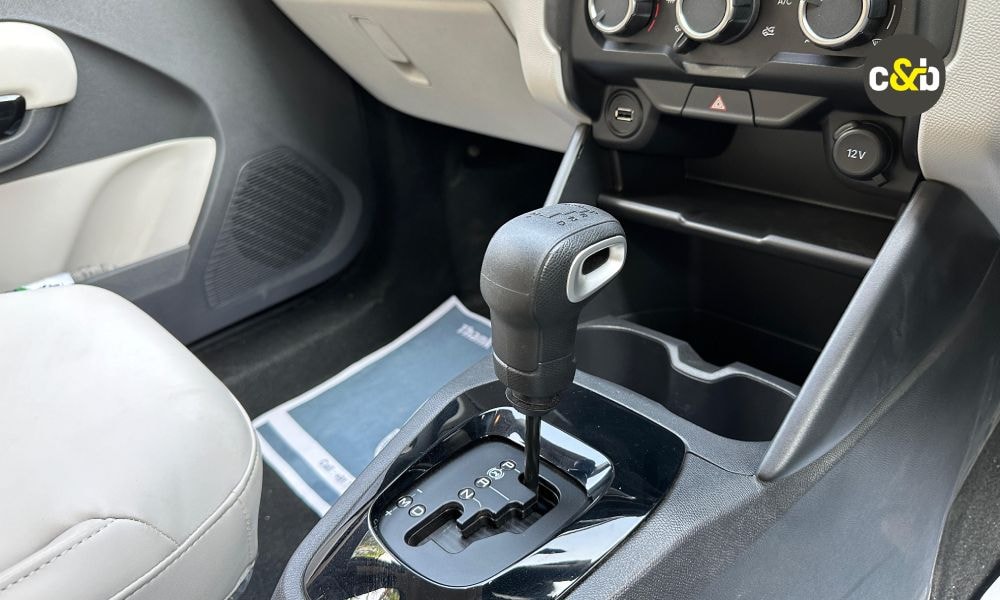
Roll back a decade or two, and most mass-market buyers had just a simple choice of manual or automatic gearbox once they finalised the car. Now, the choice isn’t just limited to automatic; you are quite likely to walk into a dealership and say you want a car with an automatic and then be asked: “Which one?” While once it was simply choosing between a manual or torque converter automatic, the choice of automatic now encompasses four different variations and in some cases the car you chose is offered with three of them – Creta & Seltos come to mind. So just what makes these gearboxes different and which is the right one for you?
Automated Manual Gearbox (AMT)
While the AMT had existed outside India for decades, it hit the Indian mainstream in the 2010s when it became the gearbox of choice for almost every budget car you could buy… even now. The AMT is the most cost-efficient of the automatic gearbox units, essentially taking a manual gearbox and replacing the physical throw lever and clutch with actuators and sensors that do the job for you. The result, on paper at least, is the convenience of an automatic at a lower cost and the benefits of mileage similar to a manual. An interesting detail of the AMT gearbox is that it lacks a Park or ‘P’ gear on the selector and requires the user to shift to neutral and pull the handbrake - as you would in a standard manual.
In real-world conditions, you do feel the interruptions in power as the gearbox shifts gears, though these “head nods” have been smoothened out to a notable extent in the latest generation cars.
Who should buy?
Well, a majority of cars under the Rs 10 lakh mark nowadays are offered with AMT gearbox options with only a select few exceptions. It’s the automatic gearbox for the masses, so you don’t really have a choice if you’re in the market for a budget automatic.
Continuously Variable Transmission (CVT)
Once linked to Formula 1, the CVT gearboxes have several advantages over other types of automatics. There’s no interruption in power; the engine can stay in the meat of the powerband, the gearbox itself is very compact so packaging is not a problem, and there are fewer moving parts so it’s less prone to failure on paper. In the real world, the smoothness is actually there, and power delivery is uninterrupted though at times delayed.
The CVT works using two sets of pulleys – one fixed and one moveable, with a belt sitting between the fixed and moving pulleys. The moveable pulley adjusts its position in relation to the fixed pulley, causing the belt to slide lower down into the gap or rise to the surface to adjust between higher torque and cruising.
This means an infinite set of gear ratios and good fuel economy, but it also leads to what we call the rubber-band effect – or the vehicle not picking up speed in direct correlation to rising RPMs. This delay is generally down to the gearbox taking time to adjust the band in the correct position. Under everyday city driving, this is negligible.
Who should buy?
CVT gearboxes do have a decent presence in the mass market segments, particularly in the popular C-SUV segment in models such as the Honda Elevate, Hyundai Creta and Kia Seltos. Subcompacts like the Renault Kiger and Nissan Magnite too offer a CVT gearbox with the turbo-petrol engine option. Additionally, should you be looking at a strong hybrid, you’re likely buying a car with a CVT gearbox. As for who should buy? Well, if you are primarily driving in the city and prefer to drive in a sedate and relaxed manner while wanting a smooth driving experience, this is the one for you.
Torque Converter Automatic (TC)
Perhaps the oldest style of automatic gearbox, the torque converter is often viewed as one of the most reliable versions of the AMT gearbox, with units offered in models priced from upwards of Rs 10 lakh to those priced in the crores. Advances in technology have meant that modern torque converters have become more than just a convenient way of going around, with some brands preferring these units over the more complex dual-clutch automatic gearboxes, with the units able to match the latter for rapid gear shifts and even in terms of smoothness.
Who should buy?
Given that the origins of the modern torque converter gearbox date back to the 1940s and it's still remained relevant today talks a lot about the ruggedness, longevity and development of the technology. Today the modern torque converter can be found in mass market models such as the Hyundai Creta and Maruti Brezza to high-end ultra-luxury models from brands such as BMW and even in a range of off-road SUVs including the Jeep Wrangler and even the Toyota Land Cruiser.
It offers perhaps the most fuss-free ownership experience of any of the automatic gearbox types, though it does come at a premium to some of the others. So if you want something that is smooth, reliable, works well both in the city and highway, and can be used in an enthusiastic fashion, this is the one to pick.
Dual Clutch Automatic Transmission (DCT/DCA)
The credit to the dual-clutch automatic being adopted across segments can perhaps be given to the Volkswagen Group with its widespread use of the DSG gearbox across its range of cars, ranging from hatchbacks to high-end SUVs. The DCT is the most complex of the automatic gearboxes used in road cars. As the name suggests, the DCT uses twin clutches, with one working on the odd-numbered gears and one on even, reducing the strain on a single clutch pedal while at the same time improving shift speeds as the second clutch is ready with the next gear well in advance of the next gear shift. That said, the DCT also requires more intensive maintenance – particularly dry clutch units which, while more inexpensive than wet clutch units, can suffer from issues in stop & go traffic, particularly overheating.
Who Should Buy?
DCT technology has come a long way in recent years, with models such as the Sonet and Venue making the technology a lot more accessible. Also, who can forget the original Polo GT TSI (the DSG was switched for a TC in its later years), which many still regard as a gem of a hatchback. That said, the modern DSG works well in the daily commute and can be more efficient than a torque converter, though it will find more appeal in the hands of enthusiasts who might enjoy making the most of the gearbox’s lightning-quick shifts.
Related News


Latest Cars


Upcoming Cars


Latest News


 car&bike Team | Sep 2, 2026Simple Wave vs Ather Konarc: Battery, Range, Performance, Features ComparedThe Simple Wave packs more range, power and storage than the Ather Konarc, but Ather counters with a longer list of useful everyday features and a lower starting price.5 mins read
 Sarthak Mahajan | Sep 2, 2026Simple Wave: In PicturesSimple has launched the Wave at Rs 1.10 lakh, making it the brand’s most affordable electric scooter.3 mins read
 car&bike Team | Sep 2, 2026Simple Wave Electric Scooter Launched At Rs 1.10 Lakh; Up To 243 Km RangeSimple Energy has entered the family electric scooter segment with the new Wave, offered in six configurations with up to 243 km of claimed IDC range.2 mins read
 Jaiveer Mehra | Sep 2, 2026New Range Rover Electric Revealed: Dual-Motor AWD, 118 kWh Battery, 600 Km RangeAll-electric Range Rover arrives in standard and long-wheelbase guise with bookings now open in India.1 min read
 car&bike Team | Sep 2, 2026Simple Wave Electric Scooter LAUNCH Highlights: Price, Specifications, ImagesSimple Energy will announce prices and complete details of the Wave electric scooter today. Watch this space to know all about it.0 mins read
 car&bike Team | Sep 2, 2026Simple Wave Electric Scooter Launch Today: What To Expect?The Wave will go up against models such as the Ather Konarc and Rizta, TVS iQube among others.2 mins read
 Amaan Ahmed | Sep 2, 2026Konarc Is The Rizta That Works For Everyone -- Including Ather Energy | FIRST RIDE REVIEWFor the slow-but-sure Ather, the Rizta was the foot in the door -- the similarly-capable Konarc, purpose-built to win over every Indian family, is built to kick that very door down.10 mins read
 Seshan Vijayraghvan | Sep 1, 2026Volvo EX90 Review: Understated Luxury Meets Electric PerformanceThe Volvo EX90 is a massive, fully electric luxury SUV that combines understated design, a tech-heavy cabin, plenty of comfort, and a capable electric powertrain. But does it get everything right?1 min read
 Preetam Bora | Aug 25, 20262026 Hero Xoom 160 Review: Maxi-mum Potential!With styling and proportions that goes into actual maxi-scooter territory, a liquid-cooled engine and large 14-inch wheels, the Hero Xoom 160 holds a lot of promise. But should you buy it?9 mins read
 Seshan Vijayraghvan | Aug 19, 20262026 BMW X1 Long-Wheelbase Review: Is This The X1 To Buy?Along with the extra rear legroom, the new BMW X1 LWB offers more features, more safety tech, and a more powerful petrol engine. But do these updates actually make it a better SUV?1 min read
 Janak Sorap | Aug 17, 2026Bajaj Pulsar N160 SS First Ride Review: The Most Tech-Loaded Pulsar Yet?The Bajaj Pulsar N160 SS brings more power, new-age electronics and sharper styling to the familiar 160cc Pulsar formula.5 mins read