
How Driving Habits Affect Clutch Life In Manual Cars
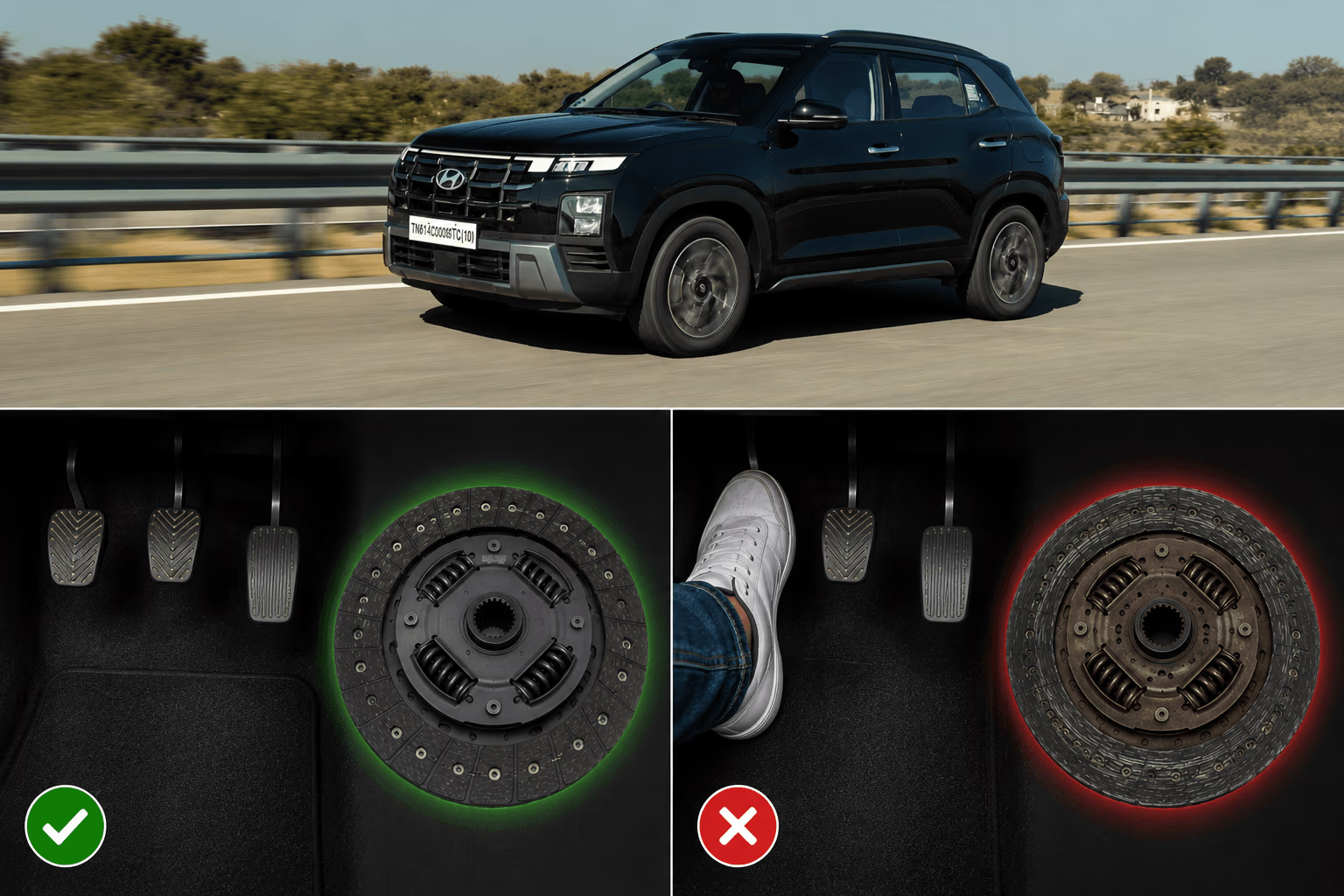
- Frequent half-clutch driving are among the biggest causes of premature clutch wear
- Heavy urban traffic, flyovers, and stop-go conditions can significantly reduce clutch life
- imple driving habits can help extend clutch lifespan and delay expensive replacement costs
The clutch is one of the most heavily used components in any manual car. Every gear change, every traffic signal, and every slow-moving traffic jam depends on it. Yet many drivers rarely think about the clutch until the car starts showing signs of trouble.
What surprises many owners is that clutch life often depends less on the vehicle itself and more on how it is driven. Two identical cars with similar mileage can have completely different clutch conditions based on driving habits alone.
Also Read: Ceramic Coating vs Paint Protection Film (PPF): Understanding The Differences
For Indian drivers, this becomes even more important. Daily traffic congestion, steep flyovers, crowded parking ramps, and frequent stop-start driving create conditions that place far more stress on a clutch than long, uninterrupted highway journeys.
Why Clutches Often Wear Faster in Indian Driving Conditions
Driving conditions in India can be particularly demanding for manual transmissions. In large cities, drivers may engage and disengage the clutch hundreds of times during a single commute. Slow-moving traffic often encourages half-clutch driving, while steep flyovers and parking ramps increase clutch slipping during hill starts.
Overloaded vehicles can also accelerate wear. Whether it is a family trip with a fully packed boot or a commercial vehicle carrying heavy loads, the clutch must work harder to transfer power smoothly. As a result, clutch lifespan in India can vary dramatically depending on where and how the vehicle is driven.
Driving Habits That Shorten Clutch Life
Some clutch wear is unavoidable. However, certain habits can dramatically accelerate the process.
Riding the Clutch
One of the most common mistakes is resting your foot on the clutch pedal while driving. Even slight pressure on the clutch pedal can prevent the clutch system from operating as intended. Depending on the amount of pressure applied, this may cause partial clutch slip or place continuous load on release components such as the release bearing.
Over time, this unnecessary contact can increase wear and shorten component life. Many drivers do this unconsciously, particularly during long periods in city traffic. Many drivers do this without realising it, especially in city traffic.
Also Read: Why Your Car's AC Cools Better While Driving Than At Idle
Holding the Car on an Incline Using the Clutch
At traffic signals on flyovers or steep slopes, some drivers hold the car stationary by balancing the clutch and accelerator. Although the vehicle remains in place, the clutch is constantly slipping during this process. Repeated hill starts using clutch slip can significantly shorten clutch life over time.
Excessive Half-Clutch Driving
Half-clutch driving is often used in crawling traffic to control vehicle speed. While brief clutch modulation is normal, maintaining the clutch in a partially engaged state for extended periods generates substantial heat inside the clutch assembly. This is one of the biggest reasons clutches wear faster in congested urban environments.
Aggressive Launches
Rapid acceleration from a standstill often requires higher engine revs and increased clutch slip. Repeated hard launches create excessive friction and heat, accelerating wear on the clutch plate and other drivetrain components.
Using the Wrong Gear
Driving at very low speeds in a gear that is too high can force the clutch to work harder when accelerating. Selecting the correct gear for the vehicle's speed allows the clutch to engage fully and reduces unnecessary strain.
Also Read: Extended Car Warranties Explained: When They Make Sense and When They Don't
City Driving vs Highway Driving: How Much Difference Does It Make?
The type of driving matters just as much as driving style. A vehicle that spends most of its life on highways usually experiences less clutch wear than one operating in heavy stop-start traffic every day.
Rather than having a fixed lifespan, clutch longevity varies significantly depending on driving habits, traffic conditions, terrain, vehicle load, and vehicle design. In favourable highway-focused use, many clutches can last well beyond 80,000 km, while vehicles used primarily in congested urban traffic may require replacement considerably sooner. Because of these variables, clutch condition is often a more useful indicator than mileage alone when assessing remaining service life.
How to Tell if Your Clutch Is Already Wearing Out
Clutch wear usually develops gradually, giving drivers several warning signs before complete failure occurs. Common clutch slipping symptoms include:
- Engine revs rising without a matching increase in speed
- Difficulty climbing steep inclines
- Reduced acceleration despite higher RPM
- A burning smell after driving in traffic
- Increased clutch pedal travel
- Vibration or judder while moving off
- Difficulty shifting gears smoothly
Ignoring these symptoms can eventually lead to complete clutch failure, leaving the vehicle unable to transfer power effectively.
How Much Does Clutch Replacement Cost in India?
Clutch replacement is not usually a minor repair. Costs vary depending on the vehicle segment, labour charges, and whether related components also need replacement.
| Vehicle Type | Approximate Clutch Replacement Cost |
| Hatchbacks | Rs. 5,000 – Rs. 10,000 |
| Compact Sedans and SUVs | Rs. 8,000 – Rs. 15,000 |
| Premium Cars and Larger SUVs | Rs. 15,000 – Rs. 50,000+ |
In many cases, replacing a clutch assembly involves significant labour because the gearbox must be removed to access the components. Owners should obtain model-specific estimates from authorised service centres or trusted workshops for the most accurate pricing.
Also Read: Brake Fade Explained: Why Brakes Feel Weak After Repeated Hard Braking
Common Clutch Myths Many Drivers Still Believe
Not every piece of driving advice passed down over the years is accurate.
Myth: Every Clutch Should Last 1 Lakh Kilometres
Reality: Clutch life depends heavily on usage. A highway-driven car may easily cross 1 lakh km, while a vehicle used exclusively in city traffic may require replacement much sooner.
Myth: Half-Clutch Driving Improves Vehicle Control
Reality: Excessive half-clutch driving is one of the fastest ways to wear out a clutch.
Myth: Clutch Wear Depends Only on Mileage
Reality: Driving style often matters more than kilometres driven.
A poorly driven car with 50,000 km may need a clutch replacement before a carefully driven vehicle with twice the mileage.
Simple Habits That Can Extend Clutch Life
A few small changes can make a significant difference.
- Keep Your Foot Off the Pedal: Use the dead pedal or footrest instead of resting your foot on the clutch.
- Use the Handbrake on Hills: Allow the brakes, not the clutch, to hold the vehicle stationary.
- Avoid Unnecessary Half-Clutch Driving: Engage the clutch fully whenever possible instead of using it to regulate speed.
- Shift Smoothly: Deliberate and smooth gear changes reduce stress on the clutch assembly.
- Select the Correct Gear: Using the appropriate gear for your speed helps minimise clutch slipping and improves drivability.
Also Read: How Interstate Vehicle Transfers Work In India: NOC, Re-registration And Road Tax Explained
Better Driving Habits Mean Longer Clutch Life
The clutch is a wear component designed to tolerate repeated frictional engagement, but its service life depends heavily on driving conditions and driving technique. But how quickly that happens depends largely on the person behind the wheel. Habits such as riding the clutch, excessive half-clutch driving, aggressive launches, and improper hill starts can shorten clutch life dramatically, especially in India's demanding traffic conditions.
Understanding these habits and making small adjustments can help manual car owners extend clutch plate life, avoid premature clutch replacement, and reduce long-term ownership costs. In many cases, the difference between a clutch lasting 50,000 km and 1 lakh km comes down to everyday driving technique.

carandbike is not merely another name in the world of automotive web sites. We bring together the best from the world of both, cars and bikes. New cars, used cars, new bikes, - we endeavour to help you with all of that. Additionally, carandbike also strives to keep its users updated with the latest from the global automotive industry. car price, car reviews, car dealers, new bikes, and everything in between, carandbike is happy to help!
Read all latest news and reviews from car&bike Team →


Related News


Latest Cars


Upcoming Cars


Latest News


 car&bike Team | Oct 3, 2026Honda Elevate Facelift Teased Ahead Of October 6 LaunchThe Elevate facelift is expected get a slightly tweaked exterior and more changes inside.1 min read
 car&bike Team | Oct 3, 20262027 Kawasaki Ninja 650 Revealed; Gets Hardware UpgradesThe 2027 Ninja 650 gets a new Showa inverted fork, radial-mount brakes and more torque, along with updated TFT connectivity.2 mins read
 car&bike Team | Oct 3, 2026Auto Sales September 2026: Maruti Leads As Kia, Tata, Mahindra Post Strong GrowthMaruti Suzuki led September sales with over 2.36 lakh units, while Tata, Mahindra, Hyundai and Kia also posted growth, with Tata recording its highest-ever quarterly sales in Q2 FY27.3 mins read
 Amaan Ahmed | Oct 2, 2026BMW F 450 R: Five Important Questions AnsweredReplacing the G 310 R as BMW's entry-level naked motorcycle is the just-unveiled F 450 R, and here are answers to five pressing questions about it.1 min read
 car&bike Team | Oct 2, 2026Honda Rebel 500 Recalled In India To Address Potential Steering IssueLess than 100 units of the motorcycle manufactured in 2025 that were sold in India are affected by this global recall.1 min read
 Amaan Ahmed | Oct 2, 2026BYD's Denza D9 MPV, Z9 GT Shooting Brake India Debut In November 2026BYD's luxury sub-brand Denza has announced its imminent India entry, and car&bike can confirm two strikingly different models from the Chinese carmaker will arrive in the next few weeks.1 min read
 Bilal Firfiray | Oct 3, 2026Kia Sorento Review: Is Bigger Always Better?The Kia Sorento has arrived to our shores at the right time. But does it have what it takes to take the market by a storm?7 mins read
 Abhishek Nigam | Oct 2, 2026MINI Countryman C Review: Has MINI Finally Grown Up Without Losing Its Personality?The new Countryman C is bigger, more practical and packed with technology, but its quirky appeal comes with a few compromises.1 min read
 Preetam Bora | Oct 3, 2026ViaTerra Spencer Riding Jacket Review: The Ideal Jacket For Indian Summers?The ViaTerra Spencer mesh riding jacket makes a strong case as a well-built, street-focussed riding jacket, combining good airflow with Level 2 protection and a snug, secure fit. Is it perfect? Read on.6 mins read
 Janak Sorap | Oct 1, 2026Yamaha YZF-R2 Track Review: New TerritoryYamaha's all-new YZF-R2 brings 200cc performance, lightweight construction and R-series DNA to a new generation of riders, but its true track potential is held back by one crucial component.1 min read
 Bilal Firfiray | Sep 28, 2026Renault Triber 1.0 Turbo Review: Was It Necessary?With the new RGEP platform, the Triber has received a much-awaited turbocharged petrol engine. It makes more power now, but was it necessary for this seven-seater MPV's fitness to purpose?5 mins read