
Brake Fade Explained: Why Brakes Feel Weak After Repeated Hard Braking

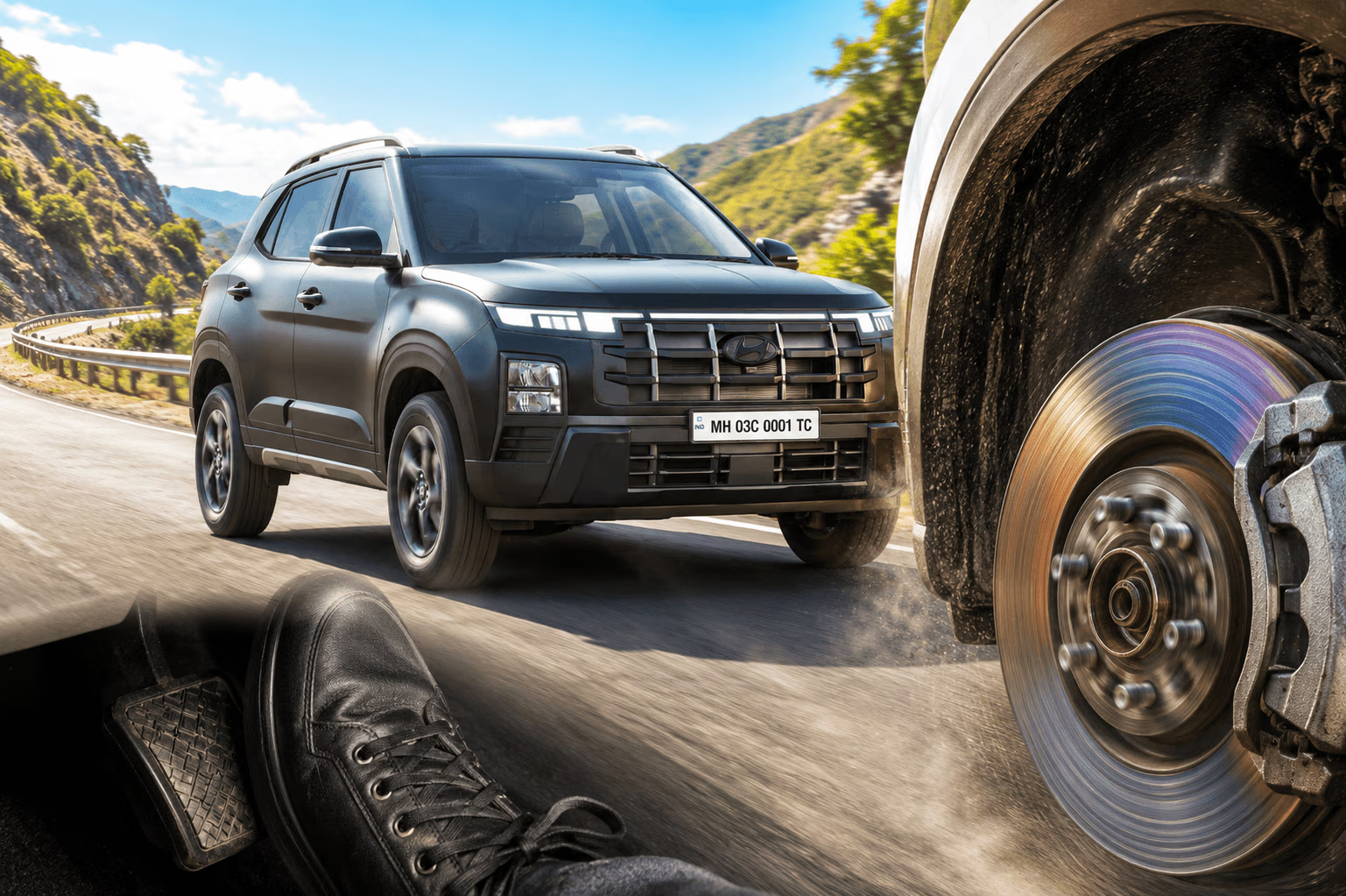
- Brake fade occurs when excessive heat reduces braking effectiveness
- Repeated hard braking can overheat brake pads, discs, and brake fluid
- Most everyday drivers experience brake fade during long downhill drives or emergency braking
Brakes are one of the most trusted safety systems in any vehicle. Most drivers expect the car to slow down consistently every time they press the pedal. However, under certain conditions, braking performance can begin to deteriorate noticeably, even when the brakes themselves are not technically broken.
This phenomenon is known as brake fade. It typically occurs when the braking system becomes overheated after repeated heavy use. While it can affect any vehicle, brake fade is particularly relevant on long hill descents, mountain roads, and situations that require frequent hard braking. Understanding why it happens can help drivers respond safely when braking performance starts to feel different.
Also Read: Battery-as-a-Service (BaaS) Explained: How EV Subscription Batteries Actually Work
Many Drivers Experience Brake Fade Without Realising It
You may have already experienced brake fade without knowing what it was.
Imagine driving down a steep hill station road with passengers and luggage on board. After repeatedly braking through a series of bends, you notice the car does not slow down quite as confidently as it did earlier. The pedal may feel different, and stopping distances may begin increasing.
Many drivers assume this is a brake malfunction. In reality, it is often the result of excessive heat building up within the braking system.
Because the change can happen gradually, drivers sometimes fail to recognise the warning signs until braking performance has already been affected.
What Exactly Is Brake Fade?
Brake fade is the temporary reduction in braking effectiveness caused by excessive heat. Every time the brakes are applied, friction between the brake pads and rotors converts the vehicle's speed into heat. Under normal conditions, this heat dissipates quickly.
However, when the brakes are repeatedly subjected to heavy use, temperatures can rise faster than the system can cool itself down. Excessive heat can reduce the effectiveness of brake pad friction materials, affect brake fluid performance, and place additional stress on braking components, making it harder for the vehicle to slow down consistently. Unlike a mechanical brake failure, brake fade is usually temporary and often improves once the braking system cools.
Also Read: Why Low-Profile Tyres Are Not Always Ideal for Indian Roads
Why Do Brakes Feel Weak After Repeated Hard Braking?
The simple answer is heat. Every hard braking event generates a large amount of thermal energy. When several heavy braking events occur within a short period, heat accumulates throughout the braking system.
As temperatures climb, the brake pads, rotors, and brake fluid can all begin operating outside their ideal temperature range. This reduces the system's ability to generate the same stopping force as before. The result is exactly what many drivers describe: the brakes feel weaker, less responsive, or require more effort to achieve the same level of stopping power.
Why Brake Fade Is More Common in India
Indian driving conditions can create several situations where brake fade becomes more likely. Hill station routes in regions such as Himachal Pradesh, Uttarakhand, and the Western Ghats often involve long descents where drivers continuously use the brakes for extended periods.
Heavy traffic can also contribute. Frequent stop-and-go driving, particularly in crowded urban areas, generates repeated braking cycles with limited cooling time.
Family road trips add another factor. A fully loaded SUV carrying passengers, luggage, and accessories requires significantly more braking force than a lightly loaded vehicle, creating additional heat during descents and highway driving.
Also Read: Best Automatic SUVs For City Traffic In India
Different Types of Brake Fade
Not all brake fade occurs for the same reason. Depending on the cause, brake fade can feel different to the driver. Pad fade often produces a firm pedal with reduced stopping power, while fluid fade is more likely to create a soft or spongy pedal feel.
Brake Pad Fade
This is the most common type. Brake pads contain friction materials designed to operate within specific temperature ranges. When temperatures become excessively high, these materials can lose some of their ability to generate friction. As a result, the pads struggle to grip the rotors effectively, reducing braking performance.
Brake Fluid Fade
Brake fluid transfers force from the pedal to the braking system. If temperatures become high enough to boil the brake fluid, vapour bubbles can form inside the hydraulic lines. Since vapour compresses more easily than liquid, the brake pedal may begin feeling soft or spongy. This type of fade often creates the sensation that the pedal is travelling further than normal.
Also Read: Green Tax in India Explained: Who Pays It and How Much Does It Cost?
Rotor Overheating
Brake rotors absorb enormous amounts of heat during heavy braking. When temperatures become excessive, the rotor's ability to absorb and dissipate heat can be compromised. Extremely high temperatures may also contribute to uneven wear, vibration, reduced braking consistency, or accelerated component wear. Severe overheating may also contribute to vibration, uneven braking, or premature component wear.
Common Warning Signs of Brake Fade
Drivers should watch for several warning signs that may indicate overheated brakes.
| Symptom | What It May Indicate |
| Increased stopping distance | Reduced braking effectiveness |
| Soft or spongy brake pedal | Possible brake fluid overheating |
| Burning smell from wheels | Excessively hot brake components |
| Reduced brake response | Brake pad fade |
| Smoke near the wheels | Severe brake overheating |
Any of these symptoms should be taken seriously, particularly during long downhill drives.
Brake Fade vs Brake Failure: What's the Difference?
Many people confuse brake fade with complete brake failure, but the two are very different.
| Brake Fade | Brake Failure |
| Caused by excessive heat | Caused by mechanical or hydraulic faults |
| Usually temporary | Requires repairs |
| Often improves after cooling | Does not improve on its own |
| Braking performance is reduced | Braking may be severely compromised or lost entirely |
Brake fade is a warning sign that the system is overheating. Brake failure indicates an actual fault within the braking system.
What Should You Do If Brake Fade Happens While Driving?
If you suspect brake fade, staying calm is important. Reduce speed gradually and increase the distance between your vehicle and traffic ahead. Avoid continuously riding the brakes, as this can make the problem worse.
If driving downhill, shift into a lower gear to use engine braking and reduce the load on the brakes. When safe, pull over and allow the braking system to cool before continuing.
Drivers should never ignore the warning signs of overheated brakes, especially if a burning smell or smoke is present.
Also Read: Engine Lugging vs High Revving: Which Habit Causes More Long-Term Engine Damage
Which Vehicles Are More Likely to Experience Brake Fade?
While any vehicle can experience brake fade, certain vehicles are more susceptible.
- SUVs carrying heavy passenger and luggage loads
- Commercial vehicles operating on hilly routes
- Vehicles towing trailers or caravans
- Cars frequently driven on mountain roads
- Vehicles subjected to repeated high-speed or performance driving
The common factor is simple: the more work the brakes have to do, the more heat they generate.
How Drivers Can Prevent Brake Fade
Preventing brake fade often comes down to driving habits and proper maintenance.
Use Engine Braking
Shifting to a lower gear on descents helps control speed without relying entirely on the brakes.
Avoid Riding the Brakes
Short, controlled braking applications generate less heat than keeping constant pressure on the pedal.
Replace Brake Fluid on Schedule
Fresh brake fluid maintains a higher boiling point because it contains less absorbed moisture. Replacing brake fluid at the recommended interval helps reduce the risk of fluid fade during demanding driving conditions.
Maintain Quality Brake Components
Good-quality brake pads and properly maintained rotors generally handle heat more effectively than worn components.
Allow Cooling Time
After aggressive driving or long descents, giving the brakes time to cool helps prevent excessive heat buildup.
Also Read: How Interstate Vehicle Transfers Work In India: NOC, Re-registration And Road Tax Explained
Not Failed, Just Overheated
Brake fade is one of the clearest examples of how heat can affect vehicle performance. It does not necessarily mean the brakes have failed, but it does indicate that the braking system is being pushed beyond its most effective operating range.
Whether you're descending a mountain road, navigating heavy traffic, or carrying a fully loaded vehicle on a road trip, recognising the symptoms of brake fade can help you respond early and maintain control. In many cases, understanding how and why brake fade happens is the first step toward preventing it altogether.
Related News


Latest Cars


Upcoming Cars


Latest News


 car&bike Team | Jul 22, 2026Simple Energy To Unveil Its First Family Electric Scooter On September 2Simple Energy is set to enter India's family electric scooter segment with the debut of an all-new model on September 2.1 min read
 car&bike Team | Jul 22, 2026MG Windsor EV Prices Hiked By Up To Rs 60,000The price hike affects all variants of the Windsor EV.2 mins read
 car&bike Team | Jul 22, 2026New Yamaha Electric Scooter Design Revealed; Could Get Swappable BatteryA newly filed design registration in Japan has revealed a production-ready Yamaha electric scooter with an all-new platform and a unique mechanical layout.1 min read
 car&bike Team | Jul 22, 2026Bajaj Pulsar 125-160 cc Range To Be UpdatedOver the next six weeks, Bajaj Auto is planning to introduce 10 “substantially new motorcycles” in the 125 cc and 160 cc Pulsar segments.1 min read
 Amaan Ahmed | Jul 22, 2026Range Rover GT Debuts As All-Electric Fastback Ahead Of World PremiereFifth member of the Range Rover family is JLR's take on a coupe-SUV; will debut in BEV form later this year.1 min read
 car&bike Team | Jul 21, 2026Maruti Suzuki To Hike Prices By Up To Rs 30,000 In August 2026This marks the second price hike in three months for the company, which previously increased prices in June.1 min read
 Shams Raza Naqvi | Jul 15, 2026Ferrari 849 Testarossa Spider Driven: Rs. 11.25 Crore Meets 1,000 bhpWe got behind the wheel of the most powerful convertible from Ferrari. What makes the 849 Testarossa Spider Special? We tell you.1 min read
 Bilal Firfiray | Jul 12, 2026Tata Sierra EV Review: Reborn In The Electric AgeThe Tata Sierra EV isn’t drastically different from its ICE counterpart when it comes to design. But being the seventh electric offering from the Indian brand, it has gotten a few things right, and very few things wrong. But is it a compelling package to buy?5 mins read
 Jafar Rizvi | Jul 13, 2026TVS Orbiter Long-Term Review (Report 1): Settling In Takes TimeFirst impressions weren't the strongest, but the Orbiter has made a mark in its first month in the car&bike garage.5 mins read
 Seshan Vijayraghvan | Jul 7, 2026Tata Altroz Petrol DCA Long-Term Review: Intercity & Highway Driving ReportWe tested the Tata Altroz Petro DCA’s highway manners, intercity performance, and real-world fuel efficiency.1 min read
 Seshan Vijayraghvan | Jun 29, 2026Renault Kiger vs Toyota Urban Cruiser Taisor: Which Underdog Deserves Your Money?Both the Kiger and the Taisor promise strong performance, solid features, comfortable cabins and everyday usability, all without breaking the bank. But which of these underrated subcompact SUVs deserves your money? Let's find out.1 min read