
Budget 2019: Electric Vehicles To Get More Affordable


The NDA 2.0 government made some major announcements for pushing electric mobility in India as part of the Union Budget 2019. While the Indian auto sector did not witness any dramatic changes in tax norms, Finance Minister Nirmala Sitharaman recommended reducing the GST rate on electric vehicles from the current 12 per cent to five per cent in a bid to push the sale of EVs in the country. In addition, there will be an income tax deduction of Rs. 1.5 lakh on the interest paid on the loans taken to purchase electric vehicles. The push for EV purchase is expected to boost sales for the alternate fuelled vehicles, which has been a major agenda for the government since the previous term.
The Union Budget 2019 also included the proposal for custom duty exemption on import of specific components. The new proposals will be in addition to the Rs. 10,000 crore allocated for EVs under the FAME II scheme and includes solar storage batteries and charging infrastructure as well. The GST council will have to consider and revise the norms, so it can be passed to customers.
The announcement has bode well with the EV industry that has welcomed the reduction in the taxation norms. Most manufacturers have welcomed the move, especially considering the high cost of EVs and the limited range has been a deterrent in the faster adoption of the vehicles. The move will also help the two-wheeler segment particularly, with NITI Aayog suggesting to ban two-wheelers below 150 cc by 2025. Meanwhile, the deadline recommended for conventional three-wheelers is 2023, to be replaced by electric derivatives.
Commenting on the Budget announcements, Chetan Maini, Co-Founder and Vice-Chairman, SUN Mobility said, "The decision to reduce GST on EVs from 12 per cent to 5 per cent is a reassuring move by the government and furthers the country's commitment to transition to an EV future. As an EV energy infrastructure provider, we welcome the move; however it would be more beneficial for the end-user, if the government also focus on reducing GST on charging/battery swapping services from 18 per cent to 5 per cent (same as that for public transport services)."
Appreciating the government's move, Dr. Pawan Goenka, MD - Mahindra & Mahindra said, "As an industry, we cannot ask for more. The government has done what it could do and now the onus is on the industry and the service providers to make the electric vehicle dream happen. For fleet applications and for commercial applications, electric three-wheelers are now commercially viable. An electric three-wheeler operator will earn more and save more per month than he/she does from an ICE engine (vehicle). Earlier, the passenger vehicles for falling short in an aggregate taxi application. But now I think with all the changes with the FAME II benefit and the registration tax not happening, and if the income tax benefit applies for fleet buyers, then it definitely would make overall electric vehicles viable for four-wheelers. And viability is the best way to spur demand."

The electric two-wheeler sector will greatly benefit from the GST reduction & push customers to switch from ICE powered vehicles
Mercedes-Benz India too welcomed the move. Martin Schwenk, Managing Director & CEO said, "We welcome the Government's vision of achieving a 3 trillion dollar economy and becoming the 6th largest economy in the world by end of this year. However, the decision to increase the custom duty on automotive parts was not expected and it is not going to help create demand in the industry which already is facing continued strong macro-economic headwinds, resulting in subdued consumer interest. The increase in custom duty coupled with increased input costs due to fuel price hike, could lead to an increase in the price of our model range. Though the budget has given a boost to green mobility, we wished for the inclusion of Plug-In-Hybrids for duty exemption as well, as that would have further given a push to the green mobility efforts."
Emphasising on the benefits of green mobility, Shekar Viswanathan, Vice Chairman & Whole-time Director - Toyota Kirloskar Motor said, "EVs do bring the benefits towards fossil fuel conservation & lowering of carbon emissions. There are other forms of green mobility which will help the government achieve the same objective. The government should also align its taxation policies towards such green mobilities which promote the reduction of fossil fuel & betterment of the environment. Thus, the focus of taxation should not only be restricted to promote and facilitate the shift to all types of green mobilities but should also be towards all other means which contribute effectively to increased fuel economy and reduced tailpipe emissions. The electric two-wheeler segment will greatly benefit from the reduction in GST given the massive explosion of manufacturers in India. Homegrown companies including Hero Electric, Ather Energy, Revolt Intellicorp, among other have welcomed the move, which will help lower the acquisition cost by a substantial margin for the end customer."
The reduction in the GST rates will greatly benefit the two-wheeler industry that has been spurt of growth in the number of EV players in recent times. Homegrown manufacturers including Hero Electric, Ather Energy, Okinawa Autotech, Revolt Motors and more welcomed the move.
Tarun Mehta, CEO, Cofounder, Ather Energy said, "Government has already moved GST Council to lower GST on EVs from 12 percent to 5 percent and the additional income tax reduction is a major boost for end consumers to purchase EVs. It addresses the concern of the upfront cost of purchasing electric vehicles. This is the best example of a consumer-driven change and is also how Ather envisions the EV sector to achieve scale and growth. It now becomes imperative that OEMs chalk out plans that allows the industry to scale up and meet the demand for compelling products."
Hero Electric - MD, Naveen Munjal said, "The electric vehicle industry needed a substantial boost & support from the government and we welcome the government's recommendation of reduction of GST on EVs from 12% to 5%. In addition to this, income tax reduction of up to Rs 1.5 lakh on the interest paid on EV loans is an extremely positive move which will encourage customers to make a switch from ICE vehicles to EVs. Reduction in custom duty on lithium-ion cells would help local component manufacturers in scaling up the production thereby further reducing the overall upfront cost of electric vehicles in India. Government's continued emphasis on FAME II initiative and strengthening of EV infrastructure will definitely encourage manufacturers to further invest in the ecosystem thereby lowering both crude oil imports and air pollution leading to a cleaner and greener future."
Beyond the incentives, reductions and benefits, there are still concerns regarding the implementation of all the factors contributing to boosting the demand for electric vehicles. Then, there's the infrastructure needed to support the demand that needs to be pushed as well and the government will have to play a more active roll in doing so in the coming years.
Related News


Latest Cars


Upcoming Cars


Latest News


 car&bike Team | Jul 30, 2026Maruti Suzuki's Hansalpur Plant Hits 10 Lakh Annual Production Capacity; First For Suzuki GloballyWith production beginning at its fourth plant, the Hansalpur facility can now build one million cars a year, making it the largest passenger vehicle manufacturing site at a single location in India.1 min read
 Amaan Ahmed | Jul 30, 2026Made-In-India Honda Rebel 500 Set To Wear Sub-Rs 4 Lakh Price TagRegional BigWing dealer websites incorrectly listed a price of Rs 5.50 lakh for the Rebel 500, but that's not the price at which the locally-built model will be launched.1 min read
 Janak Sorap | Jul 30, 2026Yezdi Adventure Gets Tubeless Spoke Wheels; Scrambler, Roadster Receive New ColoursYezdi has updated its motorcycle lineup with tubeless spoke wheels for the Adventure and fresh colour options for the Roadster and Scrambler.1 min read
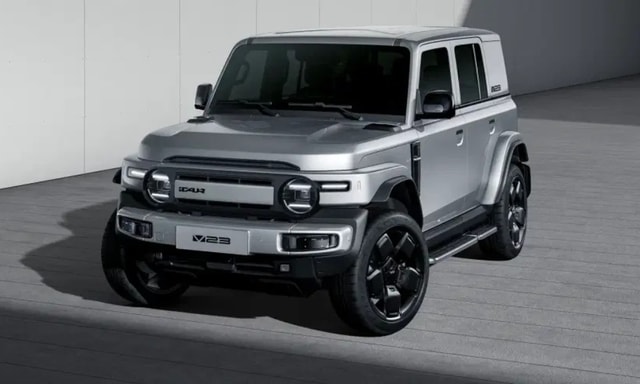 car&bike Team | Jul 30, 2026JSW Motor To Offer AWD Option on Chery iCar V23-Based SUVTest mules of the electric SUV have been spotted testing in India on multiple occasions.1 min read
 car&bike Team | Jul 30, 2026All-New 2026 Bajaj Pulsar Launching SoonBajaj Auto is getting ready to launch the next-generation Pulsar across segments, and the first one is likely to be the new Pulsar 150 or an updated Pulsar N160.1 min read
 Seshan Vijayraghvan | Jul 29, 2026Kia Sorento India Arrival Confirmed With New Teaser: Launch This Festive SeasonThe Kia Sorento has already been spotted testing in India, and it's expected to arrive this festive season.1 min read
 Bilal Firfiray | Jul 30, 2026Kia Syros EV Review: Best EV To Buy Under Rs 20 Lakh?The Kia Syros EV comes into the game with a modern design, spacious cabin, strong performance, decent range and an aggressive pricing. But could it become the new benchmark under Rs 20 lakh?5 mins read
 Jaiveer Mehra | Jul 27, 20262026 Maruti Suzuki Brezza Facelift Review: Bestseller Joins The Turbo ClubWhile Maruti’s facelifts have always tended to bring subtle updates over the outgoing models, the latest Brezza brings some heavy updates under the skin, including a new 6-speed manual gearbox and, for the first time, a turbocharged petrol engine option.1 min read
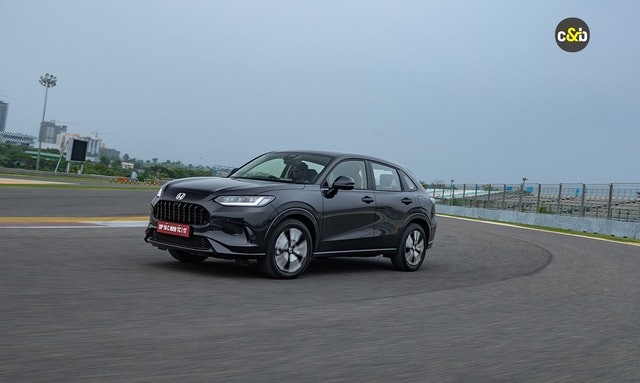 Bilal Firfiray | Jul 24, 2026Honda ZR-V Review: Who Is It For?Honda has brought the new ZR-V to India as their current flagship offering. It’s a CBU, it’s a hybrid, and it’s here for a limited few. Who is it for though?1 min read
 Girish Karkera | Jul 29, 2026Mercedes-AMG E53 4MATIC+ PHEV First Drive Review: Just What The Doctor OrderedThere are luxury cars and there are high-performance cars. But what if you want both for the price of one? Mercedes-Benz has a recommendation that promises to tread a fine line between the two – the second generation E53 with a twist.7 mins read
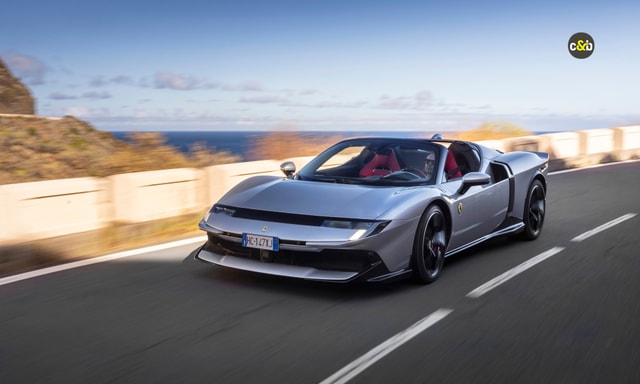 Shams Raza Naqvi | Jul 15, 2026Ferrari 849 Testarossa Spider Driven: Rs. 11.25 Crore Meets 1,000 bhpWe got behind the wheel of the most powerful convertible from Ferrari. What makes the 849 Testarossa Spider Special? We tell you.1 min read