
2026 Tata Tiago EV Review: Small EV Gets Big Improvements
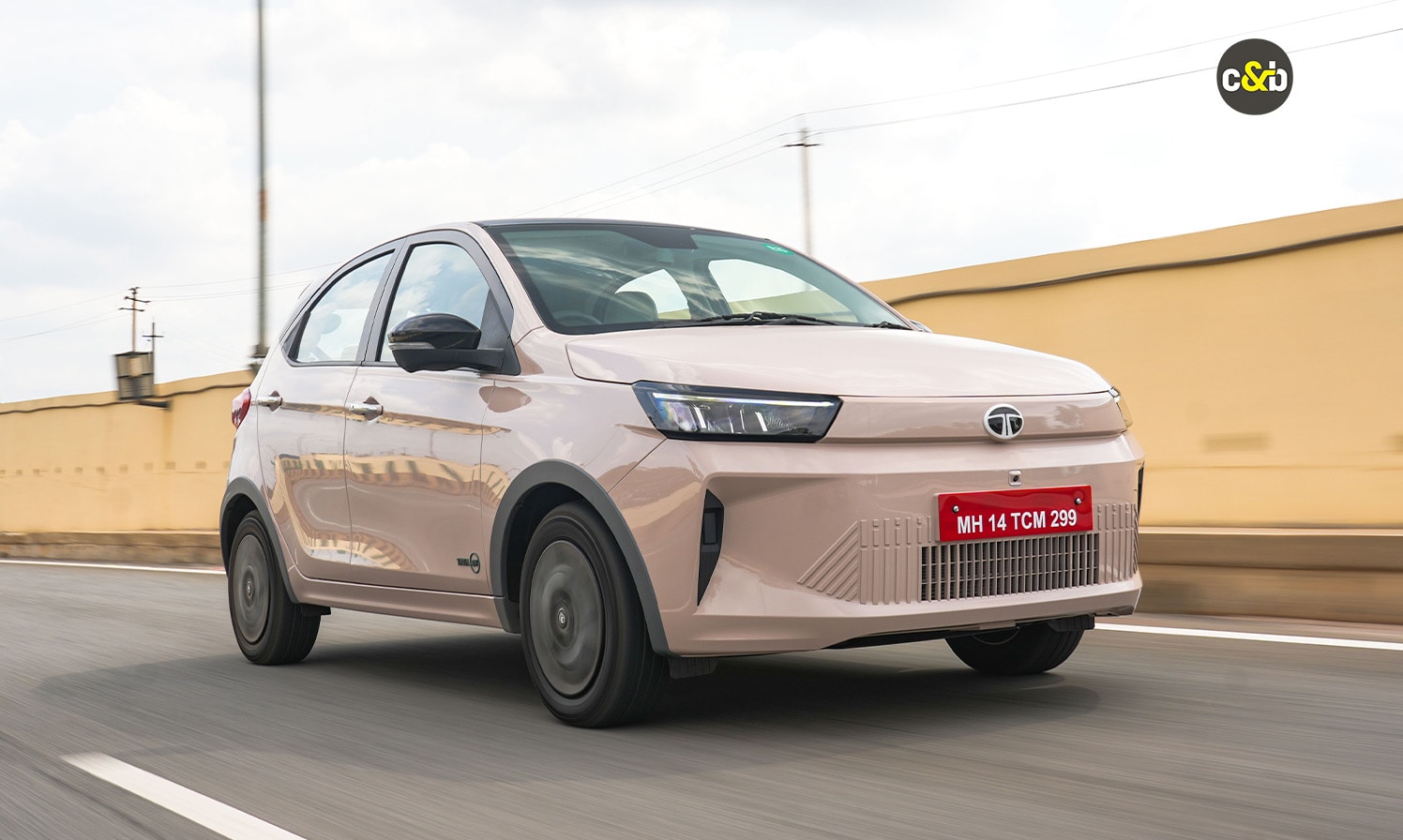
- The 2026 Tata Tiago gets new looks, more features and better tech
- It gets the same 19.2 kWh and 24 kWh battery options, but supports faster charging
- The Tiago EV is also offered under BaaS programme
The Tata Tiago EV was introduced as an affordable way to enter the EV space. Practical rather than aspirational, it looked almost identical to the standard Tiago, offered the essentials, and delivered enough range for daily city commutes. But the market has evolved. Buyers now want more than just value. They expect distinctive styling, modern technology, feature-rich cabins, and enough range to tackle the occasional intercity drive comfortably.
It promises a sharper design, segment-first features at sub-Rs. 10 lakh price point, and with the updates made over the year, it now offers enough range for journeys like Mumbai-Pune. So, does the Tiago EV truly deliver on these promises? Let’s find out.
Design & Styling
When Tata Motors first revealed the new Tiago EV, the first thing that came to my mind was – “What mess is this?” And it was not just me. Social media was flooded with memes and snarky comments about its design. But seeing the car in person at the launch completely changed my perspective. Yes, it's quirky and unconventional, but it's far from unattractive. And I like that there is now a much stronger visual distinction between the EV and ICE Tiago.
I also like the fact that Tata has not gone for a connected light bar up front and instead chosen to add LED headlamps and LED DRLs, which look quite nice. But there are no fog lights, and sadly, the company did give in to the trend of connecting the taillights while designing the rear. That said, there is no actual lightbar here.
Also Read: Tata Design Chief On Ferrari EV's Polarising Shape: Avoiding "Sameness" Crucial, But..."
Now, design is subjective, so I'm willing to give Tata some leeway there. What’s harder to justify, however, is the absence of alloy wheels on even the top-spec Tiago EV. The petrol version gets them, but here you only get 14-inch steel wheels with dual-tone wheel covers, which Tata calls Hyperstyle wheels. To be fair, they do look quite stylish, but on a range-topping variant, alloy wheels should have been offered.
The Tiago range also gets new colours, and I quite like this Sobo Surge. But there are two more - a pastel green Dehradun Dew, and light blue Pangong Pulse. The former is exclusive to the Tiago EV.
Also Read: 2026 Tata Tiago EV: What Has Changed?
Cabin & Interior
I like what Tata has done to the cabin. It’s a complete revamp with new colours, new trim, and new materials. The light tone of the cabin makes it feel airy, and Tata has made use of a lot of recycled materials for the inner panels, which add a touch of sustainability. Fabric panels used on the dashboard and doors are one of my favourite parts of the new Tiago range, and with it, you also get matching fabric seat upholstery that looks quite nice. Like Altroz, here too Tata has added extra cushioning for under thigh support, which is a neat touch.
The dashboard and centre console design too has changed, and now you get a clean, more minimalistic look. Tata added the 10.25-inch infotainment screen last time the Tiago EV was updated, but now you get more features, including the iRA connected car tech. Features like driving scores, location tracking, geofencing and remote operations, among others. The display now also supports wireless Android Auto and Apple CarPlay, which is a convenience I prefer.
Tata is also offering a new island-style driver cluster with a digital screen. Now it’s a nice, informative layout, but I am not a fan of the unit, which is a bit too small and looks like an afterthought.
You'll also notice two phone trays on the centre console, but neither doubles up as a wireless charger. Oddly enough, that's a feature reserved for the petrol model. Since both versions share the same console design, the EV simply gets the storage pads. Personally, that's not a deal-breaker, as I'm not a big fan of wireless chargers in cars anyway. What I do appreciate are the two Type-C ports, one of which supports 65W fast charging. The Tiago EV also get new toggle-style buttons for the window controls that add a premium touch.
The rear seats are decent, but you don't get adjustable headrests or a centre armrest. Rear AC vents are now part of the package, which is a welcome addition. However, there's still no USB charging port for rear passengers. Oddly, that's another feature reserved for the petrol model, which gets a 65W Type-C port at the back. Most other Tata EVs generally tend to be more feature-packed than their petrol counterparts; the Tiago has gone the opposite way, and that’s a bit baffling.
Safety
Safety has seen a meaningful upgrade in the 2026 Tiago EV. Six airbags, ABS with EBD, iTPMS, ISOFIX mounts, three-point seatbelts with reminders for all occupants, and reverse parking sensors are now standard across the range.
Step up to the Pure variant, and you get a rear-view camera, rear defogger, and an auto-dimming IRVM.
The top-spec Creative trim adds ESP with Traction Control, Hill Hold Control, and rain-sensing wipers. What stands out most, however, is the inclusion of a 360-degree camera and blind-spot view monitor. These are genuinely useful features and ones you rarely find at this price point.
Battery, Range & Performance
Tata has made no change to the battery packs, which means you get the same two options as before – 19.2 kWh and 24 kWh. The former is claimed to offer a maximum range of 226, while the latter can go as high as 285 km on a single charge, on the MIDC testing cycle. While on paper the 24 kWh battery pack’s maximum tested range might have dropped, Tata claims that in a real-world scenario, the usable range has improved marginally. So, realistically, it can offer a range of over 200 km.
Now the model I drove was the top-spec trim with the bigger battery pack, which powers a single electric motor to make 74 bhp and 114 Nm of peak torque. This being an EV, all the power and torque are available at your disposal right from when you hit the pedal. It has a quick, strong pull and feels quite smooth overall. That’s in the Normal mode. Move up to the Sport mode, and suddenly the EV feels a lot more attentive, more agile and much quicker on its feet. In fact, in sport mode, we were able to go from 0-100 kmph in just a little over 9 seconds.
The Tiago EV continues with its great on-road mannerisms as well. The ride quality is nice and supple, taking on all the undulations and bumps with great ease. And unless you hit a bigger-than-average pothole or bump, minimal harshness is felt inside the cabin.
The car also handles really well. We drove it both in the city as well as a bit on the highway, and the car felt easy to drive and manoeuvre, and the stability on the open road was also good. Having said that, a set of bigger 15-inch wheels would have made the entire package even better, adding more stability and control, which I felt had some room for improvement. Overall, the Tiago EV continues to be a great car, and it can keep the driver in you quite happy!
Charging & Warranty
While the battery size might not have gone up, the Tiago EV now supports better charging capacity. In addition to the 7.2 kW AC fast charging, the car also supports DC fast charging up to 30 kW. This means that a 10-80 per cent charge is now possible in 35 minutes. In fact, Tata claims that with a DC charger of 30 kW or more, you can get 100 km worth of charging in just 18 minutes.
What’s also made the deal sweeter is the warranty plan. Tata Motors is now offering a Lifetime, Unlimited km warranty on the 24 kWh battery pack. The same for a 19.2 kWh unit is 8 years/1.6 lakh km. The rest of the warranty plans remain unchanged.
Price & Verdict
With prices ranging from Rs. 6.99 lakh to Rs. 9.99 lakh (ex-showroom), the Tiago EV continues to offer strong value for money. You get a distinctive design, a feature-rich cabin, useful additions like the 360-degree camera and blind-spot view monitor, along with the reassurance of a Lifetime, Unlimited km warranty on the 24 kWh battery pack.
Tata has also made the Tiago EV more accessible through its Battery as a Service (BaaS) programme, which brings the starting price down to Rs. 4.69 lakh, with a battery subscription fee of Rs. 2.5 per kilometre.
Sure, there are a few misses, especially when compared to the petrol Tiago, but they aren't significant enough to overshadow the overall package. The Tiago EV remains comfortable, practical, fun to drive, and now offers enough range and charging flexibility to go beyond the daily city commute. If you're looking to make the switch to electric without stretching your budget, the Tiago EV makes a strong case.
Photos: Vaibhav Dhanawade
Related News


Research More on Tata Tiago EV


Popular Tata Models


Latest Cars


Upcoming Cars


Latest News


 car&bike Team | Jul 25, 2026Jeep Meridian 85th Anniversary Edition Launched At Rs 36.05 LakhLimited to 85 units, the special edition gets cosmetic changes and also features the CARA AI voice assistant.1 min read
 car&bike Team | Jul 25, 2026River Indie Electric Scooter Crosses 50,000 Units Production MilestoneThe milestone comes less than three years after the first unit rolled out of the company's Hoskote manufacturing facility.2 mins read
 car&bike Team | Jul 25, 20262026 Maruti Brezza Facelift Fuel Efficiency Figures RevealedThe updated model returns up to 26.90 km/kg in CNG guise, while the newly introduced turbo-petrol delivers a claimed 20.47 kmpl.2 mins read
 Jafar Rizvi | Jul 25, 2026Honda ZR-V Hybrid SUV Launched In India At Rs 47.99 LakhThe ZR-V is Honda’s first hybrid SUV for India and arrives as a CBU.1 min read
 Jafar Rizvi | Jul 24, 20262026 Maruti Brezza Facelift: Variants, Features, Engine Options ExplainedThe 2026 Maruti Suzuki Brezza is offered in four trim levels: LXi, VXi, ZXi and ZXi+ and with two engine options.5 mins read
 Jafar Rizvi | Jul 24, 20262026 Maruti Brezza Facelift Launches With Three Major FirstsThe 2026 Maruti Suzuki Brezza has arrived, and along with carrying a five-star Bharat NCAP rating, the model brings three firsts for both the Brezza and, in one case, Maruti itself.2 mins read
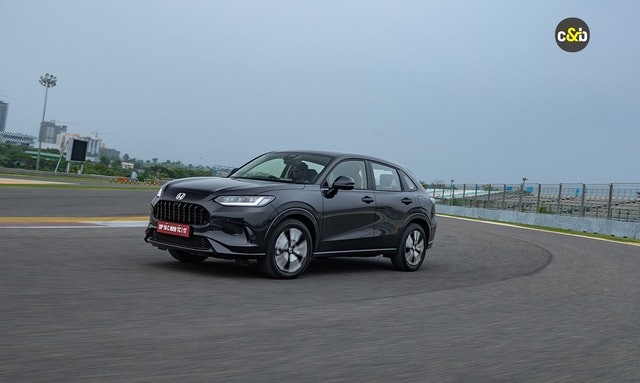 Bilal Firfiray | Jul 24, 2026Honda ZR-V Review: Who Is It For?Honda has brought the new ZR-V to India as their current flagship offering. It’s a CBU, it’s a hybrid, and it’s here for a limited few. Who is it for though?1 min read
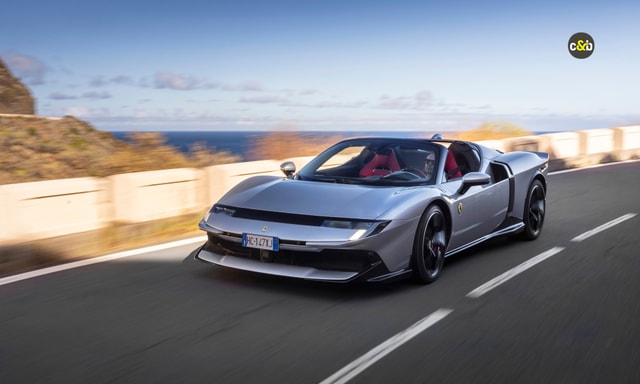 Shams Raza Naqvi | Jul 15, 2026Ferrari 849 Testarossa Spider Driven: Rs. 11.25 Crore Meets 1,000 bhpWe got behind the wheel of the most powerful convertible from Ferrari. What makes the 849 Testarossa Spider Special? We tell you.1 min read
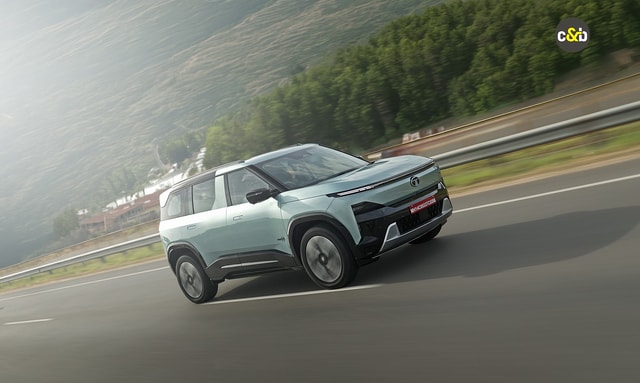 Bilal Firfiray | Jul 12, 2026Tata Sierra EV Review: Reborn In The Electric AgeThe Tata Sierra EV isn’t drastically different from its ICE counterpart when it comes to design. But being the seventh electric offering from the Indian brand, it has gotten a few things right, and very few things wrong. But is it a compelling package to buy?5 mins read
 Jafar Rizvi | Jul 13, 2026TVS Orbiter Long-Term Review (Report 1): Settling In Takes TimeFirst impressions weren't the strongest, but the Orbiter has made a mark in its first month in the car&bike garage.5 mins read
 Seshan Vijayraghvan | Jul 7, 2026Tata Altroz Petrol DCA Long-Term Review: Intercity & Highway Driving ReportWe tested the Tata Altroz Petro DCA’s highway manners, intercity performance, and real-world fuel efficiency.1 min read