
Connected Car Features Explained: What Actually Matters?
- Connected car tech includes both useful and gimmicky features
- Things like remote functions, location tracking and geofencing have real-world uses
- The number of connected features shouldn't be the deciding factor
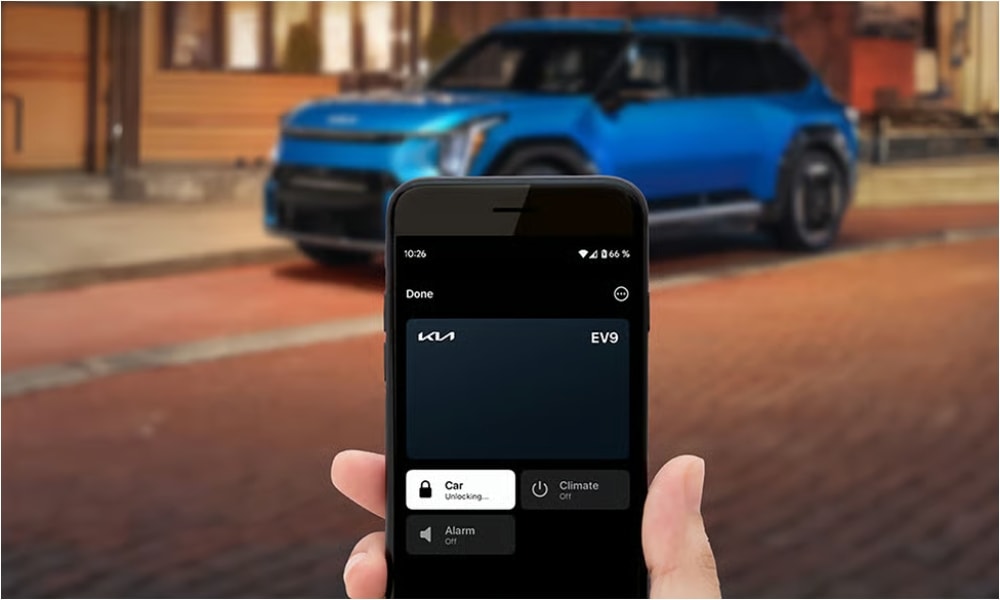
If you're buying a new car in 2026, connected car technology and its long list of features are almost certain to be part of the sales pitch at the dealership. Internet in cars has become fairly common across different model ranges. Today, even hatchbacks and compact SUVs come equipped with smartphone apps that let owners monitor their vehicle, lock or unlock it remotely, check its health, or cool the cabin before getting in.
The only difference is that as the prices go up, the list of features increases. Now, while brands might boast about offering 30-40 connected car features, not all of them make a meaningful difference in everyday ownership. So, what exactly is a connected car, how does it work, and more importantly, which features are genuinely worth having?
Also Read: ADAS vs Non-ADAS Cars: Is the Additional Cost Justified?
What Is A Connected Car?

In a nutshell, a connected vehicle can exchange information with the manufacturer's cloud servers using an eSIM and perform a bunch of remote functions. The vehicle owner can perform these functions using a dedicated smartphone app or dedicated in-car buttons for emergency services.
Also Read: Are Connected Car Features Actually Useful or Just Marketing Gimmicks?
It’s important to note that Android Auto & Apple CarPlay, wireless or otherwise, are different from connected car tech. These are essentially mirroring apps that project your smartphone’s information onto the car’s infotainment screen. A connected car, on the other hand, has its own internet connection thanks to the eSIM, which allows certain functions to work even when you're nowhere near the vehicle.
That connectivity is what enables many of the remote features buyers now take for granted.
How Do Connected Car Features Work?
Understanding how the system works also makes it easier to separate the genuinely useful features from those that are simply nice to have.

At the core of connected car tech is a Telematics Control Unit (TCU), which is essentially your car’s communication hub. Information is collected from the various sensors in different parts of the car like the fuel tank, battery terminal, wheels, etc, to provide information like - fuel level, battery charge, and tyre pressure. Even information about the vehicle location and engine status is sent securely to the cloud using the built-in eSIM.
And this process allows you to access all this information through the smartphone app. The process also works in reverse. If you lock the doors, switch on the climate control or flash the headlights using the app, that command is routed through the cloud and sent back to the vehicle.
The entire process usually takes only a few seconds, provided both the vehicle and the smartphone have network connectivity.
Also Read: What To Do If A Falling Tree Damages Your Vehicle During Monsoon
Connected Features You'll Actually Use
Not all connected car features offer value when it comes to everyday usability. In fact, in some cases, many functions are linked and can come under the same category. These are as follows:

- Remote Vehicle Controls
Remotely controlling some of the key functions of the car is something that many owners end up using. Some common functions include – locking/unlocking the car, remotely starting the engine and air conditioning system among more. The number of things you can remotely access, of course, depend on the car.
- Vehicle Location And Tracking
Not just accessibility, but security is also a major aspect of connected car technology. Because it’s connected to the cloud server, you can see the car's live location. This has many used from helping owners find it in a large parking lot to tracking the vehicle in the event of theft.
Also Read: Indian Cars with Level 2 ADAS Under ₹25 Lakh
Many systems also record trip history and offer geofencing, which lets users create a virtual boundary for the vehicle. If the car enters or leaves that area, the owner receives an alert. While these features are useful for individual owners, they can be particularly helpful for families with multiple drivers or small business operators managing a fleet.

- Vehicle Health Monitoring
Not just the car’s whereabouts, but also its health status can be monitored with connected technology. Information such as service reminders, fuel level, battery voltage, tyre pressure where supported, and warning alerts if a fault is detected. So, instead of getting a surprise while on the road, you can receive updates through the app and can schedule maintenance before it becomes a bigger problem.
- Safety And Emergency Assistance
Some of the most important connected features only become relevant when something goes wrong. Many cars now offer an SOS function that connects occupants to emergency assistance. Some systems can automatically notify emergency services after detecting a serious collision, while others provide quick access to roadside assistance in the event of a breakdown.
- Live Navigation And Traffic Information
While many of us tend to use Google Maps, the car’s built-in navigation system has also become extremely accurate. In fact, connected navigation can factor in live traffic conditions, suggest quicker routes, display nearby fuel stations and, in the case of EVs, locate compatible charging stations.
Why Connected Features Matter Even More In EVs

Connected technology is arguably even more useful in EVs. Owners can check the battery's state of charge, monitor charging progress, schedule charging sessions and view the estimated driving range remotely.
Many EVs also support cabin pre-cooling while plugged in, helping preserve driving range. Some apps can even locate nearby charging stations and maintain a charging history, making longer journeys easier to plan. For EV owners, these features go beyond convenience, helping reduce range anxiety and simplify day-to-day ownership.
Don't Ignore Subscription Costs
One practical detail that could be easily overlooked when it comes to connected cars is the cost involved in maintaining it. Most brands include connected services free of charge only for a limited period, typically between three and five years. After that, some features may require an annual subscription.
If you're planning to keep the vehicle for several years, it's worth checking how long the complimentary package lasts, which functions remain available afterwards, and what the renewal costs are.
What Should Buyers Look For?

The number of connected features shouldn't be the deciding factor. Instead, buyers should pay attention to how well the system works. A responsive smartphone app, reliable remote functions and regular software updates are likely to make a bigger difference than a long list of features that rarely get used.
It's also worth checking whether the app works equally well on Android and iOS devices and understanding what vehicle data is collected and how it's handled.
Verdict
Connected car technology has matured considerably over the past few years. While some features remain little more than digital extras, others have become genuinely useful tools that improve day-to-day ownership. Remote climate control, vehicle health monitoring, live tracking and emergency assistance are among the functions that offer real value. Features such as weather widgets or in-car news apps, on the other hand, are less likely to see regular use.
Ultimately, the best connected car isn't the one with the longest feature list. It's the one whose technology quietly makes ownership easier, safer and more convenient without demanding much attention from the driver.


Latest News


 car&bike Team | Oct 22, 20262026 Ducati Hypermotard V2, V2 SP Launched in IndiaThe base V2 variant is priced at Rs. 16.53 lakh (Ex-showroom) while the top-spec Hypermotard V2 SP is priced at Rs. 20.78 lakh (Ex-showroom).1 min read
 Sarthak Mahajan | Oct 22, 2026Navratri 2026 Vehicle Retail Sales Fall 6.52 Per Cent, EV Sales Rise 26.78 Per Cent : FADATotal vehicle retail sales stood at 11.23 lakh units over 10 days, while electric vehicle sales increased to 1.17 lakh units.1 min read
 car&bike Team | Oct 22, 2026New Maruti Swift vs 2-Year-Old Swift: Is Buying Used Actually Cheaper?Is buying a two-year-old Swift actually cheaper than driving home a brand-new one in 2026? Let’s find out.1 min read
 Sarthak Mahajan | Oct 21, 2026Delhi Government To Restrict Non-BS6 Vehicles From November 1The measures also include doubled parking charges, staggered office timings and 50% work-from-home arrangements as part of the winter pollution control strategy.1 min read
 Sarthak Mahajan | Oct 21, 2026Hyundai Bayon Safety Features Revealed: To Get Level 2 ADASHyundai Bayon gets Level 2 ADAS with 23 functions, six airbags as standard and a body structure made using 69% advanced multi-grade high-strength steel.3 mins read
 car&bike Team | Oct 21, 2026Bajaj Pulsar N250SS Launched At Rs 1.59 LakhThe updated motorcycle gets a slight bump in output and gains more features.2 mins read