
Hyundai Kona Electric: Why The Hyundai Creta Sibling Costs Rs. 25.30 Lakh


India's first electric SUV is finally here! The Hyundai Kona Electric has been launched at a price of Rs. 25.30 lakh (ex-showroom, pan India), and is a one-of-its-kind in the country. That really makes it special, but it is priced at a premium when you consider that the Kona is a sibling to the Hyundai Creta. In fact, the Kona Electric is about a shade smaller than the Creta, while sporting a slightly longer wheelbase. The Creta between Rs. 9.99 lakh and Rs. 15.65 lakh (ex-showroom, Delhi). There's a difference of nearly Rs. 10 lakh between the two models. So why does it cost Rs. 25.30 lakh for an SUV that small? Here's a breakdown on what makes this electric SUV a premium offering.
Also Read: Hyundai Kona Electric Launched In India
The Hyundai Kona is positioned as a compact SUV for developed markets, whereas the Hyundai Creta is placed as an offering for emerging markets. India now gets both SUVs, but the Kona is only sold in the electric avatar here. The key takeaway is the fact that it gets an electric powertrain and that makes all the difference. Electric technology itself is expensive and there's no surprise that the acquisition cost on an EV will be more, compared to a standard fossil fuelled counterpart. The Kona EV is also built on an all-new platform that makes it more expensive to manufacture than the Creta. With the platform shared with the petrol version, the car uses over 52 per cent of Advanced High Strength Steel (AHSS) in its construction with the components hot stamped.
Also Read: Hyundai Kona Electric India Review
Furthermore, the Hyundai Kona Electric is loaded to the gills on the feature front with LED headlamps and taillights, 17-inch alloys, electric sunroof, HUD, touchscreen infotainment system, electric parking brake, ventilated seats, 10-way adjustable driver's seat, leather upholstery, multiple driving modes and more. With respect to safety, the car comes with six airbags, ABS with EBD, VSC, VSM, HAC,TPMS, all disc brakes and more as part of the standard safety kit. While all of those features are certainly welcome, they drive up the cost. That said, for the premium you are paying on this EV, the features certainly add more value.
Also Read: Hyundai Kona Electric Review

The Hyundai Kona Electric offers an impressive range of 452 km from its 39.2 kWh battery
The other big reason is the fact that the Hyundai Kona Electric is locally assembled in India and not completely manufactured like the Creta. The EV comes as a Completely Knocked Down (CKD) kit. Hyundai won't share just yet what percentage of local content actually goes into the Kona, but the car and the battery are locally assembled at the company's Chennai-based facility. A CKD model commands a customs duty of 30 per cent, which does help the automaker save on costs when you consider that a CBU import would attract a 60 per cent duty (for cars with a CIF value below $40,000).
This has also helped Hyundai keep the prices competitive on the Kona Electric in India. In the US, the Kona Electric is priced between $36,950 and $44,900 (approx. Rs. 25 lakh and to 30.78 lakh). In its home market South Korea, the e-SUV is priced at 48,500,000 won (appox. Rs. 28.14 lakh) after tax benefits. In the EV friendly European markets like Norway, the Kona Electric is priced at 335,900 kroner (approx. Rs. 26.62 lakh). Of course, most of these markets do get the higher-spec 201 bhp version of the Kona Electric with the 64 kWh battery. The India-spec model in comparison gets the lower spec 131 bhp, 39.2 kWh battery, but the pricing does come close to the other markets. We also get a single, fully loaded version ensuring more value for the price tag.
Also Read: Hyundai Kona Electric: Top 5 Features Explained
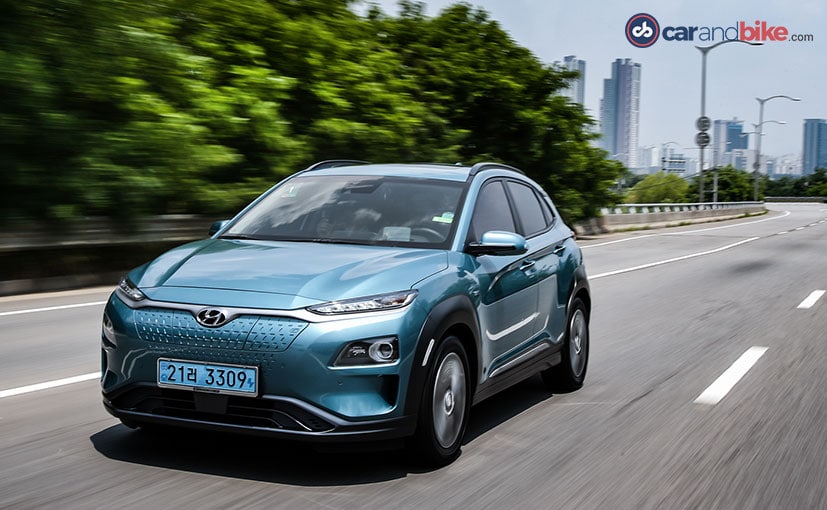
Power output is impressive with 131 bhp, while 395 Nm of peak torque is available right from 0 rpm
CKD imports do result in big cost savings over a fully built import, and that has majorly helped Hyundai India offset costs on the Kona Electric, which in turn is passed on to the customer. However, the lithium-ion batteries still remain a major component that needs to be sourced internationally considering India still does not have a battery production facility. That's a massive cost and adds up to the overall asking price of the electric SUV.
Also Read: Hyundai India Plans To Sell 500 Units Of The Kona Electric Annually
Yes, a more reasonable cost will help Hyundai India sell more units of the Kona Electric. But the company is quite clear about where the SUV is positioned. The automaker aims to sell about 500 units in a year, which isn't a high number but then the Kona Electric isn't a high volumes model either. Not yet at least! But if it does manage to meet the company's estimated sales, the model will pave way for other car makers to bring more electric vehicles in India. It does help that the Kona Electric has a range of 452 km (ARAI certified), killing that range anxiety.
What we need then are more incentives for buyers adopting electric vehicles. The recommended GST reduction in the Union Budget 2019 comes as a big push to the cause, but it will also benefit if the early buyers are offered incentives on the purchase of EVs to further encourage customers to make the transition. The Kona Electric does pave the way in many ways, and one can only expect more electric choices landing in the market soon.
Related News


Latest Cars


Upcoming Cars


Latest News


 car&bike Team | Jul 25, 2026Jeep Meridian 85th Anniversary Edition Launched At Rs 36.05 LakhLimited to 85 units, the special edition gets cosmetic changes and also features the CARA AI voice assistant.1 min read
 car&bike Team | Jul 25, 2026River Indie Electric Scooter Crosses 50,000 Units Production MilestoneThe milestone comes less than three years after the first unit rolled out of the company's Hoskote manufacturing facility.2 mins read
 car&bike Team | Jul 25, 20262026 Maruti Brezza Facelift Fuel Efficiency Figures RevealedThe updated model returns up to 26.90 km/kg in CNG guise, while the newly introduced turbo-petrol delivers a claimed 20.47 kmpl.2 mins read
 Jafar Rizvi | Jul 25, 2026Honda ZR-V Hybrid SUV Launched In India At Rs 47.99 LakhThe ZR-V is Honda’s first hybrid SUV for India and arrives as a CBU.1 min read
 Jafar Rizvi | Jul 24, 20262026 Maruti Brezza Facelift: Variants, Features, Engine Options ExplainedThe 2026 Maruti Suzuki Brezza is offered in four trim levels: LXi, VXi, ZXi and ZXi+ and with two engine options.5 mins read
 Jafar Rizvi | Jul 24, 20262026 Maruti Brezza Facelift Launches With Three Major FirstsThe 2026 Maruti Suzuki Brezza has arrived, and along with carrying a five-star Bharat NCAP rating, the model brings three firsts for both the Brezza and, in one case, Maruti itself.2 mins read
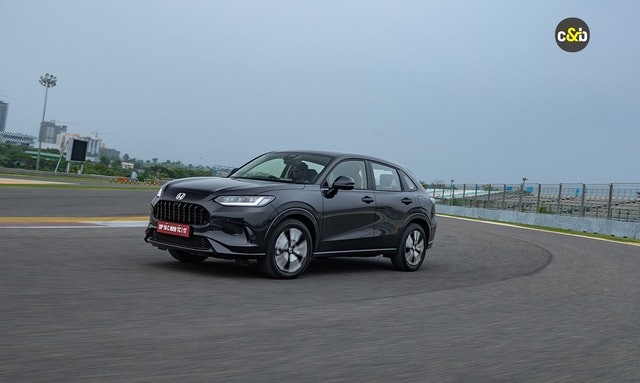 Bilal Firfiray | Jul 24, 2026Honda ZR-V Review: Who Is It For?Honda has brought the new ZR-V to India as their current flagship offering. It’s a CBU, it’s a hybrid, and it’s here for a limited few. Who is it for though?1 min read
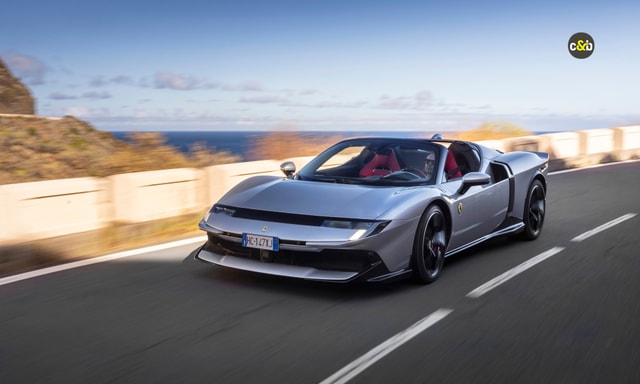 Shams Raza Naqvi | Jul 15, 2026Ferrari 849 Testarossa Spider Driven: Rs. 11.25 Crore Meets 1,000 bhpWe got behind the wheel of the most powerful convertible from Ferrari. What makes the 849 Testarossa Spider Special? We tell you.1 min read
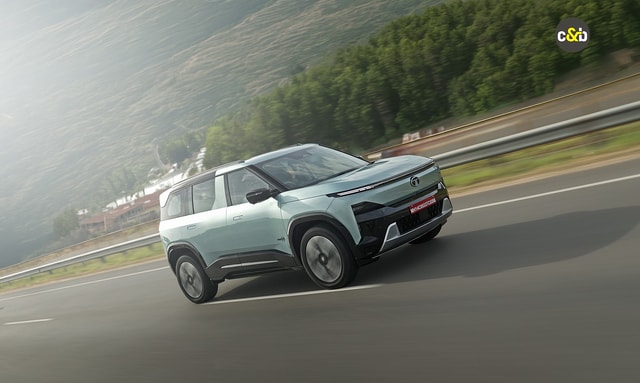 Bilal Firfiray | Jul 12, 2026Tata Sierra EV Review: Reborn In The Electric AgeThe Tata Sierra EV isn’t drastically different from its ICE counterpart when it comes to design. But being the seventh electric offering from the Indian brand, it has gotten a few things right, and very few things wrong. But is it a compelling package to buy?5 mins read
 Jafar Rizvi | Jul 13, 2026TVS Orbiter Long-Term Review (Report 1): Settling In Takes TimeFirst impressions weren't the strongest, but the Orbiter has made a mark in its first month in the car&bike garage.5 mins read
 Seshan Vijayraghvan | Jul 7, 2026Tata Altroz Petrol DCA Long-Term Review: Intercity & Highway Driving ReportWe tested the Tata Altroz Petro DCA’s highway manners, intercity performance, and real-world fuel efficiency.1 min read