
Self-Driving Cars Face Uncertain Path To US Deployment: Report

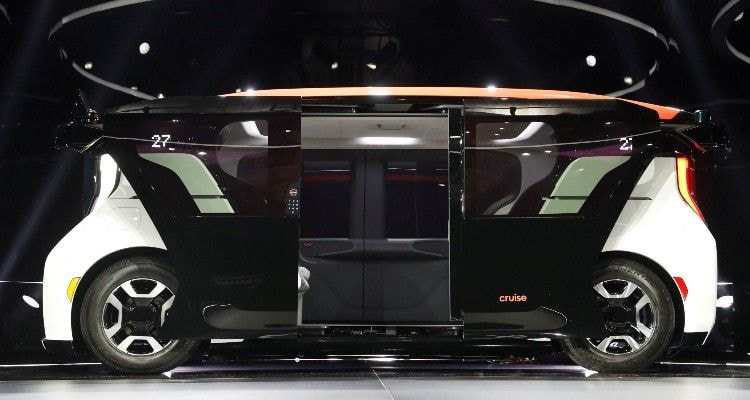
Automakers and tech companies face a bumpy road to clearing regulatory roadblocks to deploying autonomous vehicles (AVs) without human controls on public roads, industry officials and lawmakers said.
On Wednesday, Ford Motor Co and Volkswagen AG said they would shutter self-driving startup Argo AI, saying the technology was a long way off. The same is true when it comes to rules around the technology as well.
Legislation in Congress has been stalled for more than five years over how to amend regulations to encompass self-driving cars, including the scope of consumer and legal protections.
And U.S. regulators have given no indication when they might act on petitions to initially approve a few thousand self-driving cars on U.S. roads without steering wheels or brake pedals. Officials with the U.S. National Highway Traffic Safety Administration (NHTSA) on Thursday declined to say when they might act.
U.S. Transportation Secretary Pete Buttigieg said this month he has "very high hopes for the theoretical possibility that self-driving cars and high-tech cars will save thousands and thousands of lives because human beings have a basically murderous track record as drivers of cars. But we're not there yet."
Some in the industry and in Washington also see developing self-driving vehicle technology as a competitive issue.
Many lawmakers and the industry have urged Buttigieg to develop a comprehensive federal framework for autonomous vehicles, warning the United States could lose the AV race to China.
"We lag behind in shaping a regulatory framework that will foster this innovation while simultaneously protecting and encouraging all of the important benefits we believe autonomous vehicles are capable of delivering," a dozen Democratic U.S. senators wrote in April.
The letter cited efforts by competitors, particularly China, who "have significantly invested in autonomous and connected vehicle technologies."
SOARING TRAFFIC DEATHS
The issue has taken on new urgency as U.S. traffic deaths have soared since the start of the COVID-19 pandemic, jumping 10.5% last year to 42,915. That marked the highest number killed in a year since 2005.
Advocates say autonomous vehicles have the potential to reduce traffic deaths, expand mobility access to the disabled, reduce the need for parking in congested cities and cut greenhouse gas emissions.
In July, NHTSA, part of the U.S. Department of Transportation, opened for comment petitions filed by General Motors and Ford that asked the regulatory agency to grant exemptions to deploy up to 2,500 self-driving vehicles without human controls like steering wheels and brake pedals annually per manufacturer. Neither automaker seeks approval to sell self-driving vehicles to consumers.
GM wants to deploy the Origin, a vehicle with subway-like doors and no steering wheels. GM says the vehicle will require passengers to buckle seat belts prior to the start of their autonomous ride.
But the Detroit automaker faces resistance. Following a GM petition as well as a June crash involving an autonomous vehicle, the City and County of San Francisco said in its comments GM and Cruise failed to provide sufficient data and fell "short of documenting or analyzing the safety performance" of the self-driving vehicles.
Cruise said the "overwhelming majority of public comments submitted on the Cruise Origin are positive, underscoring the vehicle’s sustainability and accessibility benefits and support for American jobs."
In 2017, the U.S. House of Representatives passed legislation to speed the adoption of self-driving cars and bar states from setting performance standards, but the bill never passed the U.S. Senate.
"We're working hard to find that common ground to get something that we can pass," Representative Debbie Dingell, a Michigan Democrat, told Reuters in July.
The prospects in the new Congress that begins in January are deeply uncertain and the legislation has faced strong resistance from labor unions and groups representing plaintiffs attorneys.
While laws are not being passed, NHTSA in recent months has stepped up scrutiny of advanced driver assistance systems and autonomous vehicle systems. Last year the agency directed all automakers and tech companies to promptly report crashes involving self-driving vehicles.
Related News


Latest Cars


Upcoming Cars


Latest News


 Jaiveer Mehra | Aug 3, 2026Michelin Launches First India-Made Passenger Car Tyres; New Primacy 5 Range Prices Start at Rs 10,000The company unveiled plans last year to launch India-made passenger car tyres.4 mins read
 car&bike Team | Aug 3, 2026Two-Wheeler Sales July 2026: TVS, Honda, Suzuki, Royal Enfield And Bajaj Report Strong GrowthJuly 2026 remained good for India's two-wheeler industry, with most manufacturers reporting healthy year-on-year growth.3 mins read
 Preetam Bora | Aug 3, 2026Opinion: Norton Needs More Than World-Class MotorcyclesTVS is betting big on Norton Motorcycles. The strategy seems to be a product onslaught led by a V4 superbike, a middleweight adventure tourer, and more in the pipeline. Should TVS have also focussed on Norton’s legacy and history?7 mins read
 car&bike Team | Aug 3, 2026Kia Sorento Bookings Open Ahead Of India LaunchKia has also teased the Sorento for the first time, though the first teaser reveals precious little about the hybrid SUV.1 min read
 Janak Sorap | Aug 3, 2026New Bajaj Pulsar 125 Leaked Ahead Of August 12 LaunchThe next-generation Bajaj Pulsar 125 has started arriving dealerships ahead of its official debut, revealing significant updates to its design and underpinnings.1 min read
 car&bike Team | Aug 1, 2026Maruti Suzuki Sells More Than 2 Lakh Vehicles In July, Sets New Domestic RecordThe brand sold a total of 2,41,421 units last month which also included exports of 30,056 cars1 min read
 Bilal Firfiray | Aug 1, 2026Toyota Hilux Review: The InvincibleMarking it as the ninth generation, the Hilux comes with a major cosmetic overhaul. But is it still relevant enough for the current times or is it getting too long in the tooth?5 mins read
 Bilal Firfiray | Jul 30, 2026Kia Syros EV Review: Best EV To Buy Under Rs 20 Lakh?The Kia Syros EV comes into the game with a modern design, spacious cabin, strong performance, decent range and an aggressive pricing. But could it become the new benchmark under Rs 20 lakh?5 mins read
 Jaiveer Mehra | Jul 27, 20262026 Maruti Suzuki Brezza Facelift Review: Bestseller Joins The Turbo ClubWhile Maruti’s facelifts have always tended to bring subtle updates over the outgoing models, the latest Brezza brings some heavy updates under the skin, including a new 6-speed manual gearbox and, for the first time, a turbocharged petrol engine option.1 min read
 Bilal Firfiray | Jul 24, 2026Honda ZR-V Review: Who Is It For?Honda has brought the new ZR-V to India as their current flagship offering. It’s a CBU, it’s a hybrid, and it’s here for a limited few. Who is it for though?1 min read
 Girish Karkera | Jul 29, 2026Mercedes-AMG E53 4MATIC+ PHEV First Drive Review: Just What The Doctor OrderedThere are luxury cars and there are high-performance cars. But what if you want both for the price of one? Mercedes-Benz has a recommendation that promises to tread a fine line between the two – the second generation E53 with a twist.7 mins read