
Tesla's Electric Motor Shift To Spur Demand For Rare Earth Neodymium

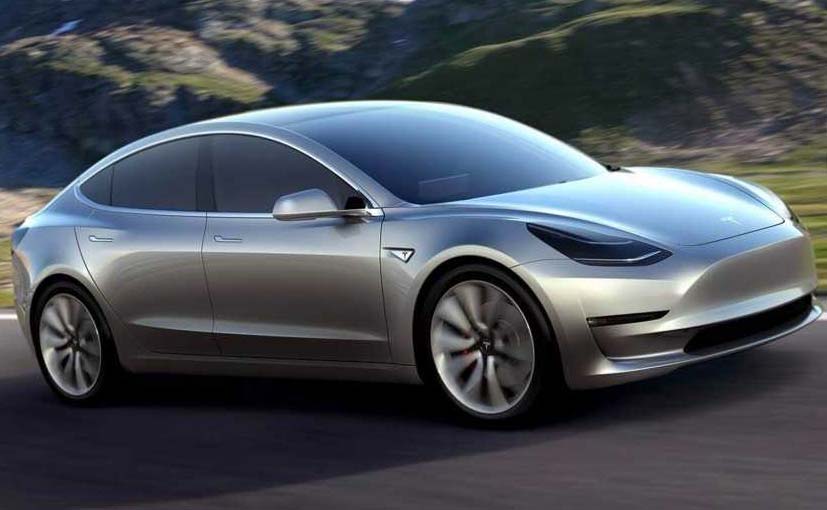
Tesla's shift to a magnetic motor using neodymium in its Model 3 Long Range car adds to pressure on already strained supplies of a rare earth metal that had for years been shunned because of an export ban by top producer China. Efforts by governments around the world to cut noxious emissions produced by fossil fuel-powered cars is driving demand for electric vehicles and the metals used to make them, such as lithium and cobalt which are key ingredients for batteries.
Now the spotlight is on neodymium. Several auto makers already use permanent magnet motors that rely on the metal because they are generally lighter, stronger and more efficient than induction motors that are based on copper coils.
But it is the switch to neodymium by Tesla, an auto maker that has staked its future solely on the electric vehicle, that is showing the way the industry is moving and the direction of demand for the rare earth metal.
Research group imarc estimates the market for the neodymium-iron-boron magnet used in the motors is now worth more than $11.3 billion, with demand for the magnets rising at a compound annual growth rate of 8.5 percent between 2010 and 2017.
"Some electric car motors use the permanent magnet technology; probably the most famous is the Tesla Model 3 Long Range. All the other Tesla models - Model X and Model 3 standards - use induction motors," said David Merriman, a senior analyst at metals consultancy Roskill.
Global demand of 31,700 tonnes for neodymium last year already outstripped supply by 3,300 tonnes, he said. Demand was expected to climb to 34,200 tonnes this year and 38,800 tonnes in 2018, leaving larger deficits.
"Tesla's decision to switch to permanent magnets has completely changed the dynamics of the market," said a source at a fund manager that specializes in metals.
The price of neodymium is now about $70 a kg, well below the $500 hit after China held back shipments to Japan in 2010 during a row over disputed islands but it is still 40 percent higher than at the start of 2017.
China, which resumed neodymium exports in 2015, imposed strict export quotas across a range of rare earth metal in 2010, saying it wanted to curtail pollution and preserve resources.
Costly Process
"People seem to have forgotten China's export ban. It could happen again. China is really the main producer, no one else has invested as much in rare earths," a rare earth trader said.
Despite their name, rare earths are found in many places around the world, but the process of extraction is difficult and expensive, as it requires separating multiple different metals from a single deposit. This is unlike the much simpler process, for example, of recovering copper from ore.
China has invested heavily in the rare earth metals process but its crackdown on mining, smelting and other polluting industries is forecast to slow supply. It already helped push the neodymium price to a two-year high of $96 in September.
"Rare earth production is as bad as you can get in terms of environmental damage," the trader said." China used its dominant position before, what's to stop it doing so again?"
Such supply concerns are encouraging automakers to search for ways of cutting down neodymium use. Toyota Motor Corp said last month it had found a way to cut use of the metal in electric motors by about a fifth.
The Japanese firm said it had developed a magnet which replaced some of the neodymium with more abundant and cheaper rare earths - lanthanum and cerium. Toyota aims to use the magnets in electric vehicle motors within the next 10 years.
Other manufacturers of electric vehicles that use permanent magnets include BMW, Nissan and Geely.
Several companies produce rare earth metals outside China, including London-listed Rainbow Rare Earths, Canada-listed Namibia Rare Earths and Australia's Spectrum Rare Earths.
But, for now, auto makers making permanent magnet motors remain heavily reliant on China, which according to Roskill accounted for 85 percent of global output of rare earth oxide estimated at 161,700 tonnes in 2017.
Morgan Stanley analysts estimate electric vehicles will total 50,000 units in 2020 or 2.3 percent of the total, rising to 400,000 in 2025 or 17.4 percent, and 975,000 in 2030 or 40.9 percent.
(Reporting by Pratima Desai; Editing by Veronica Brown and Edmund Blair)
(This story has not been edited by NDTV staff and is auto-generated from a syndicated feed.)



Latest News


 car&bike Team | Jun 6, 2026Premium TVS, Norton Bikes To Be Sold Via New Paddock OutletsTVS Motor has unveiled TVS Paddock, a standalone retail network for its premium motorcycles, with the first outlets set to open in the second quarter of FY27.1 min read
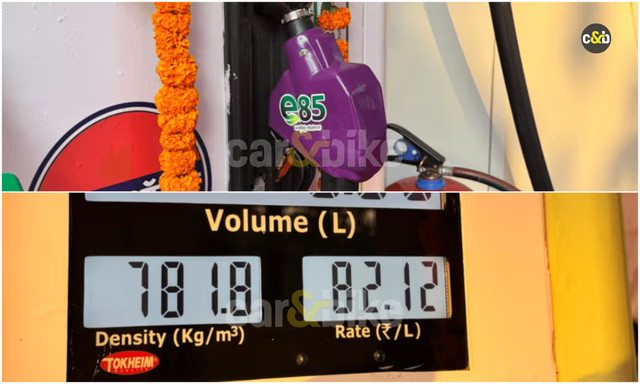 Amaan Ahmed | Jun 5, 2026E85 Fuel Priced At Rs 82.12 Per Litre In Delhi; First E85 Station InauguratedAt the opening of the first E85-dispensing station in the national capital, petroleum minister Hardeep Singh Puri promised E85 will be Rs 20 cheaper than E20 petrol.1 min read
 car&bike Team | Jun 5, 2026Renault Duster 1.0 Turbo Fuel Efficiency Figure RevealedSmaller turbo-petrol unit is offered in the base and lower mid-spec trims of the new Duster; it only gets a manual gearbox option.1 min read
 car&bike Team | Jun 5, 2026Green SM's Electric Taxi Service Now Live In India: VinFast Limo Green MPVs Deployed In Delhi-NCRBacked by VinFast parent Vingroup, the fleet uses the VinFast Limo Green electric MPV and will compete with established players such as Uber and Ola.2 mins read
 Jaiveer Mehra | Jun 5, 2026Audi Nuvolari Debuts As Limited-Run 987 bhp Hybrid SupercarLimited to 499 units, the Nuvolari shares its running gear with the Lamborghini Temerario though Audi has upper the performance figures.1 min read
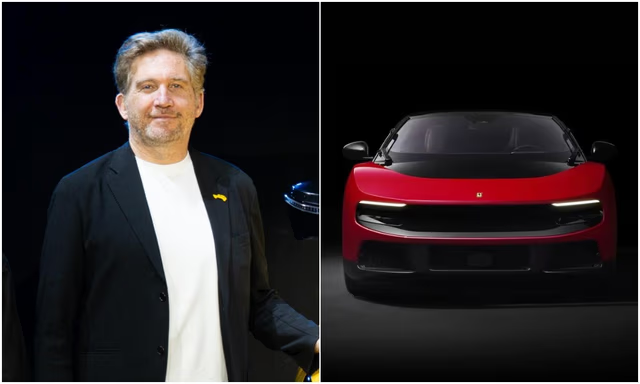 Amaan Ahmed | Jun 5, 2026Tata Design Chief On Ferrari EV's Polarising Shape: Avoiding "Sameness" Crucial, But...Social media didn't take kindly to the reveal of Ferrari's first-ever electric car, with innumerable brickbats thrown in Maranello's direction over its design. We spoke to Tata's Martin Uhlarik to understand a car designer's take on the subject3 mins read
 Seshan Vijayraghvan | Jun 6, 20262026 Tata Tiago And Tiago iCNG Review: Budget Hatch Offers Premium AppealThe 2026 Tata Tiago range brings a lot of new things to the segment, and on paper, it looks like a solid product. But,, is the premium appeal real?1 min read
 Preetam Bora | Jun 4, 2026Royal Enfield Bullet 650 Review: Is This the Most Desirable RE 650 Twin Yet?We spent some quality time with the new Royal Enfield Bullet 650, and here's our honest take – what we love, and where there's room to do better.1 min read
 Janak Sorap | Jun 2, 2026California Superbike School: Finding Speed The Right WayThree days of coaching, track time and self-discovery at California Superbike School revealed that riding faster begins with understanding how to ride better.7 mins read
 Girish Karkera | May 31, 20262026 Honda City e:HEV Review: Smartest Compact Sedan To Buy?The most affordable strong hybrid sedan in India looks more interesting than any of its past avatars1 min read
 Bilal Firfiray | May 29, 2026Skoda Octavia vRS Review: The Sensible Car Every Car Guy (Eventually) WantsThe Skoda Octavia vRS blends practicality with performance. It’s a real enthusiast appeal in a sensible sedan package.1 min read