
US Senators Announce Deal On Self-Driving Car Legislation

- The legislation would be voted on by the committee on October 4
- Current law prohibits vehicles without human controls
- However, the bill would not include larger commercial trucks
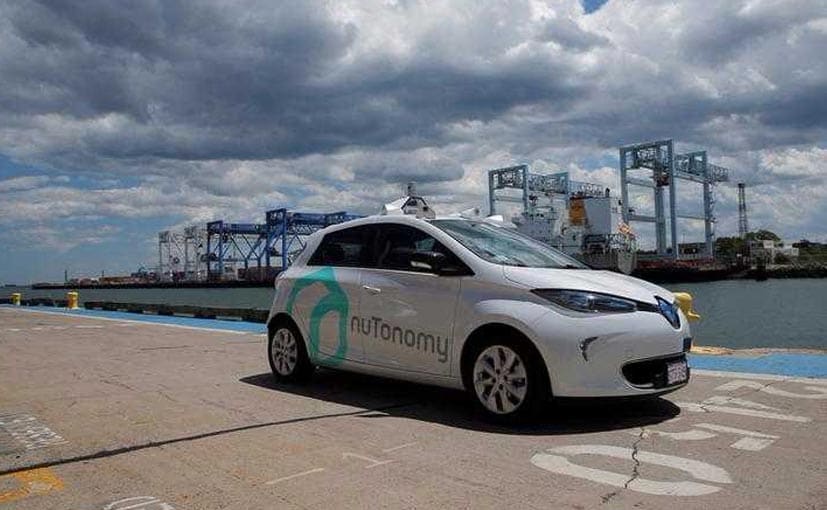
Two U.S. senators said late on Wednesday that they had reached a bipartisan deal on legislation aimed at easing hurdles to getting self-driving cars to drivers. U.S. Senator John Thune, a Republican who chairs the Commerce Committee, and Senator Gary Peters, a Michigan Democrat, said they had reached a deal on the legislation that would be voted on by the committee on October 4. They said they planned to release the text on Thursday.
Also Read: Ford, Lyft Will Partner To Deploy Self-Driving Cars
General Motors Co, Alphabet Inc, Ford Motor Co and others have lobbied for the legislation to speed deployment of self-driving cars without human controls by allowing federal regulators to approve their use if they deem them safe and barring states from blocking autonomous vehicles. Current law prohibits vehicles without human controls. Two sources briefed on the matter said the bill would not include larger commercial trucks.
"We expect adoption of self-driving vehicle technologies will save lives, improve mobility for people with disabilities, and create new jobs," Thune and Peters said in a joint statement.
A similar bill that unanimously passed the U.S. House earlier this month also excluded vehicles above 10,000 pounds.
Also Read: U.S. Official Backs Voluntary Rules For Self-Driving Cars
Senate aides have been negotiating for weeks over trucks and language in the bill that could preempt some state court lawsuits over the safety of self-driving vehicles.
The House measure, the first significant federal legislation aimed at speeding self-driving cars to market, would allow automakers get approval to sell up to 25,000 vehicles in the first year, rising to 100,000 by year three, as long as they could demonstrate the vehicles are at least as safe as current vehicles with human controls.
States could still set rules on registration, licensing, liability, insurance and safety inspections, but not performance standards.
Automakers would have to submit safety assessment reports to regulators, but the bill would not require pre-market approval of advanced vehicle technologies.
Automakers and some technology companies hope to begin deploying driverless vehicles around 2020. They have been pushing for new federal rules making it easier to deploy self-driving technology, but some consumer groups have sought additional safeguards.
Also Read: United States To Unveil Revised Self-Driving Car Guidelines
States have issued a variety of rules in the absence of clear federal guidance, and automakers have complained that California's rules are too restrictive.
Advocates hope self-driving cars will reduce U.S. road deaths, which rose 7.7 percent in 2015, the highest annual increase since 1966. A 2014 study found U.S. traffic crashes cost society $836 billion annually, with human error behind 94 percent of crashes.
(Reporting by David Shepardson; Editing by Sandra Maler)
(This story has not been edited by NDTV staff and is auto-generated from a syndicated feed.)
Related News


Latest Cars


Upcoming Cars


Latest News


 car&bike Team | Jun 30, 2026Tata Sierra EV Launch LIVE Updates: Price, Specifications, Features, ImagesTata is expected to announce complete details of the Sierra EV today. Watch this space to get all the updates firsthand.1 min read
 car&bike Team | Jun 29, 2026Tata Sierra EV Launch Today: What To Expect?The Sierra EV is expected to share much of its package with the Harrier EV.3 mins read
 car&bike Team | Jun 29, 2026Delhi EV Policy Approved: Electric Cars Under Rs 30 Lakh To Get Full Tax ExemptionThe new policy offers purchase incentives and scrappage benefits while laying down a roadmap for EV-only registrations across several vehicle segments, including two-wheelers from 2028.2 mins read
 car&bike Team | Jun 29, 2026New-Gen BMW X5 Teased Ahead Of Global Debut TomorrowThe teaser previews a fresh X-shaped lighting signature in a familiar illuminated grille setup.3 mins read
 Jaiveer Mehra | Jun 28, 2026Nissan Tekton Spied Undisguised Ahead Of July 9 DebutSole image of the SUV showcases the rear design of the SUV.1 min read
 Carandbike Team | Jun 28, 2026Renault Kwid Facelift India Launch On July 3Latest facelift marks the second major update for the entry hatchback since its launch in 2015.1 min read
 Seshan Vijayraghvan | Jun 29, 2026Renault Kiger vs Toyota Urban Cruiser Taisor: Which Underdog Deserves Your Money?Both the Kiger and the Taisor promise strong performance, solid features, comfortable cabins and everyday usability, all without breaking the bank. But which of these underrated subcompact SUVs deserves your money? Let's find out.1 min read
 Seshan Vijayraghvan | Jun 29, 2026Skoda Kodiaq RS Review: The Best Kodiaq Yet?The Skoda Kodiaq RS is finally here, and it's every bit as exciting as I expected. But was it worth the wait?7 mins read
 Bilal Firfiray | Jun 28, 2026BMW X6 M60i Review: It’s Back And HOW!The BMW X6 M60i blends a 530bhp twin-turbo V8, with its unmistakable coupe-SUV styling. There’s plenty of character, but is it worth your money?6 mins read
 Janak Sorap | Jun 25, 2026350cc Bajaj Dominar 400 Review: Same Character, Lower PriceA slightly lower displacement engine, a significantly lower price tag and nearly the same performance — the Bajaj Dominar 400 aims to be smarter rather than faster.6 mins read
 Preetam Bora | Jun 25, 20262026 Bajaj Pulsar NS400Z First Ride Review: Smaller Engine, But Should You Buy It?The Bajaj Pulsar NS400Z won our Two-Wheeler Upgrade of the Year. Then new tax slabs happened. Smaller engine, same badge – but does it still deliver?6 mins read