
Zero-Dep Cover: The Renewal Add-on That Ensures You Don’t Pay for Parts


Car repair bills often jump when a claim includes a depreciation deduction on replaced parts. Depreciation reflects age and wear so that the payable amount can fall even after an approved claim, especially for plastic and rubber items.
This is why zero-dep is often considered at renewal, particularly when a policyholder has comprehensive insurance for own-damage protection.
This blog explains what zero-dep is, what it changes, why renewal suits it, and how it affects settlement.
What is Zero-Dep Cover?
Zero-dep cover, also called nil depreciation cover, is an add-on that can reduce depreciation on certain parts replaced during an admissible own-damage claim. Many policies apply higher depreciation to plastics, rubber and fibre, which can lower the insurer’s share of the part cost.
With zero-dep, depreciation on eligible parts is reduced as per the add-on wording. It applies to the own-damage section of the policy and does not change third-party liability cover. Insurers may also set eligibility rules, such as limits linked to vehicle age or the number of claims.
What Zero-Dep Cover Actually Changes in a Policy
When a claim is processed, the insurer approves repairs and then applies deductions to reach the payable amount. Depreciation is one deduction that reduces the approved cost of replaced parts, and zero-dep mainly changes this step by lowering depreciation on specified items when the claim is allowed.
It does not remove deductibles, policy excess, exclusions, or the need to follow survey and repair approvals. Other charges are still handled as per policy terms and assessment.
Why Renewal is the Right Time to Add Zero-Dep
Renewal is usually the simplest time to add this cover because the add-on can begin from day one of the new car insurance policy period. It is also when IDV, add-ons, and eligibility rules are reviewed, including conditions linked to vehicle age.
Renewal helps the premium reflect the selected add-ons for the full year and avoids mid-term endorsement changes. Adding zero-dep at renewal keeps the coverage terms clear for the year ahead.
How Zero-Dep Cover Impacts Claim Settlement
Claim settlement depends on assessment, admissibility, and the deductions allowed by the policy. Without zero-dep, depreciation on eligible parts can increase the amount paid by the insured at the workshop. With zero-dep, that depreciation deduction is reduced for specified parts, which may lower out-of-pocket payment in cashless and reimbursement claims.
In a cashless claim, the invoice typically shows the split between insurer payment and customer payment. Compulsory deductible, voluntary deductible, and non-payable items under exclusions can still apply.
Parts Commonly Affected By Depreciation
Depreciation is often applied to materials treated as wear-linked, so deductions show up most often on certain categories of parts.
● Plastic bumpers, trims, and interior panels are often depreciated.
● Rubber seals, hoses, and beading are often depreciated.
● Fibre or composite parts used in panels and fittings
● Tyres and tubes can be depreciated, often linked to wear limits.
● Batteries and selected electrical items may be depreciated, as per the schedule.
● Paint and refinishing materials may be adjusted during the repair assessment.
What Zero-Dep Does Not Cover
Zero-dep reduces depreciation on eligible parts, but it does not override exclusions or pay for every repair-related cost. These items are commonly outside the scope, depending on the policy terms.
● Wear-and-tear and mechanical breakdown are not covered unless linked to an insured event.
● Consumables are excluded unless separately covered, such as oils, coolant, clips, and fasteners.
● Compulsory deductible and any voluntary deductible still apply.
● Delays, loss of use, and consequential loss are usually not payable.
● Items beyond schedule limits, including restricted tyres or batteries, may not be paid.
● Claims may be affected by breaches, such as an invalid licence or undeclared usage.
Conclusion
Zero-dep cover is a renewal add-on that reduces depreciation on eligible replaced parts in an admissible own-damage claim. It can help bring the insurer’s payable amount closer to the cost of parts that often face higher depreciation, while deductibles and exclusions remain.
Renewal is a sensible time to add it because the cover details and eligibility are reviewed before the new period begins. Reviewing the add-on terms helps keep expectations aligned with settlement.
Related News


Latest Cars


Upcoming Cars


Latest News


 car&bike Team | Jul 16, 2026Studds Trooper Trail Flip-Up Helmet Launched in India at Rs 2,125Studds has expanded its Trooper helmet range with the new Trail edition, featuring fresh graphics and a new colour-shifting paint option.1 min read
 car&bike Team | Jul 16, 20262027 Suzuki Hayabusa Receives Three New ColoursApart from the new liveries, the 2027 Hayabusa retains the same powertrain, electronics, and hardware.1 min read
 car&bike Team | Jul 16, 2026Hero MotoCorp Enters Germany, Expands European Presence to Five MarketsHero MotoCorp has officially entered the German market, strengthening its European presence with the launch of the Euro 5+ compliant XPulse 200 4V range.1 min read
 Jaiveer Mehra | Jul 16, 2026New Kia Syros EV Variants ExplainedThe all-electric derivative of the Syros subcompact SUV will go on sale with two battery options and in five trim levels.3 mins read
 car&bike Team | Jul 16, 2026Triumph Speed Twin 1200 TFC Launched in India at Rs 21 Lakh; Limited To 750 Units WorldwideTriumph has introduced the exclusive Speed Twin 1200 TFC in India, bringing its latest Triumph Factory Custom model to the country right after its global debut.1 min read
 car&bike Team | Jul 16, 2026Royal Enfield Classic 350 With Assist & Slipper Clutch Launched At Rs. 1.95 LakhThe assist & slipper clutch as well as USB C-type charging socket are offered only on the dual-channel ABS variant, with prices starting from Rs. 1.95 lakh (Ex-showroom).3 mins read
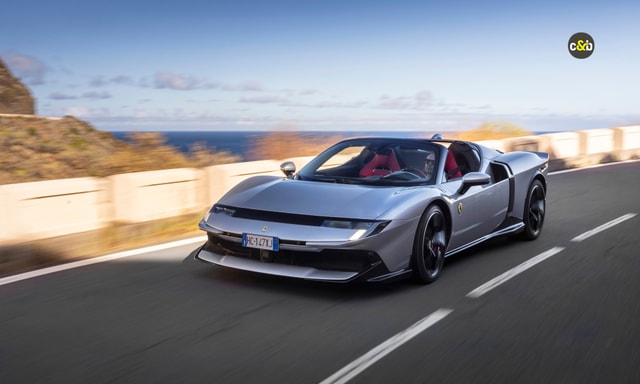 Shams Raza Naqvi | Jul 15, 2026Ferrari 849 Testarossa Spider Driven: Rs. 11.25 Crore Meets 1,000 bhpWe got behind the wheel of the most powerful convertible from Ferrari. What makes the 849 Testarossa Spider Special? We tell you.1 min read
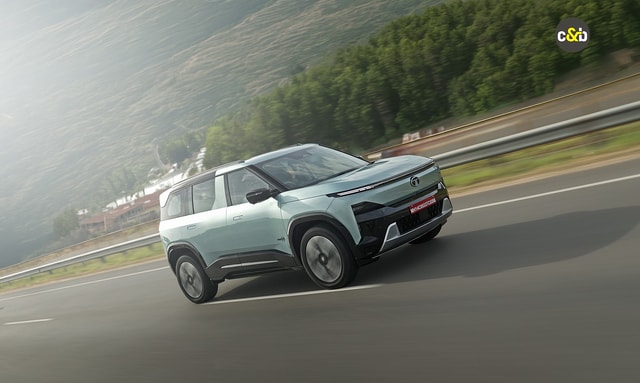 Bilal Firfiray | Jul 12, 2026Tata Sierra EV Review: Reborn In The Electric AgeThe Tata Sierra EV isn’t drastically different from its ICE counterpart when it comes to design. But being the seventh electric offering from the Indian brand, it has gotten a few things right, and very few things wrong. But is it a compelling package to buy?5 mins read
 Jafar Rizvi | Jul 13, 2026TVS Orbiter Long-Term Review (Report 1): Settling In Takes TimeFirst impressions weren't the strongest, but the Orbiter has made a mark in its first month in the car&bike garage.5 mins read
 Seshan Vijayraghvan | Jul 7, 2026Tata Altroz Petrol DCA Long-Term Review: Intercity & Highway Driving ReportWe tested the Tata Altroz Petro DCA’s highway manners, intercity performance, and real-world fuel efficiency.1 min read
 Seshan Vijayraghvan | Jun 29, 2026Renault Kiger vs Toyota Urban Cruiser Taisor: Which Underdog Deserves Your Money?Both the Kiger and the Taisor promise strong performance, solid features, comfortable cabins and everyday usability, all without breaking the bank. But which of these underrated subcompact SUVs deserves your money? Let's find out.1 min read