
81 Years And Counting – The Mahindra Saga

The year is 1945. In pre-Independent India, there existed a modest steel-trading company that went by the name Mahindra & Mohammed. As you might have guessed, this gave birth to M&M – the company that we know today as Mahindra & Mahindra. But it isn’t just about a name change. It also changed the business. From trading steel to using it to make automobiles, the company embarked on a journey defined by continuous transformation.
Change is something that kept it alive. In fact, the turn of this century is when Mahindra can also claim to have reinvented itself the most. A fact that has made it from a niche SUV maker in the passenger vehicle segment of India into a dominant top-3 contender.
Like every company with a long history, Mahindra too has had phases of ups and downs. It probably warrants a book, but let us break it down for you.
Year 1949-2000 – Era of rugged utility
Four years after the formation of the enterprise, and two years into post-Independent India, the newly renamed Mahindra & Mahindra rolled its first car off a modest assembly line in Mazagaon, then a part of South Bombay. A total of 75 Willys CJ (kits borrowed from Ford in the US) were built here over a few months. To put this in perspective, currently Mahindra makes roughly 2,500 units per day. Built from American kits, this contract-manufacturing era, however, did give India some of its most enduring off-road workhorses- the CJ 500, MM540 and eventually the Mahindra Major – some of which we see running even today. Even in those early years, Mahindra was learning something that would become central to its identity: India needed vehicles built in India, for India.

Believe it or not, even then there was the question of petrol versus diesel. While petrol was popular as a fuel for passenger vehicles, Mahindra was ahead of the rest in recognising that Indian conditions required distinct solutions. Leveraging its widespread tractor division learnings, the company partnered with Peugeot to introduce diesel engines to its road-going SUVs as far back as 1975 - a move that fundamentally shaped the brand and segment’s identity for decades. Diesel became synonymous with SUVs thanks to its inherent efficiency and torque, subsidised pricing and general robustness.
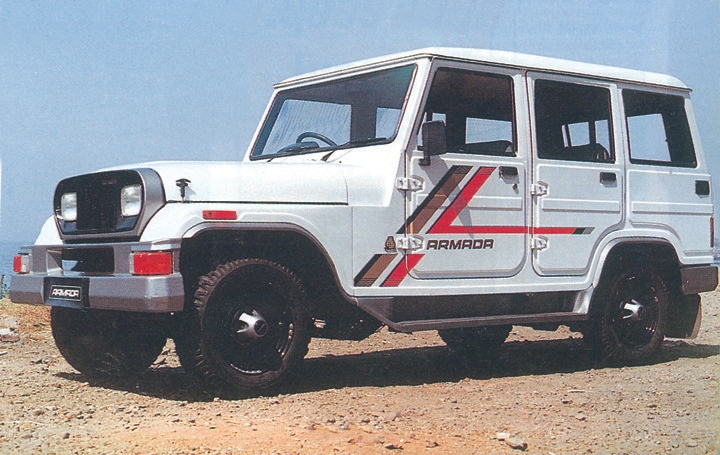
Image courtesy: Mahindra Archive
By the 1990s, a handful of global automakers with modern machines had entered a liberalised Indian market. Mahindra recognised the need for newer cars that could compete with them. But instead of creating a me-too model, it stuck to its strength in utility vehicles. Enter the Mahindra Armada (1993) - featuring a factory-fitted plastic moulded dashboard, air conditioning and later options for power steering. Armada proved that rugged no-nonsense capability could coexist in an everyday passenger car.
The formula was beginning to emerge: keep the toughness, add the comfort, and make it relevant to a changing India.
Year 2001- 2010 – Reinventing with modern engineering
At the turn of the century, Mahindra was all set to create its own indigenous legacy. The decade resulted in some models that are now considered legendary by Indians.
But more importantly, it was the decade when Mahindra moved from merely adapting to the Indian automotive market to decisively shaping it.

Image courtesy: Mahindra Archive
Bolero (2001): Designed as a replacement for the Armada Grand, the Bolero became an instant phenomenon despite an initial backlash as Mahindra dropped the romanticised Armada name. But just like the SUV, its name grew on Indians. Bolero became more than a vehicle. It became part of Indian folklore – from rural roads to small businesses, from family transport to everything in between. Celebrated for its indestructible mechanics and utilitarian versatility, it continues to anchor Mahindra's commercial and rural dominance even over two decades.
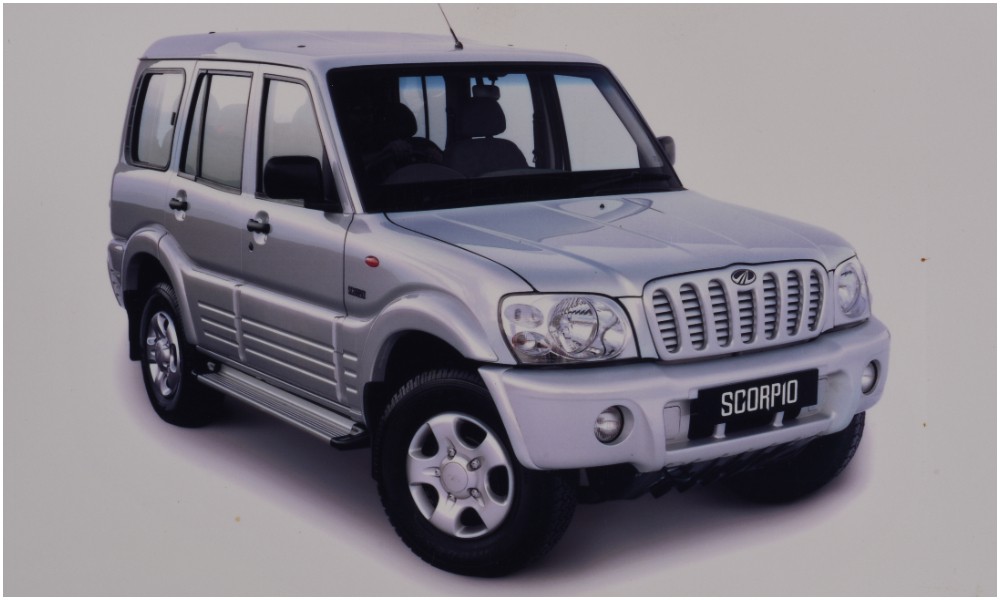
Image courtesy: Mahindra Archive
Scorpio (2002): A true watershed moment. Developed fully in-house on a ladder-frame chassis, the Scorpio captured the popular imagination and earned a cult following unlike any other Mahindra so far. Over successive generations, it evolved from what looked like a basic mechanical setup in hindsight to refined multi-link suspension systems, smooth turbo-diesel powerplants (mHawk) and modern tech suites.
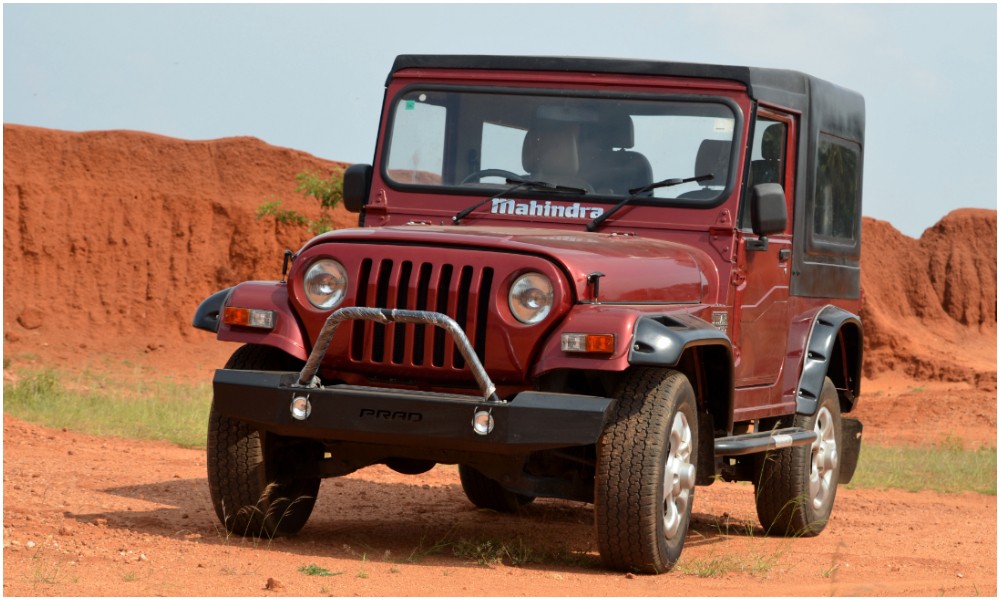
Thar (2010): Carrying forward the heritage of the CJ models and the Major from the previous century, the OG Thar preserved the raw off-road enthusiast spirit. And just when we all thought that there was nothing more to see here, Mahindra took advantage of the COVID lull to massively rethink and fine-tune the 2020 Thar. This transformation catapulted the inherent off-roader into a parallel on-road lifestyle hit for owners. This was followed by the five-door Thar Roxx, which blended true off-road pedigree with family-friendly practicality – an off-roader for all. As the just-launched Thar OG, it now lives in one of its most mainstream forms ever. This chapter of their story is perhaps the clearest example of the company’s ability to turn heritage into something contemporary. It didn't abandon what made the Thar special. It simply figured out how more people could enjoy it.
Monocoques and global ambition
Mahindra's trajectory wasn't just built on rugged ladder frames alone. To reach a wider audience, it knew it had to go further in an area it had mostly shied away from till the last decade – monocoque-based crossovers that were giving conventional ladder-on-frame SUVs a run for the money in the fast -changing New World order. Mahindra knew it was an uncharted area but it couldn’t afford to not be a part of it.
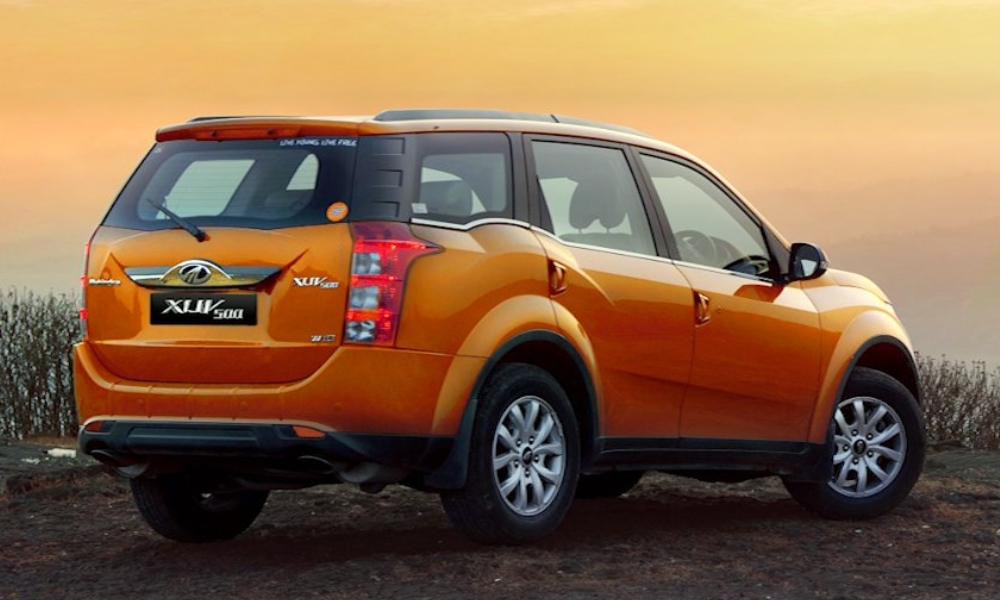
So, as early as 2011, arrived the radically different Mahindra XUV 5OO. Fusing flowing curves with modern in-car features that rivalled premium sedans, it assured better efficiency and captured a whole new demographic of buyers who weren’t Mahindra customers yet.
This was an important shift because Mahindra wasn't just asking how to make a better SUV. It was asking how to make an SUV for people who hadn't considered a Mahindra before.

This momentum expanded exponentially through the flagship XUV 7OO, which set benchmark standards for performance, comfort and in-car connectivity not only for Mahindra but also for the industry. With 7XO, the XUV story has only moved forward.
Beyond production lines
While making automobiles was a major chapter in their history, Mahindra also pursued bold global strategic ventures.
Formula E (2014–present): As a founding team in the all-electric racing championship, Mahindra utilised motorsport as an extreme proving ground for high-performance electric powertrains.

It was a very different kind of laboratory: one where milliseconds matter, technology is pushed to its limits, and the lessons travel back from the racetrack to the road.
Pininfarina (2015): Bringing the legendary Italian design studio under its wing, Mahindra backed the creation of the hyper-exclusive, 1800bhp+ Pininfarina Battista electric hypercar.
For an Indian automotive company, this was also a statement of intent. Mahindra wasn't just looking outward at the global automotive industry. It was becoming part of it.
Portal to the future: BEVs
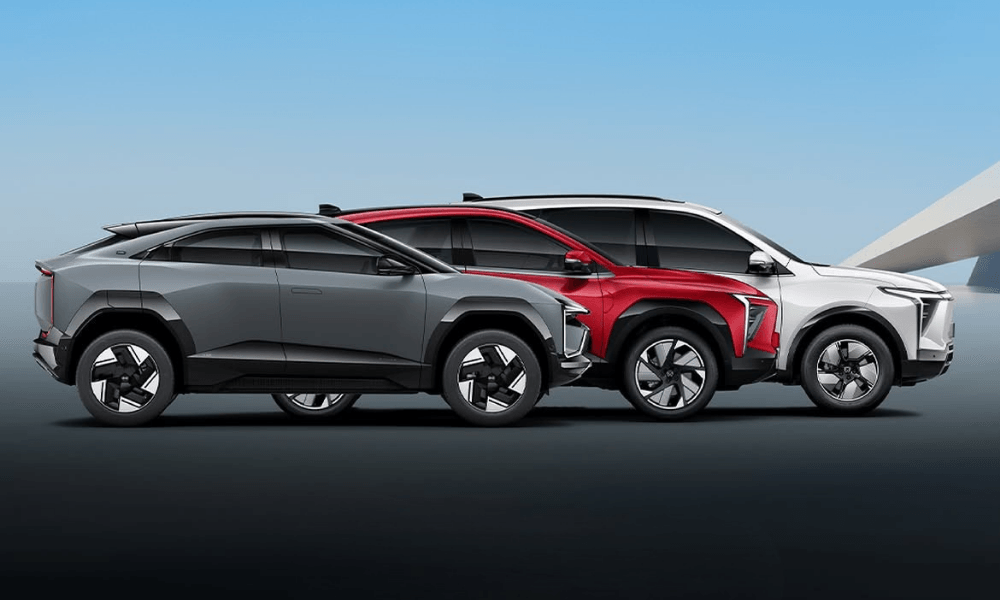
Just like its early bet on diesel in the 70s, Mahindra actually saw electrification potential long before the current wave. The 2013 e2O (formerly a Reva) was an early attempt at embracing zero-emission urban mobility. A tad ahead of its time, it did lay the foundation for a much larger strategy for the decade to follow.
Today, that vision has materialised into a full-fledged programme. Built on the purpose-engineered platforms (INGLO), models like the BE 6, XEV 9e and the three-row XEV 9S represent a quantum leap forward for Indian automotive capability. Featuring high-tech features, large-capacity battery architectures (up to 79kWh), and a real-world range of above 500km, these vehicles position the brand at the cutting edge of modern automotive technology.
And the significance of these vehicles goes beyond their specifications. They represent the answer to a larger question: Can an Indian automotive company build vehicles that are not merely good enough to compete in global industry, but ambitious enough to ace it?
The only way to know the answer was to try it out first. Which it did. Successfully.
81 years - One very Indian story
Not many automotive brands have a claim to a long history. But a time as long as eight decades is enough to humble the mightiest of industrial names. Keeping pace with changes isn’t enough; you need to be a step ahead of the competition but not too far from existing customers. Easier said than done.
And perhaps that is what makes its 81-year journey worth looking at, beyond the vehicles themselves. Because this is not just a story about SUVs, factories, engines or electric platforms. It is the story of a company that started by trading steel, learnt to build vehicles, learnt to build them not just for India, but now, for the world.
There were setbacks, there were detours, there were reinventions. There were bets that arrived early, that changed the game and even some that came in the form of lessons. But through all of it, one thing remained constant: the willingness to drive the next road.
Which makes this Indian automotive giant’s 81-year journey seem something out of the ordinary. Their war cry since 2011 has been ‘rise’. Safe to say they might as well change it now to ‘risen’.
Related News


Popular Mahindra Models


Latest Cars


Upcoming Cars


Latest News


 car&bike Team | Oct 15, 20262027 Ducati Panigale V4 Revealed; Gets More Power & Updated ElectronicsThe 2027 Ducati Panigale V4 and Panigale V4S get more power – 215 bhp, sharper handling and an even more sophisticated electronics package.1 min read
 Jafar Rizvi | Oct 15, 2026BMW F 450 RR UnveiledThe BMW F 450 RR joins the F 450 family with S 1000 RR-inspired styling.5 mins read
 Sarthak Mahajan | Oct 15, 2026Mahindra XUV 3XO CNG vs Tata Nexon CNG vs Maruti Suzuki Brezza CNG: Specifications ComparedThe Mahindra XUV 3XO is now available with three powertrain options: petrol, diesel and CNG.1 min read
 Jaiveer Mehra | Oct 15, 2026Stellantis To Launch 12 Citroen, Jeep Models In India By 2030Stellantis eyes branching out to new segments in the Indian market with seven all-new models, including an MPV and a premium pickup, on the cards.2 mins read
 Jafar Rizvi | Oct 15, 2026Jeep To Launch Toyota Hilux Rival In India By 2030Jeep could launch the Gladiator pickup in India by 2030, taking on the Toyota Hilux as part of Stellantis’ new roadmap.2 mins read
 Sarthak Mahajan | Oct 15, 2026Citroen Plots New Entry-Level Car For India Under Stellantis' FaSTLAne 2030 RoadmapThe A-segment car will be part of Stellantis’ 12-product plan for Jeep and Citroën over the next three years, backed by a fresh investment of approximately ₹4,000 crore.2 mins read