
25 Things No One Understands About F1 Cars


- Not just 100 or 1000, but there are more parts in an F1 car
- The speed takes a toll on the driver's and tyres' weight
- Aerodynamics makes F1 cars fly
Formula 1 Racing Cars
Formula 1 cars, or F1 cars, are the true magic of modern engineering. Designed on the principles of aerodynamics, Formula 1 racing is the favourite motorsport of many. The sport is conducted across different nations the whole year.

Things You Do Not Understand About F1 Cars
-
The racecar comprises over eighty thousand distinct mechanical parts, comprising hydraulic systems, carbon, fuel, tyres, inertia, and mechanical devices.
-
The front wing of the F1 car is designed to maximise downforce and also help the rear racer by reducing the amount of dirty air.
-
It takes less than 4 seconds for an F1 car to accelerate from 0–100 KMPH and then decelerate back to 0.
-
There are no anti-lock brakes in an F1 car. It is all about the driver's skills to maintain the speed of the car before making a turn and simultaneously avoiding a skid.

-
When the driver applies the brake, kinetic energy is converted into thermal energy. However, the holes in brake ducts and callipers cool the temperature of the brakes every time.
-
Tyres play a major role in F1 racing; that's why only the best of the best are chosen. Ideally, the tyres need to withstand 4 g of lateral load, 5 g of longitudinal load, and up to 1 tonne of downforce.
-
However, because of the high grip required, F1 tyres need to be replaced after less than 100 miles of the race.
-
There is excessive wear and tear during an F1 car race, so the tyres lose about 0.5 kg.
-
Nitrogen is filled in F1 car tyres.
-
According to F1 racing rules, the helmets need to be light, but the safety of the racer cannot be put in danger. The carbon fibre helps in the construction of such light yet safe helmets.
-
Not just the tyres, but also the driver loses about 4 kg in a single F1 race. This is due to the heat produced in the cockpit.
-
Time is crucial to winning an F1 race, so pit stops need to change mechanical parts and tyres of the car in less than 3 seconds. This is usually the most exciting part for the audience.
-
Along with the driver's weight, an F1 car weighs around 749 kg without the fuel in it.
-
There are 20 buttons on the steering wheel, all of which function distinctly.
-
Before 2010, F1 cars were allowed to refuel during the race. Now the cars need to fill up with fuel at the start.
-
Theoretically, F1 cars can run upside down as the lateral force and pull to the ground would remain the same.
-
The Drag Reduction System helps the rear car to over-steer by flapping the rear wing, thus reducing air resistance.

-
First, because of the minimalist design, then to avoid unnecessary additions, there are no reverse brakes in F1 cars.
-
Not only the tyres but also the brake discs rise to a temperature of 1200 degrees Celsius.
-
"Bottoming out" is a term used when an F1 car touches the track because of an uneven track.
-
Today, engineers design skid blocks made of titanium. When a car bottoms out, it leaves sparks.
-
There is about a 1-5 cm gap between the lower part of the car and the racetrack.
-
The engine must only be kept right side up when it is cool.
-
The suction pull created by F1 cars during the race pulls up the sewer lids.
- An F1 driver must be physically and mentally fit to deal with the heat in the cockpit and additional g-force, as well as stay focused in order to win.

Related News


Latest Cars


Upcoming Cars


Latest News


 car&bike Team | Jul 25, 2026Jeep Meridian 85th Anniversary Edition Launched At Rs 36.05 LakhLimited to 85 units, the special edition gets cosmetic changes and also features the CARA AI voice assistant.1 min read
 car&bike Team | Jul 25, 2026River Indie Electric Scooter Crosses 50,000 Units Production MilestoneThe milestone comes less than three years after the first unit rolled out of the company's Hoskote manufacturing facility.2 mins read
 car&bike Team | Jul 25, 20262026 Maruti Brezza Facelift Fuel Efficiency Figures RevealedThe updated model returns up to 26.90 km/kg in CNG guise, while the newly introduced turbo-petrol delivers a claimed 20.47 kmpl.2 mins read
 Jafar Rizvi | Jul 25, 2026Honda ZR-V Hybrid SUV Launched In India At Rs 47.99 LakhThe ZR-V is Honda’s first hybrid SUV for India and arrives as a CBU.1 min read
 Jafar Rizvi | Jul 24, 20262026 Maruti Brezza Facelift: Variants, Features, Engine Options ExplainedThe 2026 Maruti Suzuki Brezza is offered in four trim levels: LXi, VXi, ZXi and ZXi+ and with two engine options.5 mins read
 Jafar Rizvi | Jul 24, 20262026 Maruti Brezza Facelift Launches With Three Major FirstsThe 2026 Maruti Suzuki Brezza has arrived, and along with carrying a five-star Bharat NCAP rating, the model brings three firsts for both the Brezza and, in one case, Maruti itself.2 mins read
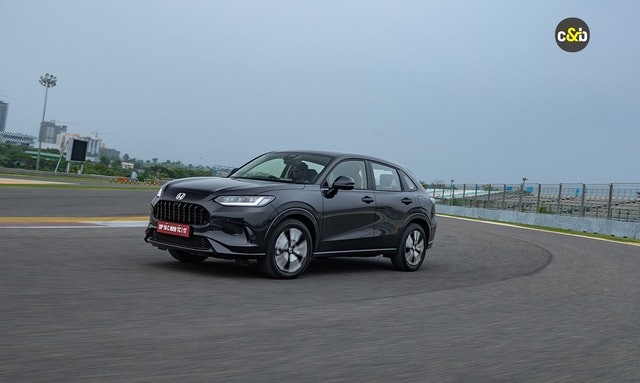 Bilal Firfiray | Jul 24, 2026Honda ZR-V Review: Who Is It For?Honda has brought the new ZR-V to India as their current flagship offering. It’s a CBU, it’s a hybrid, and it’s here for a limited few. Who is it for though?1 min read
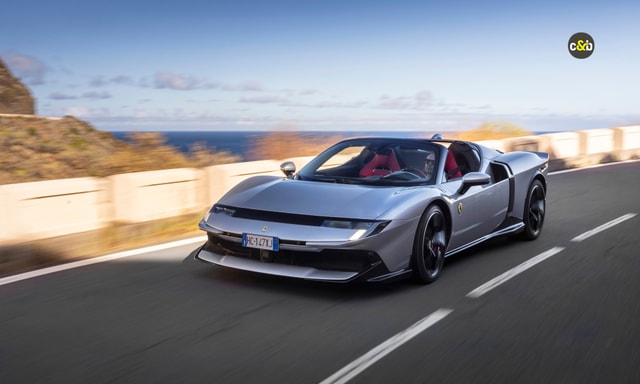 Shams Raza Naqvi | Jul 15, 2026Ferrari 849 Testarossa Spider Driven: Rs. 11.25 Crore Meets 1,000 bhpWe got behind the wheel of the most powerful convertible from Ferrari. What makes the 849 Testarossa Spider Special? We tell you.1 min read
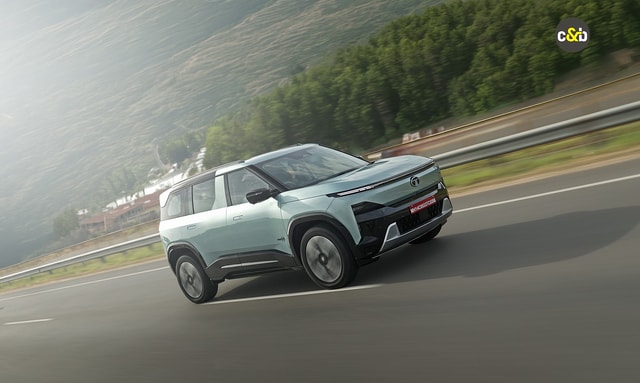 Bilal Firfiray | Jul 12, 2026Tata Sierra EV Review: Reborn In The Electric AgeThe Tata Sierra EV isn’t drastically different from its ICE counterpart when it comes to design. But being the seventh electric offering from the Indian brand, it has gotten a few things right, and very few things wrong. But is it a compelling package to buy?5 mins read
 Jafar Rizvi | Jul 13, 2026TVS Orbiter Long-Term Review (Report 1): Settling In Takes TimeFirst impressions weren't the strongest, but the Orbiter has made a mark in its first month in the car&bike garage.5 mins read
 Seshan Vijayraghvan | Jul 7, 2026Tata Altroz Petrol DCA Long-Term Review: Intercity & Highway Driving ReportWe tested the Tata Altroz Petro DCA’s highway manners, intercity performance, and real-world fuel efficiency.1 min read