
Analysis-Musk's Bold Goal Of Selling 20 Million EVs Could Cost Tesla Billions

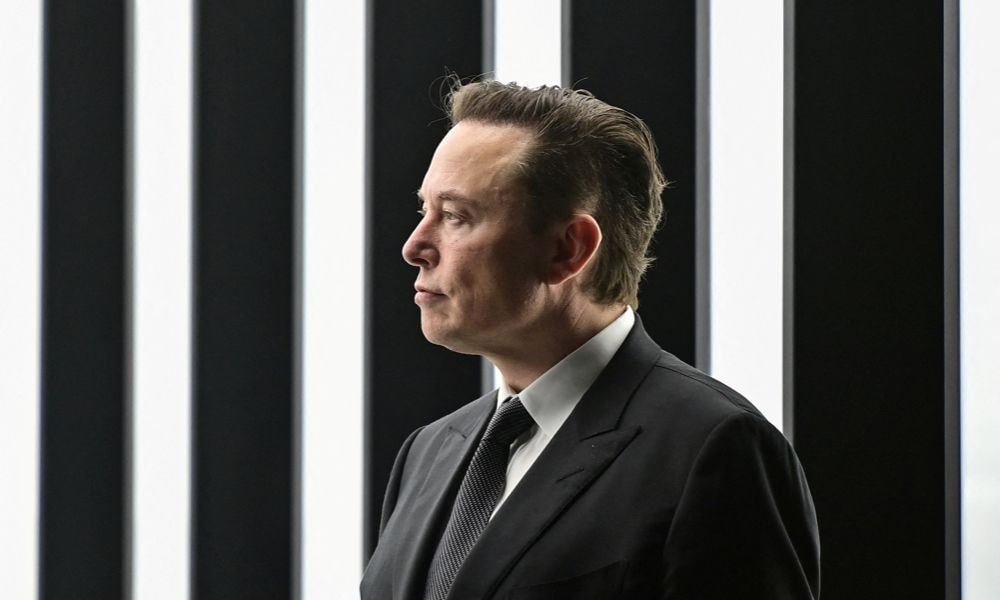
Tesla Inc Chief Executive Elon Musk has set his young company on an aggressive expansion path like no other auto executive has dreamed - but one riddled with potholes and road blocks that could stall or sidetrack the journey.
Musk's audacious goal of selling 20 million electric vehicles in 2030 is at the center of the company's growth promise for shareholders and its pledge to drive the adoption of sustainable energy. If achieved, it would make Tesla twice the size of any automaker in history, accounting for roughly 20% of the global vehicle market.
But such exponential growth - a 13-fold increase over the estimated 1.5 million vehicles it hopes to sell this year - will come at an unprecedented cost of hundreds of billions of dollars, according to a Reuters analysis of Tesla's financial disclosures and forecasts for global electric vehicle demand, EV battery and battery mineral production.
"I'd equate this with the Manhattan Project in World War Two," said manufacturing expert Michael Tracy of The Agile Group, referring to the sweeping effort by the United States to build an atomic bomb.
Musk's vision poses staggering challenges to the 19-year-old Texas-based automaker, not the least of which is securing enough batteries and critical raw materials such as lithium and nickel to supply 20 million vehicles.
Tesla has been a disruptor, but this next phase of growth, if achieved, would go beyond disruption to fundamentally remake the global auto industry as well as the mining and trade of battery materials.
Along the way, Tesla would need to build seven or eight more "gigafactories" - an average of one every 12 months or so - take share from every competitor and emerge as a company the size of Volkswagen AG and Toyota Motor Corp combined. It would also need about 30 times as much battery capacity to supply all of its vehicle factories. (See graphic, https://tmsnrt.rs/3CzDic4 )
The price tag will be steep: Tesla could spend an estimated $400 billion or more over the next eight years to build new vehicle assembly and battery plants around the globe, and another $200 billion or more to build or buy the batteries, including the cost of the raw materials.
Canada, Indonesia, India and other governments are already lobbying to win Tesla's next investment in EV production, an announcement Musk has said could come by the end of the year.
Producing 20 million vehicles a year would require Tesla to expand both its own battery-making capacity, and the capacity of its battery partners and the raw materials producers that supply them.
"Long-term, we're expecting to make on the order of 3,000 gigawatt hours or 3 terawatt hours per year," Musk told investors in July. "I think we've got a good chance of achieving this actually before 2030, but I'm highly confident that we could do it by 2030."
Tesla's current battery production capacity is 100 gigawatt-hours.
Benchmark Mineral Intelligence, which tracks the global EV battery industry, expects that Tesla will require 2.0 million tons of lithium, 1.3 million tons of nickel, 0.2 million tons of cobalt and 3.5 million tons of graphite to support production in 2030 of 3.0 terawatt-hours of battery production.
That is four times as much lithium and nickel, twice as much cobalt and seven times as much graphite as the entire EV industry expects to consume in 2022.
Benchmark describes the 2030 targets as "highly ambitious."
Tesla did not respond to a detailed request for comment.
The automaker, which rarely discloses its supplier relationships, began signing offtake agreements with miners and refiners more than a decade ago, according to former Tesla executives interviewed by Reuters, and currently has deals with more than 20 materials suppliers around the globe (See graphic: https://tmsnrt.rs/3PMZpPc )
The raw material capacity needed to support Tesla's planned production in 2030 does not exist today, experts say.
Musk's sales target also depends on factors beyond Tesla's control.
Rival automakers are fielding more electric vehicles to compete with Tesla's high-volume Model 3 sedans and Model Y SUVs.
In China, home-grown startups such as Xpeng Inc, Nio Inc and Li Auto Inc trail Tesla in sales volume, but are growing rapidly.
China's BYD, which sells inexpensive electric and hybrid vehicles, is challenging Tesla globally, while Ford Motor Co and Rivian Automotive Inc have beaten Tesla to market with electric pickup trucks, a significant emerging segment in North America.
Mike Tracy is skeptical of Musk's ability to develop a global manufacturing juggernaut over the next eight years with nearly double the production capacity of Toyota, currently the world's largest automaker by volume.
"That would be an extraordinary achievement, considering it's taken Toyota decades to build that capability," he said.
Related News


Latest Cars


Upcoming Cars


Latest News


 Sarthak Mahajan | Aug 12, 2026Mahindra Scorpio-N Pick-Up Teased; Unveiling Slated For 14 AugustMahindra has teased the upcoming Scorpio-N Pick-Up, which will be based on the existing Scorpio-N but offered in a pick-up body style.1 min read
 Sarthak Mahajan | Aug 11, 2026PM E-Drive EV Subsidy Extended To March 2028; Incentive For E2Ws Cut To Rs 5,000Even with the extension, incentives for electric two-wheelers have been reduced to Rs 5,000 per vehicle.1 min read
 Jafar Rizvi | Aug 11, 2026Hero Splendor Off-Road Crossover Design Patented In IndiaTwo new design patents filed by the brand show motorcycles based on the commuter, with one appearing to draw heavily from the old Passion Pro TR's off-road-inspired styling.1 min read
 Sarthak Mahajan | Aug 11, 2026General Motors Pulls The Plug On Chevrolet In ChinaGeneral Motors’ Chevrolet brand exits the Chinese market after 21 years of operations.1 min read
 car&bike Team | Aug 11, 2026Ethanol Blended Diesel Does Not Meet Existing Diesel Flash Point Safety StandardsMinister of State for Petroleum and Natural Gas Suresh Gopi told Parliament that the blending of ethanol in diesel reduced the fuel’s flash point to below that of standard diesel.1 min read
 Sarthak Mahajan | Aug 11, 2026New Mahindra BE 6 Sporteq Variant Teased Ahead Of Aug 15 DebutMahindra Electric Origin SUV family will grow soon with the arrival of a new variant of the BE 6, named the BE 6 Sporteq.2 mins read
 Preetam Bora | Aug 12, 2026Royal Enfield Himalayan 440 Custom Review: Beating RE to the PunchDelhi-based custom motorcycle shop TNT Motorcycles introduces packages to convert existing Himalayan 411 adventure bikes to Himalayan 440. Is it worth the expense?8 mins read
 Seshan Vijayraghvan | Aug 11, 20262026 Nissan Tekton 700 km Review: Can It Conquer The Himalayas?We drove the newly launched Nissan Tekton from Chandigarh all the way up to Leh, covering over 700 km with the new SUV. From exploring the Tekton’s capabilities in the Himalayas to setting an India Book Record, here’s how the trip unfolded.1 min read
 Preetam Bora | Aug 11, 20262026 Aprilia Tuono 457 Special Edition First Ride Review: Should You Buy It?The 2026 Aprilia Tuono 457 delivers an engaging, everyday riding experience with strong performance. At its price point, the Tuono 457 is a brilliant motorcycle, but not quite the complete package. Why is that, and should you still buy it? Read on.8 mins read
 Bilal Firfiray | Aug 1, 2026Toyota Hilux Review: The InvincibleMarking it as the ninth generation, the Hilux comes with a major cosmetic overhaul. But is it still relevant enough for the current times or is it getting too long in the tooth?5 mins read
 Bilal Firfiray | Jul 30, 2026Kia Syros EV Review: Best EV To Buy Under Rs 20 Lakh?The Kia Syros EV comes into the game with a modern design, spacious cabin, strong performance, decent range and an aggressive pricing. But could it become the new benchmark under Rs 20 lakh?5 mins read