
Automakers To Double Spending On EVs, Batteries To $1.2 Trillion By 2030

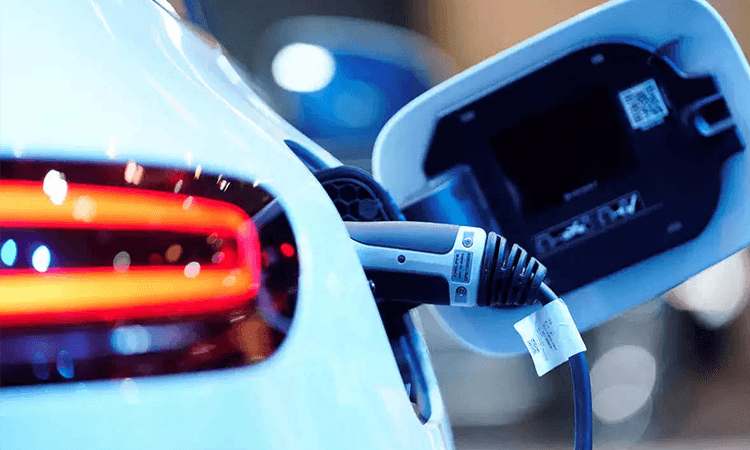
The world's top automakers are planning to spend nearly $1.2 trillion through 2030 to develop and produce millions of electric vehicles, along with the batteries and raw materials to support that production, according to a Reuters analysis of public data and projections released by those companies.
The EV investment figure, which has not previously been published, dwarfs previous investment estimates by Reuters and is more than twice the most recent calculation published just a year ago.
To put the figure in context, Alphabet, the parent company of Google and Waymo, has a market cap of $1.3 trillion.
Automakers have forecast plans to build 54 million battery electric vehicles in 2030, representing more than 50% of total vehicle production, according to the analysis.
To support that unprecedented level of EVs, carmakers and their battery partners are planning to install 5.8 terawatt-hours of battery production capacity by 2030, according to data from Benchmark Mineral Intelligence and the manufacturers.
Leading the charge is Tesla, where Chief Executive Elon Musk has outlined an audacious plan to build 20 million EVs in 2030, requiring an estimated 3 terawatt-hours of batteries. Musk in late October said Tesla already is working on a smaller vehicle platform targeted to cost half as much as the Model 3 and Model Y.
While Tesla has not fully disclosed its spending plans, such exponential growth - a 13-fold increase over the estimated 1.5 million vehicles it hopes to sell this year - will come at a cost of hundreds of billions of dollars, according to a Reuters analysis of Tesla's financial disclosures and forecasts for global EV demand, and battery and battery mineral production.
Germany's Volkswagen, while lagging behind Tesla, has ambitious plans through the end of the decade, targeting well over $100 billion to build out its global EV portfolio, add new battery "gigafactories" in Europe and North America and lock up supplies of key raw materials.
Japan's Toyota Motor Corp is investing $70 billion to electrify vehicles and produce more batteries, and expects to sell at least 3.5 million battery electric models (BEVs) in 2030. It plans at least 30 different BEVs and expects to transition the entire Lexus range to battery electric over that span.
Ford Motor Co keeps boosting its spending level on new EVs - now at $50 billion - and at least 240 gigawatt-hours of battery capacity with its partners as it aims to produce around 3 million BEVs in 2030 - half its total volume.
Mercedes-Benz has earmarked at least $47 billion for EV development and production, nearly two-thirds of that to boost its global battery capacity with partners to more than 200 gigawatt-hours.
BMW, Stellantis and General Motors each plan to spend at least $35 billion on EVs and batteries, with Stellantis laying out the most aggressive battery program: A planned 400 gigawatt-hours of capacity with partners by 2030, including four plants in North America.


Latest News


 car&bike Team | May 26, 20262026 Triumph Bonneville T120, Bobber and Speedmaster Launched In IndiaThe 2026 Triumph Bonneville range gets feature updates as well as minor design tweaks to give the bikes fresh appeal.1 min read
 Jaiveer Mehra | May 26, 20261035 bhp Ferrari Luce Is Brand’s First-Ever Electric CarQuad-motor EV, Ferrari’s first, is fitted with a 122 kWh battery and offers over 530 km of range.5 mins read
 car&bike Team | May 25, 2026Triumph Street Triple 765 RX Launched At Rs. 13.91 LakhThe Street Triple 765 RX is a track-focussed limited-edition weapon which gets premium hardware and sportier ergonomics.1 min read
 car&bike Team | May 25, 2026Ultraviolette X-47 New Base Variant Launched At ₹ 2.49 LakhWith Ultraviolette’s Hypersense radar technology given a skip for the new base variant, the X-47 is now more affordable and appealing to riders who seek a simpler, less tech-heavy experience.1 min read
 Jaiveer Mehra | May 25, 20262026 Mercedes-Benz S-Class Facelift India Launch On June 15; Will Get PHEV OptionThe facelifted S-class made its global debut in January this year with upgrades to the powertrains and tech.1 min read
 car&bike Team | May 25, 2026Royal Enfield Considering CKD Assembly Plant In MexicoWith Mexico recently raising import tariffs on motorcycles, Royal Enfield is reportedly evaluating options whether a new CKD assembly facility is required.1 min read
 Bilal Firfiray | May 25, 2026Renault Duster 1.3 Turbo DCT Road Test Review: The Solid Middle GroundMarking its return, the Renault Duster offers a strong ride quality, a refined 1.3 turbo-petrol engine, balanced handling and lot more impressive cabin. Should you buy it though?5 mins read
 Preetam Bora | May 23, 20262026 Harley-Davidson X440T Road Test Review: Did Harley Just Fix Everything?We spent a few days with the Harley-Davidson X440T to understand if Harley-Davidson India has managed to fix all the shortcomings of the standard X440!1 min read
 Janak Sorap | May 20, 2026Norton Manx R First Ride Review: Brit Superbike Killer?The Norton Manx R is not just another 200 bhp superbike chasing lap times — it is a motorcycle that tries to bring character, exclusivity and real-world usability back into the superbike experience.8 mins read
 car&bike Team | May 20, 2026Axor Brutale Surges Dual Spoiler Helmet Review: Best Of Both WorldsThe Axor Brutale Surges Dual Spoiler Helmet promises a strong mix of everyday comfort and track-focused safety. But does it? Let's find out.5 mins read
 Preetam Bora | May 11, 20262026 Suzuki Burgman Street 125 Review: What’s Good, What’s Not?The new Suzuki Burgman Street 125 gets refreshed design, minor but meaningful tweaks to the engine, a stiffened chassis, new features and more. But is it worth recommending? Read on, to find out.8 mins read