
EU, South Korea Say U.S. Plan For EV Tax Breaks May Breach WTO Rules

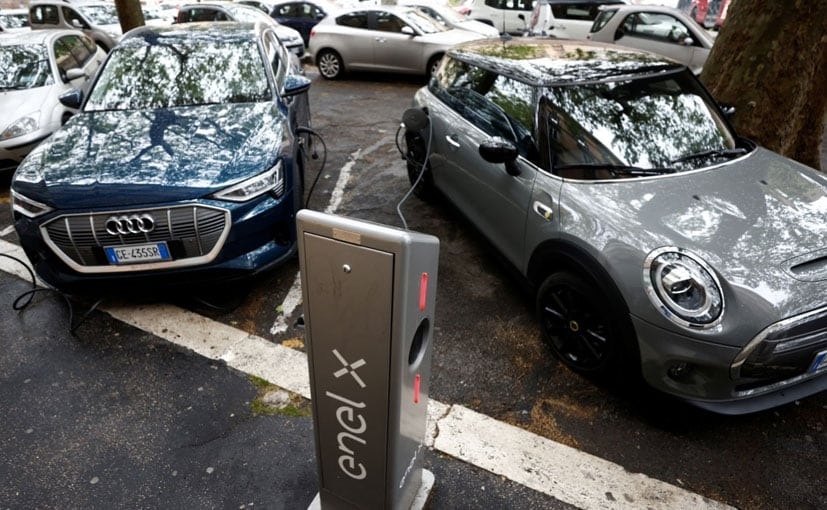
The European Union and South Korea have raised concerns about proposed U.S. tax credits for purchases of electric vehicles, saying they may discriminate against foreign-made vehicles and breach World Trade Organization (WTO) rules.
Under the $430 billion climate and energy bill passed by the U.S. Senate on Sunday, Congress would lift the cap on the existing $7,500 tax credit for electric vehicle purchasers but impose restrictions, including barring vehicles not assembled in North America from receiving the credit.
The ban on tax credits for vehicles assembled outside of North America would take effect as soon as President Joe Biden signs the legislation.
The proposed legislation also includes provisions aimed at preventing use of battery components or critical minerals derived from China.
"We think it's discriminatory, that it is discriminating against foreign producers in relation to U.S. producers," said European Commission spokesperson Miriam Garcia Ferrer. "Of course this would mean that it would be incompatible with the WTO."
Garcia Ferrer told a news briefing the EU agreed with Washington that tax credits are an important incentive to drive demand for EVs and promote the transition to sustainable transport and a reduction in greenhouse gas emissions.
"But we need to ensure that the measures introduced are fair and ... non-discriminatory," she said. "So we continue to urge the United States to remove these discriminatory elements from the bill and ensure that it is fully compliant with the WTO."
South Korea also said on Thursday that it has expressed concerns to the United States that the bill could potentially violate WTO rules and a bilateral free trade deal. South Korea's trade ministry said in a statement that it has asked U.S. trade authorities to ease battery component and final vehicle assembly requirements.
South Korea's trade ministry held a meeting with automaker Hyundai Motor Co and battery makers LG Energy Solution, Samsung SDI and SK. The companies asked Seoul to support them so that the bill would not put them at a competitive disadvantage in the U.S. market, according to the statement.
South Korea's auto industry group on Friday said it had sent a letter to the U.S. House of Representatives, requesting that the United States includes EVs and battery components manufactured or assembled in South Korea as eligible for U.S. tax benefits, citing the U.S.-Korea Free Trade Agreement.
"Korea is deeply concerned that the recent U.S. Senate's EV tax incentive bill includes provisions for providing tax incentives discriminating between North American-made and imported EVs and batteries," the Korea Automobile Manufacturers Association (KAMA) said in a statement. It said South Korea has been offering subsidies for EVs made in the United States.
Hyundai said it is "disappointed that the current legislation severely limits EV access and options for Americans and may dramatically slow the transition to sustainable mobility in this market."
Hyundai, which imports its flagship electric vehicles from Korea, has recently announced U.S. investments of $10 billion including EV manufacturing in Alabama and Georgia.
A group of major automakers said last week that most EV models would be ineligible for tax credits because of requirements for battery parts and critical minerals to be sourced from North America.
The EV tax break is part of the Inflation Reduction Act, which is likely to be passed by the House of Representatives on Friday and then sent to Biden for his signature.
Related News


Latest Cars


Upcoming Cars


Latest News


 Jaiveer Mehra | Jul 9, 2026BMW Group India Reports Best-Ever Sales In H1 2026 With 9,075 Cars & SUVs Sold9,075 units included 504 units sold under the Mini brand in India which reported a 70 per cent sales growth.1 min read
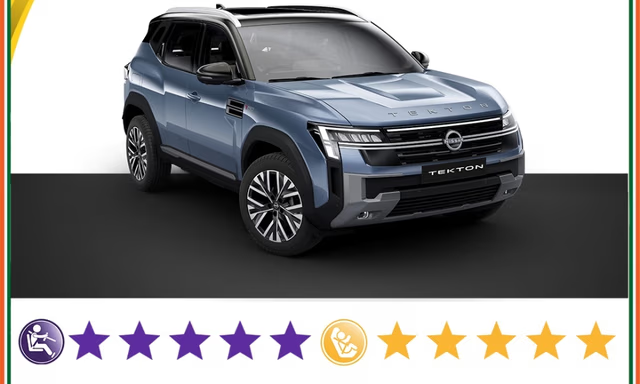 car&bike Team | Jul 9, 2026Nissan Tekton Bags 5 Stars In Bharat NCAP Crash TestsThe Tekton has essentially carried over its sibling Duster’s rating, since it shares its platform and body structure with the latter.2 mins read
 Jaiveer Mehra | Jul 9, 2026Nissan Tekton Price, Variants ExplainedThe Tekton is offered with two turbo-petrol engine options and in six variants.3 mins read
 car&bike Team | Jul 9, 2026Nissan Tekton: In PicturesOffered in six variants and two powertrain options, prices for the Nissan Tekton range between Rs 10.49 lakh and Rs 18.59 lakh (ex-showroom, introductory).3 mins read
 Jaiveer Mehra | Jul 9, 2026Nissan Tekton Makes Global Debut; Launched At Rs 10.49 LakhEssentially the sister model to the new Renault Duster, the Tekton shares much with its Renault sibling under the skin.3 mins read
 car&bike Team | Jul 9, 2026Nissan Tekton SUV India Debut Highlights: Exterior, Interior, Specifications, DetailsNissan will debut the Tekton in India today. Watch this space to get all the details firsthand.0 mins read
 Seshan Vijayraghvan | Jul 7, 2026Tata Altroz Petrol DCA Long-Term Review: Intercity & Highway Driving ReportWe tested the Tata Altroz Petro DCA’s highway manners, intercity performance, and real-world fuel efficiency.1 min read
 Seshan Vijayraghvan | Jun 29, 2026Renault Kiger vs Toyota Urban Cruiser Taisor: Which Underdog Deserves Your Money?Both the Kiger and the Taisor promise strong performance, solid features, comfortable cabins and everyday usability, all without breaking the bank. But which of these underrated subcompact SUVs deserves your money? Let's find out.1 min read
 Seshan Vijayraghvan | Jun 29, 2026Skoda Kodiaq RS Review: The Best Kodiaq Yet?The Skoda Kodiaq RS is finally here, and it's every bit as exciting as I expected. But was it worth the wait?7 mins read
 Bilal Firfiray | Jun 28, 2026BMW X6 M60i Review: It’s Back And HOW!The BMW X6 M60i blends a 530bhp twin-turbo V8, with its unmistakable coupe-SUV styling. There’s plenty of character, but is it worth your money?6 mins read
 Janak Sorap | Jun 25, 2026350cc Bajaj Dominar 400 Review: Same Character, Lower PriceA slightly lower displacement engine, a significantly lower price tag and nearly the same performance — the Bajaj Dominar 400 aims to be smarter rather than faster.6 mins read