
Global Carmakers Now Target $515 Billion For EVs, Batteries

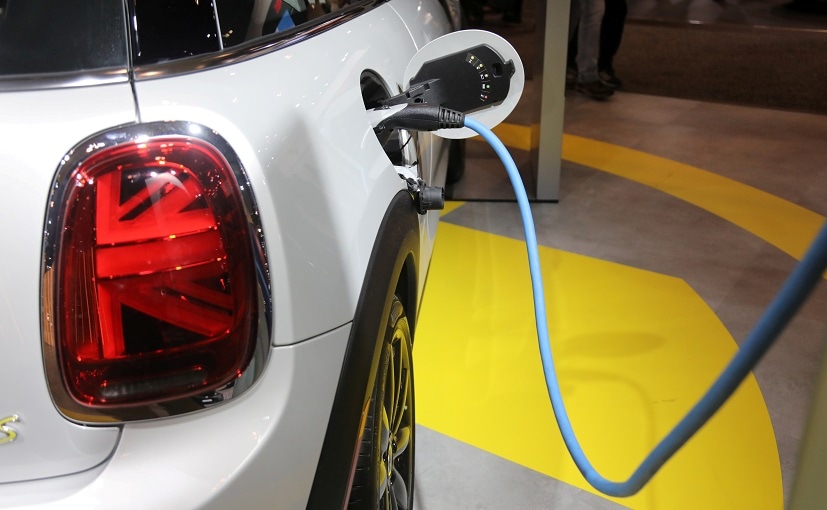
Global automakers are planning to spend more than half a trillion dollars on electric vehicles and batteries through 2030, according to a Reuters analysis, amping up investments aimed at weaning car buyers away from fossil fuels and meeting increasingly tough decarbonization targets. Less than three years ago, a similar analysis by Reuters found car companies planned to spend $300 billion on EVs and related technologies. But looming zero-carbon mandates in cities such as London and Paris and countries from Norway to China have lent additional urgency to the industry's EV-related investment commitments.
The most recent analysis shows carmakers planning to spend an estimated $515 billion over the next five to 10 years to develop and build new battery-powered vehicles and shift away from combustion engines. But industry executives and forecasters remain concerned that consumer demand for EVs could fall well short of aggressive targets without substantial additional incentives and even greater spending on charging infrastructure and grid capacity.
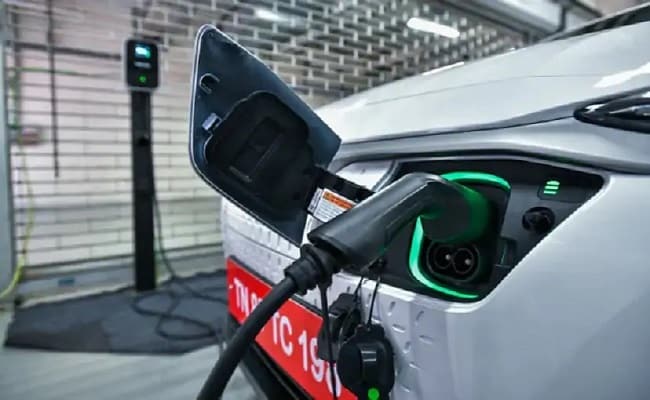
Industry executives and forecasters remain concerned that consumer demand for EVs could fall well short of aggressive targets without substantial additional incentives
Brian Maxim, head of global powertrain forecasting at AutoForecast Solutions, likens the growing investment commitments in vehicle electrification to the Cold War: "Once a few manufacturers announced EV programs, everyone else had to announce their own or be viewed as being left behind."
However, he added, "this leaves a lot of vehicle manufacturers planning significant volumes for a vehicle category that has unknown consumer acceptance, and will have minimal to no profit" for years.
Reuters compiled the investment data from company statements, investor presentations and regulatory filings.
Other surveys have come up with different spending projections. In June, consulting firm AlixPartners said auto industry investments in electric vehicles would reach $330 billion by 2025. In 2020, all global automakers combined spent nearly $225 billion on capital expenditures and research and development, according to AlixPartners.
Tesla Inc, the world's largest EV manufacturer, appears to be the one company that is selling virtually every vehicle it can build and is readying new multibillion-dollar "gigafactories" near Berlin and Austin that will significantly boost its annual production capacity. In early November, the company was valued at $1.2 trillion, more than twice the combined value of Volkswagen AG, Toyota Motor Corp, Ford Motor Co and General Motors Co.

Tesla Inc, the world's largest EV manufacturer, appears to be the one company that is selling virtually every vehicle it can build
Meanwhile, political and regulatory pressure is building on the world's carmakers to begin phasing out production of fossil-fueled vehicles, including gasoline-electric hybrids, over the next 10-15 years, while ramping up output of full electric models.
A number of countries, from Singapore to Sweden, have said they will ban sales of new combustion engine vehicles by 2030. U.S. President Joseph Biden has said he wants 40% to 50% of sales to be electric vehicles by 2030.
Germany's VW Group, which is still recovering financially from the 2016 Dieselgate emissions cheating scandal, continues to lead the rest of the industry, with more than $110 billion in EV and battery investment commitments through 2030. Those commitments, which represent more than 20% of the industry total, underpin VW's aggressive rollout plans for millions of EVs in Europe, China and North America over the next decade.

VW continues to lead the rest of the industry, with more than $110 billion in EV and battery investment commitments through 2030
VW's investments, like those of many of its rivals, are aimed at improving the range and performance of batteries and lowering the cost of EVs, as well as expanding battery and EV production across the globe, according to public data released by the companies.
VW and fellow German automakers Daimler AG and BMW AG are planning to spend a combined $185 billion through 2030, while U.S. automakers GM and Ford expect to spend nearly $60 billion through 2025.
Chinese automakers, led by VW and GM local partner SAIC Motor, have announced well over $100 billion in investment targets over the next decade. Japanese automakers lag far behind, with Honda Motor, Toyota Motor and Nissan Motor so far publicly committing less than $40 billion combined.
These investments do not include the tens of billions of dollars being invested in additional production capacity by the world's largest battery companies, many in cooperation with their automaker partners.
(This story has not been edited by NDTV staff and is auto-generated from a syndicated feed.)
Related News


Latest Cars


Upcoming Cars


Latest News


 car&bike Team | Sep 17, 2026Kia Carens Clavis Line-Up Expanded With More Accessible Automatic VariantsThe HTE (O) and HTE (EX) variants of the Kia Carens Clavis will now come with a turbo DCT setup, while the former will also offer a diesel automatic version.2 mins read
 car&bike Team | Sep 17, 2026Petrol Dealers Call For Rs 5 MDR Charge Exemption On UPI Payments; Will Consider Going Cash-Only For Payments Over Rs 2,000Dealers say that the Rs 5 charge on UPI payments of over Rs 2,000 will eat into their earnings.1 min read
 car&bike Team | Sep 17, 2026Royal Enfield Flying Flea C6 Gets New Parachute White ColourRoyal Enfield’s electric motorcycle brand Flying Flea has added a new Parachute White colour to the C6, giving the electric motorcycle a third colour option in India.1 min read
 car&bike Team | Sep 17, 2026MG M9, Cyberster Now Offered With BaaS: Prices Start At Rs 69.99 LakhOpting for the BaaS scheme enables buyers to save up to Rs 10 lakh on the upfront costs.1 min read
 car&bike Team | Sep 17, 2026TVS Apache Range Updated With New Variants And Features Ahead Of Festive SeasonTVS Motor has updated its Apache range with new safety and connectivity features for the RTR 160, RTR 160 4V and RTR 200 4V, while the flagship 310s get new Black Diamond editions.2 mins read
 car&bike Team | Sep 17, 2026TVS Ronin Gets New Variant And Feature Updates Ahead Of Festive SeasonThe neo-retro motorcycle gets a new base variant along with added technology and convenience features on the higher variants1 min read
 Preetam Bora | Sep 16, 2026Royal Enfield Himalayan 440 Review: Better Than the 450?The new Himalayan 440 with an upsized engine and gearbox has certainly improved as a touring machine and at an extremely attractive price of Rs. 2.29 Lakh. Is it the better Himalayan to choose for many riders?9 mins read
 Seshan Vijayraghvan | Sep 15, 2026BMW i5 LWB Review: Not The M60, This Is The Proper Electric 5 SeriesThe BMW i5 LWB takes the electric 5 Series formula and puts a stronger focus on rear-seat comfort and long-distance luxury. With a 669 km claimed range, 268 bhp and a more relaxed character, is this the i5 that makes the most sense for India?7 mins read
 Preetam Bora | Sep 14, 2026Ladakh Uncharted: Himalayan Basecamp Off-Road Ride ExperienceA day-long off-road excursion from Royal Enfield’s Himalayan Basecamp event in Ladakh, the Ladakh Uncharted ride by Alpinestars was all about re-discovery!6 mins read
 Janak Sorap | Sep 12, 2026New Bajaj Pulsar 125 First Ride Review: More Tech, Less Weight, Same Pulsar DNAThe new Bajaj Pulsar 125 retains the familiar Pulsar identity but gets a new engine, lighter construction, more features and a sharper riding experience.5 mins read
 Bilal Firfiray | Sep 10, 2026Mahindra XEV 9S Review: 3 Reasons To Buy It, And 3 Reasons To AvoidEveryone keeps telling me that the Mahindra XEV 9S is not the electric XUV 7XO. I disagree.1 min read