
Government's Push For Electric Vehicles Could Benefit Chinese Automakers

Reuters
1 min read
May 24, 2017, 07:04 PM
Key Highlights
- Chinese carmakers like BYD have heavily invested in electric car tech
- The NITI Aayog suggested lower taxes & interest rates on EVs in India
- With plans to enter India, Chinese carmakers see EVs as a big opportunity
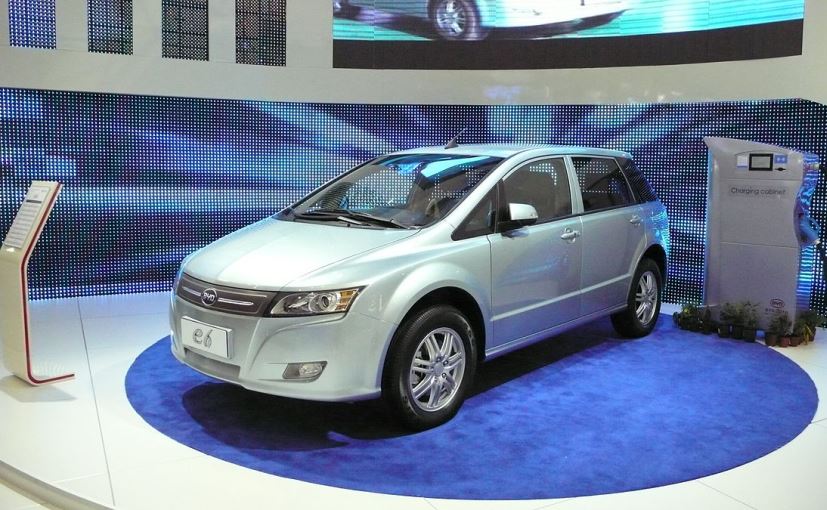
India's ambitious plan to push electric vehicles at the expense of other technologies could benefit Chinese car makers seeking to enter the market, but is worrying established automakers in the country who have so far focused on making hybrid models. India's most influential government think-tank unveiled a policy blueprint this month aimed at electrifying all vehicles in the country by 2032, in a move that is catching the attention of car makers that are already investing in electric technology in China such as BYD.
The May 12 report by Niti Aayog, the planning body headed by Prime Minister Narendra Modi, recommends lower taxes and loan interest rates on electric vehicles while capping sales of petrol and diesel cars, seen as a radical shift in policy. India also plans to impose higher taxes on hybrid vehicles compared with electric, under a new unified tax regime set to come into effect from July 1, upsetting car makers like Maruti Suzuki and Toyota Motor.
The prospect of India aggressively promoting electric vehicles was a "big opportunity", a source close to SAIC, China's biggest automaker, told Reuters. "For a newcomer, this is a good chance to establish a modern, innovative brand image," the source said, although they added the company would need more clarity on policy before deciding whether to launch electric vehicles in India.
Earlier this year SAIC set up a local unit called MG Motor which is finalising plans to buy a car manufacturing plant in western India. A spokesman at SAIC did not comment specifically on the company's India plans. Warren Buffett-backed BYD already builds electric buses in the country, while rival Chongqing Changan has said it may enter India by 2020.
BYD said in a statement the company would have "a lot more confidence" to engage in the Indian market if the government supported the proposed policy. The company said it would look at increasing its investment in India but did not give details on how it would expand its business and market share.
HIGH COSTS
While the Niti Aayog report has not yet been formally adopted, government sources have said it was likely to form the basis of a new green cars policy. If so, India would be following similar moves by China, which has been aggressively pushing clean vehicle technologies. But emulating China's success could be tough. Electric vehicles are expensive due to high battery costs, and car makers say a lack of charging stations in India could make the whole proposition unviable.
The proposed policy focuses on electric vehicles, and is likely to also include plug-in hybrids. But it overlooks conventional hybrid models already sold in India, such as Toyota's Camry sedan, Honda Motor's Accord sedan and so-called mild hybrids built by Maruti Suzuki.
Hybrids combine fossil fuel and electric power, with mild hybrids making less use of the latter. In doubling down on electric power India would be shifting away from its previous policy, announced in 2015, that supported hybrid and electric technology. That could delay investments in India, expected to be the world's third-largest passenger car market within the next decade, according to industry executives and analysts.
"All these policy changes will affect future products and investments," said Puneet Gupta, South Asia manager at consultant IHS Markit, adding that most car makers would need to rethink product launches, especially of hybrids.
ECONOMIC GAP
Mahindra & Mahindra is the only electric car maker in India but has struggled to ramp up sales, blaming low buyer interest and insufficient infrastructure. Pawan Goenka, managing director at Mahindra said the company was working with the government and other private players to set up charging stations in India. Mahindra was also focusing on developing electric fleet cars and taxis, Goenka said.
The cost of setting up a car charging station in India ranges from $500 to $25,000, depending on the charging speed, according to a 2016 report by online journal IOPscience. While the proposed policy suggests setting up battery swapping stations and using tax revenues from sales of petrol and diesel vehicles to set up charging stations, it does not specify the investment needed or whether the government would contribute.
"For full electric vehicles, the economic gap remains huge and the charging infrastructure needed does not exist," said a spokesman at Tata Motors. The company makes electric buses and is working on developing electric and hybrid cars.
DELAYED PLANS
Most automakers have focused on bringing in hybrid models that are seen as a stepping stone to electrification. Toyota recently launched its luxury hybrid brand Prius in India, while Hyundai Motor plans to debut its Ioniq hybrid sedan next year.
Maruti's parent Suzuki Motor, along with Toshiba and Denso, plans to invest 20 billion yen ($180 million) to set up a lithium ion battery plant in India which would support Maruti's plan to build more hybrids. But the apparent sharp shift in policymakers' thinking in favour of electrification is forcing automakers like Toyota and Nissan Motor to seek more clarity before finalising future products for India, while Hyundai may delay new launches.
Toyota, the world's No. 2 carmaker by sales, had planned to have a hybrid variant for all its vehicles in India, but the company's future launches would now depend on the new policy, said Shekar Viswanathan, vice chairman of its Indian subsidiary. Nissan, which plans to launch a hybrid SUV later this year, said in a statement it was waiting for more clarity before deciding whether to bring electric cars to India.
A plan by Hyundai to launch at least three hybrid cars in India in 2019-2020 would likely to be delayed, said a source. Hyundai did not comment on queries related to delays. "If the government will be aggressive on electric vehicles and not support other technologies, companies will need to rethink investments," said an executive with an Asian carmaker.
The May 12 report by Niti Aayog, the planning body headed by Prime Minister Narendra Modi, recommends lower taxes and loan interest rates on electric vehicles while capping sales of petrol and diesel cars, seen as a radical shift in policy. India also plans to impose higher taxes on hybrid vehicles compared with electric, under a new unified tax regime set to come into effect from July 1, upsetting car makers like Maruti Suzuki and Toyota Motor.
The prospect of India aggressively promoting electric vehicles was a "big opportunity", a source close to SAIC, China's biggest automaker, told Reuters. "For a newcomer, this is a good chance to establish a modern, innovative brand image," the source said, although they added the company would need more clarity on policy before deciding whether to launch electric vehicles in India.
Earlier this year SAIC set up a local unit called MG Motor which is finalising plans to buy a car manufacturing plant in western India. A spokesman at SAIC did not comment specifically on the company's India plans. Warren Buffett-backed BYD already builds electric buses in the country, while rival Chongqing Changan has said it may enter India by 2020.
BYD said in a statement the company would have "a lot more confidence" to engage in the Indian market if the government supported the proposed policy. The company said it would look at increasing its investment in India but did not give details on how it would expand its business and market share.
HIGH COSTS
While the Niti Aayog report has not yet been formally adopted, government sources have said it was likely to form the basis of a new green cars policy. If so, India would be following similar moves by China, which has been aggressively pushing clean vehicle technologies. But emulating China's success could be tough. Electric vehicles are expensive due to high battery costs, and car makers say a lack of charging stations in India could make the whole proposition unviable.
The proposed policy focuses on electric vehicles, and is likely to also include plug-in hybrids. But it overlooks conventional hybrid models already sold in India, such as Toyota's Camry sedan, Honda Motor's Accord sedan and so-called mild hybrids built by Maruti Suzuki.
Hybrids combine fossil fuel and electric power, with mild hybrids making less use of the latter. In doubling down on electric power India would be shifting away from its previous policy, announced in 2015, that supported hybrid and electric technology. That could delay investments in India, expected to be the world's third-largest passenger car market within the next decade, according to industry executives and analysts.
"All these policy changes will affect future products and investments," said Puneet Gupta, South Asia manager at consultant IHS Markit, adding that most car makers would need to rethink product launches, especially of hybrids.
ECONOMIC GAP
Mahindra & Mahindra is the only electric car maker in India but has struggled to ramp up sales, blaming low buyer interest and insufficient infrastructure. Pawan Goenka, managing director at Mahindra said the company was working with the government and other private players to set up charging stations in India. Mahindra was also focusing on developing electric fleet cars and taxis, Goenka said.
The cost of setting up a car charging station in India ranges from $500 to $25,000, depending on the charging speed, according to a 2016 report by online journal IOPscience. While the proposed policy suggests setting up battery swapping stations and using tax revenues from sales of petrol and diesel vehicles to set up charging stations, it does not specify the investment needed or whether the government would contribute.
"For full electric vehicles, the economic gap remains huge and the charging infrastructure needed does not exist," said a spokesman at Tata Motors. The company makes electric buses and is working on developing electric and hybrid cars.
DELAYED PLANS
Most automakers have focused on bringing in hybrid models that are seen as a stepping stone to electrification. Toyota recently launched its luxury hybrid brand Prius in India, while Hyundai Motor plans to debut its Ioniq hybrid sedan next year.
Maruti's parent Suzuki Motor, along with Toshiba and Denso, plans to invest 20 billion yen ($180 million) to set up a lithium ion battery plant in India which would support Maruti's plan to build more hybrids. But the apparent sharp shift in policymakers' thinking in favour of electrification is forcing automakers like Toyota and Nissan Motor to seek more clarity before finalising future products for India, while Hyundai may delay new launches.
Toyota, the world's No. 2 carmaker by sales, had planned to have a hybrid variant for all its vehicles in India, but the company's future launches would now depend on the new policy, said Shekar Viswanathan, vice chairman of its Indian subsidiary. Nissan, which plans to launch a hybrid SUV later this year, said in a statement it was waiting for more clarity before deciding whether to bring electric cars to India.
A plan by Hyundai to launch at least three hybrid cars in India in 2019-2020 would likely to be delayed, said a source. Hyundai did not comment on queries related to delays. "If the government will be aggressive on electric vehicles and not support other technologies, companies will need to rethink investments," said an executive with an Asian carmaker.


Latest News


 car&bike Team | Aug 1, 2026Maruti Suzuki Sells More Than 2 Lakh Vehicles In July, Sets New Domestic RecordThe brand sold a total of 2,41,421 units last month which also included exports of 30,056 cars1 min read
 car&bike Team | Aug 1, 2026India-UK FTA: Aston Martin Announces Revised PricesAlong with the revised pricing, the British marque has refreshed its lineup by replacing the Vantage, DB12 and DBX with more powerful 'S' derivatives.4 mins read
 car&bike Team | Aug 1, 2026BMW 7 Series, i7 Facelift Bookings Open In India Ahead Of LaunchThe facelifted models were unveiled globally in April 2026 and are set to arrive in India.3 mins read
 car&bike Team | Aug 1, 2026Auto Sales July 2026: Growth For Tata, Mahindra And Hyundai; Nissan Jumps 218%July 2026 turned out to be a strong month for several carmakers in India. Tata Motors, Mahindra, Hyundai, MG Motor and Nissan all reported healthy year-on-year growth, with new model launches, exports and growing EV demand.4 mins read
 car&bike Team | Jul 31, 2026Hero Vida VX2 Now Available With Fixed 3.1 kWh Battery, Priced At Rs 1.13 LakhUnlike the existing removable-battery variants, the new VX2 variant comes with a fixed battery and direct-plug charging.1 min read
 car&bike Team | Jul 31, 2026Honda Cars India Appoints Toshiyuki Yanagisawa As New President And CEOYanagisawa replaces Takashi Nakajima, who is set to move to Honda's regional headquarters after completing his stint in India.1 min read
 Bilal Firfiray | Aug 1, 2026Toyota Hilux Review: The InvincibleMarking it as the ninth generation, the Hilux comes with a major cosmetic overhaul. But is it still relevant enough for the current times or is it getting too long in the tooth?5 mins read
 Bilal Firfiray | Jul 30, 2026Kia Syros EV Review: Best EV To Buy Under Rs 20 Lakh?The Kia Syros EV comes into the game with a modern design, spacious cabin, strong performance, decent range and an aggressive pricing. But could it become the new benchmark under Rs 20 lakh?5 mins read
 Jaiveer Mehra | Jul 27, 20262026 Maruti Suzuki Brezza Facelift Review: Bestseller Joins The Turbo ClubWhile Maruti’s facelifts have always tended to bring subtle updates over the outgoing models, the latest Brezza brings some heavy updates under the skin, including a new 6-speed manual gearbox and, for the first time, a turbocharged petrol engine option.1 min read
 Bilal Firfiray | Jul 24, 2026Honda ZR-V Review: Who Is It For?Honda has brought the new ZR-V to India as their current flagship offering. It’s a CBU, it’s a hybrid, and it’s here for a limited few. Who is it for though?1 min read
 Girish Karkera | Jul 29, 2026Mercedes-AMG E53 4MATIC+ PHEV First Drive Review: Just What The Doctor OrderedThere are luxury cars and there are high-performance cars. But what if you want both for the price of one? Mercedes-Benz has a recommendation that promises to tread a fine line between the two – the second generation E53 with a twist.7 mins read